Cloth vs Fiber Backings with Open Coat Sandpaper
It starts on a Saturday morning with a surface that matters. Maybe it’s a maple tabletop you milled last fall, or a set of welded brackets you promised to deliver before lunch. You switch on the dust extractor, index a fresh disc, and take the first pass. Within seconds, you know if the setup is right: the abrasive either cuts cleanly or smears; it either stays cool and sheds swarf or loads, glazing the face and burning the work. This isn’t luck. It’s backing selection, grain geometry, and coating density working together. For a lot of workflows—especially on resinous woods, body filler, aluminum, and painted surfaces—open coat sandpaper keeps the cut alive by leaving voids between abrasive grains that evacuate debris instead of embedding it. But even the right coat pattern underperforms if the backing can’t transmit force, resist heat, or conform to the surface you’re shaping.
Choose poorly, and your disc tears at the edge of a weld bead, or your belt stretches and tracks off a platen. Choose wisely, and you keep scratch depth predictable, temperatures stable, and consumable costs in check. The pivotal decision is often quiet and overlooked: cloth or fiber backing? Both can carry the same grains and the same open or closed coat patterns, but they behave very differently under pressure, heat, and curvature. Understanding that difference—plus how it interacts with coat density, pad hardness, and machine speed—turns frustrating sanding into controlled material removal.
For the woodworker, this means pushing past blotchy finishes and swirl-mark rework. For a metal fabricator, it means consistent weld blending without gouging or premature disc failure. For anyone finishing composites, it’s the difference between crisp edges and delamination. Backing choice sets your mechanical envelope; coat density and grit refine it. Let’s break the decision down so your next abrasive actually performs like you expect—and lasts as long as it should.
Quick Summary: Choose cloth when you need flexibility, tear resistance, and belt or multi-radius conformity; choose fiber for rigid, aggressive stock removal on flats—then tune performance with open coat sandpaper to control loading on soft, gummy, or paint-laden materials.
How Backings Drive Abrasive Behavior
An abrasive is a system: grain, bond, coating density, backing, and interface pad all interact. Cloth and fiber backings anchor that system from the back, defining how pressure translates into the cut and how the product survives heat, torque, and edge contact.
Cloth backings are woven substrates (typically cotton or polyester) impregnated and resin-saturated to specific weights—J, X, Y, etc. J-weight is light and conformable for profiles and contours. X-weight balances tear resistance with some flexibility, often the default for belts and discs. Y-weight is heavy for high-pressure, high-horsepower machines. Cloth’s woven structure resists tear propagation, tolerates flex cycles, and wraps around radii without cracking. That makes cloth ideal for belts on platen and contact wheels, flap wheels, and discs where you need to follow compound curves or break sharp edges without cutting through too aggressively.
Fiber backings for coated abrasives (vulcanized fiber discs) are dense, cellulose-based laminates with high stiffness and excellent heat resistance. They transmit pressure directly to the grain with minimal cushioning, which concentrates force and increases unit pressure. For weld removal, mill scale stripping, and flat-plate stock reduction, that stiffness gives you speed and consistent scratch geometry. Fiber also stays dimensionally stable at higher disc speeds, especially when paired with hard backup pads, making it a go-to for 36–80 grit heavy removal on carbon and stainless steel.
Bond and coat matter in both worlds. Resin-over-resin bonds handle heat and resist grain pull-out. Open vs. closed coat controls the spacing between abrasive grains: closed packs more grains for maximum contact density; open reduces loading by creating discharge paths for swarf and resin. But those gains only translate when the backing is aligned with the job. A fiber disc on a curved railing will chatter, gouge, and fragment; a soft J-weight cloth on a flat weldment will conform too much, diluting pressure and slowing cut. Start with the geometry and pressure profile of your task, then select the backing to match; coat density and grit come next.
When Open Coat Sandpaper Makes Sense
Open coat sandpaper spaces abrasive grains with visible voids—typically 30–60% coverage versus 90–100% for closed coat. Those voids are not wasted real estate; they are escape routes for swarf, resin, and paint dust. In practice, open coat extends cut life and reduces glazing on materials that smear or clog: softwoods laden with pitch (pine, fir), painted or primed panels, aluminum, brass, body filler, and thermoplastics.
On cloth, open coat is particularly effective in intermediate grits (P80–P180) where you’re refining shape without sealing the surface. A flexible J- or X-weight cloth disc with open coat tracks a curved profile, shedding dust before it packs the face. You maintain a self-sharpening action longer, and temperatures stay below the threshold where resin smear or coating melt occurs. That protection is critical at higher orbit rates or when vacuum extraction isn’t perfect.
On fiber discs, open coat is less common in very coarse grits because the chips are larger and less prone to clogging. But once you step into finishing grits (P80–P120) to blend scratches after heavy removal, an open coat fiber disc can prevent aluminum loading or paint smearing while still keeping the stiff, flat support needed to erase 36–60 grit lines. Pair that with a medium to hard backup pad to maintain flatness on panels.
There is a tradeoff: because fewer grains contact the work simultaneously, open coat can slightly reduce initial cut rate on clean, dense materials. For mild steel, cast iron, or kiln-dried hardwoods with low resin, a closed coat may cut faster and leave a more uniform scratch at the same grit. The fix is simple—select the coat for the substrate and the stage of the workflow. If you see dust caking between grains or a mirror-like glaze, step to open coat. If the dust is free-flowing and the scratch is shallow but uniform, closed coat likely serves you better.
Tip: For aluminum and painted panels, use open coat with stearate anti-load topcoats. The stearate acts as a dry lubricant, further reducing loading and heat without contaminating most finishing systems.
Cloth vs Fiber: Strength and Flex
Pick cloth when you need flexibility and edge durability; pick fiber when you need rigidity and pressure density. This rule-of-thumb becomes clearer when you examine failure modes and force paths.
Cloth failure modes:
- Edge fray and wear-through on prolonged contact with sharp corners.
- Stretch and tracking issues if belt tension is too low.
- Heat softening of the resin saturation if airflow is poor.
Fiber failure modes:
- Brittle cracking when over-flexed or forced across tight radii.
- Edge chipping and “pizza-cutter” scalloping if the backup pad is too hard for a heavily crowned surface.
- Heat checking on stainless if pressure is too high without adequate cooling.
Cloth shines in belt sanding, contouring, and hand-backed operations. J-weight cloth with aluminum oxide or silicon carbide in open coat resists loading on softwoods and primers. X-weight with ceramic/zirconia excels on portable belt sanders for beveling and rounding edges without tearing. You can feather edges accurately because the backing flexes before the grain cuts too deep.
Fiber excels on angle grinders with resin-fiber discs where you want aggressive, flat grinding on metals. The stiff backing converts downforce into high localized stress at the grain tips, driving ceramic or zirconia grains to self-fracture and stay sharp. When your goal is to erase a weld crown fast and then step to a finishing disc, fiber gives you that first-stage speed.
Coat density integrates with both: open coat on cloth reduces loading in dusty, gummy tasks; closed coat on fiber maximizes bite on clean steel. But don’t overgeneralize—open coat on fiber can be the right choice for blending aluminum or removing paint without smearing. According to a article, backing weight, saturation, and coat selection jointly determine cut rate, heat management, and durability, and understanding those variables avoids trial-and-error waste.
Practical boundary conditions:
- Curves and soft interfaces favor cloth.
- Flat plates and hard pads favor fiber.
- High RPM with heavy pressure favors fiber; high contact area with variable geometry favors cloth.
Match Material, Tool, and Backing
Backing selection is not isolated; it’s a three-variable problem: material, tool, and interface. The wrong interface pad can sabotage the right backing, and the wrong speed can overheat even the ideal setup.
Wood and composites:
- Use cloth backings in J or X weight to conform to profiles, especially on edge banding, moldings, and handrails.
- Choose open coat sandpaper in P120–P220 to avoid pitch loading on softwoods and to keep composite dust clearing.
- For solid surface and composites that smear, pair open coat with light pressure and excellent dust extraction to prevent heat bloom.
Ferrous metals:
- Start with fiber discs in P36–P60 zirconia or ceramic for weld removal on flat stock. Use a hard or extra-hard backup pad to maintain plane.
- Transition to fiber or cloth P80–P120 for blending. For aluminum or stainless, consider open coat to reduce loading and heat tint, respectively.
- Keep grinder RPM within disc ratings; fiber thrives on higher unit pressure but will glaze if you “float” it.
Non-ferrous metals and paint systems:
- Favor cloth discs with open coat and stearate topcoat at P80–P240 to limit loading and galling.
- On aluminum panels, use a medium backup pad to avoid rippling; too-hard pads dig in, too-soft pads wash out the scratch.
Actionable tips:
- Set pressure by scratch behavior, not feel. If grains polish without cutting, increase pressure or step to fiber; if the scratch is too deep or heat rises, lighten pressure or step to a softer pad and cloth.
- Calibrate coat choice with a 60-second test. If dust cakes on the disc face or smears on the work, switch to open coat at the same grit before changing grit size.
- Align pad hardness to backing: fiber wants hard pads for flats; cloth wants medium-soft pads for contours; mismatches create chatter or gouging.
- Control heat with dwell and pathing. Keep the disc moving, overlap 30–50%, and lift to vent on long passes; overheating accelerates resin failure regardless of backing.
- On belt sanders, pick X-weight cloth for general use and Y-weight only when horsepower and straight platens are in play; Y is overkill for hand-fed, low-tension units.
Shop Examples and Edge Cases
Case 1: Weld blending on 3/16" mild steel plate. Start with a P36 ceramic fiber disc on a hard pad to knock the crown. The fiber’s stiffness keeps the panel flat and the scratch consistent. Step to P80 fiber to erase deep lines. If the part heads to paint, finish with a P120 cloth disc to feather edges; the cloth’s give helps avoid undercutting at transitions.
Case 2: Refinishing a pine tabletop with blotchy stain due to prior swirl marks. Use an X-weight cloth disc in P120 open coat sandpaper to level the surface without overheating pitch. Follow with P150 and P180 open coat, vacuuming between grits. Closed coat would cut faster initially but risks glazing and swirl carryover in resinous zones.
Case 3: Aluminum motorcycle cover with oxidation and a prior rattle-can paint job. Avoid fiber for the finishing stages—its stiffness and closed coat tendency increase smearing risk. Instead, use a P80 cloth disc with open coat and stearate to clear paint without clogging, then P120/P180. Keep pressure light and RPM moderate to manage heat.
Case 4: Fabricating a curved stainless handrail. Cloth backing, J-weight preferred, with ceramic P80/P120 for shaping the curve. Fiber will chip at the edges and fight the radius. For final refinement, silicon carbide on cloth delivers a crisp, cold cut; consider open coat to reduce heat tint.
Edge considerations:
- PSA vs. hook-and-loop: PSA on fiber discs increases stiffness further and is great on flats; hook-and-loop adds compliance and can undermine fiber’s advantage but pairs well with cloth on contours.
- Grain chemistry: Ceramic excels under pressure—especially on fiber. Aluminum oxide is cost-effective for wood and mild steel on cloth. Silicon carbide fractures cleanly and is excellent on composites, primers, and stone.
- Coolant and mist: Wet-capable cloth products exist and can dramatically cut heat on metals. Fiber generally runs dry; if heat is an issue, adjust pressure, pad, and coat density.
Outcome-based rule: If your primary defect is loading and smear, try open coat and a more compliant backing. If your defect is slow cut and washboard scratch, try fiber with a harder interface and, if the substrate allows, closed coat.
Brief Description of — Video Guide
There’s a short, practical YouTube segment that walks through abrasive basics in plain language, guided by a shop pro nicknamed Woody. He breaks down grit ranges, backing types, and common use-cases in a way that connects the sheet or disc in your hand to the performance you’ll see on workpieces.
Video source: Brief Description of Sandpaper Told By Woody
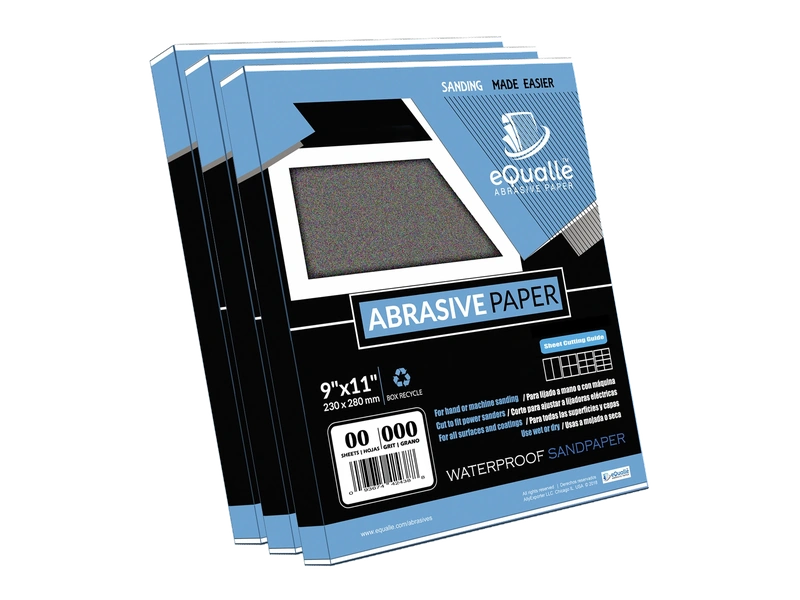
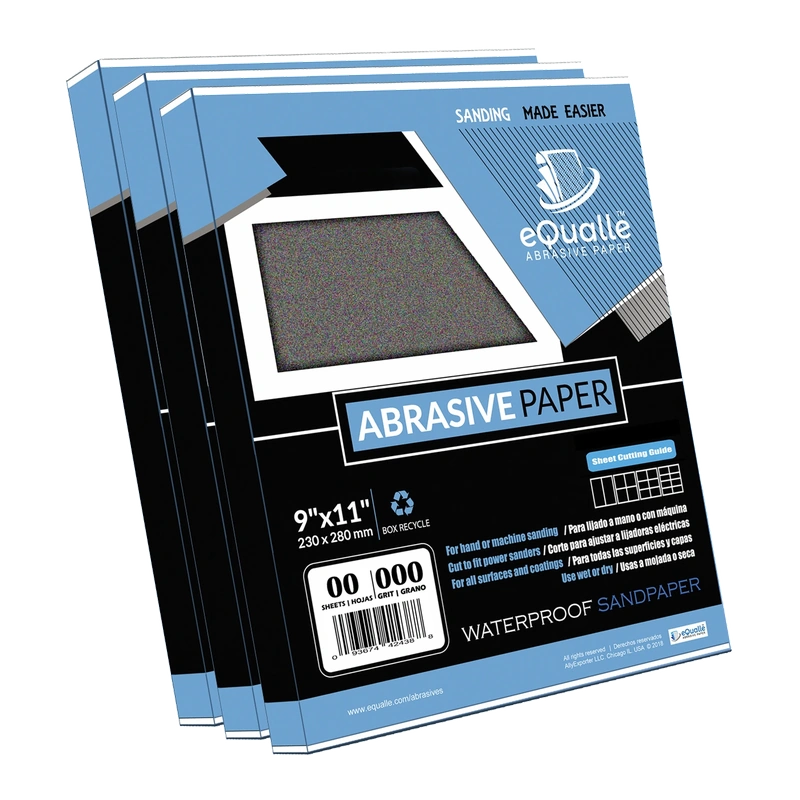
150 Grit Sandpaper Sheets (10-pack) — 9x11 in Silicon Carbide Abrasive for Wet or Dry Use — Versatile medium grit that transitions from shaping to smoothing. Works well between coats of finish or for preparing even surfaces prior to paint. (Professional Grade).
Frequently Asked Questions (FAQ)
Q: How do I know if I should switch from fiber to cloth during a job?
A: Watch for chatter on contours, edge chipping, and gouging—signs fiber is too stiff for the geometry. If you need to feather edges or follow curves, switch to cloth; if the surface is flat and removal is slow, stay with or return to fiber.
Q: When is open coat sandpaper the wrong choice?
A: On dense, clean substrates like mild steel plate or kiln-dried hardwoods with minimal resin, closed coat often cuts faster and leaves a more uniform scratch. Use open coat mainly to combat loading on gummy or coated surfaces.
Q: Which backup pad hardness pairs best with each backing?
A: Hard pads with fiber discs for flat grinding and aggressive stock removal; medium pads with cloth discs for general blending; soft pads for contours and finishing to prevent digging and to even out scratch patterns.
Q: Does grit selection change with backing choice?
A: Often. With fiber’s higher pressure density, you can use slightly finer grits to achieve the same removal as a coarser cloth disc. Conversely, on cloth, you may step one grit coarser to maintain cut without increasing pressure.
Q: How do I reduce heat buildup regardless of backing?
A: Use open coat on smear-prone materials, maintain appropriate pad hardness, keep the abrasive moving with 30–50% overlap, and let the disc vent between passes. Ensure dust extraction is effective to remove insulating debris.