
Best Grits for Joint Compound Sanding Seams
A winter morning, blinds cracked just enough to send a blade of light raking across a newly painted wall. You step closer. What looked perfect last night is now a relief map—slight ridges at the seams, a faint swirl near an inside corner, a shallow shadow where a butt joint telegraphs through. Every drywall finisher knows this moment. Light exposes the reality of surface prep. The good news: this is controllable. With the right abrasive progression and an efficient joint compound sanding workflow, you can make that same morning light your best QC tool, not your enemy.
If you’ve ever wondered why a “perfect” seam still flashes after primer, the culprit is almost always scratch pattern mismanagement or an incorrect grit jump. Joint compound is soft, thin, and brittle when sanded; it needs a tuned abrasive system that removes material quickly but leaves a uniformly shallow profile that primer can bury. The answer isn’t to keep sanding the same area harder. It’s to choose the right grit for each phase, sequence them properly, and inspect under controlled lighting. In short: treat drywall like a finish system, not a demolition target.
This guide is an unapologetically technical take on the best grit for sanding joint compound seams. We’ll cover the physics behind scratch depth, material removal rate (MRR), and feathering geometry; compare abrasive minerals and backings; and lay out a proven workflow for tapered seams, butt joints, and inside corners. Whether you’re dialing in a new pole sander with mesh screens or working by hand, you’ll find a method that reduces passes, dust, and rework. Most importantly, you’ll gain the confidence that your seams will disappear after primer—no callbacks, no flashing, no regrets. Let’s get the wall to flat and the room to calm.
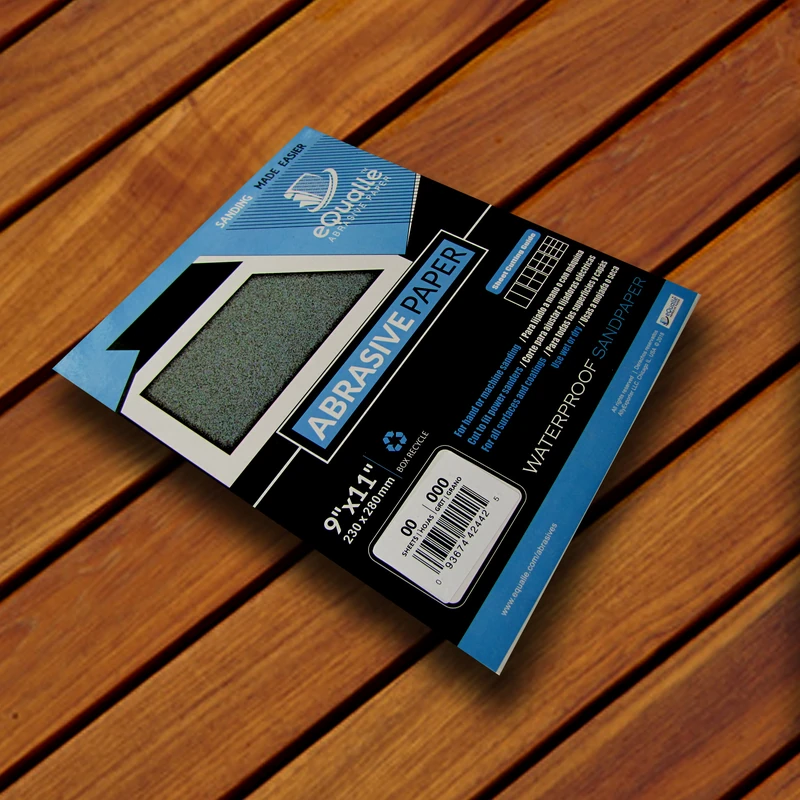
Quick Summary: Use a staged grit sequence—typically 120–150 for knockdown, 180 for refinement, and 220 for final blending—applied with light pressure and constant cross-light inspection.
What grit really does on drywall
Drywall compound is a low-modulus, friable material. Compared to hardwoods or auto body filler, it fractures and sheds easily, so abrasive selection isn’t about brute force. It’s about generating a shallow, controlled scratch pattern that the next grit can erase in fewer passes. Think of seams as low-amplitude “hills” that must be widened (feathered) without deepening. The abrasive must cut the ridge, not dig a trench.
A good starting point for most seams is 120–150 grit. At these sizes, typical aluminum oxide grains (average particle diameter ~100–125 µm) produce a scratch depth that removes ridges efficiently but doesn’t explode the paper face or over-thin the edges. Use 120 when the final coat is slightly high, or you’re correcting proud tape on a butt joint; use 150 when the coat is close and you mainly need to blend edges.
Refinement typically lives at 180. This grit cleans up 120–150 scratches and flattens the feather zone without burnishing. Burnishing is critical to avoid: polished compound looks smooth but rejects paint uniformly, causing sheen differences. Reserve 220 for the last pass only, and only on well-filled seams. 220’s shallow scratch pattern helps the primer bury the texture, but if you jump from 120 to 220, you’ll spend too long chasing 120 striations, and you’ll risk glazing the surface.
Grits above 220 (e.g., 320) are generally counterproductive on drywall. They offer minimal MRR, are prone to burnishing, and can polish the paper face. Conversely, 80–100 grits cut too aggressively on cured compound and raise fuzz or expose tape. Exception: 100 grit can rescue a high ridge if you’re careful and followed immediately by 150, then 180.
The geometry of the tool also matters. A wider head (9–10 inch pole sander) spreads pressure and prevents “valleys.” Foam-faced blocks are excellent for edge blending because they conform without creating localized lows. Keep pressure low; let the grit do the work.
Joint compound sanding workflow by grit
Most successful joint compound sanding follows a three-stage grit ladder: knockdown, refinement, and final blend. Adhering to this progression prevents deep scratches from printing through and reduces the number of corrective passes.
Stage 1 — Knockdown (120–150 grit):
- Objective: Flatten proud areas and establish feathering width.
- Tools: Pole sander with open-coat paper or mesh; hand block for edges.
- Pressure: Very light; focus on high spots first, then long strokes to extend the feather 8–12 inches beyond the seam.
- Notes: For tapered seams, 150 is usually sufficient. For butt joints or ridged tape, 120 is justified but should be used sparingly.
Stage 2 — Refinement (180 grit):
- Objective: Erase Stage 1 scratches and unify the surface across the feather zone.
- Tools: Same heads; consider a foam interface on corners to prevent edge dig.
- Notes: Cross-hatch strokes (one diagonal pass each direction) improve flatness and reveal low spots under raking light.
Stage 3 — Final blend (220 grit):
- Objective: Remove residual 180 lines and smooth micro-transitions so primer fills uniformly.
- Tools: Clean paper; avoid clogged mesh that can streak.
- Notes: Limit 220 to two or three light passes. Over-sanding here may burnish the surface.
H3: Tapered vs. butt seams
- Tapered seams: Because the board recess carries material, you can often skip 120. Start at 150, refine at 180, finish at 220. Feather 8–10 inches each side.
- Butt seams: No recess. Keep coats thin and wide during mudding; sand with 120 only to knock down the crown, then immediately advance to 150, 180, and 220. Feather 12–16 inches each side to disguise the hump.
H3: Inside corners and angles Inside corners respond best to 180 followed by 220 using a purpose-made corner sanding block. Avoid 120 in corners; it will shred paper and expose tape. Use light, parallel strokes along each leg, and never push across the apex.
Actionable tips:
- Use a pencil guide coat: Lightly scribble over the seam before each stage. Stop when the marks just disappear—no extra passes.
- Cross-light constantly: Hold a low-angle work light and inspect after every two passes per grit.
- Change abrasives early: If the sheet feels warm or looks loaded, swap it. A fresh 180 beats a glazed 150 every time.
- Protect the paper face: If you see brown fibers or “fuzz,” stop. Seal with a quick-dry primer, then resume with 220.
Abrasive types and backing selection
Not all 180s are equal. Abrasive mineral, coating, and backing profoundly affect cut rate, scratch uniformity, and dust behavior.
Minerals:
- Aluminum oxide (AlOx): The standard for drywall. Tough, micro-fractures modestly, and maintains a predictable cut. Ideal in 120–220 on both paper and mesh.
- Silicon carbide (SiC): Sharper and more brittle. Cuts fast initially but dulls sooner on compound. Excellent for mesh screens connected to vacuums; watch for streaking when dull.
- Ceramic alumina: Overkill for compound; too aggressive and costly. Skip it.
Coatings:
- Open-coat: Gaps between grains reduce loading—a must for soft materials like compound. Choose open-coat for all drywall sanding.
- Stearate or anti-load topcoats: Help shed dust and minimize clogging. Useful in 180–220, especially during final blending.
Backings:
- Paper (C–D weight): Balanced flexibility and durability for pole sanders and hand blocks. Use D-weight for 120–150 to keep shape; C-weight for 180–220 for better conformity.
- Film: Very uniform grain distribution and consistent scratch. Great in 180–220 for final blending, but can burnish quickly—use a light touch.
- Mesh screens: Enable dust extraction through the abrasive. They cut aggressively at a given grit; consider stepping one grit finer (e.g., mesh 180 ≈ paper 150 feel).
Interfaces:
- Foam pads/interfaces reduce edge-digging and help manage curvature on feather zones. Pair with 180–220 to improve blend quality.
- Rigid blocks preserve flatness on butt joints and for initial 120/150 knockdown.
According to a article, the consensus for finish sanding sits in the 150–180 range, aligning with field experience that prioritizes uniform scratch profiles over raw removal speed.
The net effect: Build your kit around open-coat aluminum oxide paper in 120/150/180/220, add mesh in 150/180 if you run dust extraction, and keep a film-backed 220 for those last, careful blending passes.
Dust control and surface inspection
Dust isn’t just a health concern; it directly affects surface quality. Loaded abrasives smear, streak, and create micro-lows that only appear under primer. Dust control is quality control.
Extraction:
- Pole sanders with perforated heads plus mesh screens evacuate dust at the cut point. Use a HEPA-rated extractor with auto-clean to maintain airflow.
- Keep hose drag off the wall to avoid bounce marks. A lightweight, anti-static hose with a swivel cuff helps.
Room prep:
- Positive pressure out of the work area reduces fine dust migration. Crack a window and place a fan outward if extraction is limited.
- Mask trim and outlets; dust nibs trapped in caulk or boxes can telegraph around plates.
Inspection regimen:
- Raking light: A compact LED set at 10–20 degrees to the wall exposes seams and scratches. Check after each grit change.
- Guide coats: In addition to pencil marks, a light spray of contrasting drywall primer can act as a “tell.” Sand until the mist just disappears to prove uniform contact.
- Touch verification: Slide a fresh nitrile glove across the seam. You’ll feel ridges and swirl patterns your eyes miss. The glove’s skin reduces finger bias and oil transfer.
Process discipline:
- Vacuum or brush the surface when changing grits. A single grit of embedded dust (e.g., leftover 120) will cut grooves through your 180 stage.
- Avoid over-sanding edges. If the paper face fuzzes, you must stop, seal, and move to a finer grit; don’t “fix” paper with more aggression.
Use these practices consistently and you’ll not only reduce airborne dust but also shorten sanding time—because clean, cool abrasives cut predictably and leave fewer defects to chase.
Common defects and how to prevent them
Even with the right grits, technique determines whether you get flat, invisible seams or a wall that betrays its repairs under light.
Swirl marks:
- Cause: Circular motion with a soft interface or loaded abrasive.
- Prevention: Sand in long, overlapping strokes parallel to the seam. Change sheets often. Use 180 to erase any 150 swirls before moving to 220.
Picture framing:
- Cause: Aggressively sanding around patch perimeters while leaving the center high or low.
- Prevention: Start by knocking down the center crown with 150, then feather outward with 180. Use a straightedge to confirm flatness across the entire patch.
Pigtails:
- Cause: Grit contamination (e.g., a 120 particle lodged in a 180 sheet) or mesh snagging debris.
- Prevention: Vacuum the surface between grits. Tap mesh on the sander head to dislodge chips. If you see a spiral scratch, stop immediately and reset.
Burnishing and flashing:
- Cause: Over-sanding with high grits (220+) or pressure that polishes compound/paper.
- Prevention: Keep final passes minimal. Prime with high-build drywall primer and spot-float any remaining lows rather than polishing the area.
Paper fuzz and tape exposure:
- Cause: Using 120 on edges or inside corners; heavy pressure at a seam edge.
- Prevention: Work edges with 180–220 only. If fuzz appears, seal with shellac-based primer and resume at 220 after drying.
Field-proven tips:
- Keep feather width generous—8–10 inches for tapered, 12–16 for butt seams—to hide transitions from normal viewing distance.
- Use a 24–36 inch aluminum straightedge to check across and along seams after 180; correct before 220.
- Prime early and re-evaluate. High-build primer can reveal what sanding hides; it’s faster to touch up compound and re-sand than to fight a polished surface.
SPACKLE Vs. DRYWALL — Video Guide
This short, practical video compares spackle to drywall joint compound, explaining when each material makes sense and how your choice affects sanding. It breaks down working time, shrinkage, and build thickness—critical factors that determine whether you’ll be sanding a brittle skim or a flexible, well-bonded mud layer.
Video source: SPACKLE Vs. DRYWALL MUD/JOINT COMPOUND (What's the Difference? When Should You Use Them?!)
120 Grit Sandpaper Sheets (100-pack) — 9x11 in Silicon Carbide Abrasive for Wet or Dry Use — High-cut abrasive for refining rough wood grain, removing scratches, and preparing bare surfaces for priming or staining. (Professional Grade).
Frequently Asked Questions (FAQ)
Q: What is the best grit to start sanding joint compound seams?
A: Start at 150 for most tapered seams. Use 120 sparingly on proud butt seams or ridged tape, then advance to 150 and 180. Avoid 100 unless correcting a clear high ridge.
Q: Which grit should I finish with before priming?
A: Finish with 220 using very light pressure to blend micro-transitions. Do not over-sand or you risk burnishing; two or three passes are sufficient.
Q: Are mesh screens better than paper for drywall?
A: Mesh paired with dust extraction controls debris and cuts aggressively at a given grit. Treat mesh 180 like paper 150 in “feel,” and be attentive to streaks as it dulls.
Q: How do I prevent sanding through the paper face?
A: Keep pressure low, avoid 120 at edges and corners, use foam interfaces for blending, and switch to 180–220 near paper transitions. If fuzz appears, seal and continue with 220.
Q: Do I need different grits for inside corners?
A: Yes. Inside corners respond best to 180 followed by 220 using a corner block. Avoid coarse grits; they damage tape and paper quickly in confined angles.