
How Long to Soak Wet-Dry Paper for Lens Sanding
The first time you watch dusk turn your road into a tunnel of glare, you realize how much clarity lives in the small things. Haze, pitting, and a cataract-like film build slowly on headlight lenses until the world looks permanently overexposed. You pull into the garage, set a bucket by the bumper, and stare at a stack of wet-dry papers—silicon carbide sheets curling slightly at the edges. You’ve polished paint before, maybe even cut orange peel out of clear coat, but lenses are different. They’re optically functional components. Every scratch you leave behind scatters photons that should have stayed focused on the road. This is why prep matters. And one deceptively simple choice—how long to soak wet-dry papers before lens sanding—will decide whether you cut cleanly with predictable scratch geometry or fight galling, loading, and inconsistent finish all evening.
You fill the bucket with warm water, add a drop of dish soap, and watch the papers relax as the latex-saturated backing takes on weight. There’s a tactile calm to it, like a ritual before a precise job. The right soak softens the sheet, activates lubricity, and preconditions the resin bond; the wrong soak turns top-flight abrasive into mush. For polycarbonate headlights and even glass lenses, your lens sanding outcome depends on that pre-soak more than most people think. The goal is repeatability: consistent slurry formation, steady cut rate, and a scratch pattern that steps down cleanly through your grit progression. Get that right and the polish that follows becomes quick, controlled, and satisfying.
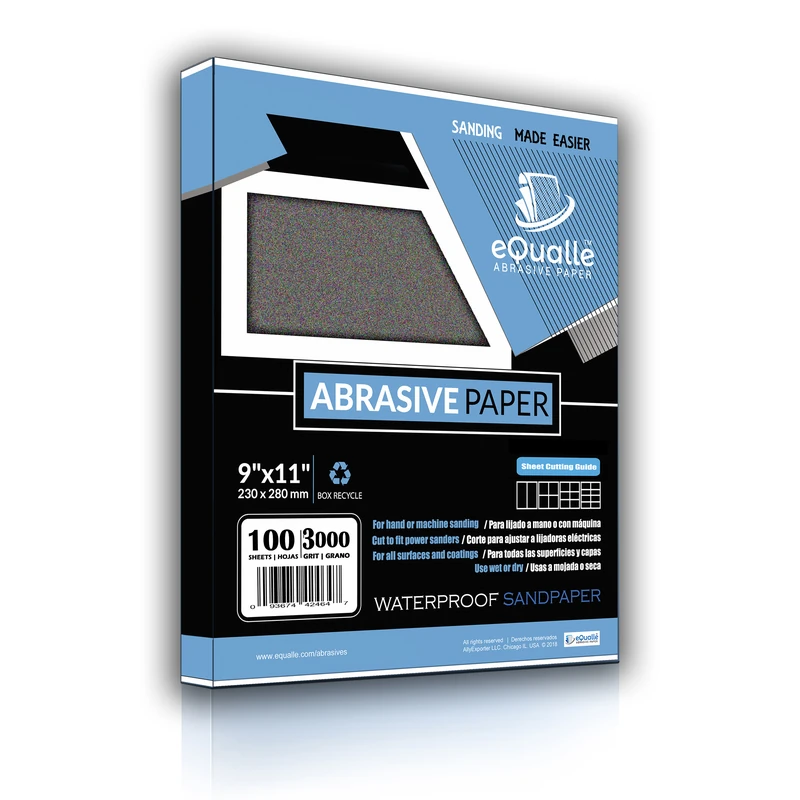
Quick Summary: Most waterproof silicon carbide sheets perform best with a 10–20 minute pre-soak; avoid overnight soaking, and do not soak PSA or film-backed abrasives.
Why Wet-Dry Paper Needs a Soak
Wet-dry abrasives are engineered to run with water because both the backing and the resin system are designed to resist swelling long enough to maintain grit anchorage while shedding worn grains into a workable slurry. Pre-soaking starts that equilibrium under controlled conditions. When you submerge a waterproof, latex-saturated paper with a resin-bonded silicon carbide (SiC) grain, water migrates into the backing fibers and edge curls relax. This reduces sheet stiffness, helping the abrasive conform to curvature and maintain consistent pressure across the lens—critical for optical surfaces that punish point-loading with deep, slow-to-remove scratches.
Soaking also saturates the sheet’s microstructure so your first passes don’t starve for lubrication. Dry starts are a common cause of scratch “spikes”—random, deeper scars created when the sheet hydroplanes unevenly or sheds a fragment prematurely. By bringing the sheet to a wet working state before it touches the lens, you stabilize the cut rate, reduce loading, and generate a uniform slurry that both cools and refines the scratch pattern.
There are limits. Resin systems are not inert forever. Prolonged submersion (hours to overnight) swells the backing and leaches plasticizers, softening the bond and causing early grain release or fuzzing at sheet edges. That translates to a shorter useful life, unpredictable cut, and the risk of rogue scratches from detached particles. In practical terms, most SiC waterproof papers reach a steady, pliable condition in 10–20 minutes. Warm water (not hot) speeds saturation without accelerating bond breakdown; aim for tap-warm, roughly 30–40°C (86–104°F). Add a surfactant at low concentration to reduce surface tension—just enough to keep the sheet wet and the slurry mobile from the first stroke.
Dialing In Soak Time by Abrasive Type
Not every abrasive benefits from the same soak. Your backing, grain, and attachment method all dictate how long—if at all—you should submerge before lens work.
Waterproof SiC sheets (latex paper backing): 10–20 minutes. This is the most common wet paper for optical plastics and glass. A 15-minute soak is a good standard, with a one-minute wetting refresh if a sheet dries mid-session.
Waterproof aluminum oxide sheets: 5–15 minutes. AlOx on paper is often a touch more resilient in the bond but cuts less aggressively on glass; soak briefly to relax curl and improve feel.
Film-backed abrasives (e.g., microfinishing film, structured abrasives): Do not pre-soak. These PET films don’t absorb water; soaking only risks loosening PSA or hook-and-loop adhesion. Instead, wet the work and the media at use with a spray bottle and run “flooded.”
PSA discs (pressure-sensitive adhesive): Never soak. Submersion will kill the adhesive. Mount on a flat interface pad and use continuous lubrication during sanding.
Hook-and-loop discs: Avoid submersion. A quick dip-and-flick (10–30 seconds) to wet the face is fine; don’t saturate the hook interface or foam pad. Rely on spray lubrication during operation.
Foam-backed finishing discs and sponges: 0–2 minutes. A brief wetting reduces drag; prolonged soaking waterlogs foam, dulls feedback, and can tear edges.
Diamond lapping sheets (for glass lenses): No soak required. Wet the lens and sheet in use. Diamond cuts clean without the need to soften the backing; keep the surface flooded to manage heat and swarf.
H3: Brand and backing caveats Some premium papers use highly filled, waterproof backings that stabilize faster; these may be ready in ~5–10 minutes. Conversely, economy papers often need the full 20 minutes to relax edge curl. If you see persistent curl after 10 minutes, gently reverse-roll the sheet once, then return it to the soak for five more minutes. Avoid hot water and solvents—ammonia or alcohol in the bucket can stress-crack polycarbonate lenses and soften resins.
The risk of over-soaking is real: swollen fibers blunt abrasive action, reduce cut rate, and encourage random grit release. Treat soaking like calibration: enough to reach stable behavior, never so much that you alter the material you paid for.
Water, Surfactants, and Slurry Control
Your lubricant is as important as your abrasive. A clean water bucket manages heat, clears swarf, and transports the micro-abrasive slurry that refines the scratch pattern. Distilled or deionized water is ideal—no minerals, no films—but clean tap water is acceptable if you finish with a distilled rinse. Keep the chemistry simple and lens-safe: non-ammoniated, fragrance-free dish soap at 0.05–0.1% by volume (about 2–4 drops per liter) is sufficient. This reduction in surface tension improves wetting without creating foam that hides defects.
Work flooded. If you hear squeal or feel stiction, pause and re-wet both the lens and the sheet; squeal means boundary lubrication has collapsed and scratches will deepen. Replace your bucket water when it turns visibly gray; spent slurry includes abraded plastic or glass plus detached grit—both can generate rogue scratches if recirculated.
Slurry management is a visibility game. Every 30–60 seconds, squeegee the lens with a rubber blade or a folded nitrile glove edge and inspect under a raking light. You’re looking for a uniform, matte field with no darker “tramlines.” Tramlines signal a piece of trapped debris or localized pressure—often at corners of the paper. Rotate the sheet often and use the largest flat you can maintain on the lens to avoid pressure edges.
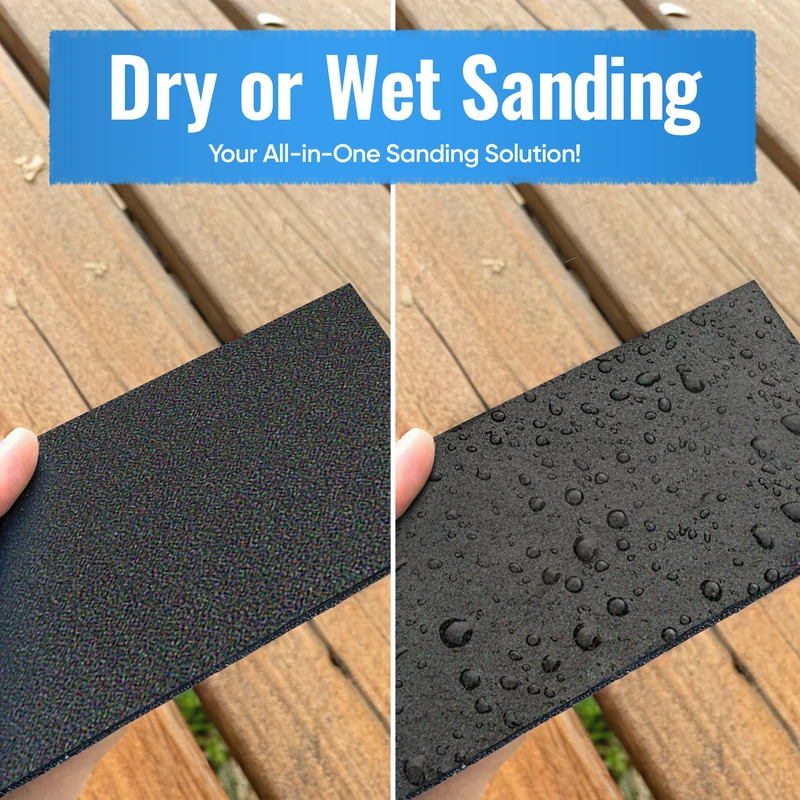
According to a article, pre-soaking wet-dry paper before wet sanding helps keep the lens lubricated and reduces clogging, which aligns with best practices for managing a stable scratch pattern.
Keep chemistry compatible with the substrate: avoid alkaline glass cleaners and alcohol on polycarbonate; both can cause stress crazing. For glass lenses, you can run slightly higher soap concentration (up to ~0.2%) to keep the swarf mobile, but rinse thoroughly before polishing with cerium oxide.
Grit Progressions for Lens Sanding and Polishing
Your grit sequence determines how efficiently you step the surface from gross defect removal to optical clarity. For lens sanding, match the starting point to damage depth and substrate hardness.
Polycarbonate headlights (plastic):
- Light oxidation, no pitting: Start at 1000–1500 grit SiC, then 2000, finish with 3000–5000 (structured or foam-backed), then compound polish.
- Moderate oxidation, minor scratches: Start at 800–1000, then 1500, 2000, 3000/5000, polish.
- Severe yellowing, sanding marks, or coating failure: Start at 600–800. Only drop to 600 if you see deep, linear gouges. Every step should fully replace the prior scratch pattern before moving on.
Glass lenses (harder, more brittle):
- Pitting and road rash: Use 320–600 diamond sheets or SiC on a rigid block; progress to 800–1200, then 2000–3000 microfinishing film if needed. Finish with cerium oxide on a felt pad; expect longer cycles because glass cuts slowly.
H3: When to step up Advance grits only when the surface shows a uniform scratch field under a cross-hatched inspection. Squeegee, dry a small area, and view under a strong, oblique light. If you can see deeper scratches “ghosting” under the current haze, you’re not done at this level. Time-on-grit is often front-loaded: you might spend 60% of your total sanding time at the first two grades.
Cross your stroke direction ~45–90 degrees at each grit change to reveal leftover tracks. This is not artistry—it’s metrology made visible. When the previous orientation disappears entirely, step up.
Micron equivalence helps at the fine end. Structured abrasives labeled in microns (e.g., 30 μm ≈ P600; 15 μm ≈ P1000; 5 μm ≈ P3000) provide predictable transitions. Film-backed media at 3000 (≈5 μm) can drastically cut polishing time by pre-refining the surface before you switch to compound or cerium.
Workflow: From First Pass to Final Clarity
Treat the process like a controlled machining sequence. Mask edges and trims with quality automotive tape. Remove any failing UV topcoat on polycarbonate with your initial grit; you can’t polish through damaged coatings. Pre-soak your waterproof sheets according to type (SiC: 10–20 minutes), set up a spray bottle of your lube mix, and stage clean microfiber towels.
Flatten and support: Use a hard, flat interface block for initial grits to avoid finger marks and lens waviness. Switch to a compliant pad only at fine grades to follow complex curvature.
Control pressure: Think 1–2 kgf (2–4 lbf) spread over the block—firm enough to cut, never so much that you bow the lens. Consistent pressure equals uniform scratch depth.
Manage heat: Keep the surface flooded and your strokes in motion. Localized heating on polycarbonate can soften the surface and smear scratches; on glass it can induce microcracks.
Inspect often: Every 30–60 seconds, squeegee, wipe, and inspect. If you see random deeper lines, stop and flush; you likely trapped debris. Replace the sheet if loading becomes visible.
Finish strong: After your final 3000–5000 grit step, move to an appropriate polish—aluminum oxide compound for plastics on a foam finishing pad, or cerium oxide slurry on felt for glass. Work until you restore clarity, then seal polycarbonate with a UV-stable coating.
H3: Actionable tips for consistency
- Pre-soak benchmark: SiC sheets 10–20 minutes; foam/film zero; hook-and-loop face only dipped. Keep a timer so your routine is repeatable.
- Soap dosing: 2–4 drops per liter of water. More isn’t better—foam hides defects and can trap grit.
- Edge control: Chamfer the sharp corners of new sheets with a single pass of 1500 grit; it prevents corner gouges when you roll over edges.
- Sheet rotation: Quarter-turn the sheet every minute to distribute wear and maintain a consistent cut.
- Clean environment: Rinse the bucket, your hands, and the lens if you drop a sheet. A single grain of grit from the floor can put you back two steps.
How To Restore — Video Guide
If you’re restoring glass headlight lenses with visible pitting, a practical demonstration helps. A detailed video from a skilled hobbyist shows a full wet-sanding and polishing sequence on damaged glass, emphasizing steady lubrication, patient grit stepping, and clean microfiber management for wipe-downs. The key takeaway is that glass requires more time on each abrasive and benefits from diamond or fine SiC before a cerium oxide polish.
Video source: How To Restore Your Glass Headlight Lenses? Sanding And Polishing!
1500 Grit Sandpaper Sheets (25-pack) — 9x11 in Silicon Carbide Abrasive for Wet or Dry Use — Refining grit that bridges polishing and buffing—perfect for restoring a subtle satin or semi-gloss look on painted finishes. (Professional Grade).
Frequently Asked Questions (FAQ)
Q: How long should I soak wet-dry paper before lens sanding?
A: For waterproof silicon carbide sheets, 10–20 minutes in warm water with a tiny amount of dish soap is ideal. Film-backed, PSA, and hook-and-loop discs should not be submerged; wet them at use only.
Q: Can I soak papers overnight to save time?
A: No. Extended soaking swells the backing and weakens the resin bond, leading to premature grit release and random scratches. Stick to a timed 10–20 minute pre-soak.
Q: Should I add soap to the soak water?
A: Yes, at very low concentration (0.05–0.1%—about 2–4 drops per liter). It improves wetting and slurry mobility without excess foam that can hide defects.
Q: Do structured or film abrasives need soaking?
A: No. Film-backed and structured abrasives don’t absorb water; soaking can compromise adhesives. Wet the lens and the abrasive surface during use instead.
Q: Is warm or cold water better for soaking?
A: Warm tap water (30–40°C / 86–104°F) speeds uniform saturation without harming the bond. Avoid hot water; it accelerates degradation and can warp lower-quality backings.