
Block Sanding Tips with the Best Sanding Block
Saturday sunlight cuts through the garage dust as you run a hand along the tabletop you’ve been building for weeks. It’s close—close enough that friends would call it done—but your fingertips still catch where the light catches: faint ripples, a couple of low spots, swirl ghosts you can’t quite ignore. You try another pass with a random-orbit sander and the same thing happens—some areas look better, others worse. It feels like a conversation where you keep talking past the point, never quite saying what you mean. Then you reach for a simple tool that promises a steadier answer: a sanding block.
In a world of powered efficiency, a sanding block can sound quaint. Yet that block—wood, cork, rubber, or foam—does something your hand alone can’t. It provides a flat, predictable reference, helping your paper cut high spots without digging into the lows. It evens out pressure so the grit works consistently. It follows grain lines instead of inventing its own. When you pair the right block with the right grit and a clear workflow, you move from chasing imperfections to removing them on purpose. Instead of sanding by feel and hoping, you sand with a plan.
This guide is for the careful woodworker who wants a clean, level surface without endless rework. We’ll explore which sanding block to choose, how to move through grits, and how to handle edges and curves so they look intentional, not accidental. Whether you’re flattening a tabletop, shaping a chamfer on a shelf, or preparing a drawer front for finish, block sanding will help you get to that quiet, satisfying moment when your hand slides across the wood and finds nothing to say.
Quick Summary: Use a well-chosen sanding block, consistent grit progression, light pressure, and grain-aware technique to level, refine, and finish wood surfaces with precision.
Why Block Sanding Beats Bare-Hand Work
Sanding by hand without a block feels natural, but it doesn’t set you up for flatness. Your fingers conform to dips, which means they won’t remove them; they’ll deepen them. A sanding block gives your sandpaper a firm, stable backer so the abrasive cuts peaks first. Over time, that flattens the surface rather than tracing its bumps.
A block also distributes pressure more evenly. Bare fingers can press too hard; that heat softens resins, clogs paper, and risks glazing or burnishing the wood so it resists stain. With a block, the pressure is spread out, the cut stays cooler, and your grit does its job longer. This matters most when you’re correcting plane tracks, scraper shadows, or minor glue-line ridges—jobs where you want control more than speed.
On grain-critical surfaces like tabletops and door panels, a block also reduces cross-grain scratching. You’ll still need a smart sequence of grits, but the block keeps the paper tracking in a straight line, making scratches easier to see and remove. For edges, the block stabilizes your angle so a micro-chamfer remains crisp rather than ballooning into a rounded corner.
Think of the block as a reference tool, like a straightedge: it doesn’t just carry the paper; it defines the shape the paper creates. Use a rigid block on flats to maintain level, and a slightly soft block on gentle curves to maintain contact without faceting. When you do use power sanders, a quick follow-up with a sanding block at your final grit often erases swirl patterns and brings everything together into a uniform scratch pattern ready for finish.
Choosing a Sanding Block That Fits the Job
“Sanding block” is a category, not a single tool. The best block for a tabletop is different from the best for a cabriole leg. Start by matching firmness to the task. Rigid blocks—wood wrapped in cork, dense rubber, or hard plastic—excel at keeping large, flat panels true. They prevent your pressure from dipping into low spots. Softer blocks—closed-cell foam or neoprene—conform slightly to subtle curves like chamfers, bevels, and rounded edges without leaving flats or facets.
Size matters, too. A longer block (8–11 inches) bridges undulations on tabletops and door rails, while a shorter block (4–6 inches) navigates narrow parts, small panels, and edging. Hand comfort counts: a block that fits your grip reduces fatigue, helping you sand in consistent strokes rather than short, choppy ones. Hook-and-loop faces make paper changes quick and keep sheets seated; pressure-sensitive adhesive (PSA) can feel more secure but is slower to swap.
DIY blocks are perfectly valid. A small hardwood offcut with a cork or thin neoprene face glued on becomes a great all-rounder. For curves, keep a set of foam blocks of varying densities. For tight profiles, make custom “sanding sticks” by wrapping paper around paint stirrers, dowels, or short lengths of PVC.
Actionable tips:
- Pick two: one rigid cork-faced block for flats and one medium-soft foam block for edges and curves; add specialty shapes only as you need them.
- Size for the surface: longer blocks for tabletops and rails; shorter blocks for drawer parts and narrow trim.
- Use color-coded paper storage (e.g., red for 80, blue for 120, green for 180, yellow for 220) and load blocks only with matching colors to avoid grit mix-ups.
- If your shop is dusty, choose hook-and-loop blocks; swapping paper without adhesive keeps your grits clean and fast.
Grit, Direction, and Pressure That Win
A sanding block is only as effective as the strategy behind it. Start with the least aggressive grit that will do the job. For flattening tool marks on hardwoods, 100–120 grit often suffices; jump to 150–180 for general smoothing and 220 for pre-finish refinement. In softwoods, begin one step finer to avoid deep scratches that chase you for hours.
Always sand with the grain on visible faces. Cross-grain strokes cut quickly but leave scratches that stubbornly telegraph through stain and topcoat. If you must work cross-grain to knock down a high spot, immediately return to with-the-grain strokes at the same grit to erase those cuts. Use a light pencil guide coat—a scribble grid—so you can see what’s removed and what remains. When the pencil lines disappear uniformly, move up one grit.
Pressure should be firm enough to keep full contact, but never heavy. Let the grit do the work. If the paper stops cutting, change it; dull paper burnsish wood and wastes effort. Clean paper occasionally by rapping the block on your palm or using a crepe rubber cleaner. According to a article, a cork-faced block gives a “just-right” compliance that cuts high spots with less risk of tipping into lows, making it a dependable choice for most flat work.
Actionable tips:
- Plan your sequence and stick to it: 120 → 150 → 180 → 220 for hardwood; 150 → 180 → 220 for softwood. Skip more than one grit only if the surface is already consistent.
- Mark between grits: a light pencil grid reveals where you’ve actually sanded and prevents “ghost scratches.”
- Time limits help: spend roughly the same number of strokes per area at each grit to keep things even.
- Replace paper at the first sign of glazing; fresh paper is faster and leaves a cleaner scratch pattern.
Edges, Curves, and Profiles Made Clean
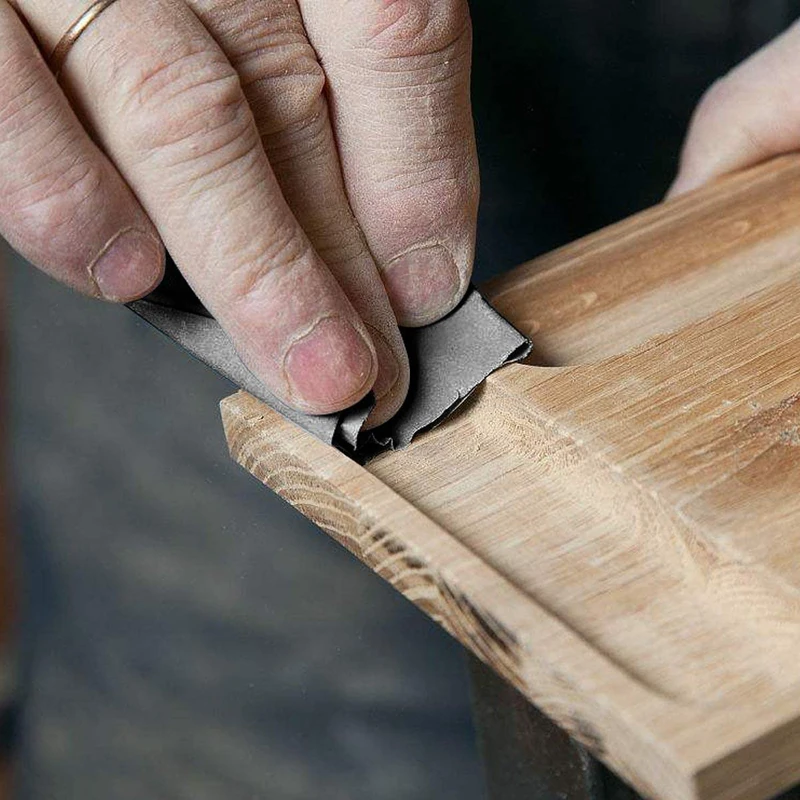
Edges deserve special attention. Without a plan, an edge quickly rounds over and shrinks the visual crispness that makes furniture look professional. Start by defining the edge you want. For a sharp arris with just a kiss of safety, use a rigid block and two or three very light passes at 220 grit, tipping the block just enough to break the corner. For a consistent chamfer, pencil a guide along the edge and hold the block at a fixed angle, counting strokes and alternating sides to keep it even.
When sanding curves, choose a block that matches the geometry. For gentle radii (like a roundover), a medium-soft foam block maintains contact without creating flats. For tighter inside curves—on a cutout handle or cabriole knee—wrap paper around a dowel or short PVC section whose diameter approximates the curve; this prevents facets and ensures the abrasive actually reaches into the radius.
Profiles like beads, coves, and ogees respond well to “sanding sticks.” Make a small kit: thin hardwood strips, tongue depressors, dowels, and shaped scraps with paper wrapped and taped in place. Label each with its grit. Work from coarse to fine, and avoid rocking—let the shape of the backer define the cut.
Actionable steps for crisp results:
- Back up fragile edges: clamp a sacrificial board flush with the edge you’re sanding so the block rides across both, reducing rounding pressure.
- Always start with a few light passes; it’s easy to remove more, but you can’t put wood back.
- For symmetrical edges (like a chamfer around a tabletop), rotate the piece and sand “with the grain” on each side instead of trying to force a single orientation.
Finishing Prep and Dust Control Habits
A perfect finish starts with dust management and surface uniformity. After your last shaping grit, vacuum the surface and your sanding block thoroughly; dust trapped under paper acts like rogue coarse grit. Wipe with a clean, slightly damp microfiber to raise grain on open-pore woods, let it dry, then give a final pass with 220 to knock down the fuzz. This “raise and cut” routine prevents surprise roughness after your first coat of finish.
Control your environment when possible. Still air allows dust to resettle; a low-speed fan aimed away from the work can help, as can a quick misting of the floor to keep fines from rising. Keep separate blocks (or at least separate faces) for raw wood and between-coat rubdowns to avoid contaminating your finish with coarse scratches.
If you’ve used a random-orbit sander, finish by hand with a sanding block at the same final grit, following the grain. This aligns the scratch pattern so it disappears under finish rather than shimmering at certain angles. Before applying finish, inspect under raking light; your eyes will catch what your fingers miss.
Practical habits:
- Store grits flat and clean in labeled folders or envelopes; grit contamination is project sabotage.
- Vacuum and brush the paper face often; a crepe cleaner restores bite and extends life.
- Keep a “final-pass” block loaded with 220 (or 320 for film finishes) reserved only for last-touch work.
- After the first sealer or washcoat, lightly scuff with a fresh 320 or 400 on a soft block to level raised grain without cutting through edges.
The Only 3 — Video Guide
There’s a helpful video that distills sanding down to essentials: the presenter argues you only need three sandpaper grits for most woodworking, and shows how each one fits into a lean, effective workflow. It also highlights affordable tools that cover 90% of tasks without overspending.
Video source: The Only 3 Sandpapers You Really Need | SANDING BASICS
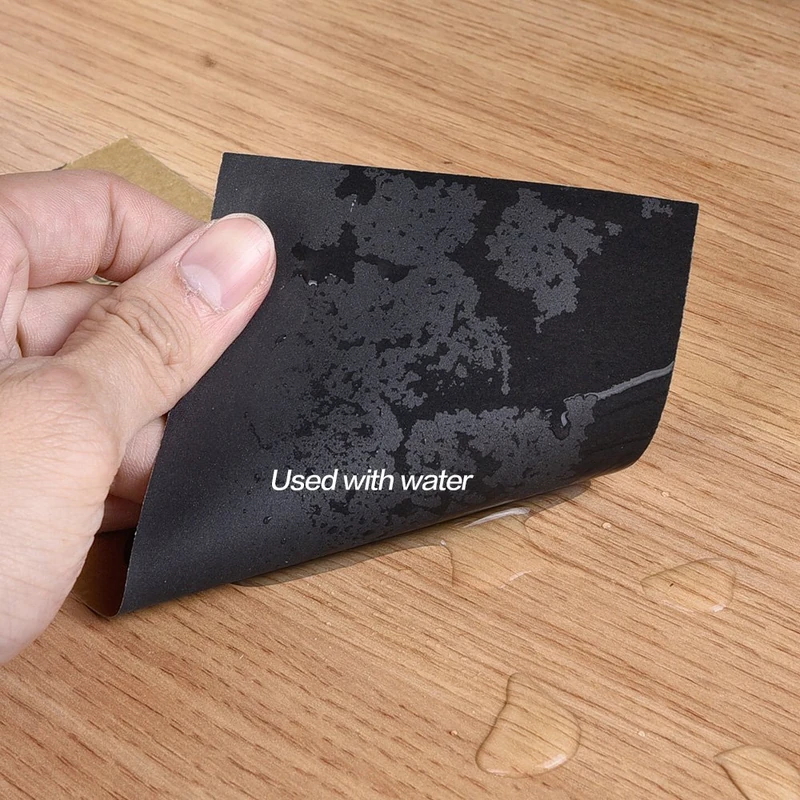
80 Grit Sandpaper Sheets (100-pack) — 9x11 in Silicon Carbide Abrasive for Wet or Dry Use — Durable coarse sandpaper made with Silicon Carbide for fast stock removal and surface leveling. Excellent for woodworking, metalwork, and fiberglass preparation. Works effectively for both wet and dry sanding before moving to 120 grit. (Professional Grade).
Frequently Asked Questions (FAQ)
Q: Which sanding block is best for beginners?
A: Start with a rigid cork-faced block about 8 inches long for flat panels and a medium-soft foam block about 5 inches long for edges and gentle curves. Those two will handle most tasks until you discover a need for specialty shapes.
Q: How do I avoid rounding over edges when sanding?
A: Use a rigid block and very light pressure, keep the block flat, and take only a couple of passes at a fine grit. For extra protection, clamp a sacrificial board flush to the edge so the block bridges across, reducing pressure at the corner.
Q: What grit progression should I use for a hardwood tabletop?
A: If the surface is generally clean, go 120 → 150 → 180 → 220 with a rigid block, sanding with the grain. Use a pencil guide coat to track progress, and do a final hand pass at 220 even if you power-sanded earlier.
Q: Can a sanding block replace a random-orbit sander?
A: For small projects, touchups, and final refinement, yes. For heavy stock removal or large surfaces, power sanders are faster, but a sanding block is still essential for final alignment of the scratch pattern and edge control.
Q: How often should I change sandpaper on the block?
A: At the first sign of clogging, glazing, or when cutting slows noticeably. Fresh paper saves time and leaves cleaner scratches; don’t try to “use it up” at the expense of surface quality.