
Blend Primer Edges with a Sanding Sponge
It’s early, the light is low, and an uneven patch on your wall catches a grazing beam of sun. You prepped the area last night—filled a hairline crack, primed the spot, and stepped away feeling done. But this morning, the primer edge telegraphs a hard line no topcoat could hide. If you’ve been here before, you know the difference between a near miss and a seamless finish comes down to one modest tool: a sanding sponge. Not just any abrasive will do. Foam-backed abrasives deliver conformal contact, edge control, and repeatable scratch patterns you can trust. They turn an obvious patch into a clean gradient that vanishes under paint.
Feathering primer is a tactile, visual, and process-driven task. Done well, the blended edge will disappear under flat paint and remain invisible even under semi-gloss at oblique angles. The physics are simple: a primer film adds thickness; anywhere this thickness steps down to bare substrate or a previously painted surface, light will emphasize the ridge. The fix isn’t brute removal, but controlled diffusion—lower the ridge, widen the transition zone, and regulate the scratch profile so the uppermost paint layers level it out rather than highlight it.
A good sanding workflow is systematic. Start with accurate mapping: find the high edge, define the blend zone, and set the grit progression so scratches get finer as you move away from the repair. Use consistent pressure (not more than the weight of your hand), keep dust managed so you can “read” the surface, and stop as soon as the ridge yields to a matte, uniform gradient. With a quality sanding sponge—correct density, grit, and edge geometry—your primer blends will move from acceptable to undetectable.
Quick Summary: Feather primer by leveling the ridge with a fine-to-medium sanding sponge, expanding the blend zone in overlapping passes, and finishing with a uniform, low-profile scratch pattern.
Why Feathering Primer Lines Matters
Primer changes two things that eyes pick up instantly: film thickness and surface texture. A primer “island” creates a micro-step where its edge ends, and the act of rolling or brushing often deposits extra material at that boundary. Even after a topcoat, this step can telegraph—a faint shadow line visible under raking light or a sheen discontinuity under satin and semi-gloss. Feathering converts that step into a ramp.
Under magnification, sanding is sculpture: you’re removing a few microns of material to shift a steep drop-off into a gentle slope. The goal is a gradual thickness transition over 25–125 mm (1–5 inches), depending on substrate and paint film build. A uniform scratch pattern is critical. Random deep scratches close to the edge create micro-troughs that accept more paint, which will flash differently. Conversely, an overly polished surface can reduce adhesion for subsequent coats.
Feathering also matters for substrate integrity. On drywall, aggressive abrasives can rip paper or over-thin joint compound, compromising the core and causing fuzzing that reappears under paint. On cabinetry, over-sanding the feathered area can break through to bare wood, changing absorption and causing color shifts in stain-grade or waterborne finishes. For automotive-style substrates or melamine-faced panels, an uncontrolled edge can become a fracture line where later coats peel.
Practically, feathering is insurance against callbacks and touchups. It allows you to apply a thinner finish coat without fearing coverage issues at the patch perimeter. It saves material because you’re not burying a ridge under excessive paint, and it reduces rework because sheen uniformity improves when the underlying surface is consistent. The method is straightforward: dial in the right abrasive, define the blend area, and execute a predictable sequence of passes.
Selecting the Right Sanding Sponge and Grit
Foam-backed abrasives behave differently than plain paper. The foam acts as a pressure distributor and micro-conformer, which helps you keep contact even across irregularities without digging in. For feathering primer, choose a sanding sponge with medium-density foam—stiff enough for flat control, flexible enough for edges and slight contours. Dual-edge formats (with one crisp edge and one radiused edge) are especially useful: use the crisp edge to ride just off the primer ridge; shift to the radiused edge to soften the blend zone.
Abrasive choice matters. Aluminum oxide is the go-to for drywall, wood, and most waterborne primer films because it fractures to expose fresh cutting edges and resists loading. Silicon carbide cuts faster and is ideal for wet-sanding on harder primers or lacquered surfaces. For dry feathering over typical wall/trim primers:
- 120–150 grit: only if you have a large ridge or heavy overspray; keep pressure light to avoid tearing paper or gouging.
- 180–220 grit: primary leveling passes to reduce the step without deep scratches.
- 240–320 grit: refinement passes to set a uniform, paint-ready scratch pattern.
- 400–600 grit: optional pre-finish scuff for high-sheen topcoats or spray finishes.
Consider coating type and cure. A fully cured primer will dust cleanly; if it gums up, either the film isn’t cured or the abrasive is too fine/too hot. Choose open-coat sponges with anti-loading treatments when possible. Dimensions also matter: a larger face (70 × 110 mm class) spans the ridge and surrounding blend zone predictably. Keep at least two sponges on hand—one for cut, one for finish—so you don’t cross-contaminate grits.
Wet versus dry? For drywall and porous substrates, dry-sanding with dust extraction is safer and cleaner. On cabinetry or sealed surfaces, a light wet-sand with silicon carbide can help control dust and reduce clogging. Regardless, test in a small area first and monitor scratch uniformity under raking light.
Grit progression at a glance
- Start: 180–220 to knock down the ridge
- Intermediate: 240–280 to expand and soften the transition
- Finish: 320 (or 400+) for high-sheen systems
Surface Prep: Clean, Map, and Mask
Surface preparation determines how efficient your blending will be. Start by removing contaminants that drive abrasive loading: wipe the area with a mild, residue-free cleaner or denatured alcohol to cut oils and handprints. If you’re working near kitchens or handles, degreasing is non-negotiable. Vacuum any loose dust, then allow the surface to dry completely; moisture softens primer and clogs sponges.
Next, map the topography. Use a soft pencil to crosshatch the primer perimeter lightly, or dust on a guide coat (a contrasting dry pigment or an aerosol guide coat). Under raking light—place a bright lamp about 300–450 mm (12–18 inches) from the wall and look along the surface—identify where the edge steps. Mark a concentric ring 25–75 mm beyond the ridge as your initial blend boundary. This gives you a target zone to keep strokes consistent.
Mask strategically. Feathering needs room, so avoid placing tape right at the ridge unless you are protecting adjacent finishes; move protection back from the working area to avoid introducing a hard line that your sponge could replicate. For trim and cabinetry, mask delicate edges and adjacent hardware. If you are blending near an inside corner, orient the sponge so its crisp edge runs parallel to the corner, minimizing the chance of rounding it over.
Dust control improves decision-making. Attach a small dust extractor to a brush or use a vacuum between passes to keep the surface readable. Replace or rotate a sponge surface as soon as it shows loading; loaded abrasives smear instead of cut. According to a article, durable bond systems on modern dual-edge sponges can extend life and keep cutting action consistent, but they still benefit from frequent light cleaning with compressed air or a gentle tap-out during use.
Temperature and humidity matter; let primer cure per spec. Sanding too soon tears rather than refines, making feathering harder and increasing the risk of rework.

Feathering Workflow: Passes and Pressure
A repeatable workflow helps you hit a clean blend fast and avoid overworking the area. Think in three zones: the ridge (cut), the halo (blend), and the field (refine). Keep each pass aligned and deliberate, with an eye on scratch direction and pressure.
- Knock down the ridge
- Tool: 180–220 grit sanding sponge, crisp edge oriented just off the ridge.
- Motion: Light crosshatch strokes (about 30–45° to the ridge), 100–150 mm long. Keep the sponge flat—no rocking.
- Pressure: No more than the weight of your hand. If the primer rolls or pills, stop; the film isn’t cured or you’re creating heat.
- Check: After 6–8 passes, vacuum and inspect under raking light. You should see the step fading and the pencil/guide coat thinning uniformly.
- Expand the blend zone
- Tool: 240–280 grit sponge, radiused edge to avoid re-introducing a line.
- Motion: Longer overlapping passes that extend 25–50 mm beyond the original zone. Rotate the sponge periodically to distribute wear.
- Pressure: Lighter than step one—imagine two fingers worth of force.
- Check: The transition should feel indistinguishable to the fingertip sliding from field into patch. If you can feel the ridge with eyes closed, keep blending, not cutting.
- Refine and set the scratch
- Tool: 320 grit (400 if you’re working under a high-sheen or spray system).
- Motion: Single-direction finishing strokes aligned with the final viewing direction (e.g., vertical for walls). Avoid circular motion unless the substrate is uniformly flat; circles can telegraph under directional lighting.
- Cleanup: Vacuum, tack-wipe with a dry microfiber, and re-check under light. Consider a misted “tack coat” of primer if you’ve broken through anywhere—spray a light pass to restore uniform porosity before topcoat.
Actionable tips:
- Guide-coat every blend: A quick dusting shows high spots and scratch progression instantly.
- Keep two sponges active: One for cut, one for finish. Don’t mix grits; contamination creates random deep scratches.
- Time your cure: If the primer balls up, wait another 30–60 minutes or switch to a coarser, fresher sponge to reduce heat.
- Work outward, lighten pressure: Each concentric zone should use finer grit and less pressure than the last.
Finish Checks and Troubleshooting
Inspection is a process, not a glance. Use raking light from at least two directions to catch any residual ridge or scratch inconsistency. Run your fingertips across the transition with eyes closed; a perfect feather feels boring—no bump, no trough, just a consistent drag. Then dampen a microfiber cloth and lightly wipe the area; a faint sheen can reveal remaining steps the dry surface hides. If you see a line, it’s often at the feather perimeter—expand the zone another 25–50 mm with the finishing grit.
Guide coats are your friend, especially on complex profiles like trim and raised-panel doors. A quick dust coat highlights low/high micro-areas. For cabinetry, watch edges: foam can roll them over if you tip. Keep the sponge flat and let the foam conform, not the wrist. If you accidentally burn through to joint compound or bare wood, spot-prime immediately and let it cure fully before re-sanding with the finishing grit only.
Address common issues:
- Persistent ridge after multiple passes: You’re likely pushing too hard and creating a “mirror” ridge. Reset pressure to featherweight, go back one grit coarser, and widen the blend.
- Fuzzy drywall paper: You sanded too early or too coarse. Seal with a dedicated primer or shellac-based sealer, let cure, and restart at 240–320 grit.
- Sheen mismatch after topcoat: Scratch pattern was inconsistent or too coarse. Scuff with 320–400, apply a thin leveling coat, and maintain consistent stroke direction.
- Clogged sponge: Primer too soft or dust too heavy. Extend cure time, switch to open-coat abrasive, or use light wet-sanding on non-porous substrates.
Before painting, remove dust thoroughly. Vacuum, then a dry microfiber wipe, followed by a gentle tack cloth if the finish system allows. Keep the room at stable humidity and temperature so the topcoat levels over your carefully buried transition. A well-feathered edge lets you apply the topcoat thinner and faster, with confidence that no raking light will betray your repair.
Beginner Sanding Mistakes — Video Guide
A concise walkthrough of beginner sanding pitfalls shows why sanding looks simple yet demands technique. The video breaks down common errors—overpressure, skipping grits, and inconsistent stroke direction—and demonstrates how to correct them with controlled passes and proper abrasive choices.
Video source: Beginner Sanding Mistakes | How to Sand
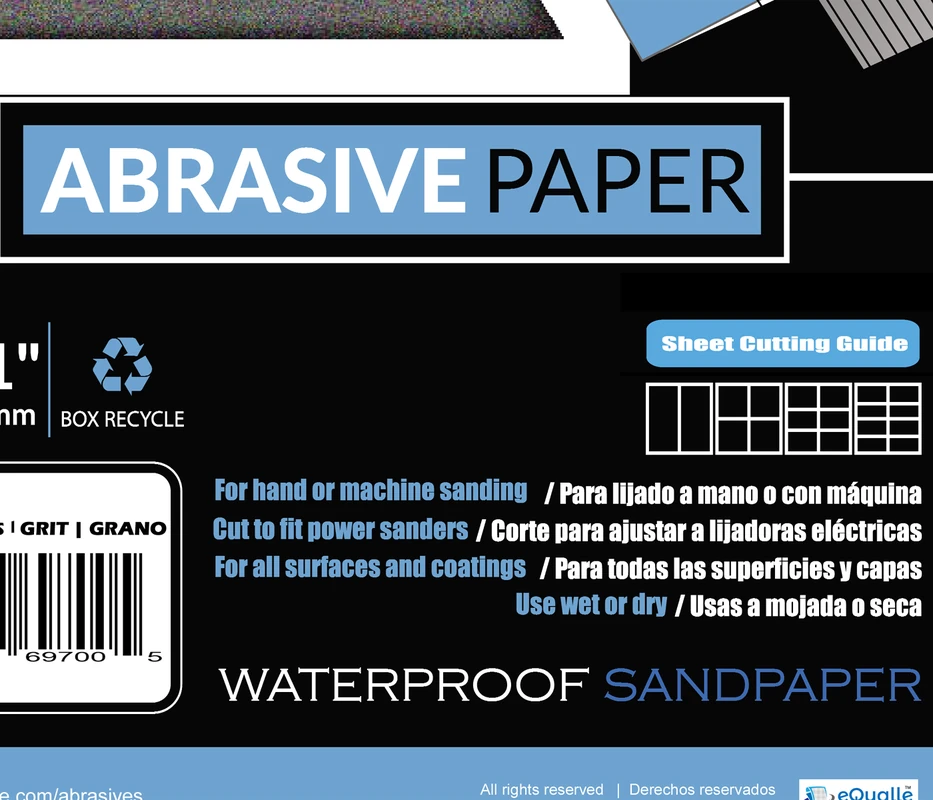
80 Grit Sandpaper Sheets (10-pack) — 9x11 in Silicon Carbide Abrasive for Wet or Dry Use — Durable coarse abrasive that evens out irregular surfaces and clears old coatings. Ideal for early sanding stages in woodworking, fiberglass, or metal preparation. (Professional Grade).
Frequently Asked Questions (FAQ)
Q: What grit should I start with when feathering primer edges?
A: Begin with 180–220 grit on a sanding sponge to reduce the ridge, then step to 240–280 to widen the blend, and finish with 320 (or 400 for high-sheen systems).
Q: Is dry-sanding or wet-sanding better for blending primer?
A: Dry-sanding is ideal for drywall and porous substrates for clean dust control and readability; wet-sanding with silicon carbide works on sealed or cabinetry surfaces to reduce loading.
Q: How do I avoid rounding over corners and profiles?
A: Keep the sponge flat, use the crisp edge parallel to the corner, reduce pressure, and limit strokes that cross the edge; mask delicate details if needed.
Q: My sponge clogs quickly—what’s wrong?
A: The primer may be under-cured, you may be pressing too hard, or your grit is too fine for initial leveling. Extend cure time, lighten pressure, and use an open-coat 180–220 grit first.
Q: Do I need to re-prime after feathering before the topcoat?
A: If you stayed within the primer film and maintained a fine scratch, you can topcoat directly. If you burned through to substrate, spot-prime, let it cure, then lightly scuff with 320 before painting.