
Sandpaper Grit Chart: Belts, Discs, and Sheets Mapping
It always starts with a surface and a feeling. Maybe it’s the kitchen table that’s seen holiday spills, or the fender you’ve been meaning to fix, or a maple cutting board you want to make heirloom-smooth. You run your hand across it and feel the story: dents here, scratches there, a patch of stubborn paint that won’t let go. That’s the moment I reach for a notepad, not the sander. Why? Because every great finish begins on paper—specifically, with a sandpaper grit chart. If you’ve ever jumped into sanding and ended with swirl marks, burn-through, or “Why does this still look cloudy?”, the solution wasn’t more pressure or more time. It was a better map.
I learned this the sweaty way—once shaping a cherry tabletop with an 80-grit belt, then skipping straight to 220 sheets. The result? The 80-grit scratch pattern shrugged off my 220 effort like armor. Hours lost. Since then, I’ve mapped my grit progressions across belts, discs, and sheets before I fire up a single tool. It’s not glamorous, but it’s the difference between a “good enough” Saturday project and a finish that makes people ask, “How did you get it that smooth?”
If you’re a weekend woodworker, an auto body hobbyist, or a shop pro juggling belt sanders, random orbit discs, and hand sheets, this guide is your shortcut. We’re going to break down how to choose grits based on what’s in front of you, how to hop between formats without losing your scratch pattern, and how to use a sandpaper grit chart to select the right steps. By the end, you’ll have a clear map—from stock removal to final polish—to get clean, consistent results every time.
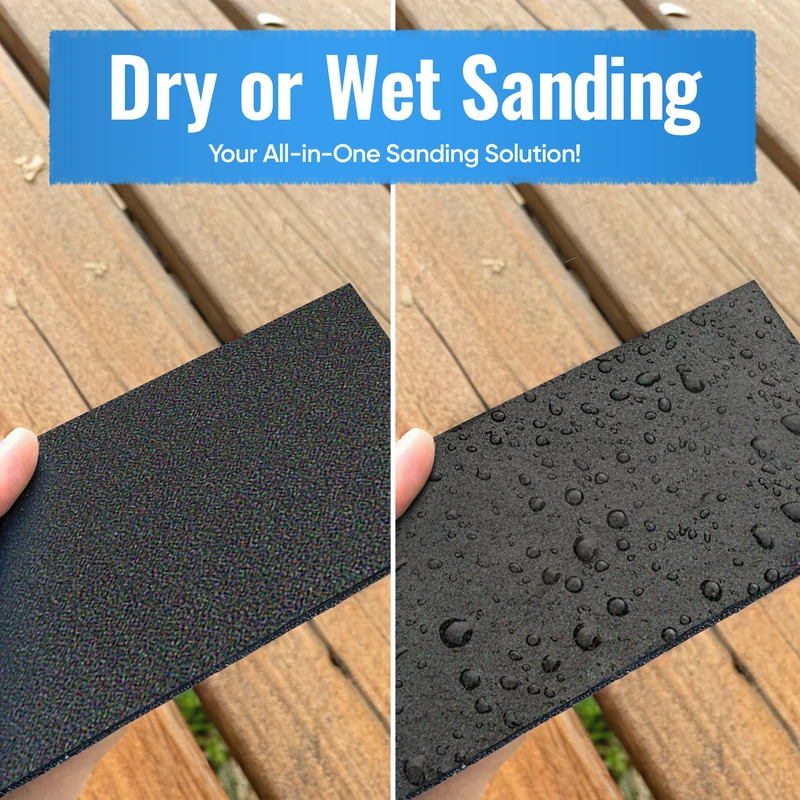
Quick Summary: Use a sandpaper grit chart to plan sensible grit steps and align belts, discs, and sheets so each tool hands off a surface the next grit can actually refine.
Start at the Surface: Reading the Material
Before you pick a grit, pick a mindset: you’re diagnosing a surface, not just sanding it. The material, the defect, and the finish you’re aiming for all dictate the starting grit and the format—belt, disc, or sheet.
Wood (softwoods, hardwoods, and veneers)
- Softwoods (pine, fir) crush and fuzz easily; start a touch finer to avoid deep gouges. 100–120 with a random orbit disc is often safer than 80 with a belt unless you’re flattening badly cupped stock.
- Hardwoods (oak, walnut, maple) tolerate coarser starts. For flattening or removing planer marks, a belt sander with 60–80 works, followed by 120–150 discs. Veneers demand caution—avoid belts unless you’re experienced, and rarely start below 180.
- End grain drinks up scratches. If you must shape with 80 or 100, plan extra steps: 120 → 150 → 180 → 220 at minimum, backing your paper with a firm pad or block.
Metals and auto body
- Steel and iron: Use aluminum oxide or ceramic in belts (36–80) for scale/rust removal, then step through 120–180–240 discs before paint. Keep heat in check—let the abrasive cut, don’t force it.
- Aluminum: Clogs fast; choose open-coat or stearated papers. Start finer (120–180) unless you’re shaping welds with a flap disc first. Wet-sanding 400–600 helps control loading and heat.
- Auto body fillers and primers: Typically 80–120 for initial shaping, 180–220 to refine, 320–400 for primer, 600–800 for pre-paint wet-sand.
Finishes and coatings
- Old paint on wood: If it’s lead-suspect, stop and follow safety protocols. For safe paint, 60–80 belts or 80 discs to break the film, then 120–150 to remove residue. A cabinet scraper can speed things up between grits without adding scratches.
- Clear finishes: Scrape or chemically strip, then 150–180 discs to re-level. Work evenly—spot-sanding clear coat can create depressions you’ll fight later.
H3: What to watch for
- Grain direction: Belts run linear scratches; discs leave orbits. Transition to hand sheets with a block before final grit to align scratches with the grain on visible wood surfaces.
- Heat: Burning is a sign of dull abrasive or too much pressure. If you smell it, stop and reset.
- Edges and corners: Chamfer lightly early (120–150). Sharp edges burn through finish and tear paper.
Decoding a sandpaper grit chart for real work
Grit numbers aren’t universal across standards, and that’s where a lot of frustration starts. On the bench, most of what you’ll see is FEPA “P” graded (P80, P120) or CAMI (80, 120 without the P). They often align at coarse ranges but diverge as you go finer. A solid sandpaper grit chart will also reference micron sizes, which tell you the actual particle dimension.
FEPA P vs. CAMI (approximate daily-driver matches)
- P60 ≈ 60 CAMI
- P80 ≈ 80 CAMI
- P120 ≈ 120 CAMI
- P180 ≈ 180 CAMI
- P220 ≈ 220 CAMI
- P320 ≈ 320 CAMI
- Above P400, differences grow; check micron ratings when you need precision.
Micron feel (ballpark)
- P80 ≈ 201 microns (fast stock removal)
- P120 ≈ 125 microns (leveling and pre-finish)
- P220 ≈ 68 microns (pre-sealer on wood; filler refinement)
- P400 ≈ 35 microns (primer surfacer prep)
- P800 ≈ 21 microns (pre-paint or between coats)
Beyond the number, consider the abrasive and the coat:
Abrasive type
- Aluminum oxide: All-rounder for wood and steel; durable.
- Zirconia: Aggressive and cooler-cutting for heavy stock removal on belts.
- Ceramic: High-end removal on tough metals; shines on belts/discs with pressure.
- Silicon carbide: Sharp and brittle; best for wet-sanding, plastics, stone, and final auto body work.
Coat and backing
- Open-coat: More space between grains; resists loading on softwoods and paint.
- Closed-coat: More grains per area; cuts flatter on hardwoods and metals when clogging isn’t an issue.
- Backing weights matter: A/B/C paper is flexible for sheets; C/D for discs balances durability; X/Y cloth for belts keeps tension and heat under control.
The takeaway: translate the grit, pick the right abrasive and coat, and align your expectations to the micron. That’s how your next abrasive actually erases the last one’s scratches instead of skating over them.
Belts, Discs, and Sheets: One Map, Three Roads
Different formats excel at different jobs, but they must speak the same “scratch language.” That’s where grit mapping comes in: plan steps so your belt’s cut hands off cleanly to your disc, then to your hand sheets.
Belts (linear force, speed, aggression)
- Use to flatten, remove stock, erase planer marks, and shape edges.
- Typical range: 36–120. 36–60 for heavy removal; 80–100 for flattening; 120 for cleanup before discs.
- Backing: X or Y-cloth keeps the belt stable; choose zirconia or ceramic for longevity on tough woods/metals.
- Key tip: Never jump directly from 60 belt to 220 disc. Map through 100–120 first, then 150–180.
Discs (random orbit leveling and refinement)
- Your mid-stage workhorse for blending belt scratches and prepping for finish.
- Typical range: 80–400. Use 80–120 to erase belt scratches; 150–220 for pre-finish wood; 320–400 for primers.
- Hook-and-loop vs PSA: Hook-and-loop runs cooler and is reusable; PSA sticks flatter for ultra-consistent contact—great for bodywork blocks and DA sanders with interface pads.
Sheets (hand sanding control and final grain alignment)
- Typical range: 180–600+. Use with a flat block to align scratches with wood grain or to finesse body lines on panels.
- A/B/C-weight papers bend around profiles; stearated versions minimize loading.
A real-world map example: hardwood tabletop with planer lines
- 80 belt to knock down ridges and flatten.
- 120 disc to erase belt scratches and level.
- 150 disc to refine.
- 180 hand sheet on a block with the grain to align scratches.
- 220 hand sheet or disc for pre-finish.
On auto body filler: 80 disc to shape → 120 disc to smooth → 220 disc for feathering → 320 disc on primer → 600 sheet wet before base coat.
According to a article. Use it to sanity-check the ranges when you’re switching between formats or materials.
H3: Backing pads and interfaces
- Hard pad: Flattens aggressively; best for erasing low grits and block-like control.
- Medium pad: Everyday blending and leveling.
- Soft pad or interface foam: Follows contours, reduces pigtails at 220+; ideal for curves and primer surfacers.
Grit Progressions That Save Time
If you’ve ever wondered, “How big should my jumps be?”, here’s the workshop rule: each step should remove the previous scratches in a couple of passes without stalling out. As a baseline, think 80 → 120 → 180 → 220 for wood, or roughly 1.5× jumps. On metals and paint, consider smaller jumps when finish clarity matters.
Wood furniture (bare hardwood)
- Start: 80 belt if flattening, otherwise 100–120 disc.
- Refine: 150 → 180 discs.
- Align: 180 sheet on a block with the grain.
- Pre-finish: 220 sheet/disc; stop here before oil, shellac, or film finishes. For water-based topcoats, lightly raise grain with a damp cloth, dry, and hit 220 again.
Painted wood cleanup
- Break film: 80–100 disc or 60–80 belt on flat frames.
- Smooth: 120 → 150 discs.
- Prime: 180–220 disc; after primer, sand 320 lightly to de-nib.
Auto body filler and primer
- Shape: 80 disc with a hard pad, minimal pressure.
- Refine: 120 → 180 discs to remove 80 scratches.
- Feather: 220–320 discs across blend zones.
- Primer: Block sand 320–400; pre-paint wet-sand 600–800 sheets.
Metals (steel fabrication)
- Scale removal: 36–60 belts (zirconia/ceramic).
- Blend: 80–120 discs.
- Pre-finish: 180–240 discs, then Scotch-Brite style nonwoven for sheen if desired.
Actionable tips to lock in your mapping
- Follow the 50% scratch rule: If you can still clearly see the previous scratch pattern after two light passes, your jump was too large—drop back one grit.
- Don’t skip the “bridge” grit: After a belt at 80, always include 120 disc before you leap to 180+.
- Mark your pads: Keep a hard pad for ≤120, medium for 150–220, and soft/interface for 320+. Consistent pad choice makes grits behave predictably.
- Use the pencil grid test: Lightly scribble across the work, sand, and inspect. Remaining lines tell you where low spots or coarse scratches still live.
- Manage dust: Dust extraction and frequent vacuuming extends abrasive life and exposes scratch patterns so you can course-correct early.
Troubleshooting Sanding Problems
Even with a solid map, issues pop up. Good news: most problems speak a clear language—once you know how to listen.
Persistent swirl marks (pigtails) with discs
- Cause: Loaded paper, too-soft pad at too low a grit, or grit contamination.
- Fix: Clean or replace the disc, switch to a firmer pad below 180, and vacuum between grits. Slow your RPM and keep the sander flat—tilting rides the edge, digging tracks.
Sanding “haze” that won’t clear
- Cause: Jumped too far in grits, or crossed scratch patterns from belts not fully erased by discs.
- Fix: Step back one grit (e.g., from 220 to 180), use a hard pad to cut uniformly, then re-climb with smaller jumps. Finish with sheets along the grain.
Loading and glazing
- Cause: Resinous wood, soft paint, or aluminum smearing; closed-coat paper on gummy materials.
- Fix: Use open-coat or stearated papers; for aluminum and paint, wet-sand 400–600 with silicon carbide. Clean discs with a rubber abrasive stick during use.
Burning on wood
- Cause: Dull paper, too much pressure, or stalled belt.
- Fix: Replace the abrasive, lighten pressure, and keep the work moving. Check belt tracking and platen flatness—misalignment creates hot spots.
Belt tracking and edge gouges
- Cause: Poor tension or tracking; worn graphite platen pads.
- Fix: Re-tension and re-track per the machine’s spec, replace platen covers, and dress table edges. Step down to 100–120 for cleanup after flattening with coarser belts.
Sheet tearing and finger grooves
- Cause: Hand-sanding without a block or using too light a backing.
- Fix: Always use a sanding block on flat work; switch to foam or cork blocks for mild curves and an interface pad for tight radii.
H3: Know when to replace
- If it’s shiny, it’s done: A polished abrasive surface won’t cut—swap it out.
- Time your paper: If a fresh grit fixes a problem instantly, the old disc was the culprit.
- Don’t cheap out on the first step: Coarse grits do the heaviest lifting; worn coarse paper wastes hours you’ll never get back.
General Sandpaper Selection — Video Guide
If you’re tackling panels, primer, or filler, a concise walkthrough of grit selection can save real time. A solid general guide demonstrates how to match the grit and paper type to each stage of auto body repair—from shaping filler to refining primer and prepping for paint—so you don’t chase scratches at the eleventh hour.
Video source: General Sandpaper Selection & Grit Guide for Auto Body Work
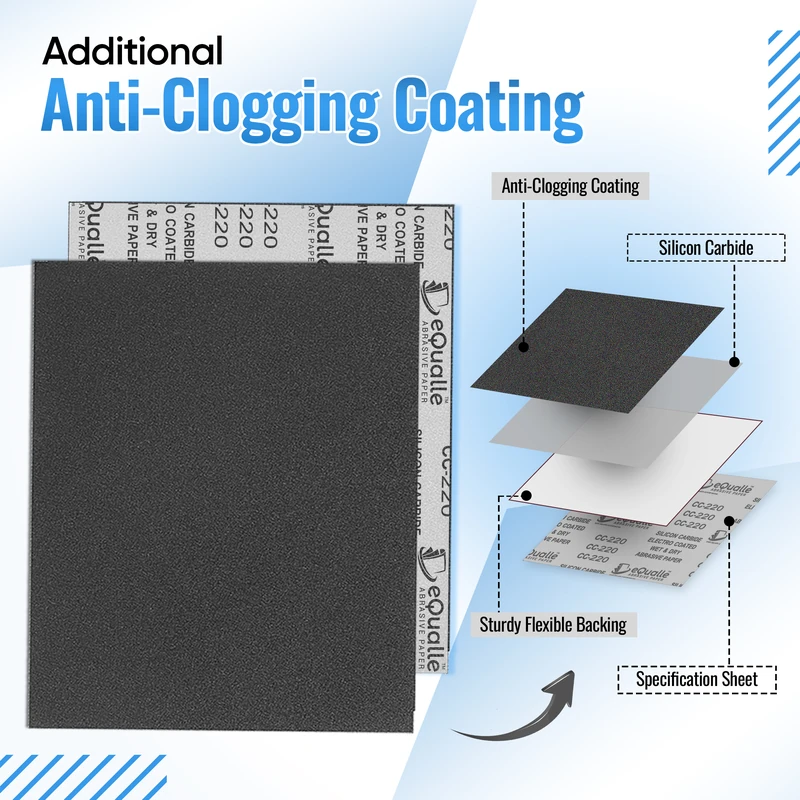
60 Grit Sandpaper Sheets (50-pack) — 9x11 in Silicon Carbide Abrasive for Wet or Dry Use — Extra-coarse Silicon Carbide abrasive for rapid stock removal and reshaping. Excels at stripping paint, smoothing rough lumber, or eliminating heavy rust on metal surfaces. (Professional Grade).
Frequently Asked Questions (FAQ)
Q: What’s the difference between FEPA “P” grits and regular numbers?
A: FEPA “P” grades (P80, P220) and CAMI (80, 220) are similar at coarse levels but diverge as they get finer. Above P400, differences are more noticeable. When precision matters, compare micron sizes or stay within one standard for the whole project.
Q: What grit should I use to remove paint from wood without gouging it?
A: Start with 80–100 on a random orbit disc for control, or 60–80 on a belt for flat, robust parts. Once the film breaks, move to 120–150 to clear residue. Finish at 180–220 before priming or applying a new finish.
Q: Can I wet-sand with any sandpaper?
A: No. Use silicon carbide or papers labeled for wet/dry. Typical wet grits are 400–800 for auto body pre-paint and 1000–2000 for final leveling between coats. Keep the surface clean and change the water frequently to avoid grit contamination.
Q: How should I store belts, discs, and sheets so they last?
A: Keep them flat, dry, and out of heat. Store belts hanging to prevent kinks, discs in sealed sleeves or drawers, and sheets in labeled folders by grit. Avoid sunlight and temperature swings that can curl backings or weaken adhesives.
Q: When do I know a disc or belt is done?
A: If the surface of the abrasive looks glossy, feels smooth, or requires more pressure to cut, it’s spent. If switching to a fresh piece suddenly fixes scratch removal or loading, you waited too long—replace earlier next time.