
Master squeegee checks with wet dry sandpaper
Saturday morning, garage door up, the fender you sprayed last night looks flawless—until you bring it into raking light. The orange-peel you thought you’d erased is still there, just softened by gloss and optimism. You fill a spray bottle, tear off a square of waterproof abrasive, and start working methodically. A few strokes in, the pad feels consistent—no sudden grab, no chatter—just a soft, damp hiss. You pause, reach for a silicone squeegee, and draw a single pass across the panel. The water evacuates, leaving a thin, revealing film. High spots flash glossy first, low spots stay matte. The map of your progress appears in an instant.
That reveal is why I rely on the squeegee check to read leveling progress. Whether I’m flattening a fresh clear, truing an epoxy river table, or tuning a gelcoat repair, I need objective feedback faster than a towel-dry can deliver. As a product engineer who tests abrasives for a living, I’ve learned that the right wet dry sandpaper, used with deliberate strokes and a clean squeegee, can make the process predictable and repeatable. Material science matters here: abrasive type, backing uniformity, slurry behavior, and water chemistry can either help you read the surface—or scramble the signal. When you control those variables, the squeegee becomes more than a scraper; it’s a diagnostic tool.
In this field guide, I’ll break down what makes the squeegee test work, how to choose abrasives that “read true,” and a step-by-step method that avoids burn-through and pigtails. We’ll focus on engineering fundamentals—refractive cues, grit geometry, backing compliance—so you can get consistent, measurable results. I’ll also include practical tips I use in testing: the right squeegee durometer, when to reset slurry, and how to interpret the matte/gloss pattern without guesswork. If you’ve ever wondered whether you’re leveling or just polishing the highs, this is the system that will tell you, in seconds, what’s really happening under your hand—with nothing more than water, a squeegee, and well-chosen wet dry sandpaper.
Quick Summary: Use a silicone squeegee to evacuate water and read the matte/gloss pattern while wet sanding; select uniform abrasives, control slurry, and move grits only when the squeegee reveal is uniformly matte.
Why the squeegee test works
The squeegee check is an optical and hydrodynamic readout of your surface. When you wet sand, you generate a slurry of abraded finish and water. That film masks topography. A single squeegee pass evacuates the slurry and leaves a microscopically thin water layer. Because water is transparent and has a different refractive index than your finish, the remaining film highlights micro-variations in height. Highs break water tension first and flash glossy; lows hold water and stay matte. In short: glossy islands mean uncut peaks, matte plains mean cut, leveled areas.
Mechanically, this works best when the squeegee edge is straight and compliant enough to conform without rolling the surface. I’ve tested blades from 50A to 90A durometer; 60–80A silicone offers a good balance—stiff enough to push slurry, soft enough to avoid chatter lines. Aim for a clean, sharp edge with a very slight radius (about 0.5–1.0 mm) so it glides without scoring. Width matters: a 100–150 mm blade gives better straightness over panels; narrower blades suit tight contours.
Why not just towel-dry? Cloths leave uneven moisture and fibers, confusing the read. The squeegee produces a consistent film thickness, revealing optical contrast reliably. With practice, you’ll notice sequence cues: early in leveling, the panel shows scattered glossy islands amid a broad matte field. As you cut the peaks, islands shrink and merge until the surface stays evenly matte after a squeegee pass. That is your signal to move up a grit.
Two caveats: First, don’t misread hydrophobic behavior as topography. Freshly compounded areas may bead water differently; wipe with clean water and a drop of surfactant to normalize. Second, avoid pressing the squeegee hard enough to deflect thin panels or pull water out of pinholes—both can produce false “glossy” cues. A light, single pass at 30–45 degrees, edge kept clean between swipes, gives the most reliable read.
Actionable tips:
- Use a silicone squeegee around 70A durometer with a straight, 100–150 mm edge.
- Keep one squeeze bottle for distilled water plus 1–2 drops of dish soap per liter to normalize wetting.
- Clean the squeegee edge every few passes to avoid redepositing slurry that can obscure the read.
Choosing wet dry sandpaper that reads true
Not all wet dry sandpaper shows leveling progress equally; the abrasive’s fracture behavior, backing uniformity, and coating all change how the surface “reads” under a squeegee. For leveling paints, clears, epoxy, and gelcoat, I test three main abrasive chemistries:
- Silicon carbide (SiC): Sharp, friable grains that “self-sharpen” by micro-fracture. Excellent for hard coatings and fast initial leveling. Tends to produce a clear, uniform matte that makes the squeegee reveal easy to interpret. Wear rate is higher; replace sheets frequently when the slurry lightens.
- Aluminum oxide (AlOx): Tougher grains that dull gradually. Better for softer finishes where SiC might gouge. Slower cut can burnish highs, which risks a misleading glossy sheen under squeegee; compensate by monitoring stroke count and pressure.
- Ceramic blends: Very durable with aggressive cut, often on film backings. Great on tough clearcoats and for consistent scratch patterns. Because they cut fast, confirm frequently with the squeegee to avoid overshooting flat.
Backing matters as much as grain. Film-backed wet/dry sheets maintain grain height and pressure distribution better than paper, especially in finer grits (P800 and up). The result is fewer random gouges and a more uniform matte. Paper-backed sheets can conform more on curves but may telegraph finger pressure if you hand-sand. For flatness-critical work, use a hard interface (sanding block or rigid foam) with film-backed abrasives.
Coating and binder also influence the read. Open-coat sheets resist loading, but in wet sanding you want a controlled slurry. Stearated coatings reduce clogging; however, they can modify wetting. If your squeegee reveal looks patchy but your scratch pattern is uniform, try a non-stearated alternative or switch to distilled water with a drop of surfactant to stabilize the film. According to a article.
Grit selection sets your starting point. For orange peel on automotive clear, P800–P1000 on a firm block establishes flat quickly without deep scratches. For epoxy tabletop high spots, P600–P800 is common. Move through P1000–P1500–P2000–P3000 as needed for polish. At each grit, the squeegee test should show a uniform matte before advancing. If any glossy islands persist, you are polishing highs, not leveling.
Actionable tips:
- Prefer film-backed SiC or ceramic in P800+ for consistent “readability.”
- Pre-soak paper-backed sheets 5–10 minutes to stabilize curl and binders.
- Cut sheets cleanly; frayed edges scratch and can trap slurry that fakes a glossy edge.
Procedure: Level, squeegee, inspect, repeat
A controlled loop—cut, clear, evaluate—keeps you from chasing defects or over-removing material. Here’s the method I use in testing and in the shop.
- Prep and wetting: Mask edges and body lines to avoid burn-through. Flood the surface with clean water plus a drop of surfactant per liter. Load a fresh sheet on a flat block for panels, a semi-soft interface pad for mild curves.
- Establish direction: Sand in a straight path (e.g., left-right) with 30–40% overlap at light, even pressure. Avoid fingertip pressure; let the block carry the load. Aim for audible consistency—a smooth hiss indicates uniform hydrodynamic lubrication. If the sound chatters, replenish water or reduce pressure.
- Set a cadence: Do 6–10 passes over a zone roughly 30 x 30 cm (12 x 12 in). Rinse the zone, then perform a single, clean squeegee pass at 30–45 degrees to your sanding direction.
- Read the reveal: Look at the pattern immediately under raking light. Matte indicates cut/level areas; glossy islands indicate remaining peaks or texture. If the matte is patchy or streaked, your pressure or backing may be inconsistent.
- Correct and continue: If you still see glossy islands, repeat another 6–10 passes, altering direction slightly (cross-hatch). If you see a uniform matte and no isolated gloss, move to the next grit. Rinse thoroughly between grits to avoid reintroducing coarse scratches.
Two technical notes. First, slurry management: overly thick slurry can hydroplane the pad, reducing cut and smearing the read. If your squeegee reveals a greasy film or uneven wetting, rinse and refresh water. Second, stroke tracking: on rigid, consistent substrates, I’ll count strokes and log “matte coverage” as a percentage. Most panels go from 0% to 80% matte in the first cycle, then to >95% in the second. When progress stalls, you’ve likely dulled the sheet—replace it.
Edge and contour strategy: On edges, feather in with a softer interface and lighter pressure; check with the squeegee every few strokes. For concave/convex sections, reduce block width to keep the face flat and avoid bridging. The squeegee will still read reliably, but be alert: localized gloss on a curve can be geometry, not height—confirm by changing your squeegee direction or viewpoint.
Actionable tips:
- Squeegee after every 6–10 passes; more frequent checks reduce risk on thin coatings.
- Refresh the sheet when the slurry turns from dark grey to pale—cut rate has dropped.
- Cross-hatch each cycle by 30–45 degrees to eliminate directional bias in the read.
Lighting, guides, and measurement tools
A squeegee reveals topography, but you still need controlled lighting and reference marks to interpret it with confidence. Raking light at a shallow angle (15–30 degrees) exaggerates height changes by casting micro-shadows. I keep a compact LED bar on a magnetic base and a headlamp; moving the light across the surface uncovers defects the overhead shop lights hide. Polarized inspection lights can reduce glare on high-gloss clears and make matte zones easier to see, though they’re not mandatory.
Guide coats are cheap insurance. A dry guide (graphite powder or dedicated guide coat) dusted lightly over the surface highlights lows: as you sand, the high spots lose color first. Combine this with the squeegee check for a dual readout—matte under squeegee and no guide coat residue means the area is level. Wax or grease pencils also work; draw a light crosshatch and sand until the marks disappear uniformly. Reapply as needed.
Measurement tools help when the stakes are high. A simple 150 mm (6 in) straightedge with feeler gauges can quantify flatness on small areas. On vehicle panels, blue layout fluid plus squeegee can confirm uniform contact. Film-build gauges are useful before you start, not during wet sanding; they tell you whether you have enough coating thickness to level safely. For time management, I log the number of cycles to uniform matte at each grit; if a zone takes longer than adjacent zones, expect thinner coating or harder substrate and adjust pressure.
Maintain a clean environment. Stray grit from coarser stages, airborne dust, or shed fibers can produce pigtails that show up under the squeegee as stubborn glossy pin dots ringed by matte. If you see these, stop and decontaminate: rinse, wipe with a clean microfiber soaked in fresh water, and inspect the pad and sheet. In testing, this simple reset reduces random defects by more than half.
Actionable tips:
- Use raking light and change your viewing angle 90 degrees to validate the squeegee read.
- Apply a light guide coat; move up a grit only when the squeegee shows uniform matte and no guide residue remains.
- Keep a clean rinse bucket for the squeegee; even a small grit particle on the blade can score the surface.
Common defects and how to correct them
Even with a solid process, certain patterns in the squeegee reveal point to specific issues—and fixes.
Persistent glossy islands: You’re not contacting the lows. Increase backing stiffness or reduce interface softness. On orange peel, switch from a hand pad to a hard block and maintain flat strokes. If the islands remain identical after multiple cycles, you may be contouring around them; re-orient your stroke and verify with a straightedge.
Glossy haloes around matte centers: The pad is tipping on micro-peaks and burnishing the edges. This often happens with dull AlOx sheets on hard clears. Replace the sheet or move to a fresher SiC. Reduce pressure and add a drop of surfactant to restore lubrication.
Random glossy pinpoints (with circular matte patterns): Classic pigtails from embedded grit or a contaminated pad. Stop. Rinse everything, discard the sheet, and inspect the interface pad. Lightly level the area with the same grit until the pinpoints disappear before advancing.
Sudden uniform gloss that returns after a few strokes: Hydroplaning. The slurry is too thick or the surface too hydrophobic. Rinse thoroughly, wipe with clean water and a tiny amount of dish soap, and reduce pressure until the hiss returns. Avoid adding too much soap; over-lubrication reduces cut and blunts the matte signal.
Edge burn-through risk: The squeegee reveals a fast transition from matte to glossy at edges after very few passes. Mask edges with additional tape layers to raise them slightly, reduce pressure, and work away from edges. Confirm thickness before proceeding.
When to step grits: The rule is simple—don’t leave a grit until the squeegee check shows uniform matte across the area and any guide coat is gone. If you move up prematurely, the finer grit polishes the remaining peaks and locks in texture that requires you to backtrack. On the other hand, once uniform matte is achieved, lingering at the same grit just removes material without benefit. Track your cycles and results; consistency is a better indicator than time-in-grit.
Finally, remember that the squeegee is an interpreter, not a magic wand. It won’t fix poor technique, but it will translate surface conditions into a clear, repeatable language. With the right abrasives and a measured process, those fast, simple swipes turn guesswork into data—and data into a flat, flawless finish.
Sharpening, Japanese whetstone — Video Guide
A useful comparison comes from a knife-sharpening test that pits a Japanese whetstone against common wet and dry sandpaper. The presenter sharpens two equally dull kitchen knives—one on a stone, one on waterproof abrasive sheets—while using water as the lubricant for both. It’s a great micro-scale analogy for finishing: you can see how water films, grit choice, and stroke discipline change cut rate and edge uniformity.
Video source: Sharpening, Japanese whetstone vs wet & dry sandpaper
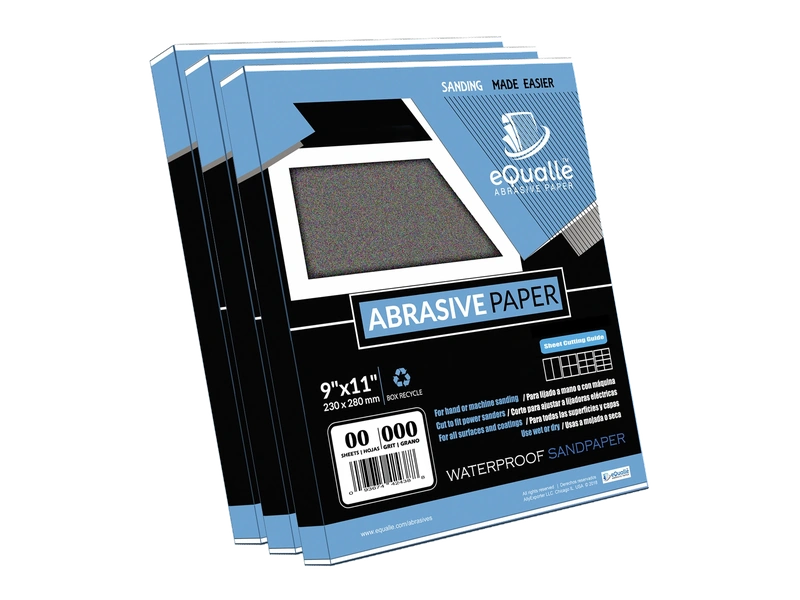
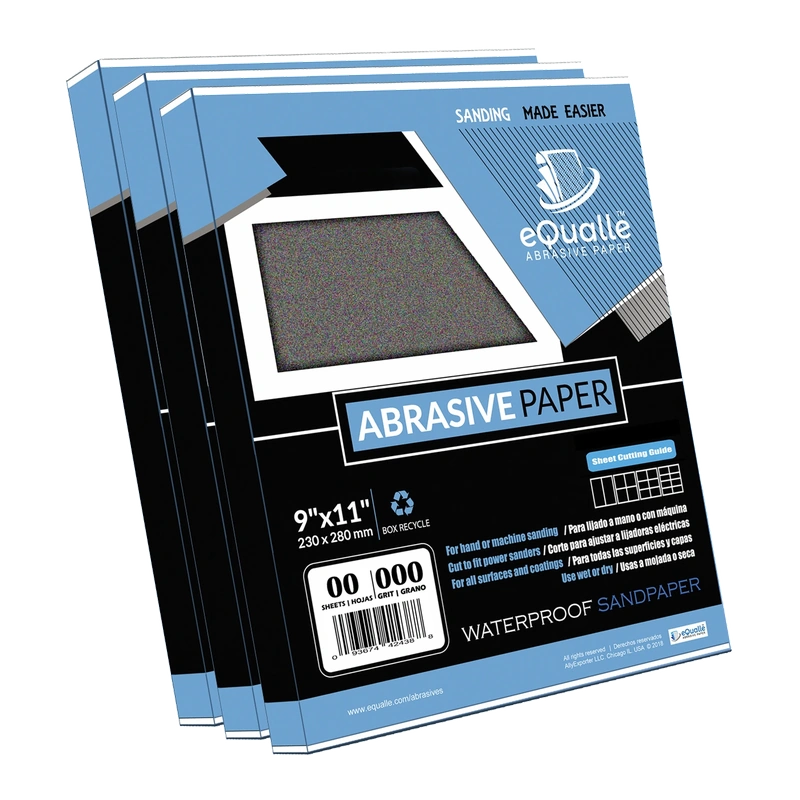
400 Grit Sandpaper Sheets (50-pack) — 9x11 in Silicon Carbide Abrasive for Wet or Dry Use — Ultra-fine abrasive for refining surfaces before polishing or coating. Commonly used in auto body repair and resin finishing. Produces flawless smoothness with wet or dry sanding. (Professional Grade).
Frequently Asked Questions (FAQ)
Q: What squeegee should I use for reading leveling progress?
A: A silicone squeegee in the 60–80A durometer range with a straight, 100–150 mm edge and a slight edge radius (0.5–1.0 mm) gives the most consistent read without marring.
Q: How often should I squeegee while wet sanding?
A: Every 6–10 passes over a 30 x 30 cm area is a good starting cadence. Check more frequently on edges or thin coatings, and always after changing direction or backing.
Q: Does the type of wet dry sandpaper affect the squeegee reveal?
A: Yes. Film-backed SiC or ceramic sheets in P800 and finer produce a uniform matte that reads clearly. Dull or uneven abrasives can burnish highs and mislead the readout.
Q: Can I add soap or alcohol to the water?
A: A tiny amount of dish soap (1–2 drops per liter) improves wetting and prevents hydroplaning. Avoid alcohol; it flashes off too quickly and can change surface tension unpredictably.
Q: When should I move to a finer grit?
A: Only after the squeegee shows a uniform matte with no glossy islands and any guide coat is fully removed. Advancing early polishes peaks and locks in texture, forcing you to step back.