
Edge Control Mastery: Epoxy Sanding Without Rounding
Late Saturday light spills across your bench as you lift the piece you’ve been chasing all week—a cabinet door with beveled rails, a delicate reveal, and a flawless, glassy finish you poured your focus into. The surface glows. Then you see it: the profile at the lower edge has softened. It’s not ruined, but the shadow line that made the joinery look razor-clean has turned mushy. You didn’t gouge it or make a dramatic mistake; you just sanded. That’s the paradox. Sanding is supposed to refine, yet without edge control, it quietly erases what your hands and tools worked so hard to define. If your project includes epoxy sections or topcoats, epoxy sanding adds another layer of complexity—heat, clogging, and brittleness can conspire to round off details even faster.
Maybe you’ve built a small side table with an inlaid epoxy accent, or you’re prepping an epoxy-sealed countertop for a final coat. With the surface dead flat, your eye travels to the perimeter where the tactile first impression happens. Edges frame our work the way a mat frames a print: any drift out of square reads immediately. You try to finesse the last swirl marks and the paper grabs a bit at the corner, the backing flexes, and suddenly the crisp 90-degree meeting of planes is gone. It takes seconds to lose, and hours to remake. Worse, rounding isn’t just a cosmetic issue—glue lines can weaken if the mating edge loses squareness, miters open, and hardware alignment suffers.
What if sanding could be the most predictable part of your process? Edge control is not about locking your wrists and hoping; it’s about strategy—using the right backers, guiding fences, predictable grit steps, and techniques that distribute pressure where you want it. With a few simple changes, you can keep complex profiles sharp, maintain square chamfers, and prep epoxy without melting, loading, or rolling the edge. The goal is not to sand less, but to sand smarter: flatten when you want flat, soften only where you choose, and protect all the details that define craftsmanship.
Quick Summary: Edge control pairs firm-backed abrasives, guided motion, and smart epoxy sanding practices to prevent unintentional rounding so details stay crisp and square.
The hidden cost of rounded edges
Rounding creeps in quietly because sandpaper, by nature, seeks high spots. An edge is the ultimate high spot, so it receives more pressure, heat, and abrasion per pass—especially if your backing is soft or your stroke pauses there. The result is a subtle radius that widens unequal to the rest of the surface, flattening shadow lines and shifting dimensions you intended to hold true. In furniture, even a half-degree of drift off square at the edge can show as a light gap at a miter or a face-frame corner that doesn’t sit flush. In cabinetry, drawer fronts lose that intentional frame reveal. In veneers, rounding increases burn-through risk. And with epoxy, the material can warm and smear, compounding the problem with a glossy “lip” that’s difficult to blend back.
Think about how people interact with your work. Fingers find edges first. Light catches edges first. And finishing products—dyes, sealers, and topcoats—behave differently at edges because film thickness thins over radii. A rounded edge can turn an even sheen into a halo, and sprayed coats will often pull back slightly at a feathered corner, emphasizing inconsistency. Glue-ups also suffer: a rounded mating edge reduces contact area, asking glue to bridge a gap rather than bond two planes. Even if the assembly holds, you’ve built in stress and potential creep.
The good news is that rounding is predictable and preventable. It tends to happen when one or more of these variables stack up: soft backing, aggressive grit at the finish passes, localized pressure, and stopping/starting on the edge. Your strategy is to invert those conditions—use a firm backer, choose grits that cut cleanly without tearing, keep the block moving before it touches the edge, and let jigs and fences carry alignment so your muscles don’t have to. Do that consistently, and those crisp reveals stop feeling fragile and start feeling normal.
Epoxy sanding on edges: keeping lines crisp
Epoxy brings special considerations: it can clog paper quickly, soften with heat, and chip at corners if it’s not fully cured. That can make edges feel like a minefield. Start with time—full cure isn’t just a label on the bottle. Depending on the product and ambient conditions, epoxy may need several days to reach full hardness. Sanding too soon amplifies smearing and rounding because the softened resin behaves like a rubbery high spot that your grit skis over rather than cuts.
Use a firm, flat backing block for any edge work on or near epoxy. Foam interface pads are helpful for blending broad surfaces but are counterproductive at edges; they wrap around corners and invite rounding. For handwork, a hardwood block with PSA paper (pressure-sensitive adhesive) distributes pressure across a flat plane. On larger panels, a half-sheet sander with a rigid pad or a random-orbit sander fitted with a hard interface plate keeps you honest. Keep the tool flat and the edge away from your fulcrum—no rocking.
Heat is the enemy. A light touch and fresh, open-coat abrasives help. Wipe cured epoxy with a clean rag and a bit of denatured alcohol before sanding to reduce gumming from surface contaminants, then dry thoroughly. If you’re transitioning from epoxy to wood at an edge, take your final strokes from wood toward epoxy rather than dragging epoxy dust into open grain. Where drips or “nibs” form at edges, resist the urge to sand first; instead, shear them flush with a sharp cabinet scraper or a razor held in a controlled block, then follow with very light sanding. You remove less material and maintain geometry.
Actionable tips:
- Let epoxy cure fully—ideally 72 hours at room temperature unless your system specifies longer.
- Use a firm backer at edges; avoid soft foam pads on corner work.
- Keep strokes moving; never dwell at the edge. Start and end passes off the workpiece, not on the corner.
- Clear dust often and change paper at the first sign of loading to reduce heat and smearing.
Tools and grits for flat, square control
You don’t need a shop full of specialty tools to control edges, but you do need the right few. Start with a set of rigid sanding blocks. A hardwood block planed square to your bench is perfect; so is a machined aluminum block. For ultra-straight reference, adhere PSA paper to a known-flat surface (thick glass or a granite plate) and bring the work to the abrasive rather than the other way around—excellent for truing small parts or squaring a veneered edge without tipping.
Next, add a 90-degree edge block or fence. A purpose-made 90° sanding block lets you register one face while sanding the adjacent face, keeping edges crisp and square. If you don’t have one, make a simple L-shaped fence from plywood: one leg guides along the face, the other holds the paper, ensuring the block cannot roll. For power sanding, use a random-orbit sander with a hard interface pad for edges and a standard pad for broad surfaces. Oscillating sanders and half-sheet sanders with rigid plates are also excellent for keeping edges flat.
Choose grits with intent. For epoxy and hardwood edges, start no coarser than P120 unless you’re removing significant material; then progress to P150–P180 and finish at P220. On profiles and veneers, avoid jumping more than one grit step to prevent deep scratches that force you to stay longer at the edge. Mark the area with a pencil hatching before each grit; sand until the marks disappear uniformly—if the edge clears first, you’re rounding. Vacuum and wipe between grits to remove loose abrasive that can act like rogue coarse grit.
- Pencil grid your surface to monitor pressure distribution.
- Register faces to fences or blocks rather than “eyeballing” square.
- Keep abrasives fresh; dull paper requires pressure, and pressure rounds.
According to a article
Technique: pressure, path, and pause
Technique locks the tools and grits together. Think in terms of pressure management, stroke path, and where you pause. Pressure: your hands should ride the center of the block, not the edge. When you feel yourself “steering” by pressing a corner, stop. Reset your grip so wrists are neutral and elbows provide the push. For power sanding, let the machine’s weight do most of the work; extra downward force compresses pads and arcs around the edge. Keep the sander fully supported on the face—no overhang.
Path: develop a habit of starting and ending your strokes off the work. For edges, this matters twice: you avoid dwell at corners, and you keep the abrasive from “climbing” the edge as you slow down. Use long, overlapping passes that cover the entire area. If you must focus on a defect near an edge, blend your passes back into the field so you don’t create a low trough.
Pause: never idle the tool on a corner. If you need to think, set the tool down or lift it completely off the surface. When hand sanding, count strokes. A consistent count per face keeps you honest and helps when you’re tuning fit on joinery. And when you approach final grit, lighten up. Those last passes are about refining scratch pattern, not removing stock.
Step-by-step for a crisp, square edge:
- Mark both faces with pencil hatching and a light scribe line 1–2 mm in from the edge—your “no-round” boundary.
- Shear away any epoxy drips or wood nibs with a card scraper, burr tuned, before touching sandpaper.
- With P150 on a rigid block, take 5–8 strokes, starting and finishing off the work, keeping full block contact; check the pencil marks.
- Rotate the piece, repeat the stroke count on the adjacent face to maintain symmetry.
- Progress to P180 and P220 with the same controlled stroke count, stopping the moment your pencil marks just disappear.
Micro-bevels deserve a mention. If your design calls for a small chamfer or eased edge, cut it deliberately with a block plane, chamfer bit, or a guide block and fresh paper. When you create the bevel intentionally, you define the geometry; sanding then simply refreshes the surface without guessing the line.
Preventive aids: blocks, fences, and tape
Prevention shifts effort from “fixing” to “guarding.” Start with mechanical guides. A simple L-fence, clamped to your workpiece, will guide a sanding block and prevent roll-over. For repeat tasks—like prepping a run of shelf edges—make a dedicated jig: two straight hardwood rails at 90° with a replaceable “sacrificial lip” that takes any incidental rounding instead of your piece. Similarly, bench dogs and a perpendicular fence on your bench give you a reliable registration for long, controlled strokes.
Use tape as armor. A narrow band of painter’s tape, applied just off the edge you want to protect, creates a tactile and visual boundary. On epoxy surfaces, tape also reduces smearing into adjacent wood. If you’re finishing, tape the final reveal line; remove it after sanding so you inspect the edge before coating. For fragile veneers, use a double-layer tape band to spread pressure across more fibers.
Tool choices can be preventive too. Cabinet scrapers, tuned with a consistent burr, shear rather than abrade and don’t compress around edges. Files with safe edges (no teeth on one side) can refine a chamfer without cutting into the adjacent face. For machine sanding, a platen sander with a firm, flat pad is less likely to roll edges than a soft orbital interface. And for small details—moldings, inlays, and corners—make custom-profile blocks by pressing a scrap into the profile wrapped with sandpaper, creating a perfect-fit backer that won’t distort geometry.
Practical safeguards:
- Add a 0.2–0.4 mm intentional micro-bevel to extremely sharp edges after final sanding; it resists chipping without looking rounded.
- When blending epoxy to wood, sand the wood face first, then feather the epoxy lightly toward it to avoid dragging resin dust into grain.
- For miters, register each side to a square block as you sand to maintain the angle; do not freehand the inside corner.
Sanding Screen Floor — Video Guide
This how-to video demonstrates using a floor buffer fitted with metal wire mesh sanding screens to abrade an epoxy floor prior to recoating. It covers attaching screen disks securely to the buffer and shows how the broad, even contact reduces swirl marks and controls heat—key considerations when working on epoxy surfaces that can load and smear with traditional paper.
Video source: Sanding Screen Floor Buffer on Epoxy Floor "How-To"
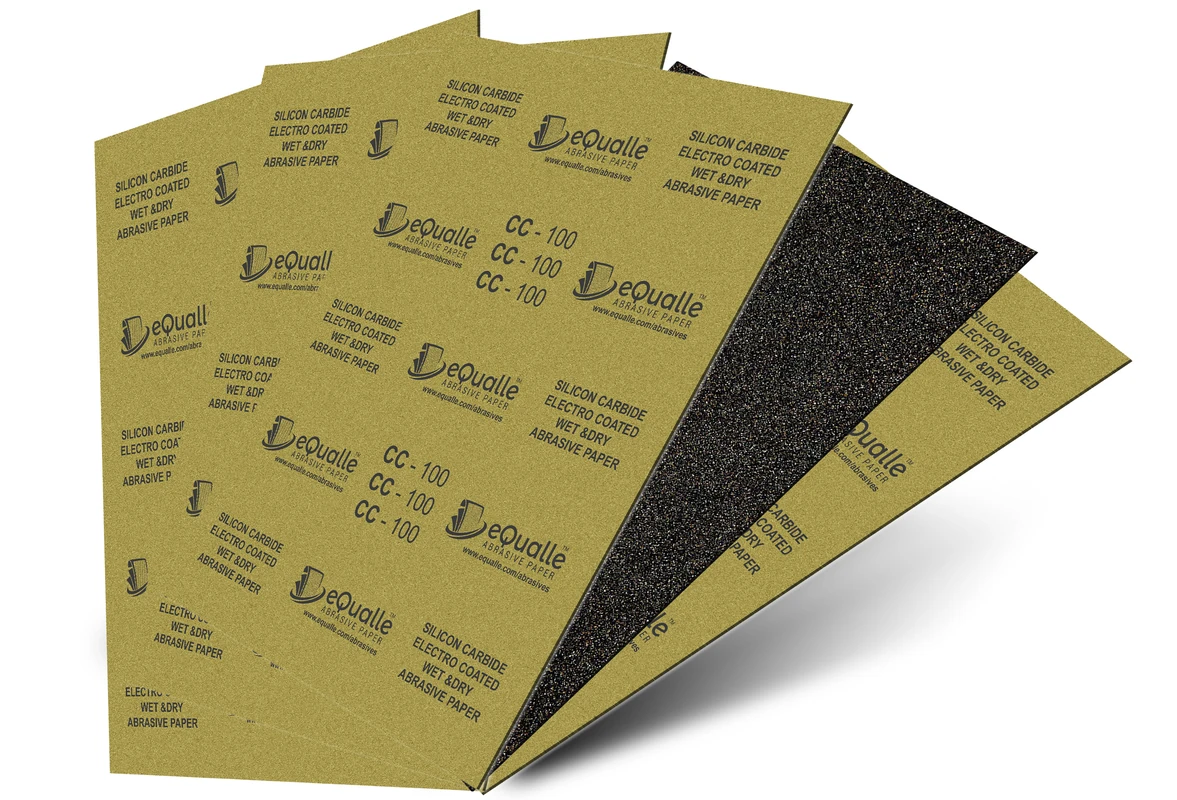
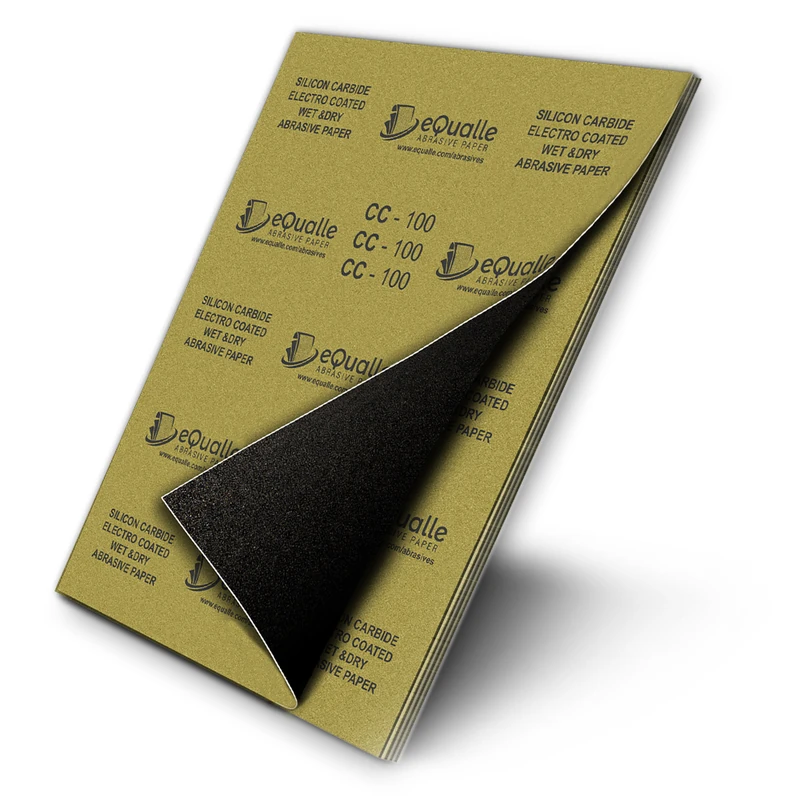
400 Grit Sandpaper Sheets (100-pack) — 9x11 in Silicon Carbide Abrasive for Wet or Dry Use — Ultra-fine abrasive for refining surfaces before polishing or coating. Commonly used in auto body repair and resin finishing. Produces flawless smoothness with wet or dry sanding. (Professional Grade).
Frequently Asked Questions (FAQ)
Q: How do I keep a sharp 90° edge from rounding when sanding by hand?
A: Use a rigid sanding block, register one face against a fence or square, and keep strokes moving so you start and finish off the work. Avoid foam pads at the edge, apply even pressure centered on the block, and stop as soon as pencil hatching disappears uniformly.
Q: What’s the safest way to remove epoxy drips at edges without rounding?
A: Shear first, sand second. Use a sharp cabinet scraper or a razor held in a block to slice drips flush, then follow with light passes on a rigid block at P180–P220. Work from wood toward epoxy and avoid dwelling at the corner to prevent heat-softening and smearing.
Q: What grit sequence should I use on epoxy next to wood?
A: Typically P120 to remove defects, then P150–P180 to refine, finishing at P220 before recoating. Don’t skip more than one step, change paper at the first sign of loading, and keep a firm backer at edges to prevent rounding.
Q: Do interface pads on random-orbit sanders cause rounding?
A: Soft interface pads can telegraph around edges and round them. Use hard interface plates or the sander’s rigid pad for edge work, reserving soft pads for blending broad, flat fields away from corners.
Q: Is it better to ease edges intentionally or leave them sharp?
A: For durability, a tiny micro-bevel (0.2–0.4 mm) is smart, but cut it deliberately with a plane, chamfer tool, or guided block rather than letting sanding “decide.” Intentional geometry preserves design intent and prevents unplanned rounding.