
Oil vs Water: Getting Microfinishing Film Right
I can spot the moment a finish turns from “good” to “great.” It’s that quiet breath you take when the tool breaks free from the film and you catch the clean, unbroken sheen across an edge you’ve labored over. In my shop, that moment usually happens late on a Saturday—coffee gone cool, bench lights warmed up, and the plate glass on my bench wearing a fresh sheet of microfinishing film. I keep two bottles nearby: one filled with water and a drop of dish soap, the other with a light mineral oil. They aren’t just liquids—they’re decisions. Each one pushes the work in a different direction.
If you’ve ever watched a chisel face blur under gray slurry, or a knife bevel glow like wet ink under a fine grit, you’ve already felt the tug-of-war between water and oil. Both will lube and cool a cut; both can carry swarf away from the cutting points. But in practice, they change the way the grit behaves, how the film sticks to its backing, how quickly the abrasive clears, and whether your part ends up with a mirror, a soft satin, or a mess of micro-scratches.
I’ve switched back and forth a thousand times: water on hardened tool steel to keep it crisp and fast; oil on aluminum to prevent loading; water again on glassy carbon fiber where I want clean extraction of dust; and a bit of oil on a stainless plane blade when I want a slow, controlled polish that doesn’t heat soak the edge. The choice isn’t theoretical—it’s what keeps your film cutting smoothly instead of skating, keeps your adhesive planted instead of puckering, and keeps your finish repeatable across batches. So let’s roll up our sleeves and get precise about oil versus water, and how to make microfinishing film earn its keep every single time you stick it down.
Quick Summary: Water cuts faster and cleans easier; oil cuts smoother and resists loading—choose your lubricant based on material, grit, and finish goal to get reliable, pro-grade results.
What Lubrication Really Does
In micro-abrasive work, lubrication isn’t just “slippery stuff.” It changes the physics of how grit engages, how heat moves, and how debris behaves. Get this part right, and your film will last longer and cut more predictably.
Cooling and heat control: Both water and light oil act as heat sinks, but water absorbs and carries heat away faster. If you’re pushing pressure on a hardened steel bevel or a wide plane back, water helps keep the temper safe and the adhesive under the film from softening. Oil warms more gradually, which can make the cut feel smoother but can also trap heat if you overdo pressure.
Swarf management: The micro-cutting action produces fines that clog the abrasive and scratch the surface if they’re not removed. Water tends to suspend and float swarf, especially with a drop of surfactant (dish soap) to lower surface tension. Oil tends to corral particles into a heavier slurry that stays put longer and can “cushion” the abrasive. That cushion is why oil can feel smoother, but it also means you need to refresh the surface more often to avoid loading.
Contact and scratch control: With very fine grits (say 9 µm down to 1 µm), the liquid forms a boundary layer that affects how many grit tips contact at once. Thinner water films promote more direct engagement—faster, slightly more aggressive cutting. Thicker, more viscous oils distribute pressure and help keep scratch depth uniform—a calmer, more controlled polish.
Adhesive health and backing behavior: Most microfinishing films use a polyester backing and pressure-sensitive adhesive when PSA-backed. Water is less likely to attack the adhesive than some hydrocarbons, but it can seep under edges if you flood the sheet. Light oils, used sparingly, don’t usually trouble polyester film but can creep if squeezed toward the edges. Either way, moderation protects the bond.
Bottom line: lubrication is your dial for speed, feel, and cleanliness. You’re not just preventing friction—you’re tuning the interface so the film cuts predictably, grit after grit.
Choosing Water vs Oil for microfinishing film
This choice isn’t about dogma—it’s about matching lubricant to material, grit, and finish target. Here’s how I pick reliably in the shop.
Hardened carbon and tool steels: Water for speed and cooling when flattening backs and setting primary bevels (30–15 µm). Switch to light oil for the final micro-polish (9–1 µm) if you want softer scratch transitions.
Stainless steels (A2, CPM, etc.): Start with water to keep heat in check; if you see stubborn loading, pivot to a drop or two of oil. Stainless swarf can smear under pressure; oil often keeps the action steady.
Non-ferrous metals (aluminum, brass, copper): Oil wins here. Non-ferrous swarf likes to gall. A thin film of mineral oil or sewing-machine oil keeps the abrasive open and reduces streaking.
Composites and plastics (G10, CF, acrylic): Water with a bit of surfactant is my default. It suppresses dust, cools fast, and avoids the “smear” you can get with heat-sensitive plastics.
Finishing targets: Satin mechanical finish (repeatable, linear scratch) leans water; deep mirror finish leans light oil at the last grit for that polished glow.
Actionable tips:
- Start wet, finish oily: Use water through mid-grits for speed, then one grit higher than you think with oil to blend the scratch pattern for a mirror pop.
- Add a drop of dish soap to water: One drop per 250 ml breaks surface tension, preventing beading and helping swarf float away instead of skating under your work.
- Use just enough oil: A dime-sized spot spread thin is plenty; if you see a thick, milky slurry, you’re drowning the cut and risking loading.
- Reset the surface: Every 10–15 strokes, wipe the film with a lint-free rag and reapply a small amount of lube. A clean surface equals consistent scratch depth.
- Mind your edges: Keep lubricant away from the film’s perimeter so it doesn’t creep under and curl the sheet—work from the center out.
Setup and Technique That Deliver
Your setup determines whether the lubricant helps or hurts. Here’s my reliable routine for microfinishing film work that stays flat and predictable.
Base and film: Use a dead-flat substrate—thick plate glass, granite tile, or a surface plate. Clean it with glass cleaner and a razor scraper to remove old adhesive and grit. Lay down your microfinishing film (PSA or non-PSA) carefully. For PSA sheets, roll from one edge to avoid trapping air; a plastic card or J-roller helps. For non-PSA, spritz the base very lightly with water to float the film flat, then squeegee it down.
Lube application: For water, mist the surface with a spray bottle; you want a sheen, not puddles. For oil, place a tiny bead in the center and spread it with two fingers gloved in nitrile until you have a thin, even film.
Body mechanics: Plant your feet, square your shoulders. Keep your pressure centered and gentle—let the abrasive do the work. Use full-length strokes for long edges; for small parts, adopt short, overlapping figure-eights. Pressure should lighten as you move up the grits.
Stroke discipline: Count your strokes. Match the number and direction when you flip sides to keep bevels even. At each grit, sand until the previous scratch pattern is completely replaced. Use a raking light to verify—don’t trust your memory.
Clean transitions: Before changing grits, wipe the workpiece and your hands, change rags, and give the base a quick clean. Cross-contamination ruins high-grit work faster than anything.
If you’re unsure about your film’s compatibility with oils vs water, remember that polyester-backed films are generally safe either way. In fact, many microfinishing belts and sheets are designed to run dry, with water, or with oil. According to a article, film-backed abrasives like diamond microfinishing belts are engineered to handle both lubricants, giving you flexibility to match your process needs.
H3: Step-by-step quick start
- Flatten and clean the base.
- Apply film without bubbles.
- Sheen the surface with water (add a drop of soap) or spread a thin oil film.
- Make 10–15 controlled strokes, check the scratch pattern.
- Wipe, relube lightly, and repeat until the pattern is uniform.
- Move up one grit; reset cleanliness between steps.
Troubleshooting the Finish
Even when you do everything right, problems crop up. Here’s how I diagnose and fix the usual suspects.
Loading and glazing: If the film looks shiny and stops cutting, you’ve got embedded swarf. With water, add a little more, wipe, and consider one extra drop of surfactant. With oil, you’ve likely over-lubed—wipe thoroughly, reapply a thinner oil film, and lighten pressure. If aluminum is the culprit, switch to fresh film sooner rather than later; once it smears, it’s tough to recover.
Scratches that won’t go away: Persistent lines usually mean a larger particle or debris made it onto the surface. Stop immediately, clean everything (film, part, hands), and back up one grit. If the scratch follows a track, check for a grain of grit embedded at the film’s edge.
Edge rounding and “convexing”: Too much pressure or a thick lube layer can hydroplane the part. With oil, thin it out; with water, spritz less and keep the film barely damp. Support narrow edges with a secondary backing (hard felt or a guide) to maintain flatness.
Adhesive lift or bubbles: Flooding with water can creep under PSA edges; wipe the perimeter dry, place a clean paper towel over the film, and press down with a roller to reset. With oil creep, clean the edges with isopropyl on a rag and avoid pushing fluid toward the perimeter.
Micro-chipping at edges: If your hardened steel edge shows tiny chips, you’re either too aggressive (reduce pressure) or using a lubricant film too thin at a coarse grit. Add a hair more water to cushion or step up one grit and take a few extra strokes.
“Haze” after mirror: After an oil finish, residue can mask the clarity. Degrease with a lightly dampened microfiber cloth, then dab with a clean, dry one. If the haze remains, you may be seeing underlying coarser scratches—drop back a grit and blend again with minimal oil.
Reminder: a raking, low-angle light is your best inspector. Tilt the part. If you still see the previous grit’s scratches, you’re not done.
Shop Safety and Clean-Up
Water and oil change how you work—and how you clean. Don’t let a great finish turn into a rusty tool or a safety hazard.
Water protocols: After water work on ferrous parts, dry immediately. Warm the metal gently with a hair dryer or heat gun on low for a few seconds, then wipe a thin anti-corrosion film (camellia oil, mineral oil, or a rust inhibitor). Don’t stack wet sheets; store them flat and dry to prevent microbial funk and adhesive issues.
Oil protocols: Use lint-free rags and keep a dedicated bin with a metal lid for oily waste. Even light mineral oils can contribute to spontaneous combustion in the right conditions. Spread rags to dry outdoors before disposal, or use a UL-listed oily waste can. Keep aerosols and ignition sources away from oil-misted work areas.
Ventilation and skin: Oil mists and swarf-laden aerosols aren’t your friend. A simple box fan pulling air away from your bench helps. Wear nitrile gloves when using oils and fine abrasives—your skin is happier and your finish stays cleaner. With water, avoid flooding—you’re chasing precision, not washing dishes.
Bench hygiene: Between grits, wipe the plate glass and surrounding bench with separate rags for water and oil to prevent cross-contamination. Label spray bottles clearly. Keep films in sleeves or a binder, noted by grit and use count. Dust and grit in storage are finish killers.
Disposal and environmental sense: Don’t pour oil down the drain. Collect spent oils in a container for recycling. Water used in small quantities can usually be wiped and binned when captured in rags; check local regulations if you’re generating more than a cup or two per session.
Do these things and your shop stays safer, cleaner, and your results more repeatable—day after day.
懷園開箱 20200724 3M — Video Guide
This short unboxing and demo walks through a polyester-backed microfinishing roll from an industrial brand, showing the texture, flexibility, and how the roll is handled in the shop. You’ll see close-ups of the abrasive face and backing that help you understand how the film behaves under tension and when applied to a flat base.
Video source: 懷園開箱 20200724 3M 80137 Micro Finishing Film Roll 372L
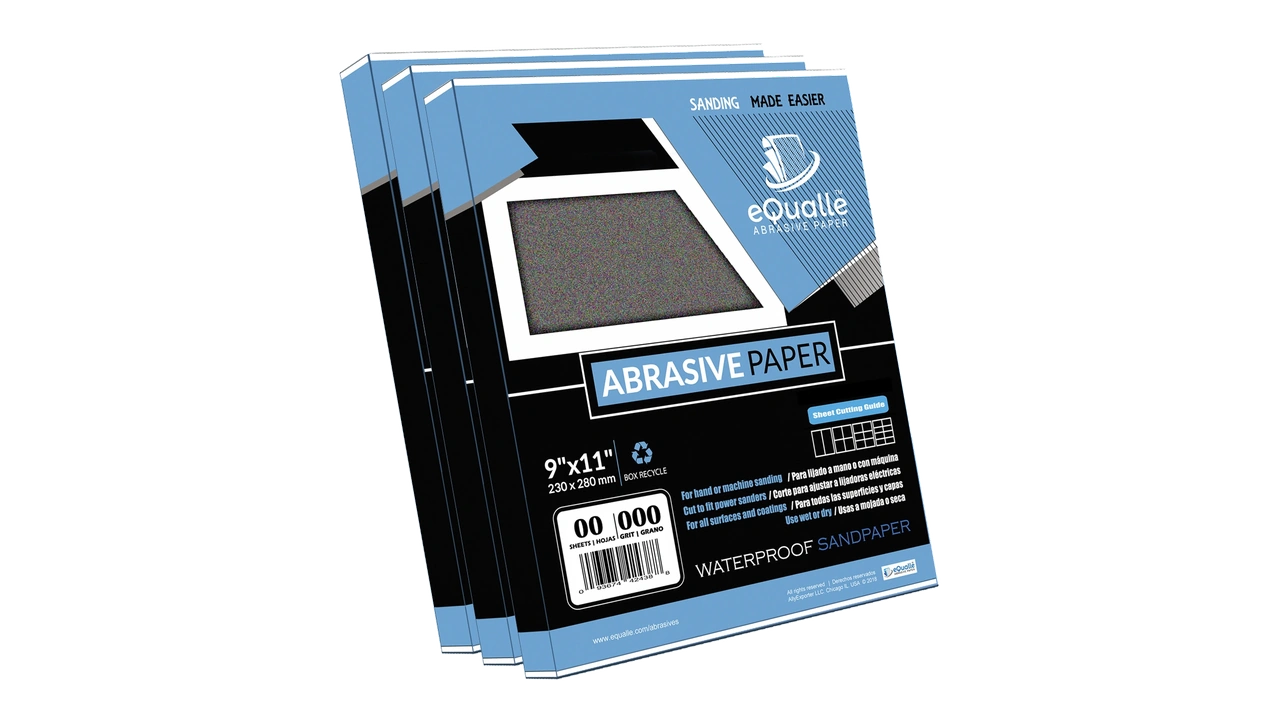
2000 Grit Sandpaper Sheets (25-pack) — 9x11 in Silicon Carbide Abrasive for Wet or Dry Use — Precision polishing grit designed to remove haze and restore clarity to clear coats and high-gloss automotive paint. (Professional Grade).
Frequently Asked Questions (FAQ)
Q: Should I always use lubricant with microfinishing film?
A: You can run some films dry, but a little water or light oil dramatically improves cut consistency, cooling, and surface quality. I run wet 95% of the time—water for speed and cleanup, oil for final refinement or when metals want to load.
Q: What oil works best without gumming up the film?
A: A light mineral or sewing-machine oil is ideal. Avoid heavy motor oils and sticky sprays. A few drops go a long way—spread thin until it just darkens the surface.
Q: Can I add soap to oil like I do with water?
A: No. Soap is for water to reduce surface tension. With oil, the key is minimal quantity and frequent wiping. If you need more “slip,” you’re probably using too much pressure or too coarse a grit.
Q: How do I prevent rust when using water on steel?
A: Dry immediately, warm the part briefly, and apply a thin rust inhibitor. Don’t let water pool on the bench or under the film. A dedicated drying towel at arm’s reach makes this habit easy.
Q: How do I know when to switch from water to oil?
A: When you reach the grit where you want to tame scratch contrast and chase clarity—often at 9 µm and finer—switch to a thin oil film for the last few passes. If you see loading or haze, adjust the amount or go back one grit to blend.