
Boat Sanding and UV-Safe Finishes That Last
The marina was quiet, just the slap of little waves on hulls and the faint smell of salt and sunscreen left in the breeze. I ran my palm along a sunburned toerail—chalky, dry, and rough like a beach pebble. That’s what months of UV does to finishes: sucks the oils out, bleaches pigment, and opens tiny fissures that drink water. I’ve seen it a hundred times on boats that live uncovered. The fix isn’t glamorous, but it is satisfying: smart prep, disciplined boat sanding, and a finish system built to fight sunlight. If we do the work methodically, you’ll watch the surface tighten up, grain pop, and water bead the way it should.
I’m Lucas Moreno, your workshop and DIY specialist. Out on the water, finishes aren’t just pretty—they’re protection. UV exposure is relentless. Even “UV-resistant” products fail early when the substrate wasn’t sanded properly, the schedule was off, or the finish was too thin. If you’ve ever laid down a shiny coat that dulled within a season, you know exactly what I mean. The good news: with the right grit sequence, between-coat technique, and a UV-aware coating plan, you’ll extend the life of your varnish, paint, or gelcoat from months to years.
Picture this project in phases. We’ll start by reading the sun damage like a diagnostic map: oxidized chalk on gelcoat, amber varnish turned brittle, epoxy that looks fine but turns amber and powdery in a month. Then we’ll dial in sanding—how deep to cut, which grit sequence builds adhesion without swirl marks telegraphing through. After that, we’ll stack the correct coating layers—UV-filtering varnishes, pigmented urethanes, or a gelcoat refresh—applied within the right windows. Finally, I’ll show you a maintenance routine that buys you seasons of shine. No gimmicks. Just boatyard-proven steps.

Quick Summary: UV beats up finishes, but disciplined boat sanding, UV-smart coatings, and tight timing create a durable film that resists sun, salt, and seasons.
Sun, salt, and the finish you choose
Marine UV exposure is a multiplier. Sunlight breaks chemical bonds, salt attracts moisture and grime, and temperature swings push and pull at the film. Start by matching the finish to the environment and the maintenance you’re willing to do.
- Clear exterior woodwork (handrails, trim, spars): Use a marine spar varnish or two-part clear urethane with strong UV absorbers and HALS (hindered amine light stabilizers). The UV package slows degradation; the flexible resin handles expansion and contraction.
- Hull sides and topsides: Pigmented two-part polyurethane paints offer the best UV defense because pigments scatter and absorb light before it reaches the resin. High-gloss whites reflect heat; dark colors look sharp but run hotter—plan accordingly.
- Epoxy: Excellent structural resin but poor in sunlight unless it’s shielded. Epoxy chalks and ambers with UV. If you glassed with epoxy, topcoat it with paint or a UV-loaded varnish as soon as the epoxy has cured and been sanded for adhesion.
- Gelcoat: Gelcoat can be renewed by cutting oxidation and adding protective waxes or sealants, but deeply degraded gelcoat may require sanding and reapplication of gelcoat or a switch to a paint system.
Take a minute to assess the “UV map” of your boat. Port sides often cook in afternoon sun. Rails and cabin tops roast and shed finish faster than shaded cockpit panels. If you keep the boat on a mooring, the bow may be shaded by the jib, while stern rails bake. This tells you where to invest extra film thickness and where to plan mid-season touch-ups.
Finally, think in terms of film build. UV doesn’t just beat the surface; it migrates into the film. Thicker coatings with proper recoat windows survive longer. If you can’t commit to at least 6–8 coats of clear on exterior wood, consider pigmented paint for longer intervals between maintenance.
Dialing in boat sanding for UV-ready surfaces
Sanding isn’t punishment; it’s the backbone of adhesion and a major UV defense. A properly keyed surface lets your coating bond and build thickness without telegraphing scratches. Here’s the workflow I use at the bench and on the dock.
Step-by-step surface prep:
- Decontaminate first. Wash with a mild boat soap, rinse, and dewax with a dedicated solvent. Sunscreen, polish, and silicone are adhesion killers. Change rags frequently.
- Assess the cut. On dead, chalky gelcoat, start light (P320–P400) with a soft interface pad and see if you’re removing oxidation without biting into healthy gel. On varnished wood with failed film, go coarser (P120–P150) to strip weak layers; then refine through P180 and P220.
- Control the tool. A 5" or 6" random-orbit sander with dust extraction is your friend. Keep it flat, low to medium speed, and let the grit do the work. Heat is your enemy—if the surface feels warm, pause.
- Fair, then finish-sand. Low spots on wood? Spot-fill with epoxy fairing compound and sand flush. For epoxy-glassed panels, wash off amine blush with water and a Scotch-Brite pad before sanding; otherwise you’ll smear contamination around.
- Stop at the right grit. For most paints and varnishes, P220 is a safe final prep before the first coat on bare wood or epoxy. Between coats, P320–P400 knocks down nibs without cutting too deep.
Actionable tips you can bank on:
- Keep a dedicated “clean” vacuum hose and HEPA extractor for finish prep; a dusty shop vac spreads contamination.
- Use a pencil cross-hatch on trouble areas; sand until the marks are evenly gone to avoid low, glossy survivors that won’t hold finish.
- Wrap a half-sheet of abrasive around a cork or rubber block for edges and trim—ROS pads round corners fast.
- On gelcoat, avoid grits coarser than P320 unless you’re deliberately flattening for paint; heavy scratches can telegraph through.
- For teak, vacuum, then wipe with mineral spirits to preview grain and find scratches before you commit to coating.
When everything feels uniformly matte and dust-free, you should see no shiny pinholes or glossy streaks. That uniform scratch pattern is your adhesion insurance.
Coatings that fight UV, coat by coat
Once the surface is keyed, choose a coating that interrupts UV and builds thickness with discipline. Think of each coat as part of a system, not a standalone miracle layer.
Clear systems (varnish and clear urethane):
- Traditional spar varnish: Flexible, warm tone, forgiving to apply. Load the early coats thin and frequent to lock down fibers. Aim for 8–12 coats outdoors. Recoat within the manufacturer’s window (often 12–24 hours) for chemical bond; outside that, lightly sand with P320.
- Two-part clear urethane: Tougher and more UV-stable but less flexible and fussier with moisture and temperature. Mix precisely, filter through a paint strainer, and abide by induction times if specified. Great for spars and rails that see strong sun.
Pigmented systems (polyurethane paint):
- Two-part poly paints (LPU) provide top-tier UV resistance. Prime appropriately—epoxy primers over epoxy/glass, etch primers for metals. Lay down thin, even coats with the recommended reducer for the day’s temperature and humidity. Dark colors? Increase film thickness and expect shorter refresh cycles.
Epoxy-under-clear:
- If you’ve glassed wood with epoxy for strength, you must shield it. After the epoxy fully cures, wash off blush, sand to P220, and apply your UV-blocking clear or paint. Even “UV-inhibited” epoxies are not sunlight finishes by themselves.
Application notes:
- Strain every batch, maintain a wet edge, and tip off bubbles. UV additives don’t matter if you trap dust nibs and sags that force premature sanding.
- Build film evenly on exposed edges and end grain—UV and water exploit thin spots first.
- Respect temperature: ideal is usually 60–80°F, with substrate at least 5°F above the dew point.
According to a article, marine finishing success depends on process and tool control as much as product choice—a reminder that technique is your longest-lasting UV shield.
Between-coat technique and timing
This is where projects succeed or fail. Good between-coat sanding creates mechanical “tooth,” flattens dust, and prevents witness lines.
My between-coat checklist:
- Timing: Recoat while the film can still form a chemical bond when possible. If you miss the window, you must sand more thoroughly. Cooler days lengthen windows; hotter days shorten them.
- Grit choice: For varnish, P320–P400 is the sweet spot. For LPU paint, stay finer—P400–P600—to avoid cutting through. You’re not reshaping; you’re knocking down nibs.
- Pattern: Hand-sand with a soft pad in gentle, overlapping passes. On larger flats, a well-controlled ROS with a foam interface can speed things up, but keep pressure light.
- Cleanliness: Vacuum, then wipe with a lint-free cloth lightly moistened with the manufacturer-approved solvent. Avoid silicone-laden “furniture” tack cloths; use painter’s tack rags or a microfiber slightly dampened with water or solvent, depending on the system.
- Edge protection: Tape sharp corners after first coat. Films thin at edges; any aggressive sanding there cuts through and invites UV failure.
Fix defects as they appear:
- Sags or runs: Let them harden, then level with a sharp razor pulled like a tiny plane. Follow with P400 and recoat.
- Dust craters (fisheyes): Often contamination-related. Stop, clean the surface and surrounding area thoroughly, and consider a fisheye eliminator only if the coating manufacturer allows it.
- Nibs: Flatten quickly with a P400 finishing pad, not your fingernail.
Curing and climate:
- Avoid direct sun during application; heat flashes the solvent and traps texture. Work in the morning shade or indoors with good airflow.
- Humidity above 80% can blush varnish and cloud urethanes. If the substrate is near dew point, wait. A simple thermo-hygrometer in your kit pays for itself.
Log your schedule. Write down temperatures, humidity, coat counts, and products. When it’s time to refresh next season, you’ll know exactly what worked.
Maintenance that beats the midday sun
The most durable finish is the one you maintain on time. UV defense is not set-and-forget.
Routine that extends life:
- Shade: A breathable cover or at least rail and cap cover while moored can double finish life. Even partial shade on the hottest hours matters.
- Wash: Salt crystals act like sand and attract moisture. Rinse with fresh water regularly. Use pH-neutral soap; harsh cleaners strip protective wax and can dull varnish.
- Wax and protectants: On gelcoat and painted surfaces, a quality marine wax or polymer sealant with UV inhibitors adds sacrificial protection. Renew 2–3 times a season in high-sun regions.
- Inspection: Focus on edges, end grain, and horizontal surfaces. At the first sign of dulling or checking, scuff with P320 and add one or two maintenance coats rather than waiting for failure that demands a full strip.
- Seasonal refresh plan: Exterior wood in strong sun often needs one light scuff and one to two coats mid-season. North-facing or shaded sides may stretch longer. Pigmented LPU may go a couple of seasons before a scuff-and-shoot, but don’t wait until gloss is gone; gloss loss signals resin breakdown.
Real-world cadence:
- Clear on rails/spars: 8–12 initial coats. Mid-season scuff-add in high UV zones. Full refresh every 1–2 years depending on latitude and storage.
- Gelcoat: Cut oxidation annually with a fine compound, polish, then protect. If you’re compounding more than once a year to keep gloss, consider stepping to paint.
- Painted topsides: Gentle wash, annual decon and polymer sealant, spot repairs at chips immediately to keep UV and water out of the primer/epoxy beneath.
Your goal is to stay ahead by hours, not months. A couple of maintenance mornings per season are cheaper than a full strip in September.
Improper sanding between — Video Guide
There’s a concise video that nails a common mistake: sanding between coats the wrong way and locking in scratches. It breaks down how to select the right grit, apply even pressure, and clean properly so your next coat lays silky-smooth instead of highlighting swirl marks.
Video source: Improper sanding between coats of finish- HOW TO AVOID IT!
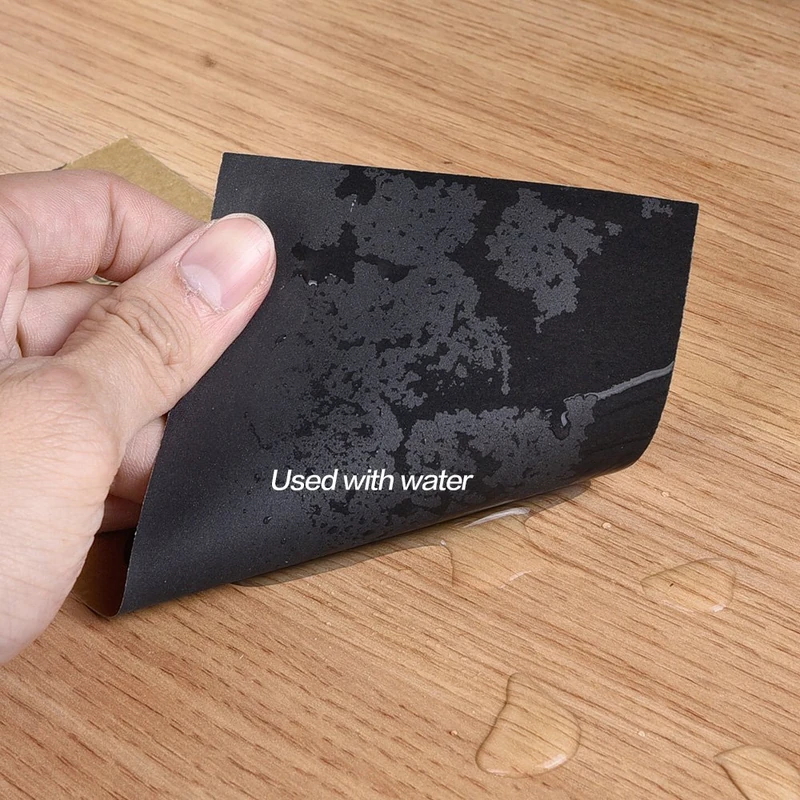
2000 Grit Sandpaper Sheets (50-pack) — 9x11 in Silicon Carbide Abrasive for Wet or Dry Use — Super-fine grit for restoring deep gloss on automotive paint, resin, or metal. Removes micro-defects and surface haze. Ideal for precision polishing prior to waxing or compounding. (Professional Grade).
Frequently Asked Questions (FAQ)
Q: Do UV-inhibited epoxies eliminate the need for paint or varnish?
A: No. UV-inhibited epoxies slow degradation but aren’t a final sunlight finish. Always topcoat with a pigmented paint or a clear with strong UV absorbers and HALS.
Q: How many coats of exterior varnish should I plan for?
A: Outdoors, 8–12 coats is a realistic target for long-term protection. Load early coats thin to lock fibers, then build film evenly. Maintain with 1–2 coats before visible failure.
Q: What grit should I use between coats?
A: For varnish, P320–P400 removes nibs without cutting through. For two-part polyurethane paint, stay finer—P400–P600. Always clean thoroughly before recoating.
Q: Can I sand or apply finish in direct sun?
A: Avoid it. Sun heats the substrate, flashes solvents, and softens films, leading to texture and adhesion issues. Work in shade or controlled conditions with good airflow.
Q: My gelcoat looks chalky. Can I save it without repainting?
A: Often yes. Wash, dewax, and compound with a fine-cut product to remove oxidation, polish, then protect with a quality wax or polymer. If gloss won’t return or fades rapidly, consider sanding and moving to a paint or fresh gelcoat system.