
Choosing the Best Sandpaper Brand for Every Grit
Late Sunday, the shop is warm and a little loud—random orbitals humming, shop vac pulling a steady whirr, and a maple tabletop glowing under fresh shellac. You’re feeling that flow where the dust hangs like a halo and every pass lines up with the grain just right. Then it happens: you reach for P320 to close the gap between P240 and P400… and the drawer is empty. You try P280 from another pack but it’s a different brand; the cut is jumpier, the stearate loads different, and the paper tears at the clip. Now you’ve got swirl marks, a 30-minute detour to the store, and a finish window slipping away. That’s the moment you learn that the best sandpaper brand isn’t just about how sharp the grit is or how long it lasts—it’s about support, continuity, and having the right grits in the formats you use, when you need them.
I’m Lucas Moreno, Workshop & DIY Specialist. I’ve burned through enough paper to fill a contractor bag, and I can tell you this: if your abrasive system is scattered—different families, missing steps, odd hole patterns—you pay for it in time, quality, and frustration. The best sandpaper brand for you is the one that has your entire grit ladder covered—from heavy hogging to glass-smooth finishing—with consistent backing, coatings, hole patterns, and store availability.
In this guide, we’ll get practical: how to pick a brand based on grit range and real supply, what backings and coatings actually matter, and which formats keep your workflow moving. You’ll get real sanding sequences I use in the shop and a quick test method to vet any abrasive line. By the end, you’ll know exactly what to stock so you never stall at the crucial pass again.
Quick Summary: Choose a sandpaper brand that supports your full grit progression, offers consistent backings and formats you use, and stays available locally or on dependable supply.
Grit ranges that actually cover real work
When you sand day in and day out, “having grits” and “having the right grits” are two different things. The workflow is built on predictable steps—too big a jump and you chase scratches; too small and you waste time. What you want from any brand is a clean ladder with the right increments in the FEPA P-scale (P80, P120, P150, P180, P220, P240, P320, P400, P600, and so on), clearly labeled and continuously available across formats.
Here’s where range matters most:
- Wood prep: Typical ladders go P80/P120 for rough flattening; then P150/P180/P220 to close the pores; P320 between finish coats. Softer woods (pine, cedar) forgive larger jumps; hardwoods (oak, maple) telegraph scratches, so tighter steps are safer.
- Finishing and sealer sanding: P320–P400 keeps nibs down without cutting through dye or toner. For shellac or lacquer, a light P320/P400 scuff is plenty.
- Film leveling: P600–P800 wet/dry for leveling a cured clear before buffing; P1000–P2000 for automotive clears or high-gloss topcoats.
- Metals and edges: P60–P120 for deburring and shaping; P180–P320 for blending; higher grits only if you’re preparing for polish.
- Repair work: P36–P80 for aggressive stock removal or epoxy leveling; then step out carefully (P120–P180–P220) to avoid ghost scratches later.
Actionable tips:
- Build a base ladder: Stock P80, P120, P150, P180, P220, P320, P400 as your core. Add P60 (rough), P600 (finish scuff), and P1000–P2000 (clear coat) if your work requires it.
- Standardize scales: Prefer FEPA P-grits for consistency. If a brand mixes CAMI and FEPA without clarity, move on.
- Mind the jumps: Keep jumps to about 1.4–1.7× in grit (e.g., P120 → P180 → P240). Bigger jumps cost time.
- Duplicate your key steps: If P180 and P220 are your “money” grits, keep two boxes of each in your main format plus a backup in sheets.
Backings, bonds, and coatings that save time
A brand is more than mineral and a number. The backing, resin, and topcoat dictate how the paper cuts, loads, and survives tough jobs. You want a line where those properties are consistent through your grit range, so the feel doesn’t change when you step up or down.
What to look for:
- Backing weight and type: Paper backings (A–F weight) control flexibility and tear resistance. Lighter A–C sheets conform to profiles; heavier D–F hold flat and resist tearing. Film backings shine at P320+ because they keep grit flat for scratch uniformity. Cloth backings (J/X) suit belts and curved work where durability matters.
- Bonding/resin: Resin-over-resin construction resists heat and keeps grit locked in under pressure. Cheaper glues go soft and shed grit early.
- Coating style: Open-coat exposes more space between grains to resist clogging in soft woods and paints. Closed-coat packs grains tighter for harder materials and metals. Some brands let you choose open vs closed within the same family across multiple grits—this is gold.
- Load-resistant stearate: A must for paints, softwoods, and resinous stock. Look for consistent stearate through P120–P400. For wet sanding and metals, a non-stearated film can be preferable.
- Mineral type: Aluminum oxide is the all-rounder; ceramic or ceramic blends ramp up cut and life on coarse grits; silicon carbide excels in finer wet/dry work and on finishes and glass-smooth polishing sequences.
Practical shop guidance:
- Keep your coarse to medium cuts (P60–P180) in an open-coat ceramic/aluminum oxide blend on paper or cloth—you’ll hog material and clear dust faster.
- Switch to film-backed, closed-coat aluminum oxide or silicon carbide from P320 up when you care about consistent scratch patterns under finish.
- Match your backing to the tool: Film discs for orbitals, flexible A/C sheets for hand sanding profiles, and cloth for belts and spindles.
- Test heat: If you feel the paper warming and going “greasy,” you’re either pushing too hard or the resin bond is too weak for the job—change the brand or the abrasive family, not just the grit.
Stock, formats, and the logistics you live with
Even the best abrasive is useless if you can’t keep it on the shelf. Support is about availability in the formats you rely on: sheets, discs, rolls, belts, sponges, and the hole patterns your sander uses. Before you commit to any brand, map your workflow and demand the SKUs that make it run smoothly.
Key format checks:
- Discs: Confirm 5" or 6" diameter, hole pattern (8H, 9H, multi-hole, or mesh/net), and attachment (hook-and-loop vs PSA). If you run dust extraction, multi-hole patterns or net discs dramatically reduce clogging and cleanup.
- Sheets and rolls: 9x11 sheets cut to blocks and curves; PSA rolls for edge guides and custom sticks. Does the brand offer the same grit range across both?
- Belts and specialty: Common belt sizes (3x18, 3x21, 3x24, 4x24) and spindle/bobbin sleeves. For bandsaws or knife makers, confirm cloth-backed belts beyond P220 exist and are stocked.
- Sponges and pads: Fine grits for between-coat nibbing, curved profiles, and detail sanding. Consistency here saves finishes.
Supply and service:
- Retail presence: If you’re a weekend warrior, you need grits at the big box on a Saturday. Pros might lock in distributor accounts for bulk.
- Continuity: Some lines disappear or rebrand every couple of years. Pick a brand with a long-lived abrasive family so your grits don’t vanish mid-project.
- Hole-pattern adapters: If you switch sanders, can you still buy discs that fit? Multi-hole and net discs offer the most flexibility between platforms.
According to a article.
Actionable stocking plan:
- Audit your tools: List every sander and size you use, plus hole patterns. Buy sample packs to test dust extraction before committing.
- Establish par levels: For your top five grits, keep two months of supply on hand. Set a reorder trigger at 25% remaining.
- Color-code bins: Assign color labels per grit step so helpers and future-you grab right the first time.
- Standardize one family: For 80% of your work, run one abrasive family across grits and formats. Keep a second specialty line (e.g., net discs) for clog-prone tasks.
Selecting the best sandpaper brand for grits
Now to the heart of it: how do you actually choose the best sandpaper brand for reliable grit support? You’re looking for a combination of breadth, consistency, and real-world backing—not marketing fluff.
Use this evaluation checklist:
- Grit coverage across formats: For each grit you rely on (P80, P120, P150, P180, P220, P320, P400, P600, P800), verify availability in your primary format (e.g., 5" 8-hole H&L discs) and your secondary (9x11 sheets or rolls). If a brand misses two or more steps, that’s a red flag.
- Consistent scratch pattern: Within the same family, P180 should feel like the sibling of P220 and P320—not a stranger. Inconsistent scratch geometry creates ghosting under finishes.
- Backing continuity: Do film-backed options begin at P240 or P320? Do the paper weights change wildly between P150 and P220? Predictability matters when you’re dialing pressure and feed rate.
- Load resistance: For the kind of work you do—paint, resinous woods, auto clear—does the line offer stearated open-coat in the mid-grits and non-stearated film higher up? That pairing is a time-saver.
- Supply chain: Can you buy on a Friday and have it by Monday? Are your “emergency grits” carried locally? Ask your distributor about stock depth, not just lead times.
- Support and samples: Quality brands often provide sample packs, tech sheets with FEPA P-grit equivalents, and real human support. If they can’t tell you the coating type, keep shopping.
A practical selection flow:
- Step 1: Define your core ladder and formats (e.g., P80–P400 in 5" multi-hole discs, P120–P320 sheets).
- Step 2: Buy three-packs (P180/P220/P320) from two candidate brands. Sand the same board half-and-half, same sander, vacuum on, fresh pad. Compare speed, scratch uniformity, and loading.
- Step 3: Stress test one grit you use heavily—typically P180 on hardwood. Sand 8–10 linear feet with firm pressure. Better paper keeps cutting, doesn’t clog, and doesn’t shed grit.
- Step 4: Check availability for higher specialty grits (P600–P2000). If you occasionally finish to gloss, the brand must cover it without a detour to a different family.
- Step 5: Commit to one family and buy in bulk for your most-used grits; keep a smaller cache of specialty papers (net discs for paint, silicon carbide film for wet sanding).
Real-world brand notes (no sponsorships, just shop talk):
- For woodworking: Lines known for strong mid-grit coverage and good anti-clog coatings are often favorites. Look for film-backed options starting at P240/P320.
- For automotive clears: You’ll want silicon carbide wet/dry above P1000 with dependable increments (1000/1500/2000) and good sheet integrity when wet.
- For metal: Ceramic blends in coarse grits and durable cloth belts make the difference from P36–P120; then transition to closed-coat AO or SC.
Real sanding sequences that rarely fail
A good brand makes these sequences smooth because the grits are always on hand and behave predictably. Use these as baselines and adjust for your tools and wood.
All-around hardwood tabletop (oak/maple):
- Flatten: P80 on a ROS with dust extraction, light pressure, slow passes.
- Refine: P120 → P150 → P180 → P220. Vacuum between steps and pencil-scribe the surface to verify scratch removal.
- Pre-finish: If staining, stop at P180–P220. If clear-coating, P220 is perfect; P320 only for between coats.
Between-coat leveling (lacquer or shellac):
- First coat: Lightly scuff P320 film by hand on a soft pad. Keep it gentle—just nib removal.
- Second coat: P400 if needed for nibs, then final coat. Avoid over-sanding edges.
Painted cabinet doors (acrylic/alkyd):
- Prep: P120 to break gloss and level imperfections.
- Primer: Sand primer with P220 open-coat stearated paper.
- Topcoat nibs: P320–P400 stearated film discs, minimal pressure.
Automotive clear coat repair:
- Level dust nib or run: P1000 wet → P1500 wet → P2000 wet. Keep a dedicated silicon carbide line for this with consistent sheets that don’t curl.
- Polish: Compound and polish; no extra sanding steps if the scratch pattern is uniform.
Metal deburring (mild steel):
- Knockdown: P60 or P80 ceramic on a flap wheel or belt.
- Blend: P120 → P180 closed-coat. If you need a brushed finish, follow with a non-woven medium pad.
Epoxy leveling on river tables:
- Start: P80 open-coat, light touch to avoid heat.
- Refine: P120 → P180 → P220. Switch to film at P320+ to keep scratch consistent under high-gloss topcoats.
Tips to keep sequences clean:
- Use pencil crosshatching before each step. If you still see the previous marks, you’re not done with the current grit.
- Replace discs early. A “spent” disc polishes scratches instead of removing them.
- Keep pads fresh. A worn interface pad adds swirls—replace every few months if you sand daily.
- Control speed and pressure. Let the abrasive cut; heavy pressure creates heat and clogs even great paper.
Troubleshooting your grit ladder
Even with a strong brand behind you, things go sideways. Here’s how to diagnose and fix common sanding headaches fast.
Problem: Swirls that appear after finish
- Cause: Jumped grits, soft pad, or inconsistent abrasive family.
- Fix: Back up one grit and re-sand with a fresh disc. Move to film-backed P320 for the final scuff. Replace the sander pad if it’s over a year old in daily use.
Problem: Paper clogs instantly on pine or paint
- Cause: Closed-coat non-stearated paper or too much pressure.
- Fix: Switch to stearated open-coat in the same grit. Use dust extraction and lighten up; clear the disc with an abrasive eraser between passes.
Problem: Paper tears at the clip or folds
- Cause: Backing too light for the job or old, brittle stock.
- Fix: Step up one backing weight or switch to cloth-backed rolls for aggressive hand blocks. Store sheets flat and sealed.
Problem: Uneven scratch pattern under gloss
- Cause: Mixed families with different grain shapes; switching from paper to film mid-sequence without adjusting.
- Fix: Standardize the finishing grits (P240+) on one film-backed line. Keep your mid-grits in the same family too.
Problem: You can’t find P180 in your disc pattern
- Cause: Brand gaps or niche hole pattern.
- Fix: Shift to multi-hole discs or net discs that play nice across sander brands. If supply remains spotty, change the abrasive line rather than the sequence.
Field-proven habits:
- Label your sanders with the current grit on painter’s tape. Swap discs and tape together.
- Keep a “finish box” with P320/P400 film sheets and a dedicated soft block—no cross-contamination with coarse grits.
- Track reorders on the bin with a Sharpie: date opened, date re-ordered. It’s low-tech but bulletproof.
Wood Sanding 101 — Video Guide
If you’re just getting your bearings, there’s a solid overview video that breaks down beginner-friendly sanding: tools to own, how to choose grits, and simple safety habits. It covers the core sanders (random orbital, detail, belt), when to move up a grit, and how dust collection changes results more than you’d think.
Video source: Wood Sanding 101 | Best Sanders, Sandpaper Grits & Safety Tips
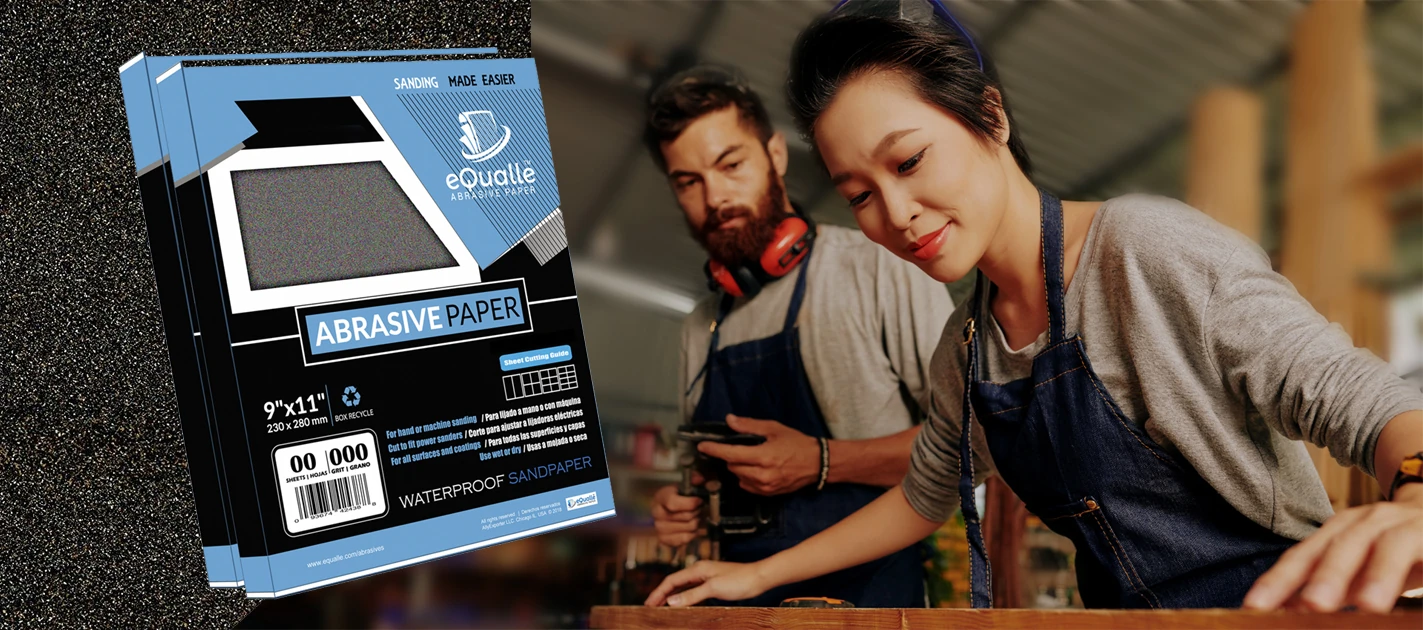
500 Grit Sandpaper Sheets (100-pack) — 9x11 in Silicon Carbide Abrasive for Wet or Dry Use — Fine precision sandpaper for detailed primer and surface smoothing. Removes light scratches and prepares for higher-grit polishing. Suitable for plastic, resin, and metal work in wet or dry conditions. (Professional Grade).
Frequently Asked Questions (FAQ)
Q: What grit steps should I always keep in stock?
A: For most woodshops: P80, P120, P150, P180, P220, P320, and P400. Add P60 for rough work, P600 for scuffing, and P1000–P2000 if you do clear coat leveling or auto work.
Q: Is film-backed paper worth it for fine grits?
A: Yes. From roughly P240 and up, film backings keep the grain level and the scratch pattern more uniform, which shows up immediately under clear finishes.
Q: Open-coat or closed-coat—how do I choose?
A: Open-coat resists clogging on softwoods, paints, and resins. Closed-coat cuts faster and more evenly on hardwoods and metals. Many pros run open-coat mid-grits and closed-coat or film in fine grits.
Q: Why do some brands skip P180 or P320 in certain formats?
A: It’s often a sales-volume decision. If a brand’s line has gaps in your key formats, it will slow your workflow—choose a line that covers those steps consistently.
Q: How do I know when to replace a disc?
A: If pressure increases but cutting doesn’t, or the surface looks burnished rather than freshly cut, it’s done. A good rule is a fresh disc per panel or per major surface, especially in fine grits.