
Surface Leveling: Flatten Glued-Up Panels by Hand
The clamps click loose on a Saturday morning, and the shop exhales. You can smell the faint sweetness of cured glue and yesterday’s coffee. The panel—boards you’ve nursed from rough lumber to edge-jointed strips—comes out of the pipe clamps like a promise. But every promise needs work. There’s a whisper of misalignment at the seams, a few proud edges, maybe a clamp bruise. You don’t own a drum sander, and your benchtop planer isn’t wide enough. Still, the goal doesn’t change: a dead-flat, honest surface that feels like a single piece of wood under your palm.
This is where long sanding blocks earn their keep. They’re straightforward, affordable, and—when used with intention—relentlessly accurate for surface leveling. I’ve flattened dining tables, desk tops, and cabinet panels with nothing but a long block, patience, and a pencil. It’s not about brute force; it’s about consistent contact, disciplined strokes, and reading the wood with your eyes, hands, and ears. If you’ve ever chased flatness and ended up with rolling waves and swirls, you’ll appreciate how quickly a properly set up long block tells the truth and erases mistakes without digging in.
The rhythm is comforting: mark, stroke, check, repeat. The pencil grid fades where the high spots go, sound brightens as the paper starts cutting, and the panel slowly turns from a piled-up collection of edges into a unified plane. If you’re coming from power sanding, you’ll notice a shift. The long block is quieter, cleaner in its intent, and less likely to betray you with a gouge. Once the panel is flat, you switch to finer grits, align the final scratch pattern with the grain, and you’re ready for finish. You’ll feel it—work you can trust, precision you can measure, and a surface that behaves under stain, paint, or clear coat.
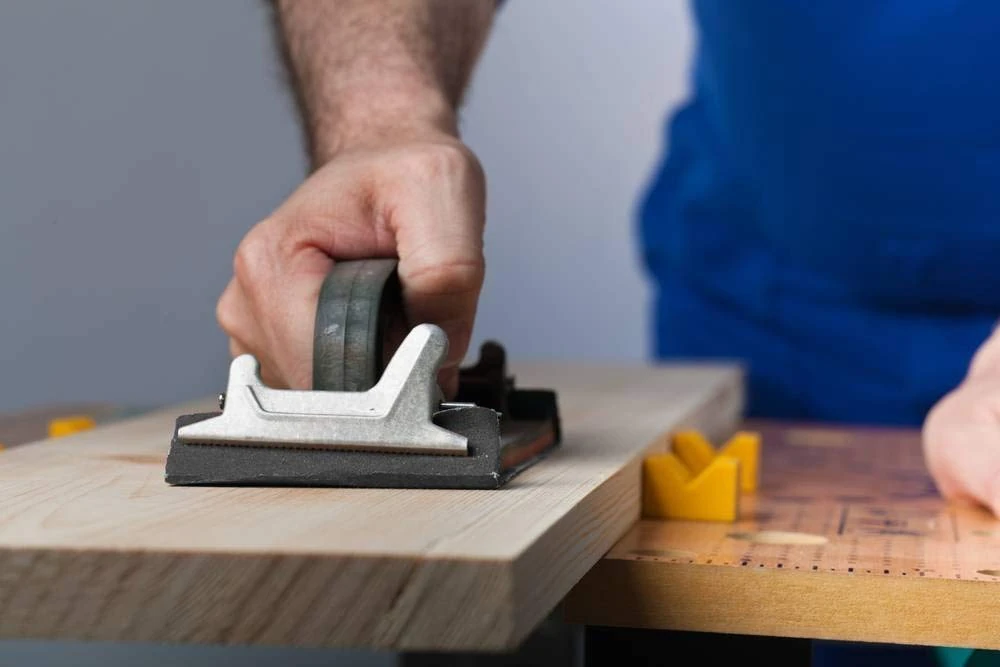
Quick Summary: Build or grab a long sanding block, mark the panel, use diagonal full-length strokes for flatness, progress grits thoughtfully, and verify with straightedge and raking light.
Plan the Glue-Up for Flatness
Your flattening job starts before you touch sandpaper. A good glue-up reduces how much material you need to remove and how hard you have to work.
- Joint edges cleanly and square. Test with a light and a straightedge—no daylight at the seams. If you don’t have a jointer, use a long hand plane or a shooting board to get reliable edges.
- Align boards during assembly. Biscuits, dominos, or simple alignment cauls keep faces close. If you’re working without alignment aids, use clamping cauls wrapped in packing tape to prevent sticking. Alternate clamps above and below the panel to equalize pressure.
- Manage squeeze-out. Scrape glue beads at the gel stage (rubbery, not fully hard) with a plastic scraper. You’ll protect your sandpaper and avoid telegraphed glue lines later.
- Control board orientation. While “alternating rings” isn’t a cure-all, it can help balance cupping. More important is grain direction: arrange boards so most grain runs similarly to simplify final passes.
Before the glue even sets, set your expectations for flatness. Lay the clamped panel on a checked-flat surface—your bench or a known-straight beam—and use winding sticks or an accurate straightedge across the panel to confirm it’s not twisted. Correct small issues immediately with clamp pressure and cauls. After cure, flush trimmed ends and any gross misalignment with a block plane or a sharp card scraper to knock down proud glue lines. The closer you get at this stage, the faster your long block will deliver a consistent, flat surface without deep scratches or divots. Think of your glue-up as half of the flattening job—because it is.
Surface leveling with long sanding blocks
A long sanding block is your analog wide-belt sander. Make one that’s straight, stiff, and comfortable. A 24–36 inch length is ideal for most panels. I like a 3–4 inch-wide piece of 3/4 inch MDF or a straight aluminum beam. Add a thin cork or rubber underlayment for compliance, then stick on PSA (pressure-sensitive adhesive) sandpaper from a roll. Attach a low-profile handle or two so you can push with both hands without tipping.
Mark the surface with a soft pencil in a grid. Start with 60–80 grit for initial flattening. Stand square to the work, plant your feet, and drive the block in long, even diagonals across the entire panel. Each stroke should begin off the panel and end off the panel to avoid creating a crown in the middle and a dip at the edges. Cross the opposing diagonal next—think “X” pattern—to ensure you’re not biasing one direction. Keep pressure centered and distributed. Listen for a consistent hiss and watch the pencil marks: they’ll fade first on the high spots, then uniformly as you get close to flat. Vacuum frequently; loaded paper stops cutting and creates heat.
Five practical tips that pay off:
- Prepare two blocks: one dedicated to coarse grits (60–80), one for mid-grits (100–120), to keep faces clean and true.
- Register the block edge against a clamped straight batten along the panel perimeter to help prevent tipping and to keep passes parallel.
- Replace paper early. If it feels like work, it’s the paper, not you—fresh abrasive cuts cooler and flatter.
- Work the full width on every pass; partial strokes create low lanes. Overlap each pass by at least one-third the block’s width.
- Move from your hips with a light bend in the knees. Long, smooth strokes beat short, choppy scrubbing.
When your pencil grid erases evenly and your straightedge shows no daylight in multiple directions, you’re ready to move up in grit.
According to a article, sanding diagonally to level and then switching to with-the-grain at finer grits is a reliable path to flat, scratch-free surfaces.
Grit progression and scratch control
Grit choice is strategy, not ritual. Start coarse enough to erase misalignment without burning the day. On most hardwood glue-ups, 80 grit is the sweet spot. If your panel is near flush out of clamps, you can begin at 100. The goal with the coarse grit is pure geometry: make the face co-planar across its width and length. Keep the diagonal “X” pattern until your straightedge reads true.
Once flat, move to 100–120 grit and repeat the diagonal sequence, but lighten pressure and shorten the sanding window. You’re not re-flattening—just cleaning the surface left by the previous grit and tightening the scratch depth. Mark with pencil again. At 120, you should be able to preview the final look under raking light.
At 150 or 180 grit, change your stroke orientation. Work with the grain in long, overlapping passes. This step aligns scratch patterns so they vanish under finish. Switch to a shorter, lighter block if needed, but keep it long enough to maintain flatness (18–24 inches is fine). If you’re using water-based finishes, pre-raise the grain with a damp cloth, let dry, then do a quick, delicate pass at 180–220 with the grain to knock down fuzz.
Scratch control essentials:
- Inspect with raking light at a low angle from a single source. Scratches will telegraph—they’re directional; tilt the panel to see them.
- Wipe with mineral spirits (or water for water-based finishes) to preview how scratches will show under finish. Let it flash off fully before continuing.
- Never skip more than one grit step. 80 → 120 → 150/180 → 220 is a safe climb.
- Sandpaper wear matters. If the scratch pattern becomes random and shiny, the abrasive is glazed—swap it out.
Treat grit steps as short, focused sessions. The heavy lifting happens at 80. By 220, you’re polishing a flat plane you’ve already earned.
Preventing ridges, dips, and taper
A long block is forgiving, but it still punishes bad habits. The most common issue is scalloping at glue lines because people hover there, pushing down on a “problem.” Don’t spot-sand. Keep the block moving across the entire surface with uniform pressure. The length of the block averages the highs and lows—trust it.
Edge roll-off is another trap. If you finish strokes on the panel, your hands naturally dip as your elbows extend. That ramps down the edges and creates a shallow bowl. Solve this with technique and setup:
- Start and end every stroke off the panel. Use scrap “runners” clamped flush at each end so your block stays fully supported throughout the motion.
- Clamp a sacrificial board around the perimeter as a “frame” if you need to maintain a crisp edge or to help control tilt. That frame takes the wear, not your panel.
- Keep a playing card and 24–36 inch straightedge nearby. Move the straightedge across the panel in multiple directions; if you can slide a single card under it, you’ve got a low spot to address.
Taper can creep in if you bear down at one end more than the other. Reset your stance: feet shoulder-width, body centered, hands spread evenly on the block. Take five practice strokes while watching how the block rides. If it rocks, you’re loading one corner. Adjust your grip until the sound and contact feel uniform.
Three focused anti-mistake tips:
- Re-true the block face. If your cork or rubber pad develops a hollow from heat or pressure, replace it. A flat tool makes a flat surface.
- Maintain a witness grid. If the pencil disappears on one end but lingers elsewhere, don’t “chase” just that area—keep the long, consistent passes until the entire surface catches up.
- Use time, not force. If you’re sweating but not cutting, your abrasive is dull or clogged. Fresh paper protects geometry.
If a small low persists, resist the urge to dig it out. Flatten to the surrounding plane, then decide whether to live with a hairline hollow (often invisible after finish) or take the panel thinner to remove it entirely.
Finishing prep and flatness checks
You’re nearly there. Before declaring victory, verify flatness and readiness for finish. Use a quality straightedge diagonally, across, and along the grain, checking several zones: near edges, the center, and around glue lines. Pair it with a light source for raking light. Your fingertips are excellent sensors; close your eyes and glide your hand across glue seams—proud glue feels like a speed bump, a dip like a soft valley.
Clean the surface thoroughly. Vacuum first, then tack cloth or a damp rag appropriate to your finish system. If you’ve used a vacuum with a brush head, make sure it’s clean—embedded grit can re-scratch the surface.
Address micro-defects now:
- A sharp card scraper can erase a stubborn scratch or tiny high without disturbing the surrounding plane. Follow with a few light, with-the-grain passes at your final grit to blend.
- Break edges slightly with a couple of passes at 220 on a small sanding block to prevent chipping and to take finish gracefully.
- If the panel will be attached to a base, pre-drill elongated holes for seasonal movement and seal both faces to reduce moisture imbalance.
Finish strategy matters. Oil-based finishes are forgiving of faint 180-grit scratch, but water-clear, high-build finishes may reveal everything—go to 220, sometimes 320 on tight-grained woods like maple. Test on a scrap from the same glue-up if you’re unsure.
Finally, let the panel rest flat on stickers for a few hours after sanding—wood can move from heat and humidity. Do a last straightedge pass before finishing. A flat panel that stays flat is the real win.
leveling uneven concrete — Video Guide
There’s a concise video that shows an industrial sander knocking down high spots on a wavy garage floor. Different material, same lesson: long, overlapping passes, steady pressure, and patient checking get you to level. The operator works in broad diagonals, erases high ridges first, and methodically blends the whole surface.
Video source: leveling uneven concrete garage floor surface
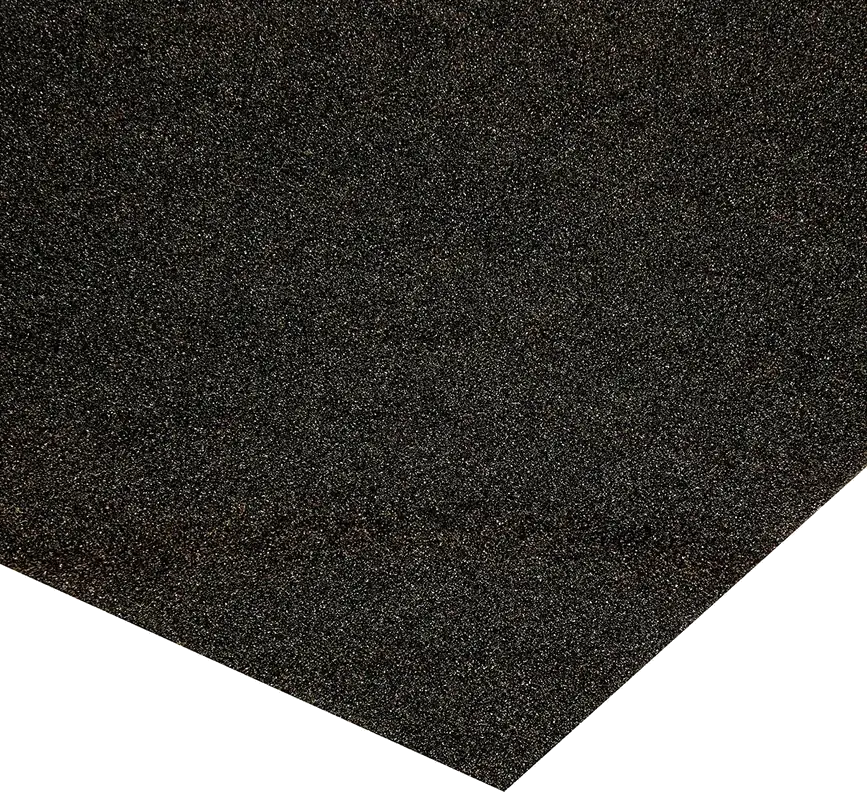
600 Grit Sandpaper Sheets (100-pack) — 9x11 in Silicon Carbide Abrasive for Wet or Dry Use — High-precision finishing grit that delivers ultra-smooth surfaces. Common in primer sanding, automotive detailing, and fine metal work. Performs excellently in both wet and dry sanding. (Professional Grade).
Frequently Asked Questions (FAQ)
Q: How long should my sanding block be for panel flattening?
A: Aim for 24–36 inches. Longer averages better across highs and lows, but make sure it’s stiff and comfortable to control.
Q: What grit should I start with on a typical hardwood glue-up?
A: Most panels flatten well starting at 80 grit. If alignment is excellent out of clamps, you can start at 100. Avoid beginning finer than 100 for flattening.
Q: Won’t a belt sander be faster than a long block?
A: It can be, but it’s easy to dish or gouge a panel with a handheld belt sander. A long block is slower on paper but faster to “perfect,” with less risk and cleaner geometry.
Q: How do I prevent glue lines from showing after finish?
A: Scrape or sand off glue at the gel stage, then flatten with a coarse grit. Progress through grits and finish with with-the-grain passes. Preview with mineral spirits to spot residual lines.
Q: Do I need to sand both sides of the panel?
A: Yes, at least knock down the underside and seal both faces. Balancing removal and finish helps reduce cupping from moisture changes.