
Best Grits for Baseboard Sanding and Scuff Prep
By the time the morning light sweeps across the hallway, every flaw in your trim becomes a quiet distraction: a chipped edge near the doorstop, a line of roller orange peel above the shoe molding, the glossy band where furniture grazed the baseboard. You run a fingertip along a suspect stretch of paint, and it feels slick, impervious—more like a plastic shell than something ready to bond with a fresh coat. It’s a moment many of us know: the desire to fix everything before the day gets busy, weighed against the fear of making it worse. That’s exactly where baseboard sanding earns its keep. It’s the technician’s shortcut to predictability—matting the sheen, leveling micro-defects, and creating a uniformly keyed surface that primer and enamel can actually bite into.
The decision isn’t just “sand or not.” It’s what grit, which abrasive type, how many passes, and how to reach the profiled recesses without flattening crisp edges. Choose too coarse and you can undercut profiles or telegraph scratches through the finish; go too fine and you’ll leave the old film too slick, inviting premature peeling. And then there’s dust management—because a clean, abraded surface is only as good as the vacuum you use afterward.
This article zeroes in on the best grit to scuff sand previously painted baseboards, with a focus on predictable adhesion, fast defect removal, and efficient workflows. We’ll translate the theory of cut rates and abrasive structure into a step-by-step approach you can apply in a single room or an entire floor of trim, with notes for latex versus alkyd, satin versus semi-gloss, and everything in between. By the end, you’ll have a repeatable process that respects both craftsmanship and the clock.
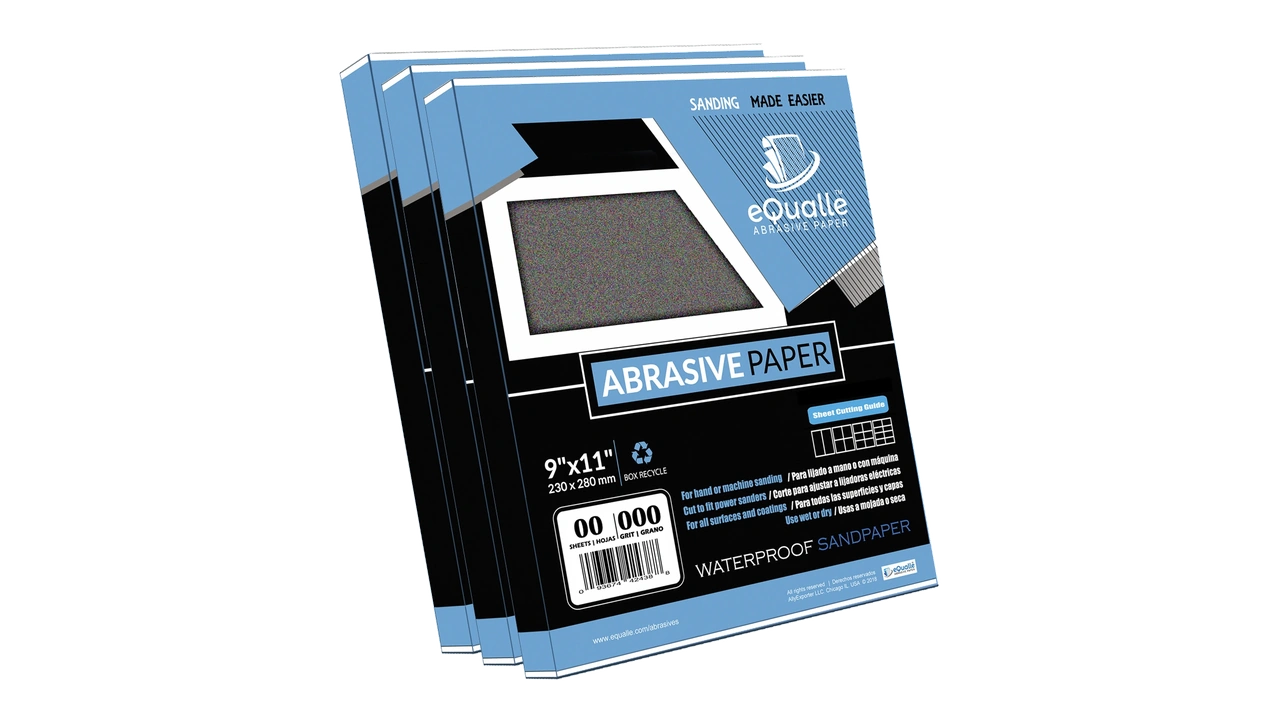
Quick Summary: For previously painted baseboards in sound condition, scuff sand with P220 as your baseline, adjust to P180 for tougher deglossing or to P240–P320 for final enamel-ready matting, and always verify with a clean, uniform scratch pattern before priming.
What painted trim surfaces demand
Previously painted baseboards vary widely in film chemistry, thickness, and age, which governs the abrasive response. A sound acrylic-latex in satin is relatively soft and will degloss predictably with P220–P240. A hard, older alkyd or high-gloss enamel may resist initial cutting and need a slightly coarser approach—P180 to start—followed by a refining pass. Multi-coat systems, where you have layers of paint and intermittent touch-ups, often exhibit “differential cut,” meaning softer patches abrade faster than harder zones. Your job is to even out that response without flattening edges or profiling the substrate.
The goal of scuff sanding is not material removal; it’s surface energy modification and controlled roughness. You want a uniform, fine scratch pattern that eliminates gloss and micro-contaminants (soaps, oils, old polish residues) while preserving detail. In practical terms, that means selecting an abrasive that conforms to profiles, resists loading, and cuts consistently. Foam-backed sanding sponges and non-woven pads excel here because they distribute pressure and are less likely to “dig” on corners.
Distinguish scuff sanding from corrective sanding. If you’re knocking down runs, roller stipple, or paint ridges at caulk lines, begin with a focused corrective step (e.g., P150 on a hard interface pad or a fine mill file for drips), then return to a scuff grit for the broader surface. If the existing paint is failing—peeling or chalking—scuffing is insufficient; you need to remove the friable film and spot-prime the substrate. Finally, always perform a solvent wipe check in an inconspicuous spot: a quick swipe with isopropyl alcohol on latex or mineral spirits on alkyd reveals any unexpected softening that might gum your abrasive and signals the need to adjust technique.
Grit choices for baseboard sanding
If the paint film is intact and you’re solely boosting adhesion, P220 (FEPA) is the most balanced scuff grit for baseboards. It reliably kills gloss without leaving visible scratch-through under typical trim enamels. For harder enamels or glossy alkyds that resist cut, step down to P180 for a single pass, then refine with P220 to remove coarser scratches. When the surface is already very smooth and you’re trying to minimize texture transfer under high-build enamel, a final kiss with P240–P320 further blends the scratch pattern, especially on horizontal tops where light rakes across.
Key scenarios:
- Smooth semi-gloss latex, sound: Single pass P220, light pressure, foam-backed sponge.
- High-gloss alkyd, sound: P180 pass to break the sheen, followed by P220 to refine.
- Orange peel or isolated drips: Localized leveling at P150 on defects only; general scuff P220 afterward.
- Ultra-smooth finish demand (sprayed enamel): P240–P320 final pass, then dust removal and tack.
Equivalency matters. FEPA “P” grades (P180, P220, P240) do not match CAMI numbers one-for-one. Stick with FEPA-labeled papers or sponges for predictability. Non-woven pads also play a role: maroon pads (~P320–P400 equivalent) are excellent for intricate profiles and inside corners where paper edges can gouge; gray pads (~P600–P800) are more of a final polish and can under-abrade for bonding if used alone on glossy films. Avoid steel wool under waterborne products—it sheds, rusts, and can telegraph through light paints.
Pressure and stroke length are as important as grit. Maintain moderate, even pressure; let the abrasive do the work. Over-gripping or leaning into a corner will round profiles and thin edges, which later collect dirt and show premature wear. Keep strokes with the grain direction of the trim for consistent scratch orientation, especially on wider, flat sections.
Abrasives, tools, and controlled passes
Choosing the abrasive architecture influences cut rate, loading, and scratch uniformity. For baseboards, use aluminum oxide papers or sponges in P180–P320; they’re durable and self-renewing under pressure. Stearate-coated sheets reduce clogging on latex, especially when the previous paint contains residual surfactants that can gum the abrasive. Foam-backed sponges (medium/fine/extra-fine corresponding roughly to P180/P220–P240/P320) conform to ogees and bevels without biting into edges. Non-woven pads are invaluable for profiles around returns, cap moldings, and the shoe.
Hand-sanding is surprisingly fast when planned in zones: flats, profiles, and floor-adjacent edges. For flats, a small, rigid sanding block maintains plane and avoids finger grooves. For profiles, switch to a 1/4-sheet sponge folded to present a fresh face. Near flooring, protect with a wide putty knife or a scrap shield to prevent scuffing the finish. Dust collection is not optional—vacuum with a HEPA head after each wall-length section, then wipe with a damp microfiber and finish with a solvent-appropriate tack cloth immediately before primer.
Random orbital sanders can speed long, flat runs (e.g., tall baseboards), but use a soft interface pad and keep to P220–P240 to avoid swirl marks that may telegraph under low-viscosity enamels. Don’t bring a ROS onto delicate profiles; it will flatten detail. Micro-mesh systems above P320 are generally overkill for adhesion and can leave a surface too slick for waterborne primers to grab.
According to a article, moving from coarser to finer grits is standard to refine the surface; in practice for previously painted trim you’ll do this selectively—reserve coarse intervention (P150–P180) for defects, then scuff broadly with P220. If you ever see pigment buildup or pilling on the abrasive, stop and wipe down; clogged media scratches unpredictably. Replace sponges and sheets frequently—fresh, sharp grains reduce pressure requirements and preserve profiles.
Workflow: from prep to primer without delay
A tight workflow preserves the advantages won in sanding. Start with a “dry” inspection and mapping: mark drips, chips, or caulk ridges with a pencil. Mask adjacent surfaces only after you’ve knocked down defects; masking before leveling can trap dust and skew your lines. Next, perform targeted corrections (P150 on defects), then switch to your global scuff grit (P220 baseline). Work in manageable lengths—8 to 10 feet—so you can vacuum and wipe before dust resettles.
Timing matters. After sanding, vacuum immediately, wipe with a damp microfiber (water for latex-painted surfaces, mineral spirits for older alkyd to lift residues), then tack. Prime within a few hours; the longer abraded paint sits, the more airborne contaminants and skin oils can reduce surface energy. Where adhesion is critical—over glossy alkyd or unknown coatings—use a bonding primer compatible with your topcoat. Shellac-based primers lock in tannins and block stain but can be brittle; acrylic-urethane bonding primers offer strong adhesion with more flexibility under waterborne enamels.
Actionable tips:
- Use a cross-hatch scuff on glossy alkyd: light strokes at 45° one way, then the opposite, with P180, followed by a P220 linear pass to unify.
- Protect floor finish: slide a 6-inch drywall knife or paint shield along the shoe as you sand; it doubles as a guide and keeps sponges off hardwood.
- Refresh edges often: rotate your sponge to a clean face every 2–3 linear feet; consistent cut equals consistent sheen removal.
- Verify with a sheen test: tilt a work light at a low angle; any remaining glossy islands need a quick touch with P220 before you move on.
Finish the section with a quick adhesion check if you’re unsure: after priming a small test patch, let it dry, score a cross-hatch with a sharp knife, apply tape, and pull. If paint releases to the substrate, reevaluate—either more aggressive scuffing or a different primer may be required.
Troubleshooting adhesion and flaws
Even with disciplined sanding, certain failure modes can appear after recoating. The most common is “fisheye” or crater defects where residues (silicone, furniture polish) resist wetting. Scuff sanding helps, but contamination may remain below the surface; wipe with a dedicated deglosser or solvent appropriate to the existing coating, then prime with a stain-blocking or adhesion-promoting primer. If the new coat beads or crawls during brushing, stop—do not keep spreading—remove the wet paint, clean, and re-prime the area.
Telegraphed scratches show as linear marks under raking light. They usually come from using a grit too coarse (P120–P150) across broad areas without subsequent refinement. Correct by allowing the coat to cure, then denib with P320 and apply another finish coat. Edge burn-through—where profiles show the previous color or substrate—means you used too much pressure or too rigid a backing. Spot-prime the burn-throughs and adjust technique with a softer sponge and lighter touch.
When paint peels in tape tests or chips easily on impact, suspect under-abraded hard films or incompatible primer. For tough enamels, a two-step scuff is superior: P180 to break the glaze, P220–P240 to refine, plus a true bonding primer. For unknown coatings (e.g., catalyzed conversion varnish previously applied in a shop), sanding alone may not guarantee adhesion; consider a dedicated adhesion primer system and perform a full cross-hatch test before proceeding.
Lastly, manage dust. Residual sanding dust is a silent adhesion killer. Use a vacuum with a brush attachment, then a microfiber wipe, then a solvent-compatible tack cloth only immediately before coating. Over-tacking can redeposit residue; a single gentle pass is sufficient. Proper lighting—a raking LED—will reveal misses before paint locks them in.
How to Properly — Video Guide
A seasoned finisher with decades of field experience demonstrates why sanding isn’t optional for durable trim paint. The walkthrough emphasizes deglossing to raise surface energy, choosing the right grit for the existing film, and maintaining consistent pressure so profiles stay crisp rather than rounded. You’ll see clear examples of when to start at P180 versus P220 and how to refine to P240–P320 before enamel.
Video source: How to Properly Sand Trim
600 Grit Sandpaper Sheets (10-pack) — 9x11 in Silicon Carbide Abrasive for Wet or Dry Use — High-precision finishing grit that delivers ultra-smooth surfaces. Common in primer sanding, automotive detailing, and fine metal work. Performs excellently in both wet and dry sanding. (Professional Grade).
Frequently Asked Questions (FAQ)
Q: What is the single best grit to scuff sand previously painted baseboards?
A: P220 is the baseline for sound, previously painted baseboards. It reliably removes gloss without leaving visible scratches under most trim enamels.
Q: When should I use something coarser than P220?
A: Use P180 to break tough gloss on hard alkyd or heavily polished areas, then refine with P220. Reserve P150 for isolated defect leveling only, not broad scuffing.
Q: Can I use non-woven pads instead of sandpaper?
A: Yes. Maroon pads (~P320–P400 equivalent) are excellent for profiles and corners. Pair them with P220 paper on flats to ensure adequate tooth for adhesion.
Q: Is steel wool safe under water-based paints?
A: No. Steel wool can shed fragments that rust under waterborne coatings. Use aluminum oxide papers or non-woven pads instead.
Q: Do I need to sand between primer and topcoat too?
A: A light denib with P320 after primer improves feel and appearance, especially before high-gloss enamel, but keep it gentle to avoid cutting through.