
Wool, Foam, or Microfiber: Paint Polishing Pads
It starts the same way for many of us: a quiet weekend morning, a freshly washed car pulled halfway into the garage, and a shaft of sunlight cutting across the hood. At first glance the finish looks fine—clear, reflective, even proud. Then the light catches it just right. You see the spiderweb swirls, the errant straight-line marks from a hurried wash, the faint haze that robs the gloss of its depth. That’s the moment you decide the surface deserves more than a quick wax. It needs targeted preparation, controlled abrasion, and a disciplined plan for paint polishing that respects the paint system as much as it pursues perfection.
Standing there with your polisher and a box of pads, the choice feels deceptively simple: wool, foam, or microfiber? Each style promises correction. Each can deliver brilliance—or leave micro-marring and haze—depending on how it meets the paint, the abrasive you pair it with, and the way you manage pressure, rotation, and residue. The difference between a crisp, liquid finish and a cloudy compromise is found in the details: pad construction, paint hardness, defect profile, machine motion, and process control.
If you’ve ever chased clarity panel by panel and felt the satisfaction when a test spot pops, you know paint work is part technique and part judgment. Picking the right pad material is a high-leverage decision. Make it with data—paint type, defect depth, abrasive system—and your correction becomes measurable and repeatable. Make it on guesswork and you’ll chase your tail with endless re-cuts and refinements. Let’s build a practical framework to choose between wool, foam, and microfiber pads for any correction, and then translate it into reliable, efficient sanding and polishing workflows.
Quick Summary: Choose pad material by paint hardness and defect depth, match abrasives to pad behavior, control heat and residue, and validate with a disciplined test-spot workflow.
Know your paint and defects
Before picking pads, audit the surface. Identify the paint system (single-stage vs. clearcoat), age, and whether it’s OEM or a refinish. Many Japanese and some American clears skew soft, while German and certain high-solids refinishes tend toward hard. Soft paint mar easily and finish with little pressure; hard paint resist cut and may require aggressive combinations or pre-sanding to level efficiently.
Characterize defects:
- Shallow wash-induced swirls and light oxidation typically yield to polishing pads and fine abrasives.
- Random isolated deep scratches (RIDS) are below the swirl layer and may require spot compounding or targeted sanding (e.g., 3000-grit) before final polish.
- DA haze and micro-marring are process artifacts; they indicate pad/abrasive mismatch or excessive pressure and heat.
- Etching and texture issues (orange peel) are sanding territory, not simply polishing.
Prep sets the ceiling for your finish. Execute a full decon: contact wash, iron remover on ferrous fallout, tar remover if needed, then clay with a proper lubricant. Follow with a panel wipe (safe solvent or dedicated prep) to remove oils that mask true condition. Tape edges and delicate trim. If you have a paint thickness gauge, profile the panel to avoid over-thinning and to identify prior repairs.
Establish a test spot that represents the worst panel. Start mild: a polishing foam with a fine polish on a DA at moderate OPM. Evaluate under cross-lighting (LED inspection, sunlight if available). If defects remain, step up methodically—microfiber or wool with a medium compound, or pre-sanding where appropriate. Lock your winning combo and repeat it panel by panel. This structured escalation avoids over-cutting soft clears and saves time on hard systems.
How pad choice shapes paint polishing results
Pad material controls three critical outcomes: rate of cut, finish quality, and temperature behavior. Paint polishing isn’t just about removing material; it’s about how you remove it and what you leave behind. Wool fibers deliver high initial bite and typically run cooler because the pile moves air; they level quickly but can leave faint fiber trails that demand refinement. Microfiber pads act like a dense forest of cutting edges—consistent, fast on a DA, but prone to clogging with spent abrasive and paint residue if not cleaned often. Foam pads compress to conform, spreading pressure more evenly; they excel at finishing, with cut governed by density and cell structure.
Chemistry matters. Non-diminishing abrasives (SMAT-style) maintain particle size and rely on your process—pressure, passes, pad—to manage cut. Diminishing abrasives break down with working time and pressure, which can pair well with wool and foam where progressive refinement occurs in one set. Microfiber often prefers non-diminishing to maintain consistent, predictable bite across a set.
Geometry and construction are equally influential:
- Diameter and thickness: Thicker pads absorb heat and contour better but can stall rotation on long-throw DAs. Thin pads transmit energy efficiently for faster cut but run warmer and are less forgiving on edges.
- Interface layers: An interface pad increases conformity on curved panels and can improve finishing with microfiber but may reduce effective cut.
- Foam PPI (pores per inch) and density: Low PPI/open-cell foams vent heat and increase cut; higher PPI, softer foams finish clearer.
- Microfiber pile: Short, tight nap increases control and finishing; longer pile ups cut but can mat faster. Coating on fibers (resin/adhesive) affects initial aggressiveness.
- Wool type: Knitted/wool-blend DA pads tame vibration and finish cleaner than traditional twisted wool yet still cut quickly.
The right combination ties pad mechanics to paint character. Soft clears often respond best to foam finishing or microfiber with a finishing polish, while hard clears may require microfiber or wool with a medium compound before a foam refine. Keep your variables controlled and change one at a time.
Abrasive mechanics: wool vs foam vs microfiber
At the contact patch, each pad material engages defects differently. Wool’s fibers cut via localized, high-aspect shearing. The pile separates, rotating and oscillating with the machine to level peaks of the clear. Because air channels through the pile, wool runs relatively cool—useful on sensitive or freshly cured paint. Its drawback is directional fiber marring, especially on soft, dark colors, often visible as a faint “track” pattern under high-CRI lighting. A brief refining step with a polishing foam typically clears this.
Microfiber pads present thousands of fiber tips that “plane” the surface uniformly. They are stellar on dual-action machines, translating orbit energy into fast defect removal with less user effort than foam. They also load quickly. Spent abrasive and resinous paint residue pack the fibers, stiffening the face and raising temperature. Without regular cleaning (compressed air, pad brush, or on-the-fly towel wipe), microfiber transitions from cutting to smearing, leaving DA haze. Light priming (fully color the fibers with compound, then blow out to leave a thin film) stabilizes initial engagement and avoids dry fiber scouring.
Foam behaves viscoelastically. Under pressure, cells collapse and redistribute load, giving foam the best finishing potential. Cutting foam formulations use stiffer, larger-cell structures to transmit abrasive action, while polishing and finishing foams use finer, softer cells to burnish. Foam can trap heat if overloaded or if the face saturates with residue. Frequent pad swapping and modest pressure keep foam operating in its sweet spot.
Machine choice interacts strongly here. Long-throw DAs maximize microfiber efficiency but can stall if pad thickness and contouring sap rotation. Standard-throw DAs are more forgiving. Rotary with wool remains a fastest-path option for severe defects and flat panels, but it demands refined technique to avoid holograms and edge risk; many modern technicians prefer DA-safe wool for a balance of speed and finish.
Contaminant control is non-negotiable. If you’re correcting over embedded grit, you’re machining that grit into the clear. Maintain a clean face, minimize on-pad product buildup, and monitor panel temps with a touch or IR thermometer to stay below risky thresholds on sensitive finishes. Microfiber and wool thrive when kept fluffy and cool; foam shines when clean and lightly loaded. According to a article
Workflow recipes for real-world corrections
Translating pad theory into repeatable outcomes requires defined workflows. Use these as starting templates, then tune by test spot.
Daily driver, medium-hard clear (e.g., German OEM):
- Cut: Microfiber cutting pad + medium compound on a long-throw DA, moderate pressure. Prime pad fully, blow out, then 4 pea-size dots per set. Work 4–6 section passes; keep pad rotation visible.
- Refine: Orange or yellow polishing foam + finishing polish. Light pressure, slow arm speed for a uniform haze that wipes crystal clear.
- Jeweling (optional): Ultra-soft foam + ultra-fine polish at low OPM to maximize DOI (distinctness of image).
Soft, dark Japanese clear:
- Start mild: Polishing foam + finishing polish on a standard-throw DA. Minimal pressure to avoid micro-marring.
- If initial cut is inadequate: Switch to DA wool + finishing polish for more bite without jumping to a heavy compound. Refine with soft foam.
- Avoid microfiber cutting unless necessary; it can haze soft clears. If used, shorten cycle times and lower pressure.
Hard defects with localized RIDS:
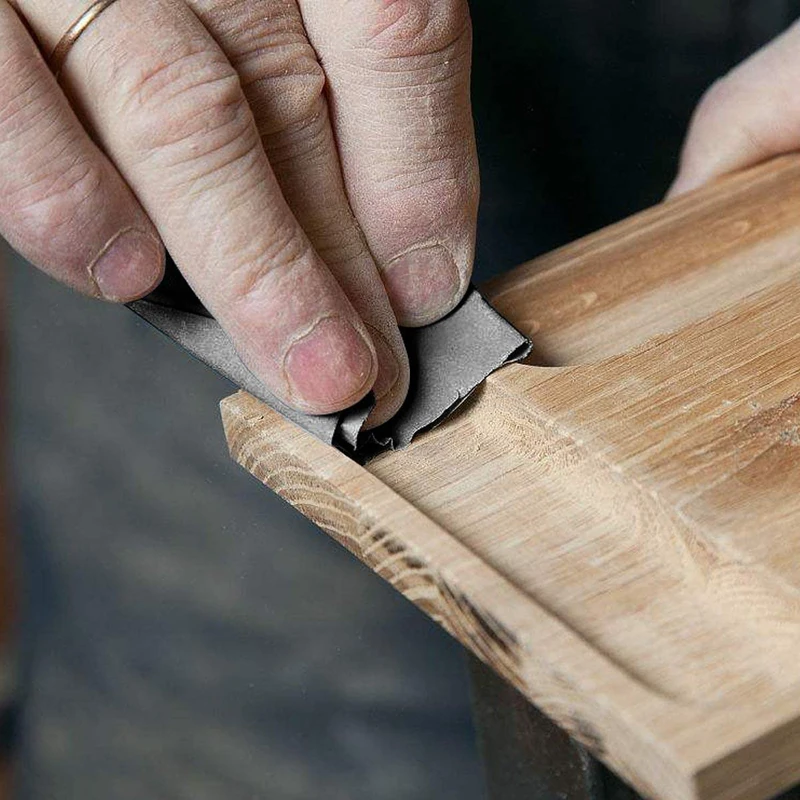
- Spot-sand: 3000-grit disc on a soft interface at low OPM until the scratch edge blurs by ~80%. Keep the disc clean and flat to prevent pigtails.
- Level: DA wool or microfiber + medium compound, focused on the sanded area, feathering into surrounding paint.
- Finish: Polishing foam + fine polish to remove any blend haze.
Fresh refinish (cured per paint system):
- Heat sensitivity is high; prefer DA wool or polishing foam with finishing polishes. Keep panel temps conservative. Incremental passes are safer than aggressive one-step solutions.
Actionable tips:
- Clean as you go: After every section, blow out microfiber and wool with compressed air; for foam, wipe face with a clean towel and swap pads every 2–3 sections.
- Control your pressure: Let the pad face rotate on a DA. If rotation stalls, reduce pressure or adjust pad thickness to regain mechanical cut.
- Prime smartly: Fully prime microfiber once per fresh pad to saturate fibers, then remove excess; for foam, a thin buttered film prevents dry buffing and DA haze.
- Manage heat: Use thinner pads for efficiency on hard paints but monitor temperature. On soft paints or edges, add an interface pad or choose thicker foam to buffer heat.
- Keep cycles short: Especially with microfiber, stop when the residue turns clear and thin. Overworking compounds increases haze and dries the pad.
Troubleshooting finish issues
Finish not crisp? Diagnose by symptom and adjust the variable that most directly influences the artifact.
Faint haze on soft paint:
- Likely cause: Overly aggressive pad (microfiber/wool) or excessive pressure/time with a medium compound.
- Fix: Step down to a polishing foam with a finishing polish. Reduce pressure and OPM slightly. Ensure pad is clean and not over-primed with spent residue.
DA haze on hard paint:
- Likely cause: Microfiber matting or diminishing abrasive broken too far down before defects cleared.
- Fix: Shorten cycle, refresh pad more often, or switch to a non-diminishing compound. Consider a thinner microfiber pad to increase effective cut and reduce dwell.
Holograms (rotary use):
- Likely cause: Wool on rotary with too much pressure or contaminated pad.
- Fix: Transition to DA with a polishing foam pass. If rotary must be used, lighten pressure, slow the machine, and refine with a softer pad and a finishing polish.
Pad hop and stalling on curved panels:
- Likely cause: Pad face too stiff, thickness too low, or residue buildup increasing grab.
- Fix: Add a 3–5 mm interface pad for contouring, switch to a softer foam for finishing phases, and reduce product load.
Dusting and smearing:
- Likely cause: Too much product or working past the abrasive’s window.
- Fix: Use less, wipe residue promptly, and re-wipe the panel with a mild panel prep. In high heat/humidity, choose a low-oil finishing polish that flashes cleanly.
Deep RIDS remain after multiple passes:
- Likely cause: Insufficient leveling; the scratch depth exceeds safe correction with polish alone.
- Fix: Stop chasing with compound; spot-sand with 2000–3000 grit, then re-polish, monitoring thickness. If still visible and near safety limits, accept improvement rather than risking burn-through.
Edge burn risk and trim staining:
- Protect edges with tape or avoid crossing them under load. Use reduced pressure and slower arm speed near body lines. Keep compounds off porous trim and clean immediately if contact occurs.
Polishing Paint For — Video Guide
In this concise walkthrough, a seasoned detailer demonstrates a straightforward approach to getting started with polishing: keep the process simple, select a sensible pad and product, and focus on consistent technique. He emphasizes test spots, light pressure, and working small areas to avoid heat and residue issues.
Video source: Polishing Paint For Beginners - Keep It Simple & Have Fun!
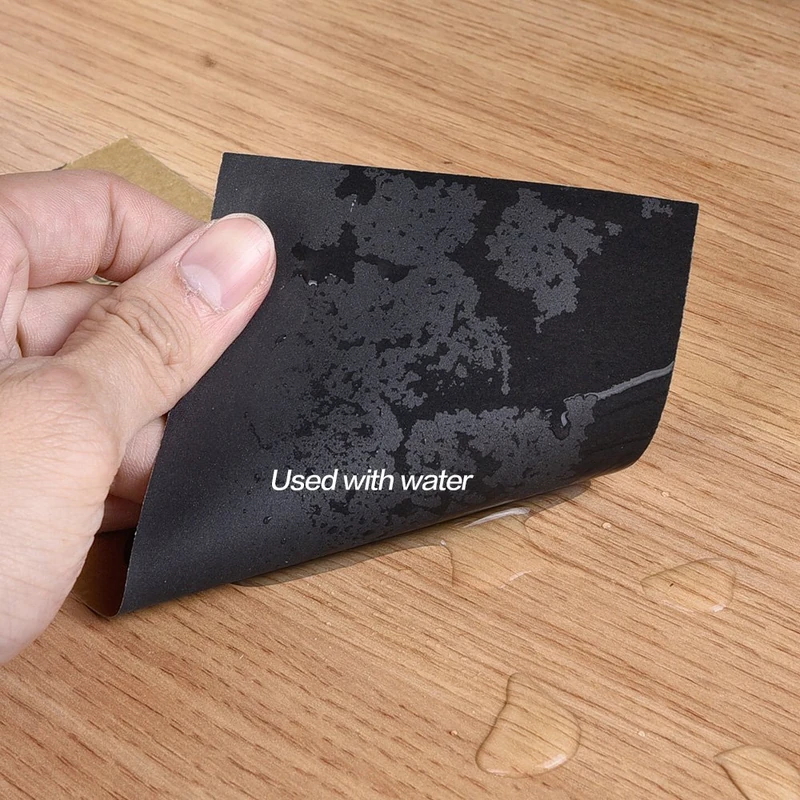
800 Grit Sandpaper Sheets (50-pack) — 9x11 in Silicon Carbide Abrasive for Wet or Dry Use — Ultra-fine grit for pre-polish refinement on paint, clear coats, or resin. Smooths imperfections without damaging the base layer. Provides optimal control when used wet or dry before 1000 or 1200 grits. (Professional Grade).
Frequently Asked Questions (FAQ)
Q: How do I choose between wool, foam, and microfiber for a first pass?
A: Base it on paint hardness and defect depth. For soft paint with light swirls, start with polishing foam. For hard paint with moderate defects, try microfiber plus a medium compound. For severe defects or oxidized single-stage, DA wool is a fast, cool-running first step.
Q: What pad size works best on a long-throw DA?
A: Five- to 5.5-inch thin pads maintain rotation and cut efficiently on long-throw machines. Larger 6.5-inch pads contour well but may stall on tight curves. Use smaller 3-inch pads for pillars and bumpers to preserve control and rotation.
Q: How often should I clean or swap pads during a job?
A: Clean the pad face every section. Microfiber and wool benefit from compressed-air fluffing; foam prefers frequent towel wipes. Swap to a fresh pad every 2–3 sections to manage heat and residue, more often on soft paints or in hot conditions.
Q: Can I one-step with microfiber and a finishing polish?
A: Sometimes, especially on medium-hard paints with light-to-moderate defects. Prime lightly, use low-to-moderate pressure, and keep cycles short. Always verify with a test spot—if haze remains, quickly refine with a polishing foam.
Q: When should I sand instead of compounding?
A: If RIDS persist after controlled compounding, or if texture (orange peel) is the main visual defect, targeted sanding (e.g., 2000–3000 grit) levels more predictably. Follow with a cutting step (wool or microfiber) and then a foam refine, while monitoring film build to stay within safe limits.