
Rust Repair: Cut and Weld or Use Converter
The first cool Saturday of fall, you pop the garage door and that familiar smell hits—old steel, stale undercoating, coffee. You slide on a headlamp, run a hand along the rocker of the wagon you’ve promised yourself you’ll save, and the flashlight beam catches it: a chalky orange bloom creeping along a seam. Rust. It always starts innocent. You grab a pick and it whispers through a scabbed blister like a cracker—underneath, the panel is darker, softer, shocked with pits. That’s the moment that tests your resolve. Is this a quick grind and treat? Or am I cutting and welding today? This is where rust repair moves from theory to reality, and the difference between a weekend win and a year-long project is the decision you make next.
I’ve been in that moment with classics, work trucks, trailers, and daily drivers. Sometimes the right move is a wire wheel, a rust converter, and an epoxy seal. Other times, there’s no shortcut: you cut out cancer, shape fresh steel, weld, and rebuild the seam. If you’re a hobbyist with a small compressor and a jittery respect for sparks, or a pro with a TIG habit and a shelf of abrasives, the decision-making framework is the same. We’ll walk it step by step—how to diagnose the severity, how to verify metal thickness, when a converter earns its keep, and when the welders must come out. I’ll also share the sanding and prep tricks that prevent do-overs. By the end, you’ll have a shop-grade checklist you can trust, and the confidence to point at any rust and say, “I know exactly what to do.”
Quick Summary: Learn to assess rust depth, structure, and access so you can decide when to cut and weld versus treat with a converter—and lock in repairs that last.
Know your rust: surface vs structural
Before you touch a grinder, classify what you’re seeing. Rust lives on a spectrum, but for practical decisions we divide it into four tiers:
- Flash rust: Thin orange haze on bare steel from humidity. It wipes or sands off with minimal metal loss.
- Surface rust: Brown, flaky scale with intact base metal underneath. It can be pitted but hasn’t perforated.
- Scale and delamination: Heavy flake, swelling seams, or layered metal separating—a sign rust has creeped between panel layers or along welds.
- Perforation/structural: Holes, creases crumbling under light hammer taps, or any rust at critical mounts (subframes, spring perches, seat belt or hitch points).
Field tests I rely on:
- Pick test: Press a sharp pick into suspect areas. If it sinks with moderate pressure or the surface sounds dull and crumbly when tapped with a small ball-peen, you’ve got deep damage.
- Thickness gauge or calipers: Compare nearby healthy metal to the affected area. If you’re down more than 20–30% thickness on anything structural, start planning a cut and weld.
- Drill test: On non-visible or soon-to-be-replaced areas, a 1/16" pilot can show you metal consistency. Slow, crunchy dust signals heavy corrosion; clean spirals mean solid steel.
- Backside check: Use a mirror or borescope in wheel wells, rockers, and boxed rails. Rust between layers (pinching seams, spot weld flanges) often looks minor outside but is major inside.
Red flags demanding caution:
- Swollen seams or blistering near spot welds—rust is likely traveling between layers.
- “Rust jacking” around brake or fuel line clips—hardware traps moisture and starts a hidden colony.
- Any bubbling under sound deadener or undercoating—assume worse beneath.
Keep this principle in mind: surface rust can be treated if the base metal is sound and accessible; rust that undermines structure, traps moisture between layers, or has perforated needs surgery. Your job is to decide which side of that line you’re on—accurately and honestly.
When cutting and welding is the answer
Cut-and-weld is mandatory when the metal can no longer carry load or hold shape. If you’re eyeing a subframe mount, seat belt anchor, spring perch, control arm pickup, steering box area, or a hitch attachment, there’s zero debate: replace the steel. A converter can’t add strength; it only stabilizes what remains.
Here’s a methodical path to a clean structural repair:
- Map the bad metal
- Strip to bare steel with a flap disc (60–80 grit) and a carbide scribe. Don’t chase shiny metal—chase sound metal. Mark boundaries where the grinder reveals pitting deeper than 30–40% thickness or where a pick breaks through.
- Probe factory spot weld lines; rust loves to run those seams. If you see “pepper pits” under the paint every inch or so, plan to cut beyond.
- Create a repair patch
- Cardboard template first, then transfer to 18–16 ga steel (floor pans/rockers) or thicker for frames and brackets.
- Match curvature with a body hammer and sandbag; for tight bends, use a vise and form blocks. Clearance is king—aim for 0.5–1.0 mm gap max to reduce distortion.
- Prep edges
- Bevel both the patch and the opening lightly (30–45°) for full penetration. Clean to bright metal, degrease with solvent, and apply weld-through zinc primer only where overlapping is unavoidable.
- Weld with control
- Tack every 1 inch to lock alignment; then stitch weld in alternating spots, allowing cool-down between hits. Keep a damp rag on hand to manage temperature and prevent panel warping. Don’t lay a long bead on body panels; on frames you can, but still skip around.
- Dress and seal
- Grind welds with 60–80 grit flap, then 120. Don’t overheat—blueing equals softened metal. Seal with epoxy primer, seam sealer on joints, and cavity wax inside closed sections.
Tips that save time and frustration:
- If rust reached a multi-layer pinch seam, replace or rebuild the seam; don’t just cap from the outside.
- Drill out factory spot welds and recreate them with plug welds to mimic OEM strength.
- On thin body panels, a copper spoon behind the seam can act as a heat sink and backing for cleaner stitches.
One more note: when cost or downtime is a concern, combine strategies—cut out the worst, weld in a patch, then treat the surrounding marginal areas with converter and epoxy. That hybrid approach often delivers the best lifecycle.
Planning rust repair with converters
Converters are powerful when used where they excel: stabilizing light-to-moderate corrosion on non-critical metal, inside cavities you can’t weld, or as a belt-and-suspenders step after aggressive mechanical prep. They chemically react—usually via tannic or phosphoric acids—to turn iron oxide into a more stable, paintable compound.
Where converters shine:
- Surface rust on floor pans, inner fenders, battery trays, and exterior panels with intact thickness.
- Complex seams or boxed sections where you can reach to prep but not to weld; pair with cavity wax afterward.
- Post-sandblasting or heavy wire-wheel work, to neutralize micro-pitting you can’t fully abrade.
How to do it right:
- Mechanically remove as much scale as possible. Use a knotted wire cup on a grinder for fast scale removal, then a roloc surface conditioning disc. Aim for 90–95% clean steel with just a light pepper of staining.
- Degrease thoroughly. Oils ruin the reaction. Use wax and grease remover and let it flash dry.
- Apply converter per label in a thin, even coat. Too heavy equals a gummy film. Allow full cure—rushing this step is a top failure point.
- Topcoat with 2K epoxy primer once the converter has fully reacted and dried. Avoid single-stage rattle-can primers in structural or high-wear areas; they’re permeable and invite rust back.
When not to rely on converters:
- Any perforation or thinning near high-load zones.
- Crusty layers between lap joints you can’t open—if it’s still expanding, it’ll pop the best paint job.
- Under heavy body filler without an epoxy barrier—chemistry and moisture can cause lifting.
A smart decision workflow:
- If you measure more than 70–80% original thickness, no holes, and you can access both sides to clean, converter + epoxy is viable.
- If you can only access one side but it’s non-structural (e.g., inner skins), consider converter plus cavity wax flooding after primer.
- If there’s an edge with “moth bites,” cut that edge back to clean metal, weld a minimal repair lip, and treat the surrounding areas with converter.
According to a article
Pro tip: Keep a small reference panel where you test your chosen converter, epoxy, and topcoat stack. Abrade it, treat it, then flex and chip it after cure. If it powders or lifts, fix your process before touching the vehicle.
Sanding and prep that actually lasts
Great rust outcomes are 70% surface prep. The chemistry can only do so much if metal stays dirty, slick, or wet. Here’s the approach I use in the shop for long-term adhesion.
Grit progression that works:
- Knock down scale: 36–60 grit flap disc or a knotted wire cup. Wire wheels polish if used too long; stop once scale is gone.
- Level and profile: 80 grit flap to remove major scratches, then 120 grit on a DA sander with an interface pad to keep panels flat.
- Final profile for epoxy: 120–180 grit on bare steel gives epoxy primer enough tooth without tearing it up.
- After epoxy cures, scuff with a red scuff pad or 320 grit before filler or topcoat, per product window.
Heat management:
- Keep panels cool. Overheating promotes flash rust as the panel cools and sweats. Work in quadrants and let metal rest.
- If you see blue or black heat tint, you’re pushing too hard. Back off RPM or pressure.
Cleaning and masking:
- Blow off dust, then vacuum. Dust can hold moisture and salts.
- Wipe with a proper wax and grease remover, two rags method (wet on, dry off). Avoid silicone-based products anywhere near paint.
- Mask clean edges so epoxy doesn’t crawl under old coatings; feather transitions for later bodywork.
Seams and edges:
- Open seams where safe. A thin putty knife or seam splitter helps break brittle seam sealer to expose hidden rust.
- After treating, reseal with a brushable or caulk-style seam sealer over epoxy—not under it. Many seam sealers like an epoxy substrate for adhesion and moisture resistance.
Real-life sanding advice:
- Use roloc surface conditioning discs to “read the metal.” They reveal pits without gouging.
- For curves and beads, switch to a contour wheel or hand-sand with soft blocks—don’t flatten the profile.
- On frames, a needle scaler excels at chipping out thick scale around welds where flaps can’t reach.
Three shop-proven tips:
- Keep a spray bottle of 50/50 isopropyl and distilled water to neutralize leftover dust and salts, then dry with compressed air.
- If you must pause mid-prep, spritz a light coat of phosphoric-based metal prep to prevent flash rust, then rinse/neutralize per label before epoxy.
- Document your stack: abrasive, converter, primer, seam sealer, topcoat. Six months later, you’ll know exactly what succeeded.
Seal, protect, and maintain
No matter how you fix rust, protection determines longevity. Think layers: seal the metal, block seams, armor the underside, and keep moisture out of cavities.
Your protective stack:
- Epoxy primer: Two full coats on bare steel provide the best barrier. If you used a converter, confirm compatibility—some require a specific window before epoxy.
- Seam sealer: Brush or caulk after epoxy. Tool it into joints and spot weld lines. Seam sealer is your moisture gasket.
- Topcoat or chassis paint: On underbodies, a 2K urethane or high-solids chassis paint resists chips better than lacquer-based aerosols.
- Cavity wax: Flood rockers, frames, doors, and pillars. Use a wand to fog the inside until it drips out of weep holes. It creeps into lap joints and displaces moisture.
- Undercoating (optional): Rubberized or wax-based undercoats are fine over fully cured epoxy and paint—but never bury active rust. Avoid thick tar products that trap moisture.
Maintenance cycle:
- Inspect seasonally, especially after winter. Pay attention to drain holes; unclog them so water doesn’t pool.
- Wash the undercarriage after salted roads. Salt plus oxygen is rust’s rocket fuel.
- Touch-up chips immediately with epoxy-based primers or direct-to-metal coatings. Small failures become big ones fast.
If you weld today, plan protection tomorrow:
- After welding, blow out the backside of repairs. Soot and slag hold moisture. When cool and clean, fog cavity wax behind the seam.
- Don’t rush paint. Most 2K epoxies need a minimum cure before topcoat for chemical bonding; respect the window for long-term toughness.
Practical signs of success:
- Repairs stay quiet. No new “crunch” sound when pressing around seams.
- Drain holes weep clear wax at first, then stay open and dry.
- After the first rainy drive, no brown streaks at panel edges—if you see them, you missed a seam.
How to Clean — Video Guide
There’s a straightforward video walkthrough from a DIY channel that shows the basics of cleaning a rusty trailer frame and repainting it for durability. It covers safety, surface prep with wire wheels, rust removal, and how to apply coatings in the right order so the finish holds up on a working trailer.
Video source: How to Clean and Paint a Rusty Trailer Frame
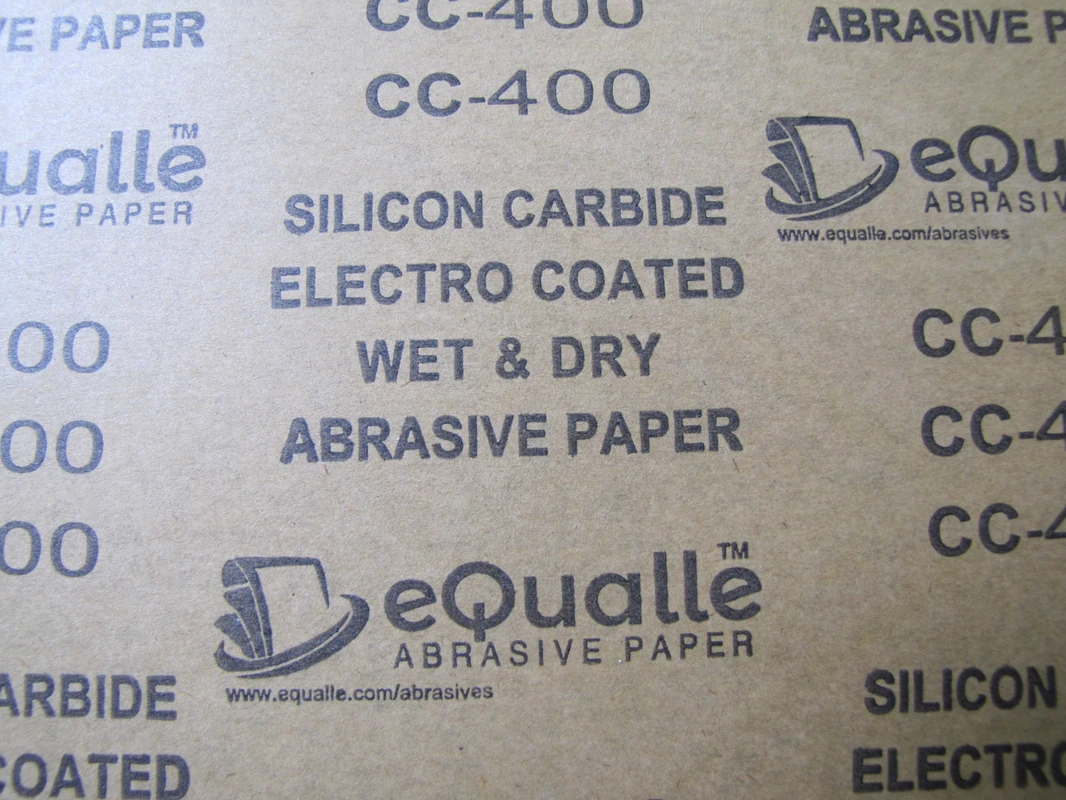
800 Grit Sandpaper Sheets (10-pack) — 9x11 in Silicon Carbide Abrasive for Wet or Dry Use — Ultra-fine grit for pre-polish refinement on paint, clear coats, or resin. Smooths imperfections without damaging the base layer. Provides optimal control when used wet or dry before 1000 or 1200 grits. (Professional Grade).
Frequently Asked Questions (FAQ)
Q: How do I know if I should cut and weld or use a converter?
A: If the area is structural or has perforation, thinning over ~30%, or rust creeping in layered seams, cut and weld. If metal is sound, with accessible surface rust and no holes, a converter plus epoxy can be appropriate.
Q: Can I apply body filler over rust converter?
A: Yes, but only after the converter fully cures and is sealed with 2K epoxy primer. Most fillers adhere best over sanded epoxy; check product data sheets for recoat windows.
Q: What grit should I stop at before epoxy primer?
A: Finish bare steel at 120–180 grit. That profile gives epoxy bite without leaving deep scratches that telegraph through coatings.
Q: Is weld-through primer necessary on all patches?
A: Use it only on overlapped joints where you can’t coat the backside after welding. For butt welds, clean bright metal with no primer yields better weld quality; protect with epoxy afterward.
Q: How do I protect inside rockers and frames after repair?
A: Flood them with cavity wax using a wand, reaching drain holes and seams. Repeat yearly in harsh climates for ongoing protection.