
between coats sanding for water-based finishes
The first time I chased a flawless water-based finish, I watched the light graze across a new maple desk and saw nothing but promise—and dust nibs. Under the shop’s afternoon sun, every tiny speck caught the eye. I had followed the schedule, measured film build, and kept a clean bench. But the finish felt slightly rough, like a fine orange peel. I knew what came next: between coats sanding. The question was not whether to sand, but when—and how—to avoid cutting through those early coats or, worse, clogging the abrasive with half-cured resin.
Water-based topcoats dry quickly but cure more slowly than the clock suggests. Depending on temperature, humidity, airflow, and coat thickness, the finish can be dry to the touch yet still too soft for effective denibbing. In that window, sandpaper loads immediately, drags, and leaves witness marks that telegraph through subsequent coats. Wait too long, and you risk diminished intercoat adhesion. The workflow is precise: read the film, manage the environment, select the right abrasive, and apply just enough pressure to slice nibs without flattening your finish. Done correctly, sanding between coats is not punishment; it’s the insurance policy that moves you from “good” to “glass-smooth.”
If you’ve ever questioned whether the finish is ready—or wondered why your 320 grit suddenly gum-balled into uselessness—this guide will calibrate your process. We’ll get exact on cure states, grit progression, pressure control, and the sensory checks that pros use. You’ll learn how to time each pass, minimize risk of burn-through, and keep scratch depth shallow enough to disappear in the next coat. The goal is to transform between coats sanding from a nerve-wracking guess into a system you can trust.

Quick Summary: Sand lightly by hand with 320–400 grit once the film powders on contact, avoid sanding within the early tacky stage, and recoat within the manufacturer’s adhesion window.
How water-based topcoats actually cure
Water-based finishes don’t just “dry”; they coalesce. After water and coalescing solvents flash off, latex or urethane particles fuse into a continuous film. That film passes through three practical states:
- Green/soft: Dry to the touch but still plastic. Sandpaper clogs instantly, and scratches smear instead of cutting cleanly.
- Powdering-ready: The film abrades into fine white dust (not rolls), nibs slice off cleanly, and the surface deglosses uniformly.
- Fully cured: Hard and chemical-resistant; sanding is easy, but intercoat adhesion is governed by mechanical tooth rather than chemical bonding.
Your job is to find the powdering-ready window. At 70°F (21°C) and 45–55% RH with moderate airflow, many water-based polys and acrylics reach that state in 60–120 minutes per thin coat. But environment trumps labels: cool temps, high humidity, and thick application push the window out to 3–6 hours or more. Conversely, warm, dry air with gentle movement shortens the wait.
A quick diagnostic: press a clean fingertip onto an inconspicuous spot. If it prints and rebounds slowly, wait. If it feels dry and faintly squeaks under light pressure, test with a fresh 400-grit sheet in a corner. Powder means go. If you see pilling or translucent smearing, stop and give it more time.
Reserve aggressive leveling for later coats. Early layers should be denibbed, not flattened. Focus on knocking off dust, raised grain, and tiny sags. For the first one or two passes, hand-sand only. If you need to correct orange peel or waviness, build two or three thin coats, then level with a firm block and controlled abrasives.
Dialing in between coats sanding workflow
Precision comes from repeatable steps. Treat sanding between water-based coats as a micro-process, not an afterthought.
- Verify readiness
- Visual sheen: Look for uniform dulling as the solvent evaporates. Random glossy islands often mean the film is still green.
- Fingernail test: Lightly drag a nail edge. It should not bite or leave a mark.
- Powder test: Two or three strokes by hand with 400 grit; stop immediately if you feel grab or see gumming.
- Choose the right abrasive
- First denib pass: 320–400 grit stearated paper or aluminum oxide film-backed sheets; foam-backed pads work on profiles.
- Leveling pass (later coats): 320 grit on a firm block; then refine to 400–600 grit.
- Mesh abrasives (e.g., net-type) excel with dust extraction, reducing loading on waterborne resins.
- Control the interface
- Use a flat, rigid block on planar panels to avoid dishing. A 3–5 mm interface pad with a random orbital sander (ROS) is safe only after the film builds.
- On edges, wrap the paper around a slightly rounded block; keep contact area small and strokes light to avoid cut-through.
- Technique and pressure
- Hand-sanding: Use light fingertip pressure—just enough to skate the paper and slice nibs. Let the abrasive cut, don’t force it.
- ROS: Set to low speed, minimal pressure, and keep it moving. Vacuum extraction is strongly recommended to prevent re-depositing fines.
- Cleaning between coats
- Vacuum with a soft brush to lift fines from pores.
- Blow off with clean, oil-free air at low pressure.
- Wipe with a water-dampened microfiber. Avoid tack cloths (they can contaminate waterborne films), and avoid mineral spirits.
Actionable tips:
- Use fresh sheets. Waterborne finishes dull abrasives quickly—swap at the first sign of loading.
- Target the defects, not the whole panel, on early coats. Feather just the nib clusters; then a light overall pass.
- If you hit wood, stop immediately. Spot-seal with a thin coat, re-level only after it powders again.
- Keep a humidity monitor and small fan in your finishing area; airflow matters more than you think.
Abrasives, tools, and dust management
Abrasive selection is the lever you control most. Between coats sanding is mostly about denibbing (shearing protrusions) and refining scratch depth. You’re not shaping wood anymore; you’re conditioning film. That calls for sharp, shallow-cut media with consistent grain and backing.
- Paper vs film: Film-backed abrasives maintain flatness better and shed heat; they’re ideal for ROS and hand blocks. Paper is fine for quick denibbing.
- Grain type: Aluminum oxide is a dependable choice. Silicon carbide cuts fast and leaves a finer scratch for its grit number—use it when you need a quick, shallow bite. Avoid cheap, inconsistent grits that leave rogue deep scratches.
- Stearated/open coat: These resist loading on softer films. For water-based resins, stearates lower friction and minimize gumming during the green-to-powder transition.
- Foam-backed pads: Great for profiles and low-risk edges, but they can telegraph uneven pressure. Use only for light denibbing.
- Mesh/net abrasives: With vacuum, they keep dust out of the cut, producing cleaner, cooler scratches and less chance of clogging.
Tools:
- Hand block: The default for early passes. Choose a firm, flat block for panels.
- ROS with interface pad: Safe after 2–3 coats when the film is stable. Run slow and light, 320–400 grit, and keep the pad clean.
- Micro-mesh for final refinement: After the last coat has cured, 1500–2400 grit micro-mesh can knock down tiny nibs before a rub-out.
Dust management is performance, not housekeeping. Dust fines recirculate and re-embed into wet coats. The sequence matters: vacuum first, light air blow-off second (angled away from the surface), and a damp microfiber last. Keep a separate finishing brush and avoid any siliconized shop cloths. According to a article, hand-sanding is preferred for intercoat work because it reduces the risk of heat and swirl defects—aligning with best practices for waterborne systems.
A note on scratch visibility: Water-based films are more transparent and higher in surface tension than oil; deep scratches telegraph readily. Err on the finer side (400) unless you’re deliberately leveling.
Timing by environment and film thickness
The most common failure in between coats sanding is impatience. Timing is a system variable you can standardize with a few controls.
Environment:
- Temperature: Target 68–75°F (20–24°C). Below 65°F, coalescence slows dramatically.
- Humidity: Aim for 40–55% RH. Above 60% RH, water has nowhere to go; the film stays green.
- Airflow: Gentle, indirect movement speeds evaporation without skinning the surface. A small fan pointed past—not at—the work is ideal.
Film build:
- Thin coats win. Water-based finishes are designed for multiple thin passes. Heavy application traps moisture, extending the green stage.
- First coat raises grain. Expect a pronounced roughness on open-pore woods and end grain; denib with 320–400 grit once it powders.
- Second coat often needs the lightest touch. Most of the “fur” is down; you’re slicing dust nibs and micro-bubbles.
Practical timing baselines (always test on your finish):
- At 70°F/50% RH, brushed or sprayed thin coats: light denib in 1–2 hours; recoat immediately after sanding and cleaning.
- At 60°F/65% RH: extend to 3–5 hours; verify with the powder test.
- After heavy coats or low airflow: wait until overnight if needed, then sand gently. If the film feels rubbery the next morning, you applied too heavy—correct with lighter passes going forward.
Recoat window:
- Many water-based urethanes specify a chemical adhesion window (e.g., recoat within 2–4 hours without sanding). Once you cross that, mechanical tooth becomes essential. Light sanding to a uniform matte restores reliability.
- Avoid exceeding the maximum recoat window by days without abrasion; once fully cured, adhesion depends entirely on your scratch pattern.
Stagger your workflow:
- Rotate parts. Finish part A, then B, then C. By the time A returns, it’s likely in the powder window.
- Use timers labeled per piece. Don’t trust memory in a multi-panel job.
Troubleshooting adhesion and defects
Even precise workflows run into gremlins. Use these diagnostics and corrections.
Adhesion failure (peeling, flaking):
- Causes: Contamination (oils, silicone, wax), sanding too soon (smeared surface), or recoating well past the window without abrasion.
- Fix: Remove the affected area down to sound film, clean with water and a drop of mild detergent or the manufacturer’s cleaner, scuff-sand 320–400 to uniform dullness, and recoat thin.
Sand-throughs and witness lines:
- Causes: Excess pressure on edges, hard block on a crowned surface, or aggressive grit (≤220) between coats.
- Fix: Feather the edge with 400 by hand, spot-seal the exposed wood with a thin coat, allow to powder, then blend with the next coat. Use a softer interface on convex profiles.
Persistent orange peel:
- Causes: Viscosity too high, poor atomization, or finishing in a cool, still environment.
- Fix: Improve atomization or add manufacturer-approved extender, apply thinner coats, and introduce gentle airflow. Level after 2–3 coats with 320, then refine with 400 before the next coat.
Loaded paper/gummy feel:
- Causes: Sanding in the green stage or pushing too hard.
- Fix: Stop. Clean the surface, wait 30–60 minutes, then retest for powdering. Replace loaded abrasive; don’t try to “rub it clean.”
Cloudiness or blush:
- Causes: Trapped moisture in thick coats or high humidity.
- Fix: Allow more cure time with airflow and warmth. If severe, sand back to clarity and resume with thinner applications.
A final pass strategy:
- After your penultimate coat, level with 320–400 to a dead-flat matte, remove every nib, then apply a very controlled final coat. If needed, micro-denib cured dust with 1000–1500 grit or micro-mesh and polish lightly with a non-silicone compound.
Sanding Between Topcoats — Video Guide
Bethany from Madeline Jean Antiques & Restoration demonstrates an efficient method for sanding between topcoats to achieve a near-flawless surface. She emphasizes light pressure, the correct grit range for denibbing, and a consistent cleaning routine before recoating.
Video source: Sanding Between Topcoats - Getting a SMOOTH Finish
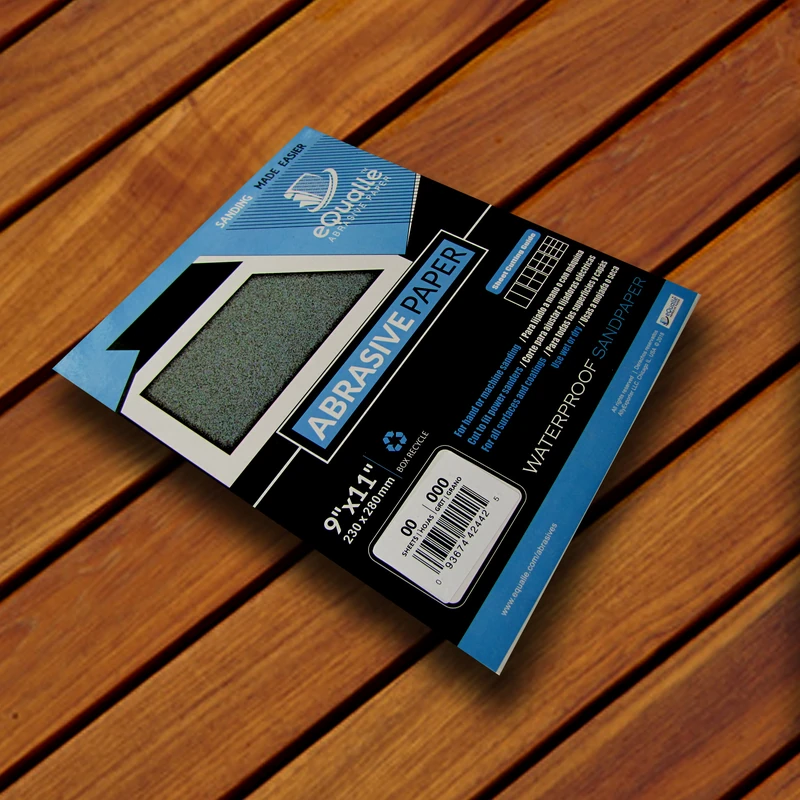
320 Grit Sandpaper Sheets (25-pack) — 9x11 in Silicon Carbide Abrasive for Wet or Dry Use — Fine finishing grit for sanding between coats of paint, primer, or lacquer. Provides smooth, even results for woodworking, automotive, and precision finishing. Works efficiently for wet or dry applications. (Professional Grade).
Frequently Asked Questions (FAQ)
Q: How long should I wait before sanding between coats of a water-based finish?
A: Under typical shop conditions (70°F/50% RH), 1–2 hours is common for a thin coat to reach the powdering stage. Always verify via a quick hand test: if the film produces fine white dust and doesn’t smear, you’re ready. Cooler temps, higher humidity, or thicker coats can push that to 3–6 hours.
Q: What grit should I use for between coats sanding?
A: For denibbing, start with 320–400 grit. Reserve 320 for leveling after you’ve built 2–3 coats. Use 400–600 for light intercoat scuffing when adhesion is the primary goal and the surface is already flat.
Q: Do I have to sand between every coat of a water-based finish?
A: If you’re still within the chemical recoat window and the surface is clean and defect-free, you can often recoat without sanding. However, for high-end results, a light scuff between coats improves smoothness and reliability, especially after the window closes.
Q: Can I use a random orbital sander between coats?
A: Yes, but best after two or more coats have built a stable film. Run low speed with minimal pressure, a 3–5 mm interface pad, and 320–400 grit. For the first pass after the initial coat, hand-sanding is safer to prevent cut-through and swirl marks.
Q: What’s the best way to clean before recoating a water-based finish?
A: Vacuum with a soft brush, lightly blow off with clean air, then wipe with a water-damp microfiber. Avoid oil-based tack cloths or silicone-containing products, which can cause fisheyes and adhesion issues.