
Sandpaper Grit Chart: Passes Per Grit Made Simple
Saturday light spills across your workbench. The project in front of you—maybe a scuffed oak dresser, maybe the living room floor you’ve promised to refinish—feels like a promise and a puzzle. You run your hand across the surface and feel the story it tells: tiny ridges, old finish, shallow dents. You’ve got fresh sheets of paper and a plan—start coarse and move finer—but an uncomfortable doubt hovers: how many passes per grit will it take to make this right? You glance at a sandpaper grit chart taped to the wall, and it helps you choose what’s next. Still, charts don’t tell you how many times to cover the board, how slowly to move, when to stop at a grit or when to do “just one more pass.”
The machine hums to life. You make a deliberate first sweep. Dust curls into the air like fog. On your second pass the surface starts to level; by the third, the deep scratches look more organized. But a quick spin under raking light and there they are: faint arcs from the last grit, ghosting through. You feel that pull between patience and haste. Too few passes and the next grit will only polish old scratches; too many and you waste paper—and risk over-sanding edges or soft grain. Real craftsmanship lives in that tension: enough cutting to erase the past, not so much that you create new problems.
If you’ve ever rushed a final pass and seen swirl marks bloom under finish, you know the cost of guessing. Today, we’ll take out the guesswork. I’ll walk you through what a “pass” really means, how to translate a grit sequence into pass counts, the signals that tell you to keep going (or stop), and tool-specific guidance. With a clear approach, you’ll sand confidently—measuring with your eyes, your fingers, and your light—so every step supports the next and your finish sings.
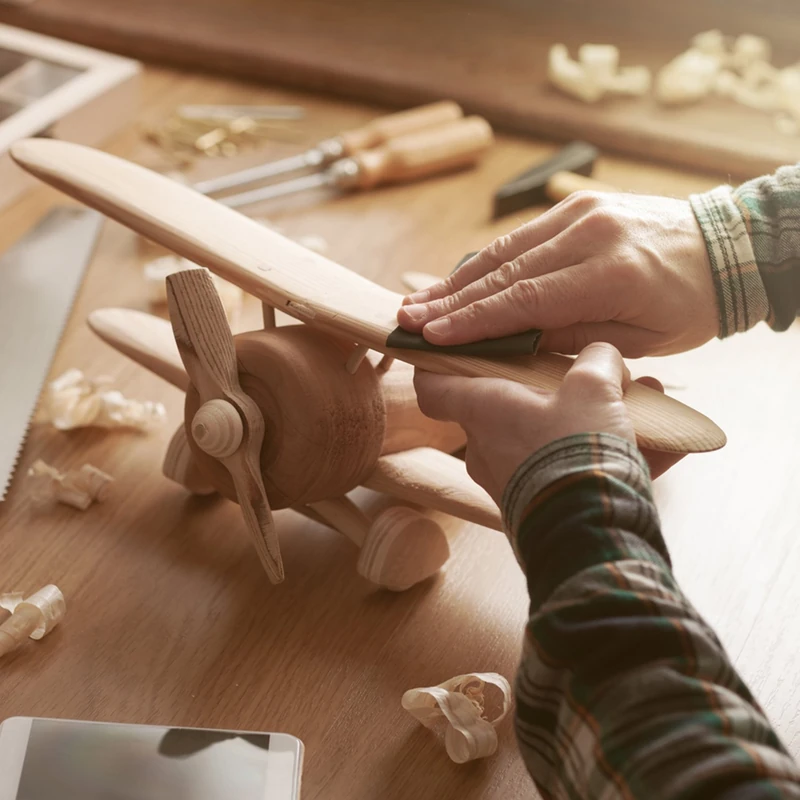
Quick Summary: Most projects need 2–3 full, overlapping passes per grit—fewer at the final grit, more at the first—moving in sensible grit steps and stopping the moment all scratches from the previous grit are gone.
What a pass really means
“Do a few passes” is vague advice until you define a pass. A pass is one full, even, overlapping coverage of the work surface at a consistent speed and pressure. If you’re using a random orbital sander on a tabletop, a single pass usually means methodically tracking side-to-side, overlapping each stroke by about 50%, from one edge to the other. If you then rotate 90 degrees and cover it again, that second coverage counts as another pass.
On floors with a drum or belt machine, a pass is one clear, straight walk up and back across the lane you’re sanding, with a controlled feed rate and consistent pressure. For hand sanding along the grain, one pass is a full-length coverage from end to end, slightly overlapping your previous strokes until the entire board is treated.
Why this matters: pass counts are only meaningful if your passes are consistent. If your first pass is slow and deliberate and your second is rushed, they don’t do equal work. Similarly, overlapping matters. Gaps leave islands of deeper scratches; the next grit can’t remove them without extra passes.
How many passes remove a scratch pattern? Think of it as a two-stage job for each grit:
- The first pass “cuts” and starts replacing the old scratch pattern with a new, shallower one.
- The second pass aligns and erases any holdouts, especially near edges, highs/lows, and end grain.
A third pass at early grits is often a smart insurance policy—especially when:
- You began with a heavy film finish or stubborn defects.
- You’re changing direction (crosshatch) or flattening a cupped surface.
- Your material is unevenly hard (e.g., certain softwoods with hard latewood).
Final grits typically need fewer, lighter passes. Over-sanding at high grits can “burnish” the surface, reducing stain uptake or creating finish adhesion issues. The goal at each stage is simple: do the minimum number of even passes needed to erase the previous grit’s scratches—no more, no less.
From chart to action: using a sandpaper grit chart
A sandpaper grit chart helps you pick the order of grits, but it’s your passes that bring the sequence to life. As a rule, jump by roughly 1.5–2× in grit size, not more. For example: 60 → 100 → 150 → 220 is sensible; 60 → 220 is not. The bigger the jump, the more passes you’ll need to erase the prior scratches—sometimes enough that you’d have been faster stepping through an intermediate grit.
Common wood sequences and typical pass counts:
- Heavy removal/flattening (bare wood or stubborn finish): 36/40 → 60 → 80/100 → 120/150. Passes: 2–3 at the first grit, 2 at each middle grit, 1–2 at the final grit.
- Furniture prep on previously sanded wood: 80/100 → 120/150 → 180/220. Passes: 2 at 80/100, 2 at 120/150, 1–2 light passes at 180/220.
- Veneered surfaces: Start finer (120/150) to protect the thin veneer, with 1–2 light passes per grit and careful checks under raking light.
Use the chart to choose the next grit, then confirm with the scratch-removal test:
- Sand a small test area at your current grit.
- Wipe or vacuum clean; view under raking light from multiple angles.
- If any deeper scratches remain, add a pass at the same grit; if none remain, move on.
For paint and clear-coat prep, treat the “finish” like a different material: step conservatively (e.g., 220 → 320 → 400), often with 1–2 passes per grit and crosshatch coverage to ensure uniform tooth.
Keep notes. Your personal “micro chart” becomes powerful: for your sander, your pressure, your wood species, two passes at 120 might be perfect, while on dense maple you may need a third. Over time, you’ll feel when the paper is cutting cleanly versus polishing, and you’ll match your pass counts to the exact work in front of you.
Pass counts by tool and material
Tool mechanics change how many passes each grit needs. Run time, pad size, and pressure all affect cut rate and scratch depth. Calibrate your expectations by tool, then adjust to the material.
Random orbital sander (5–6 inch): Expect 2 passes per grit for most solid wood, plus an optional third at the first grit if you’re removing a finish or flattening. Use 50% overlap. If you crosshatch (one pass east–west, one pass north–south), that already gives you two robust passes at a grit. On final grits (180–220), one slow, light pass is often enough once the previous pattern is fully gone.
Belt sander (handheld): These cut aggressively. One careful pass can remove a lot, but can also groove. Favor 2 lighter passes over 1 heavy pass to stay flat. Keep the platen level; let the belt do the work. When stepping up a grit, dial back pressure and speed to minimize new scratches.
Drum/belt floor sander: Start with 36/40 or 60 depending on finish thickness and flatness. Plan on 2–3 passes at the starting grit, then 2 at each step (e.g., 36 → 60 → 80 → 100/120), with the edger matching each stage. According to a article, it’s common to finish at 100–120 on floors; the exact number of passes depends on the condition and the machine’s cut.
Hand sanding/block: You control everything—great for precision but easy to undercut edges. On flat panels, think in pairs: 2 passes per grit with the grain. On profiles, sand minimally at higher grits to avoid rounding.
Material notes:
- Softwoods (pine, fir): Scratch easily and show washboarding. Favor smaller grit jumps and 2 light passes at final grits to avoid burnishing ridges.
- Hardwoods (oak, maple): Need a bit more at the first grit (2–3 passes) to flatten and remove milling marks; then 2 at each step.
- Veneers: Minimum pressure, 1–2 passes per grit, and tighter jumps (e.g., 150 → 180 → 220) to protect thickness.
- Finishes/paint prep: Target a uniform scratch for adhesion. Often 1–2 crosshatched passes per grit are enough once sheen is fully knocked down.
Remember: the best indicator isn’t the pass count; it’s whether the previous grit’s scratches are completely gone from every square inch.
Troubleshooting your scratch pattern
Not sure if it’s time to move up a grit or do another pass? Read the surface like a map.
Raking light test: Position a bright light low and off to the side. Rotate the work. If you see deeper, directional scratches from the last grit, stay put and add a pass. The pattern should look uniform and subtly finer after each pass.
Pencil grid method: Lightly draw a crosshatch pencil grid across the surface. One controlled pass should fade it; two passes should erase it uniformly. If old scratches still appear after the grid is gone, your first grit wasn’t aggressive enough—or you need an extra pass at that grit.
Feel test: Wipe clean and glide your fingertips across the grain. You’ll feel high-frequency chatter from swirl marks, especially around edges or knots. If you feel texture changes moving from center to edge, you may be under-sanding edges; add a focused, even pass with reduced pressure.
Dust color and loading: Coarse cuts produce heavier dust; as you refine, the dust gets finer. If your paper loads quickly or smears, you may be overheating or cutting a finish that needs a coarser grit first. Swap paper and reduce pressure; don’t grind a clogged disc—those create halos that take extra passes to fix.
Swirls after the final pass: These usually mean you moved up too fast or rushed the last grit. Step back one grit, do 1–2 careful passes with slow feed, then reattempt the final grit with a very light touch. If you’re using an interface pad, check for debris under it and consider switching to a firmer pad for flat work.
When to add a pass:
- You can still isolate previous-grit scratches under raking light.
- Edges or end grain show a different sheen than the field.
- You changed direction (e.g., crosshatch) and the new pass revealed hidden lows.
When to reduce passes:
- You’re at a high grit and the surface looks and feels uniformly fine.
- Veneer or soft profiles risk thinning or rounding.
- The piece will be painted and already shows consistent tooth appropriate for the coating.
Calm, deliberate checks between passes save time. Guessing costs paper—and sometimes wood.
Pro tips for faster, cleaner sanding
Dial in these habits to minimize passes while improving results.
Match speed to grit:
- Coarse grits (36–80): Slow your feed. Aim for about 1–2 inches per second with a 5–6 inch random orbital to let the abrasive cut. Two passes here beat four rushed passes later.
- Fine grits (150–220): Lighten pressure and slightly quicken your sweep to avoid burnishing.
Overlap with intent:
- Maintain 50% overlap. Imagine each disc width is a lane; half of your next lane should cover the last. Missed strips become ghost scratches that steal extra passes at higher grits.
Control pressure, not force:
- Let the abrasive cut. Excess pressure stalls the pad, creates swirls, and clogs paper—ironically forcing more passes. Keep the motor near full speed under load; if you hear it bog, lighten up.
Refresh abrasives on a timer:
- A dull disc “polishes” without cutting, luring you into extra passes. As a rule of thumb, change discs:
- Coarse grits: every 80–120 square feet on softwood, 60–80 on hardwood.
- Fine grits: every 120–150 square feet, or sooner if scratch clarity drops.
- For floors, label each pass set and rotate to keep wear even.
- A dull disc “polishes” without cutting, luring you into extra passes. As a rule of thumb, change discs:
Clean between grits:
- Vacuum, wipe with a dry microfiber, and blow out pad holes. Stray coarse particles under a fine grit act like landmines that reintroduce deep scratches—adding passes you didn’t plan for.
Use the right pad/interface:
- Firm pads for flattening, soft or interface pads for contours. The wrong pad flexes and trails scratches, demanding make-up passes.
Track your work:
- For big surfaces, chalk light guide lines or use the pencil grid. Knowing exactly where you’ve been keeps pass counts honest and coverage complete.
Respect edges and end grain:
- Edges sand faster. Feather your entry/exit and reduce pressure on perimeters. For end grain, expect one extra pass at the same grit, not a jump up—otherwise it can drink stain unevenly.
These practices turn “how many passes?” from a guess into a controlled, repeatable routine.
How Do I — Video Guide
New to furniture flips or returning after a long break? This short video breaks down how to choose the right grits at each stage of sanding and how many full coverages to make before moving on. It walks through the differences between stripping, smoothing, and finish-ready prep so you avoid common pitfalls like swirls and uneven sheen.
Video source: How Do I Sand Furniture? | Sandpaper Grit 101 - Know Which Grit to Use for Each Step of Your Flip!
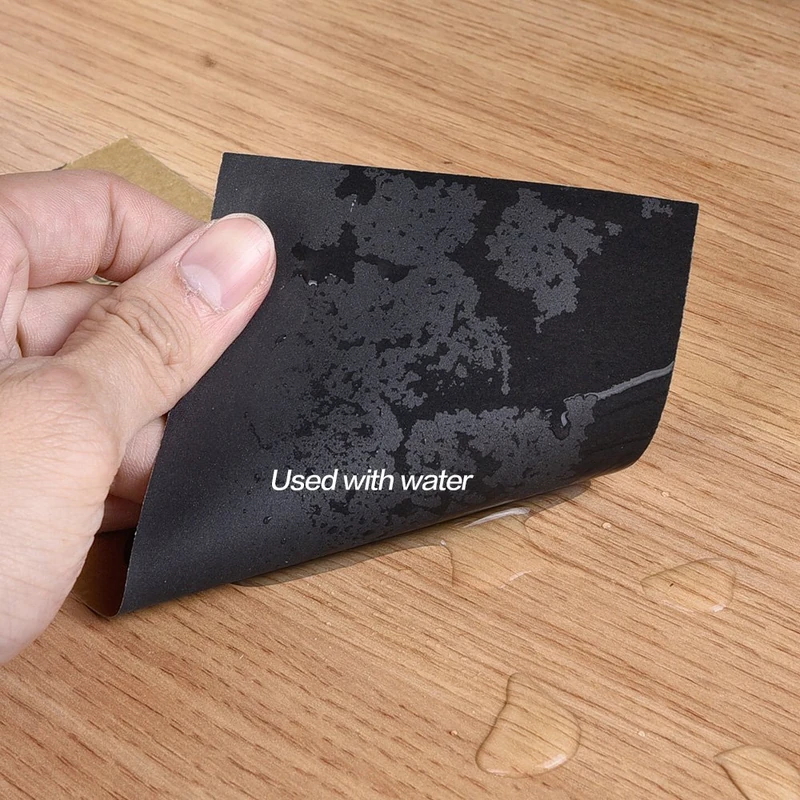
180 Grit Sandpaper Sheets (10-pack) — 9x11 in Silicon Carbide Abrasive for Wet or Dry Use — Reliable grit for producing a uniform texture on wood, metal, or filler layers—often used before varnishing or applying topcoats. (Professional Grade).
Frequently Asked Questions (FAQ)
Q: How many passes per grit should I do on hardwood floors?
A: Plan for 2–3 passes at your starting grit (36/40 or 60, depending on the floor’s condition), then 2 passes at each subsequent grit (e.g., 60 → 80 → 100/120). Use the edger to match each stage. Confirm each step under raking light; if you still see previous-grit scratches, add one more pass before moving up.
Q: Can I skip grits to save time if I just add more passes at the next grit?
A: Usually no. Skipping from, say, 60 to 180 forces many extra passes to erase deep 60-grit scratches and risks embedded swirls. It’s typically faster to include the intermediate (e.g., 60 → 100 → 150/180), with 2 passes per grit, than to “catch up” with four or more passes at a big jump.
Q: Why do I still see swirls after my final pass at 220?
A: Likely causes are moving up too quickly, dull paper, too much pressure, or debris under the pad. Step back one grit, do 1–2 controlled passes, clean thoroughly, and finish with a very light pass at 220 using fresh paper and a firm pad on flat work.
Q: How long should a single pass take with a 5–6 inch random orbital?
A: On flat hardwood, aim for about 1–2 inches per second at coarse grits and 2–3 inches per second at finer grits. The key is consistent overlap and steady pad rotation under load. If you rush, you’ll need extra passes to clean up uneven areas.
Q: How do I know when to stop at a grit and move on?
A: Three checks: under raking light the scratch pattern is uniform and fine; the pencil grid disappears evenly; and by feel, edges and field match. If those are all true, you’ve done enough passes—move to the next grit.