
Inspecting Haze Under Lights with Microfinishing Film
Late on a quiet Saturday, you roll your car into the garage, switch off the overhead fluorescents, and click on a handheld LED. The beam cuts across the paint like a spotlight at a small-town theater, revealing a performance you didn’t plan to see: a soft, cloudy veil that dances when you tilt the light. By daylight, it looked perfect. Under strong lighting, the haze is undeniable. Your heart sinks for a moment—not because the job failed, but because you didn’t have the right viewing conditions to judge it. This is the moment when craft and care intersect with truth. Strong light doesn’t create haze; it exposes it, inviting you to refine your process.
Whether you’re refreshing daily-driver clear coat, finishing a guitar body, or finessing a watch case, the path to a mirror-like finish runs through intentional inspection. That’s also where microfinishing film enters the picture: a precise, uniform abrasive that gives you control over the last 5% of the surface—where gloss, clarity, and pride live. Paired with deliberate lighting and a repeatable workflow, it helps you move beyond “looks good” toward genuine quality. Knowing what to look for and how to adjust—lighting angles, abrasive steps, pad choice, pressure—can spare hours of guesswork and leave you with a surface that holds up in any light, on any day.
In the end, haze is just a signal. It’s telling you about scratch depth, abrasive uniformity, heat, or residue trapped between you and your goal. When you get curious about that signal—when you learn to read it under strong lighting—you gain a language for what to do next. That’s the quiet satisfaction of precision work: the confidence that your finish won’t fall apart under the harshest beam or the brightest sun. With a little structure, a few easy upgrades to your tools, and the careful use of microfinishing film where it shines, you can turn that Saturday-night surprise into a polished win.
Quick Summary: Strong lighting reveals haze so you can correct it—use controlled inspection, tight abrasive steps (including microfinishing film), and a repeatable finish-check workflow.
Why Haze Appears Under Strong Light
Haze is diffuse light scatter. Instead of reflecting like a mirror, the surface sends light in many directions because of micro-scratches, uniform but shallow abrasion, or residue sitting on top. In daylight, those issues blend into the ambient brightness. Under a sharp, directional source—think focused LEDs or the sun at a low angle—the tiny valleys and peaks become visible, especially on dark colors or glossy plastics.
Several patterns matter:
- Sanding haze: After leveling, the surface holds a uniform micro-scratch pattern. It can look dull and gray, especially when grits jump from too coarse to too fine.
- DA haze or pad marring: Random-orbital action plus an aggressive pad can leave a fine trail that shows up as a uniform fog.
- Holograms: Rotary trails that appear as curved, ghost-like lines when you sweep a light across the panel.
- Coating or wax high spots: Uneven product left to flash or cure, visible as dark smudges or streaky clouds under a beam.
Physics plays a role too. If the scratch width approaches the wavelength of visible light (roughly 400–700 nm), scattering intensifies. That’s why the “last steps” in finishing matter so much: they narrow the scratch profile and make it more uniform. Heat and residue compound the problem. Overheated clear coat can soften and re-harden unevenly, amplifying scatter. Oils from polishes can temporarily fill or mask defects, then wash out later—surprise haze.
The key lesson: haze isn’t random. Its look hints at its origin. Uniform shrouds scream “abrasive step too large” or “pad too aggressive.” Directional lines suggest rotary trails. Patchy, sticky clouds point to product residue. Interpreting the pattern under strong light tells you whether to adjust grit, pad, polish, speed, or simply clean the surface and re-check.
Lighting That Reveals the Truth
You can’t correct what you can’t see. Purposeful lighting exposes haze without washing it out. The trick is to use small, intense sources and change angles frequently.
Start with one handheld LED inspection light (CRI 90+ if possible) and one fixed light that you can reposition. Portable work lights with a narrow beam (15–30 degrees) reveal micro-scratches better than wide floods. Overhead shop lights are great for general visibility but are too diffuse for inspection; they tend to flatten detail and hide subtle haze.
Surface color and gloss matter. Dark, glossy paint shows haze easily; light colors hide it. On white or silver, try a slightly warmer LED or lower the light’s angle to the surface to enhance contrast. Matte finishes need a different approach—look for uniformity of sheen rather than mirror-like clarity.
Avoid chasing perfection with a single light position. Haze that disappears head-on may leap out when you move 30–45 degrees off-axis. Your eyes fatigue quickly under bright beams, so step back, blink, and reset your perspective. Also, keep the surface clean while testing; airborne dust or polish residue can create false reads.
Actionable lighting tips:
- Position your handheld light 30–60 cm from the surface at roughly a 30–45° angle to highlight scatter.
- Use two color temperatures: 4000–4500K to enhance contrast on light colors, 5000–6500K for neutrals and darks.
- Test with both a tight-spot beam and a softer flood; the spot finds micro-marring, the flood reveals broader patterning.
- Dim the shop lights during inspection; let the directional light do the talking so subtle haze doesn’t wash out.
From sanding to gloss: using microfinishing film
Microfinishing film is a precision abrasive: abrasive minerals (often aluminum oxide or silicon carbide) uniformly resin-bonded to a PET film backing. That uniformity means predictable cut, tighter scratch patterns, and cleaner transitions between steps—ideal when you’re chasing the faint haze you only see under strong lights.
Compared to paper-backed sheets, film resists loading and holds a flatter surface, which keeps scratches consistent. In practical terms, that lets you close the gap between grits without “leaps” that leave residual scratches hiding beneath a temporary shine. Graded film in microns (e.g., 30 μm ~ P600, 15 μm ~ P1000, 9 μm ~ P2000, 3 μm ~ P5000) makes it easier to plan step-down sequences for metals, plastics, clear coat spot repairs, or even headlight lenses.
Use it as a bridge: after defect removal with a coarser abrasive, switch to microfinishing film to refine the scratch pattern before polishing. Keep pressure light and motion controlled; let the film’s uniformity do the work. On edges and tight contours, use a soft interface pad to distribute pressure and avoid digging. Lubrication (a few sprays of distilled water with a drop of mild soap) helps prevent loading and keeps the cut crisp for wet-capable film.
Practical sequence for minimal haze:
- Level with the least aggressive option that reaches the defect depth; stop as soon as the defect is gone.
- Step down in small, logical increments (e.g., 15 μm → 9 μm → 3 μm), wiping and checking under a handheld light between each pass.
- Switch to a fine polish on a soft foam or finishing microfiber pad to remove the last film-induced micro-scratches.
- Wipe with an appropriate panel cleaner to remove oils before the final inspection.
Microfinishing film doesn’t replace polishing; it sets polishing up for success. If your final steps look hazy under strong lighting, odds are your abrasive jumps are too large—or your film technique is pressing too hard and creating fresh marring.

Dialing In Polish, Pads, and Pressure
Once the scratch pattern is tight and uniform, polishing removes the last veil. Here, compatibility between polish, pad, machine, and pressure defines whether you hit clarity or introduce new haze. Finishing polishes rely on ultra-fine abrasives that break down cleanly. Soft foam finishing pads minimize micro-marring; medium foams or finishing microfibers add bite if needed but must be balanced with speed and pressure.
Start with a test spot. Under your inspection light, choose a representative area. Prime the pad lightly, add 2–3 pea-size drops, and work a small section with slow arm speed (about 2–3 cm per second) and medium pressure for the first two passes, then reduce pressure for the final passes to “jewel” the surface. Wipe with a panel cleaner and re-check under at least two light angles.
Residual oils can mimic perfection. That’s why you should always re-inspect after an oil-stripping wipe. According to a article, a true finishing polish should remove haze and light defects without relying on fillers. The payoff is durability: what you see in the light today still looks great after the first wash.
Actionable polishing tips:
- Match pad to paint: on soft clears, prefer ultra-soft foam; on harder clears, try a low-cut microfiber followed by a soft foam refinement.
- Control heat: reduce speed and pressure for the final two passes to avoid re-softening the clear and reintroducing haze.
- Clean pads often: blow out with compressed air or brush after each set; a clogged pad cuts unevenly and hazes.
- Keep jumps logical: if a finishing polish won’t clear the pattern, step one grade more aggressive in pad or polish—never both at once.
If you still see a uniform fog under strong light, re-check your prior abrasive steps. You might have jumped grit sizes too aggressively before polishing. A quick revisit with microfinishing film at a tighter micron grade can save time and preserve paint.
Quality Control Workflow You Can Repeat
Professionals rely on a rhythm more than a product list. A clean, repeatable QC loop turns individual steps—lighting, film, polish—into a reliable outcome. The goal is to remove variables and catch haze before it spreads across the whole project.
A simple workflow:
- Clean and decontaminate the surface. Clay or equivalent where needed. Dry thoroughly.
- Baseline inspection. Dim overheads. Use your handheld light at two angles to map defects. Mark areas with low-tack tape or a grease pencil.
- Correct the defect at the least aggressive level that works. If sanding, move through microfinishing film steps in small increments and wipe clean after each pass.
- Transition to polish. Run a controlled test spot to dial in pad, polish, speed, and pressure. Confirm under strong lighting.
- Expand the process panel by panel. After each section, wipe with a panel cleaner and re-check with angled light.
- Final check. Step back, change light angles and distances, and, if possible, roll into natural light. Confirm that the surface looks the same across lighting types.
Make documentation part of the craft. Snap quick photos of the light setup and test spots; note pad/polish combos and machine settings. The next job—your own or a client’s—goes faster with those notes.
Maintenance matters. Even a perfect finish dulls under poor washing habits. Introduce a gentle wash method and soft microfiber towels to preserve clarity. And keep a small inspection light in your kit; a 60-second check after a wash can spot early marring before it becomes a panel-wide haze.
Repeatable QC tips:
- Work small, verify often: 30–40 cm squares let you see cause and effect clearly.
- Reset the surface: dust and oils build up; wipe them away before each inspection.
- Change one variable at a time: if haze persists, adjust pad or polish—not both—so you learn what actually works.
懷園開箱 20200724 3M — Video Guide
This short unboxing and overview shows a roll of 3M’s 372L micro finishing film being handled and described up close. You see the backing, the adhesive, and the roll format that makes it easy to load onto blocks or machines—useful details if you’ve only bought cut sheets before.
Video source: 懷園開箱 20200724 3M 80137 Micro Finishing Film Roll 372L
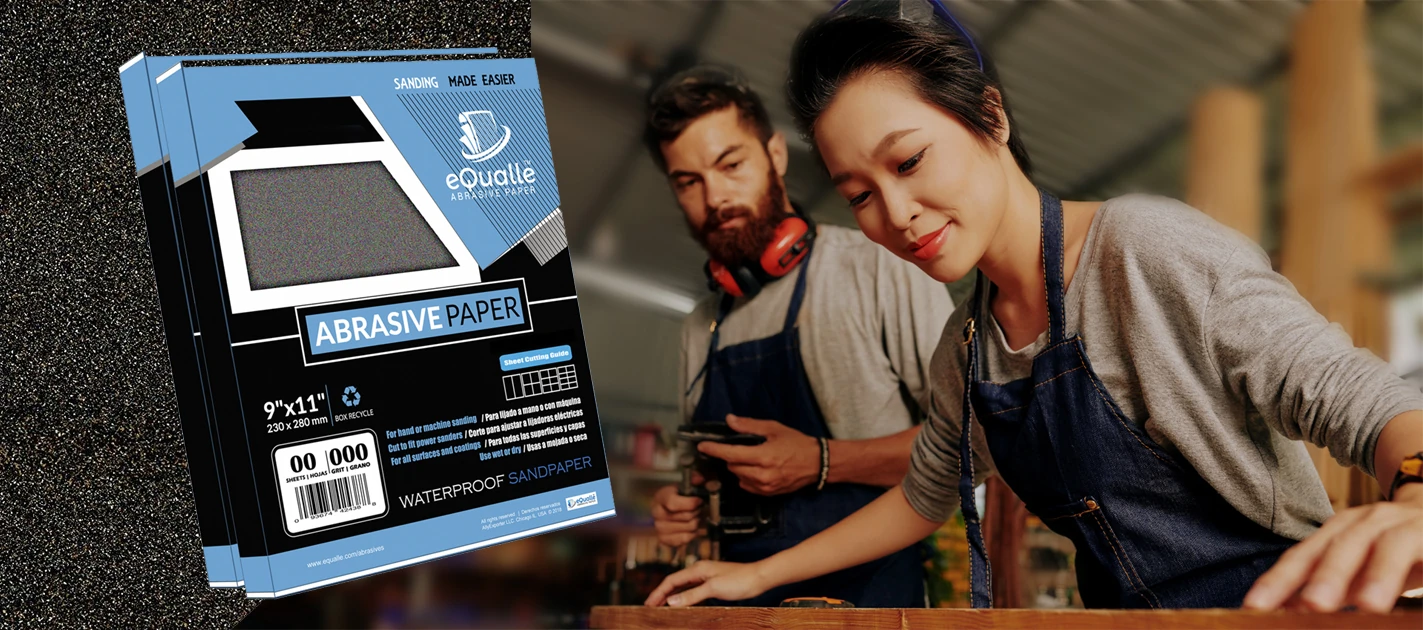
1000 Grit Sandpaper Sheets (50-pack) — 9x11 in Silicon Carbide Abrasive for Wet or Dry Use — Gentle polishing grit that removes swirl marks and fine scratches on automotive or resin finishes. (Professional Grade).
Frequently Asked Questions (FAQ)
Q: Why does my finish look perfect in daylight but hazy under LEDs?
A: Daylight is diffuse and forgiving, while a focused LED increases surface contrast and reveals micro-scratches, pad marring, or residue. Strong lighting doesn’t create haze; it exposes what diffuse light hides.
Q: Should I always sand with microfinishing film before polishing?
A: Not always. Use it when you need controlled refinement between coarser leveling and final polish, or when traditional papers leave inconsistent scratch patterns. The goal is minimal steps that reliably remove defects without over-thinning the surface.
Q: What light should I buy to inspect haze at home?
A: Get a handheld LED with a high CRI (90+), adjustable brightness, and a spot beam around 15–30 degrees. Pair it with a broader work light. Using two angles and two color temperatures improves what you can see.
Q: How do I know if haze is from polish residue or actual scratches?
A: Wipe the area with a panel cleaner (isopropyl-alcohol-based or manufacturer-specified). If the haze disappears and stays gone, it was residue. If it returns, you’re seeing real micro-marring that needs further refinement.
Q: My finishing polish adds a faint fog—what should I change first?
A: Clean or switch to a softer pad, reduce pressure and machine speed on the final passes, and ensure your previous abrasive step left a tight, uniform pattern. If needed, return one step with microfinishing film at a finer micron grade before re-polishing.