
Epoxy Sanding: Hand Block Techniques for Flat Surfaces
The raking light across the panel doesn’t lie. You wiped the dust, took a breath, and tilted the work under a low shop lamp: the swirl halos, the subtle waviness between pour ridges, the tiny dust pops that the afternoon sun always seems to magnify. It’s the moment that separates “almost” from “dialed.” Power sanders are fast and efficient, but when the goal is a dead-flat epoxy surface—tabletop, kayak seam, guitar top, bar top—there’s no substitution for feel. Epoxy sanding with a rigid hand block is about control over geometry: forcing the abrasive to bridge highs, locate lows, and cut with intent rather than chase them into more complex curves. I’ve seen long-cured coats dish under a foam pad, seen heat bloom into gummy smears on a humid day, and watched edges thin from a jittery orbital. The remedy is as old as abrasive paper: a flat block, a disciplined sequence, and a workflow that respects resin.
If you’ve ever buffed a surface only to reveal a topography of shiny valleys and matte ridges, you’ve already learned the core lesson. The polish didn’t fail—you polished a shape you didn’t mean to create. With a block, you flatten first, refine next, then polish last. This sequence transforms the process from guesswork into traceable, repeatable steps. Guide coats and cross-hatch strokes tell you where to keep working. Pencil lines disappear evenly. Scratch patterns become your quality control report, readable under one light from one angle. And when everything is true, the finish comes quickly and stays.
Epoxy’s specific behaviors dictate the details: amine blush needs water before solvents; green cure cuts differently than a full cure; open-coat abrasives load less; silicon carbide wins in the wet. Yes, machines have their role in stock removal. But for final geometry, a straight, stable block in skilled hands wins on flatness every time—and the mirror that follows is earned, not faked.
Quick Summary: For truly flat epoxy surfaces, use a rigid hand block, manage cure and surface prep, follow a strict grit progression with guide coats, and sand in controlled, cross-hatched passes before polishing.
Why a Hand Block Keeps Epoxy Truly Flat
A hand block changes the contact mechanics between abrasive and workpiece. Instead of a compliant pad that drapes into depressions, a rigid block forces the grit to ride on highs, cutting peaks until the surface aligns with the block’s plane. This is how you achieve actual flatness—not just a uniformly scratched surface.
- Compliance versus flatness: Random-orbit foam pads conform to microtopography, often creating “dish-outs” over softer resin zones or between pour ridges. A block with minimal deflection (acrylic, phenolic, hardwood, or aluminum) resists this and defines the plane.
- Heat and smearing control: Epoxy is a thermoset, but friction can soften the surface or smear incompletely cured resin. Hand blocking naturally limits heat generation compared to machine sanding, reducing clogging and preserving scratch integrity.
- Readable scratch patterns: Cross-hatching at 45 degrees with a block yields consistent, linear scratches that reveal surface errors under raking light. Circular patterns from orbitals can mask small lows and are harder to interpret.
Technique matters as much as tooling. Use a light, even grip near the centerline of the block and keep your elbows guiding straight strokes. Work in overlapping passes, rotate 90 degrees every grit, and avoid “edge dives.” For large panels, a longer block (10–16 inches) bridges a greater span, amplifying any remaining highs so you can remove them deliberately rather than chase them around.
Actionable tips:
- Use a dry-erase marker or pencil guide coat on the entire panel. Do not move up in grit until all marks are gone uniformly.
- Maintain raking light at a low angle; it’s your most honest gauge of flatness.
- Keep strokes long and straight; curved strokes introduce crown.
- Stop 1 inch before edges on initial cuts, then feather into edges with half-strokes to avoid thinning.
Grit Strategy for Consistent Epoxy Sanding
Epoxy sanding rewards disciplined grit transitions. Each step erases the last step’s scratches and reveals remaining topography. Skipping grits invites stubborn scratches and over-cutting.
Baseline sequences:
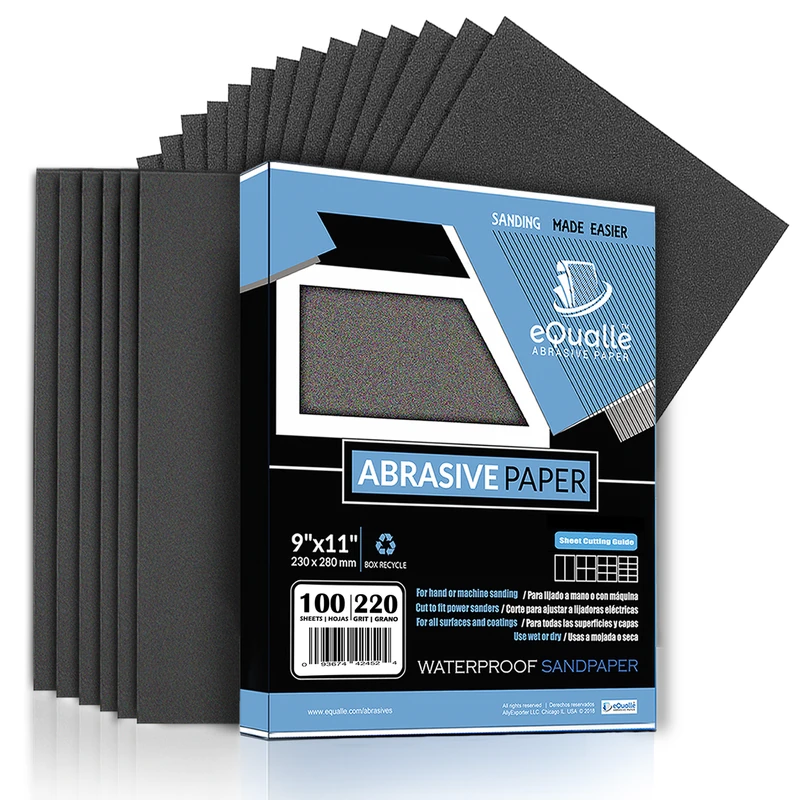
- Leveling (after flood coat or ridge planing): 120 → 150 → 180 → 220
- Refinement for finish or recoating: 220 → 320 → 400
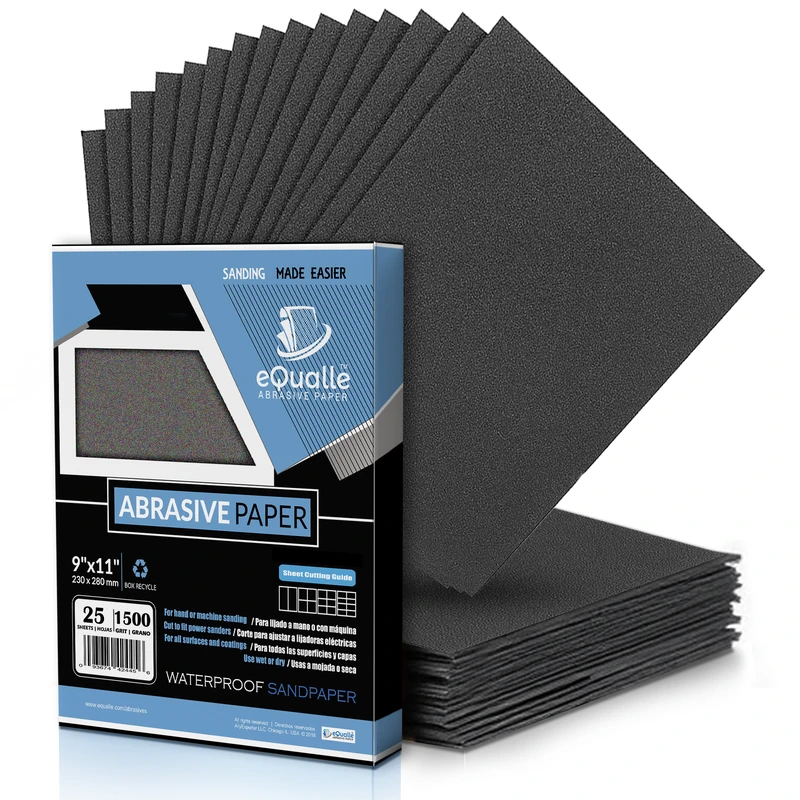
- Pre-polish and polish: 600 (wet) → 800 (wet) → 1000–1500 (wet) → compound
If the surface has significant ridges or a previous sag, begin at 80–100 grit—but only if you have sufficient film thickness. For most flood coats, 120 is the safer starting point. Use open-coat, stearated aluminum oxide papers for dry leveling; they resist loading. Switch to silicon carbide for wet stages above 600; SiC fractures sharper and cuts resin cleanly with a lubricant.
Step discipline:
- Do not advance grits until the prior scratch pattern is fully replaced. Inspect under a single consistent light.
- Rotate sanding direction roughly 90 degrees between grits; this makes leftover deeper scratches obvious.
- Use a fresh sheet often—epoxy loads quickly even with open-coat abrasives. Dull paper burnishes without cutting, creating false “gloss” that hides defects.
- Wet-sand only after thoroughly removing blush and verifying full cure. Use a few drops of dish soap in water to reduce surface tension and loading.
H3: Step-by-step hand-block workflow
- Degrease and de-blush: Wash with warm water and a non-abrasive Scotch-Brite pad; dry completely.
- Guide coat: Light pencil or dry-erase scribbles across the entire surface.
- Level at 120–150 grit: Cross-hatch at 45 degrees; stop short of edges initially; vacuum frequently.
- Refine at 180–220 grit: Continue cross-hatching; eliminate all 120 scratches.
- Pre-finish at 320–400 grit: Establish a uniform matte; check with raking light and a straightedge.
- Wet-sand 600–1000: Light pressure, frequent rinses; watch for uniform slurry color to confirm even cutting.
- Polish: Move to a compound and clean pad only after the 1000–1500 grit haze is fully uniform.
Common mistake: skipping from 220 straight to polish. You’ll chase haze and heat for an hour and still see the 220’s signature under oblique light.
Block Materials, Shapes, and Backers
Your block is a geometry tool. Material stiffness, mass, and face quality determine how faithfully it transmits flatness to the surface.
Rigid cores:
- Acrylic or polycarbonate (3/8–1/2 inch): Flat, stable, inexpensive, easy to dress on a granite plate or float glass.
- Phenolic or Garolite: Very stiff, dimensionally stable, grippy in the hand.
- Aluminum: Heaviest and stiffest of the bunch; excellent on large panels; consider chamfering edges to reduce catch.
- Hardwood (maple, beech): Readily available; stable if quarter-sawn; seal faces to resist humidity warp.
Face interfaces:
- PSA (pressure-sensitive adhesive) rolls provide maximum coupling between abrasive and face, ideal for flatness. Replace frequently to avoid lumps.
- Hook-and-loop allows fast grit swaps but adds compliance. Mitigate by using a thin H&L transfer layer over a very rigid core.
- Cork sheet (1–2 mm) can “decouple” micro-peaks on slightly irregular substrates while maintaining macro-flatness. Use sparingly—too thick and you lose bridging.
Size and shape:
- Length: 8–16 inches for tabletops and panels; 4–6 inches for tight spots and edges. Longer blocks bridge more, cutting highs consistently.
- Width: 2–3 inches balances coverage with control.
- Edge chamfers: 1–2 mm chamfer on the block reduces the risk of edge gouging.
- Custom contours: Keep one or two slightly crowned or convex mini-blocks for blending transitions where a sharp edge would telegraph.
A flatness reference is invaluable. Dress block faces lightly on a granite surface plate or a piece of float glass with 220 grit wet/dry to ensure they’re dead flat. For extreme precision, affix your abrasive to float glass and treat the epoxy like a lapping operation, moving the work across the stationary abrasive to eliminate any tendency to “roll” the block.
According to a article, finishing passes with a hand block and fine grit are a reliable way to true epoxy-coated composites before the final coat or polish.
Practical picks:
- Use stearated aluminum oxide sheets for dry leveling, PSA-backed, on a phenolic or acrylic block.
- Switch to silicon carbide for wet stages; dedicate a rigid acrylic block to wet-only work to prevent PSA issues.
- Label blocks by stiffness and task (Level, Refine, Wet) to avoid cross-contamination.
Surface Prep: Blush, Dust, and Cure Windows
Surface preparation governs how predictably epoxy sands and how cleanly scratches erase. Start by identifying amine blush—a waxy, sometimes invisible film that can form during cure, especially in high humidity or low temperatures. Always remove blush with warm water and a mild detergent using a non-abrasive Scotch-Brite pad, then rinse and dry thoroughly. Do not hit blushed epoxy with solvent first; it can smear the blush into pores and inhibit adhesion or cause unpredictable loading.
Cure states:
- Green cure (tack-free, 12–24 hours): Epoxy cuts faster but can clog easily and smear with heat. If you must flatten at this stage, use light pressure, lower grits (150–220), and frequent paper changes.
- Full cure (typically 5–7 days, check manufacturer): Hardest, cleanest cutting, least likely to smear. Ideal for final leveling and high-grit refinement.
Environmental controls:
- Temperature: Keep work, tools, and abrasives at room temperature. Cold resin is brittle and chips; hot resin smears.
- Humidity and dew point: Avoid sanding if the surface is cooler than the ambient dew point; micro-condensation can lubricate unpredictably and trap dust.
- Dust extraction: Vacuum with a brush-free nozzle; blow-off air should be oil- and water-free. Tack with a microfiber slightly dampened with water or isopropyl after dry stages—never after the wet stages without a thorough rinse and dry.
Defect management:
- Pinholes and pores: Squeegee a thin coat of neat epoxy into defects, allow to cure, then block at 220 to flush. Avoid over-filling; you’ll chase valleys.
- Edge protection: Mask edges with low-tack tape during early coarser grits. Remove for fine grits and polish to prevent witness lines.
- Guide coats: A powdered graphite or dry guide coat is cleaner than rattle-can primer and won’t introduce solvent residue.
Adhesion planning:
- If recoating, stop at a mechanically sound tooth: P180–P220 for most systems. Going finer can reduce mechanical key unless you recoat within the chemical recoat window.
- If polishing to clarity, commit to the full progression. A half-polished surface always telegraphs the underlying flatness mistakes.
Actionable tips:
- Always de-blush with water before any solvent wipe; water first, solvent second only if needed.
- Test cure by heat and fingernail: Warm a small area with a hair dryer; if it smears or fingerprints under light pressure, wait longer.
- Keep separate wet and dry sanding kits to avoid cross-contamination and PSA failure.
How to Sand — Video Guide
This concise tutorial demonstrates a full workflow to flatten and polish epoxy to a mirror using a mix of blocking and progressive grits, then finishing with compounds. It covers leveling strategy, grit jumps, wet-sanding technique, and how to read the surface under raking light so you don’t move forward prematurely.
Video source: How to Sand and Polish Epoxy Resin to a Mirror Finish - Step by Step Guide
280 Grit Sandpaper Sheets (10-pack) — 9x11 in Silicon Carbide Abrasive for Wet or Dry Use — Fine abrasive for leveling varnish or clear coats with precision. Creates a refined surface before high-gloss finishing. Performs reliably on wood, resin, or painted materials in wet or dry conditions. (Professional Grade).
Frequently Asked Questions (FAQ)
Q: What grit should I start with when hand-blocking a fresh epoxy flood coat?
A: If the coat is relatively even, start at 120–150 grit to level without risking a deep scratch pattern. Only drop to 80–100 if there are significant ridges and you have ample film thickness to stay out of the substrate.
Q: How do I know when to switch from dry to wet sanding?
A: Once you’ve established uniform flatness and erased coarse scratches through 320–400 grit dry, move to 600 and above with wet sanding to reduce heat and loading. Ensure the surface is fully de-blushed and cured; then use water with a drop of soap as a lubricant.
Q: My epoxy smears instead of cutting—what’s wrong?
A: Smearing indicates incomplete cure, excessive heat, or too-fine dry sanding too soon. Wait for full cure per manufacturer guidance, use a rigid block with light pressure, and switch to wet sanding at 600+ to manage temperature and debris.
Q: Can I polish without going beyond 400 grit?
A: You can try, but you’ll fight persistent haze and heat. A reliable polish requires a uniform scratch base in the 1000–1500 range. Skipping intermediate grits often costs more time than it saves and risks curvature from overworking localized areas.
Q: What block material gives the flattest results?
A: A rigid, stable substrate like phenolic, acrylic, or aluminum yields the flattest results. Pair it with PSA-backed abrasives for minimal compliance. Reserve hook-and-loop for situations where speed of change outweighs absolute flatness, and keep any foam interface layers as thin as possible.