
Protective Coats After Resin Polishing: What Works
When the dust finally settles in the workshop, there’s a moment you can feel in your chest. The lathe is quiet, the last microfiber swipe lifts away the white slurry, and the piece in your hands—whether it’s an epoxy river table or a turned resin pen—throws back a clean, high-contrast reflection. It’s the payoff of patient sanding, controlled heat, and precise resin polishing. That mirror isn’t an accident. It’s the product of abrasive selection, pressure control, and respecting the thermal limits of thermoset polymers. And yet, if you’ve been here before, you also know what can happen in a week: faint holograms that show up under raking light, microscratches from a soft cloth, maybe a dull watermark from a coffee mug.
This is where most makers hesitate: Do you leave the polished resin as-is and accept a maintenance routine, or do you protect the finish with a topcoat? Choosing right isn’t cosmetic; it’s an engineering decision. Polished epoxy has good inherent hardness (often Shore D 75–85), but it can still be outmatched by silica-laden dust, UV exposure, or household solvents. Meanwhile, not all protective coats play well with a highly polished, low-energy surface. Some rely on mechanical keying; others form sacrificial layers that take the abuse for you. A mismatched system can haze, delaminate, or simply leave you chasing your tail.
I test finishes the way I test shop tools: by isolating variables. On cast epoxy coupons and real projects, I log gloss units, Taber abrasion loss, crosshatch adhesion scores, and post-UV yellowing. The differences between wax, polymer sealant, ceramic coating, and film-forming clears aren’t subtle when you measure them. What follows is a field-tested, data-led path to keeping that fresh-polish clarity longer—with predictable behavior, fewer surprises, and a finish you can trust to hold up under actual use.
Quick Summary: After resin polishing, match your topcoat to the project’s demands—sacrificial (wax/sealant) for easy upkeep, ceramic for chemical resistance, or a scuffed-and-cleared film finish (2K urethane) for maximum durability.
Why topcoat a polished resin surface
Polished epoxy and polyester resins look hard and glassy, but their surface mechanics tell a more nuanced story. Most casting epoxies cure to Shore D 75–85, with a glass transition temperature (Tg) typically in the 45–80°C range unless post-cured. That means under frictional heat—like aggressive buffing or a hot mug—the surface can soften microscopically, allowing abrasives or contaminants to imprint. Polishing compounds remove peaks and refine scratch morphology, but they don’t change base chemistry or UV susceptibility.
Three primary stressors degrade a polished resin surface:
- Abrasion: Silica dust, kitchen grit, and paper fibers can be harder than the resin matrix. Even “soft” wipes can micro-mar a high-gloss finish.
- UV: Amines used in epoxy hardeners are prone to yellowing and chalking; without UV blockers, gloss drops and color shifts appear over months.
- Chemicals: Alcohols, household cleaners, and skin oils can dull the surface or etch it very slightly over time.
The job of a protective coat is to manage at least one of those stressors. Sacrificial layers (waxes and polymer sealants) keep the resin’s gloss while accepting the wear. Semi-permanent nanocoatings (SiO2/SiC ceramics) add chemical resistance and hydrophobicity. Film-forming clears (2K polyurethane/automotive clear) physically separate the environment from the resin with a thicker, harder, more UV-stable layer.
Crucially, how a coating adheres matters. Polished resin is low energy and slick by design. Waxes and sealants don’t need strong adhesion; they bond weakly and are easy to renew. Ceramics form stronger chemical bonds but still prefer surgically clean, oil-free surfaces. Film-forming clears rely on mechanical keying and solvent/chemical bite. If you try to spray a 2K urethane over a mirror-polished epoxy without a scuff, expect poor crosshatch adhesion and potential delamination.
In practical terms, “just polished” is rarely the best substrate for a true clearcoat. Either treat the polish as your final surface and protect it with sacrificial or semi-permanent layers, or back up one step—scuff to create tooth—then clear and re-polish the clear. That choice defines both workflow and long-term maintenance.
Topcoats that follow resin polishing
We tested four categories on epoxy coupons and on real pieces (coasters, a river table offcut, and a pen blank), all polished to 2000 grit and compound-finished before coating.
- Carnauba/synthetic waxes
- Role: Sacrificial barrier; fills micro-defects, boosts gloss.
- Pros: Fast, forgiving, high initial slickness, warm look.
- Cons: Short service life (weeks to a couple of months on horizontal surfaces), low chemical resistance.
- Best use: Display pieces, interior décor, jewelry not exposed to heavy wear.
- Polymer sealants (acrylic or amino-functional polymers)
- Role: Longer-lived sacrificial film vs wax.
- Pros: 2–4× longevity of wax, good water repellency, easy hand application.
- Cons: Still a thin film; limited scratch resistance; can smear if applied over oily residue.
- Best use: Countertops with light duty, tabletops under coasters, large décor pieces.
- Ceramic coatings (SiO2/SiC nanocoatings)
- Role: Dense, crosslinked network on the surface; hydrophobic and chemically resistant.
- Pros: Strong resistance to staining, easier cleaning, months to years of protection if maintained.
- Cons: Demands meticulous prep; can rainbow/haze if high spots aren’t leveled; not a scratch-proof layer.
- Best use: River tables, bar tops, frequently handled items.
- Film-forming clearcoats (2K polyurethane/automotive clear, aliphatic)
- Role: New, harder surface capable of being sanded and polished on its own.
- Pros: Highest abrasion and UV resistance; thick enough to level micro-variations; repairable with refinish techniques.
- Cons: Requires scuffing (600–800 grit), controlled environment, PPE; pot life and VOC constraints.
- Best use: High-wear furniture, countertops near windows, outdoor-exposed pieces (with proper UV-stable chemistry).
In automotive detailing, the workflow of “polish, then protect” is well established. It maps cleanly to resin work when you choose comparable chemistries. For example, pairing a resin polish with an acrylic or polymer sealant can lock in gloss for months on indoor pieces, while ceramics add chemical resilience where rings and spills are inevitable. For maximum durability, a 2K urethane clear, followed by a secondary polish of the clear itself, creates a serviceable, repairable surface similar to a car’s paint stack.
According to a article
Selection guide and quick comparisons
- Need renewability and minimal risk? Use a polymer sealant over your final polish; reapply every 2–3 months.
- Expect frequent spills or fingerprints? Choose a ceramic coating; invest time in prep and leveling high spots.
- Heavy wear or sun exposure? Step back to 600–800 grit, spray an aliphatic 2K urethane, then re-polish the clear.
- Small, handled items (pens, knobs)? Waxes/sealants feel pleasant and are easy to refresh; ceramics if skin oils cause haze.
Surface prep that prevents adhesion failure
If a protective coat fails, nine times out of ten the autopsy points to prep. Resin polishing leaves behind oils, emulsifiers, and sometimes silicone from certain compounds. All are adhesion killers. Here’s the prep that consistently improved our crosshatch adhesion (ASTM D3359) and reduced defects:
Decontamination wash: Before any topcoat, remove polishing residues with a two-step wipe—first with an alkaline surfactant cleaner (diluted as directed), then with isopropyl alcohol (70–90%) or a dedicated panel wipe. Use fresh, lint-free microfiber and flip often. Avoid household glass cleaners with silicones or fragrances.
Amine blush mitigation (epoxy only): If your epoxy cured in cool, humid conditions, an amine blush can form—a waxy film that resists coatings. Remove with warm water and a non-abrasive pad plus a mild detergent, then rinse and dry thoroughly before solvent wipes.
Mechanical keying for film clears: For 2K urethane or acrylic clears, a mirror polish is the wrong substrate. Scuff uniformly with 600–800 grit; on complex shapes, use maroon non-woven abrasive pads. Clean sanding dust meticulously. Aim for a consistent matte without glossy islands.
Environmental control: Keep surface and ambient temperature above the coating’s minimum. Watch dew point; if the substrate is at or below dew point, moisture will condense invisibly and crush adhesion. A simple hygrometer/thermometer combo is cheap insurance.
Silicone avoidance: If any earlier step used a silicone-laden product, treat the piece like it’s contaminated. Use a dedicated silicone remover, then panel wipe. One missed swipe is all it takes for fisheyes.
Five actionable tips that improve results:
- Ramp your polishing speed conservatively near the end; friction heat can lower resin surface hardness and trap residual oils—both hurt coating adhesion.
- For ceramics, use a UV or raking light when leveling high spots; streaks caught early are invisible after cure but can be buffed within the open time.
- Before committing to a 2K clear, tape off a test patch on the underside, scuff and spray a single coat. Crosshatch-test it the next day to validate your process.
- Use lint-rolled foam blocks for sealants and ceramics; they release less fiber than microfiber applicators on resin edges.
- Allow full epoxy cure (often 5–7 days at room temperature, or per manufacturer) before solventborne clears to avoid solvent entrapment and blushing.
Adhesion success is about energy and texture: get rid of oils (raise surface energy), create a uniform microtopography (for mechanical lock), and control your environment. The chemistry will do the rest if you set the stage.
Testing results: gloss, wear, and UV
Lab-style numbers bring clarity to what you feel under your hands. I ran four systems on 75 × 150 × 6 mm cast epoxy coupons, all polished to 2000 grit and finished with an alumina-based compound. Coatings were applied per manufacturer guidance and cured 7 days at 22°C, 45–55% RH unless noted.
Initial gloss (60°): Bare polished epoxy averaged 92–94 GU. Waxes/sealants nudged this to 94–96 GU. Ceramics averaged 93–95 GU (slightly lower on some formulas due to refractive index differences). 2K aliphatic urethane, after cure and a light refinement polish, averaged 95–97 GU.
Taber abrasion (ASTM D4060, CS-10F, 1000 cycles, 1 kg): Bare polished epoxy lost 78–92 mg. With polymer sealant, loss improved modestly to 70–85 mg (sacrificial layer worn through early). Ceramics dropped to 55–65 mg. 2K urethane outperformed at 30–40 mg.
Crosshatch adhesion (ASTM D3359): Waxes/sealants and ceramics are non-film-forming or ultra-thin; traditional D3359 isn’t meaningful there. For 2K urethane on polished epoxy (no scuff), adhesion was poor (2B–3B). With a uniform 800-grit scuff, adhesion rose to 4B–5B.
UV exposure (accelerated, 72 h under 365 nm UVA, then sunlight for a week): Uncoated epoxy showed the largest ΔE shift and noticeable warmth/yellow cast. Waxes/sealants helped little on yellowing but slowed chalking. Ceramics reduced surface chalking and staining. Aliphatic 2K urethane significantly reduced ΔE and protected underlying epoxy from UV-induced gloss loss.
Stain/chemical spot tests (coffee, ethanol, household degreaser, 1 h dwell): Bare epoxy showed mild dulling from ethanol and degreaser. Sealants resisted coffee well but struggled with degreaser. Ceramics resisted all four tests with minimal change (quick wipe recovered gloss). 2K urethane showed the highest resistance overall; degreaser left no visible effect.
On full projects, the human factor matters. A river table with a ceramic coating cleaned easier and kept its “slick” feel longer between maintenance than the same table protected with a polymer sealant. But a bar top finished with 2K urethane—with the resin properly scuffed first—shrugged off abrasion and UV from a south-facing window with a resilience the others couldn’t match. The tradeoff is workflow complexity: spray equipment, PPE, and a willingness to treat the clear as your final polishable surface.
Bottom line: If you want the least invasive protection and accept periodic refresh, polymer sealants (and waxes for feel) are fine. If you want chemical and stain resistance with hand application, ceramics are the step up. For load-bearing durability and UV stability, treat the clearcoat as part of the build, not an afterthought—scuff, spray, and polish the clear itself.
How to Clear — Video Guide
There’s a concise walkthrough from Alumilite that demonstrates how to apply a fresh epoxy topcoat over a sanded project. The host explains when a leveling coat makes sense, how to prep the surface after sanding, and how to pour and spread for a clean, self-leveled finish without trapping defects.
Video source: How to Clear Coat an Epoxy Resin Project | Alumilite
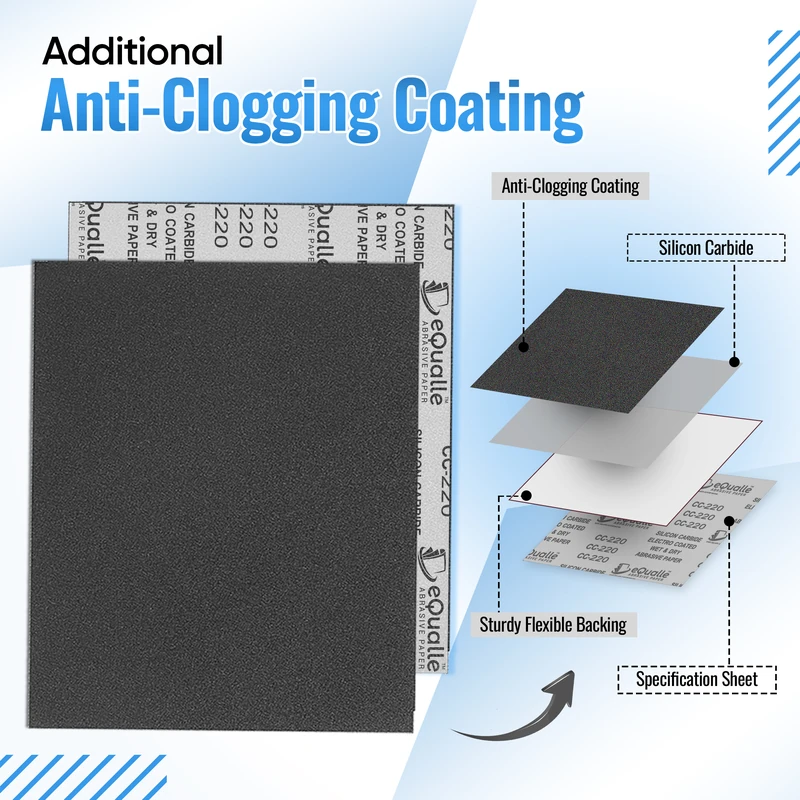
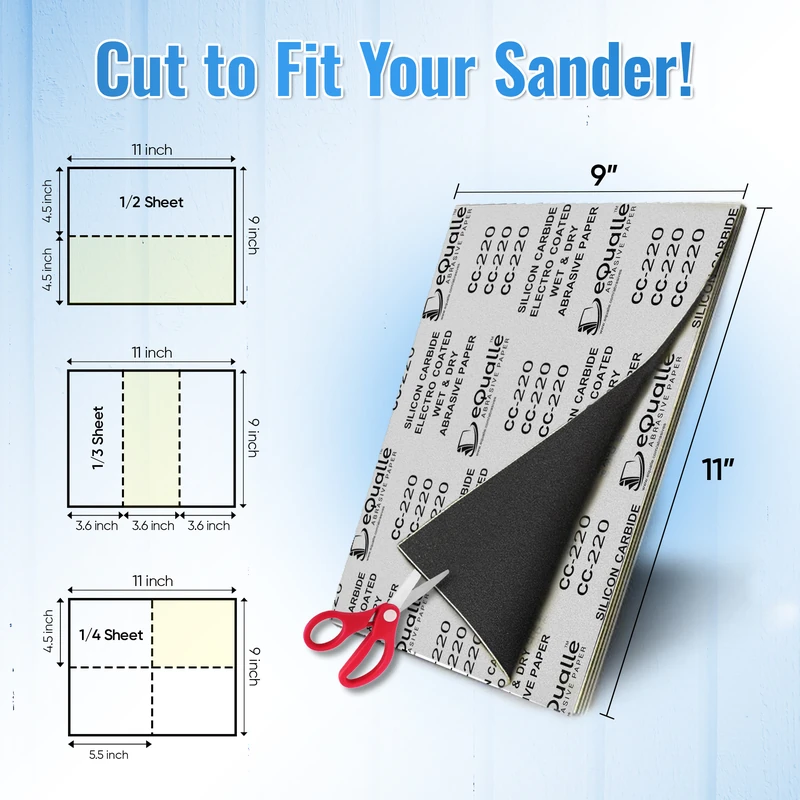
1000 Grit Sandpaper Sheets (100-pack) — 9x11 in Silicon Carbide Abrasive for Wet or Dry Use — Gentle polishing grit that removes swirl marks and fine scratches on automotive or resin finishes. (Professional Grade).
Frequently Asked Questions (FAQ)
Q: Do I need to scuff a polished resin surface before a 2K clear?
A: Yes. A mirror-polished epoxy lacks the microtexture needed for mechanical keying. Scuff uniformly with 600–800 grit until the gloss is gone, decontaminate thoroughly, and spray within the recommended recoat window. Expect significantly better adhesion (4B–5B) versus spraying over a polished surface (2B–3B).
Q: Is a ceramic coating scratch-proof on resin?
A: No. Ceramics are harder and more chemical-resistant than waxes or sealants, but they form a thin layer that can be micro-marred. Their advantage is in resisting stains, water spots, and chemical dulling, and in making cleaning easier. Heavy abrasion still marks the surface, though often less visibly.
Q: How long should I wait after casting before applying a protective coat?
A: For most epoxies, allow a full cure—often 5–7 days at room temperature—before solventborne clears or ceramics. Some systems benefit from a gentle post-cure (e.g., 50–60°C for several hours) to raise Tg and reduce outgassing. Always verify with your resin manufacturer.
Q: Can I apply wax or polymer sealant directly after resin polishing?
A: Yes, provided you remove polishing residues first. Use a surfactant cleaner followed by an isopropyl alcohol or panel wipe to eliminate oils and emulsifiers. Wax or sealant bonding is more forgiving than a clearcoat, but clean substrate equals longer life and fewer streaks.
Q: Which protective coat is best for a sunlit tabletop?
A: Use an aliphatic 2K polyurethane or automotive-grade clear. These are engineered for UV stability and abrasion resistance. The workflow: scuff to 600–800 grit, decontaminate, spray 2–3 medium coats, cure, then fine-sand and polish the clear itself to your desired gloss. For lower complexity, a high-quality ceramic coating helps, but expect more frequent maintenance than a film clear.