
Repair Pinholes Before Final Passes in Concrete Polishing
The first time you see them, it’s usually under that uncompromising halo of afternoon light: tiny pinpricks that interrupt what should be one continuous reflection across the slab. You step closer and feel the break in continuity with your eye before your hand even reaches the surface. The project is on track—aggregate exposure is even, joints are clean, dust collection has been dialed in—but these microvoids threaten the final read of the floor. In concrete polishing, pinholes are not cosmetic trivia; they are the difference between a floor that simply shines and a floor that looks poured from liquid glass.
I’ve watched facility managers, architects, and GC supers experience the same tightening in the chest when these voids reveal themselves after the early metal cuts. The timeline feels tight, your abrasive inventory is committed, and the last thing anyone wants is to rework the scratch pattern. Here’s the good news: a disciplined repair sequence can eliminate pinholes without derailing your schedule. It’s a workflow problem—one that’s solved through precise surface preparation, predictable grout chemistry, and controlled final passes.
If you understand how the cream, fines, and capillaries behave under metal-bond diamonds, and if you can maintain slurry contact where it matters, you can fill pinholes reliably before stepping into resins. Then, with the right densifier timing and final grit selection, the floor moves from “almost” to “absolutely.” This is the practical, shop-floor guide to getting there with consistency.
Quick Summary: Identify pinholes immediately after your last metal cut, grout with a fines-rich slurry under controlled moisture, confirm fill under raking light, then proceed through resins and densify before final passes.
Why Pinholes Appear and Why They Matter
Pinholes originate in the concrete matrix as entrapped air, micro-shrinkage voids, and incomplete paste consolidation at the surface. Coarse metal-bond cutting opens the cream, exposing capillaries between sand fines and cement paste. As you flatten and refine, those microvoids become optically evident long before you reach your finishing grits. If you skip proper filling, higher grits only accentuate them; reflective glare increases contrast, and you end up polishing void edges—a guaranteed way to amplify defects.
From a performance standpoint, unfilled pinholes are ingress points for contaminants and cleaning chemistry. Fine dust packs into them, marring reflectivity and complicating maintenance. On high-traffic slabs, they evolve into initiation sites for micro-chipping under rolling loads. On decorative specifications, they break the continuity of the “wet look” and diminish clarity-of-image (COI) and distinctness-of-image (DOI) readings on gloss meters.
Timing is critical. Once you’ve completed your last metal cut (often 80–120 grit in many systems), the exposed surface features are at their most receptive to grout. That window closes as you move into resins and begin densification; pore structures tighten, reducing slurry penetration. Moisture control is similarly consequential: too wet and slurry mobility outruns adhesion; too dry and grout skins over before it keys into voids. The aiming point is a slightly damp substrate with vigorous vacuuming just prior to grout application to remove fines that would otherwise line the voids and block bond.
This is why pinholes aren’t an optional repair—they’re a planned step. Build them into your workflow, assign responsibility for inspection under raking light, and document your grout mix, application rate, dwell time, and removal method. Treat it like a process variable, not an afterthought.
Abrasives, Densifiers, and Concrete Polishing Synergy
Your abrasive sequence determines both the visibility of pinholes and the success of their repair. A typical progression flattens with 30–50 metal-bond diamonds, refines at 70–80, and closes at 100–120 before transitioning to resins. The last metal pass is where you want to identify and fill. A clean, consistent scratch pattern with uniform head pressure ensures voids are opened evenly; uneven scratch depth hides defects and produces inconsistent grout uptake.
Abrasive selection: Use open-structure metal-bond tools on hard concrete (pH-stable segments, lower concentration) to limit glazing and maintain cutting efficiency. For softer slabs, a higher concentration and slightly harder bond prevent premature wear. Aim to leave a crisp but manageable profile at your last metal grit so grout can key without excessive texture.
Slurry compatibility: Grout slurries (cementitious or hybrid polymer-modified) rely on fine particles to bridge microvoids. Pairing the fines size to the profile left by your last metal pass is essential. Overly coarse fines won’t seat; excessively fine slurries can wash out or craze if overworked.
Densifier timing: Avoid pre-grout densifier application; it reduces absorption and can create an interface that rejects slurry. Apply densifier after the first or second resin pass (commonly after 200–400 grit, depending on the system). This sequencing consolidates the capillaries once the voids are filled, supporting subsequent abrasion and improving long-term abrasion resistance.
Resin transition: After grout cure and cleanup, your first resin (50 or 100 grit resin, depending on system design) should cut lightly—enough to shave surplus grout without re-exposing voids. Monitor pad loading: if resins gum up quickly, your grout is too green or the slurry wasn’t properly removed from the surface.
H3: What “good” looks like Expect uniform slurry residue without noticeable smears or puddling, no grout bridging across aggregate highs, and minimal telegraphing under raking light. If you see haloing around larger sand grains after the first resin pass, you likely underfilled or your last metal pass left troughs too deep for the slurry design.
Grouting Workflows That Actually Seal Voids
Grouting pinholes is less about dumping product on the slab and more about controlling film thickness, contact time, and mechanical agitation. Start with a substrate that’s vacuumed thoroughly—HEPA-rated extraction with sufficient CFM to remove fines from pore mouths—and pre-dampen the surface to a uniform, matte damp condition. This prevents the substrate from stealing water from the slurry too quickly.
A dependable approach is a fines-rich slurry made from cementitious powder, polymer additive, and screened floor dust from your last metal pass. The inclusion of site-matched fines improves color blending and optical continuity. Mix to a syrupy consistency: too thin and it will run without bridging; too thick and it won’t penetrate. Apply using a flexible rubber squeegee in opposing directions (north–south, then east–west) to force slurry into voids. Maintain a wet edge, but avoid pooling. Allow a short dwell (typically 10–20 minutes; follow product-specific guidance), then cross-squeegee to remove excess and prevent a crust from forming off the voids.
During the early cure, keep foot traffic minimal and maintain ambient conditions within spec—moderate RH and temperature aid uniform hydration. After initial set, conduct a light cut with your first resin to “plane” the grout flush without stripping it from the voids. Inspect with raking light and repeat a micro-grout if necessary; one pass is rarely enough on porous cream.
- Actionable tips:
- Pre-screen fines: Use 80–100 mesh to remove coarse particles; this reduces telegraphing on the first resin pass.
- Edge discipline: Hand-tool grout into edges and around penetrations before field application to avoid shadow lines.
- Moist wipe, not wet wash: Remove film with barely damp microfiber pads; flood cleaning floats grout out of voids.
- Document dwell windows: Mark start/stop times per zone so agitation and removal happen consistently across the slab.
- Verify under light: Position a 30–45° raking light and mark missed areas before moving up in grit.
According to a article.
H3: Choosing materials Cementitious grout slurries blend seamlessly on gray floors and accept densifiers well. Polymer-modified options can improve flex and early strength, reducing pull-out during the first resin cut. On highly decorative or colored slabs, a color-matched microtopping-grade grout may be warranted for optical continuity—always test in an inconspicuous area.
Final Passes: Dialing in Grits, Speed, and Pattern
Once pinholes are filled and verified, the final passes determine whether the surface reads as a single, coherent plane. This is where machine setup and operator discipline matter most. Use a crosshatch pattern with 30–40% overlap to eliminate tracking. Keep head pressure consistent—set and log PSI or machine weight distribution at the start of each grit. Variable-speed heads should be tuned to manufacturer recommendations for the abrasive type; running too fast with resins can reduce cut and burnish the surface prematurely.
Work through your resin sequence deliberately. For a satin finish, many systems finish between 400–800 grit with a post-densifier burnish; for high-gloss, continue to 1500 or 3000 grit with intermediate cleaning passes to remove swarf. Densifier is best applied after you establish clarity at 200–400 grit, when grout is locked and the surface is receptive. Uniform application (micropump sprayer, microfiber spreaders) prevents streaking. Allow the specified reaction time and, if required, gentle agitation to ensure penetration without pooling.
Edges and terminations are where high-end results are won or lost. Mirror your main floor sequence with hand-held resin pucks, and note that edges often require an extra pass to blend optics. Keep vacuums close to the point of cut and replace HEPA filters per schedule; airborne dust readily settles into microtexture and dampens DOI.
Before handover, perform a dry dust mop and an autoscrubber pass with neutral cleaner to remove fines. Check reflectivity under strong, oblique light from multiple directions. Any lingering voids or hazing should be addressed immediately—micro-grout and spot blend if needed—before final buffing or guard application (if specified). The goal is a surface whose microtopography is smooth enough that reflected lines look unbroken across panel boundaries and aggregate transitions.
DIAMOND PAD Concrete — Video Guide
Ultra Chem Labs demonstrates a straightforward sequence using Twister-style diamond pads in tandem with a liquid densifier to bring a concrete floor up to a reflective finish. The clip walks through pad changes, water management, and when to introduce the densifier so the surface tightens as you refine the scratch pattern.
Video source: DIAMOND PAD Concrete Polishing by Ultra Chem Labs
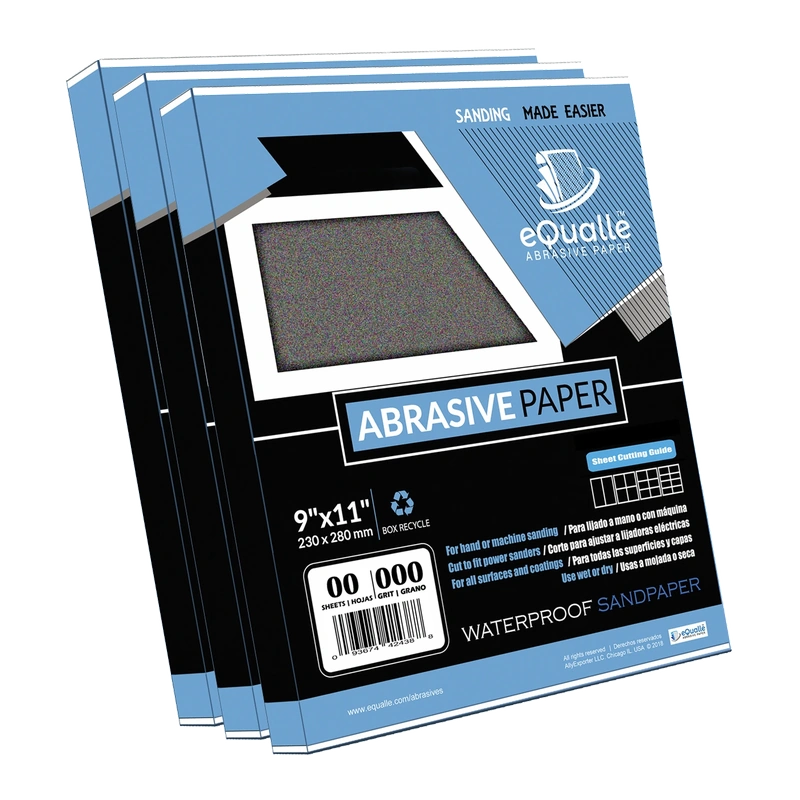
1500 Grit Sandpaper Sheets (25-pack) — 9x11 in Silicon Carbide Abrasive for Wet or Dry Use — Professional ultra-fine grit for satin or semi-gloss finishing. Removes micro-scratches from clear coats and paint touch-ups. Produces flawless textures and consistent results before final polishing. (Professional Grade).
Frequently Asked Questions (FAQ)
Q: When should I schedule grout application in the process? A: Apply grout immediately after your final metal-bond pass (often 80–120 grit). The surface is open enough for penetration, and you haven’t yet tightened the pores with resins or densifier.
Q: Can I densify before grouting to harden the surface? A: No. Densifying first reduces grout absorption and can create a weak interface. Fill pinholes, lightly cut with your first resin, then densify at 200–400 grit depending on your system.
Q: What’s the ideal grout consistency for pinholes? A: A syrupy, fines-rich slurry that bridges microvoids without pooling. It should spread with a rubber squeegee, maintain a thin film, and not run off high spots. Overly thin mixes wash out; overly thick mixes fail to penetrate.
Q: How do I confirm pinholes are truly filled before final passes? A: Inspect under a 30–45° raking light from multiple directions after your first resin cut. Mark and micro-grout any telegraphed voids, then re-plane lightly before moving up in grit.
Q: Will a guard or sealer hide pinholes at the end? A: No. Guards can add gloss and stain resistance, but they won’t mask voids. Unfilled pinholes remain visible and can trap contaminants. Proper grouting is the only reliable fix.