
Silicon Carbide Sandpaper Grain Selection Guide
Saturday morning, coffee cooling on the bench, I watched the light rake across a maple tabletop I’d promised to refinish for a friend. The surface looked fine from head-on, but the shallow angle revealed the truth: micro-tearout from a too-aggressive first pass, a few loading streaks, and a whisper of swirl marks that would telegraph through a clear finish. I’d used my default—aluminum oxide sheets—because that’s what most of us reach for. But I also had a sleeve of silicon carbide sandpaper next to the sander. On a different day, with a different substrate, silicon carbide would have been my first choice.
As a product engineer and reviewer, I’ve spent a lot of time timing cuts, logging heat with an IR thermometer, checking scratch patterns under a microscope, and measuring surface roughness after each grit. The single biggest variable I see people overlook is grain selection by material. We lump “sandpaper” into one category when we should be choosing very specific abrasives, backings, and coatings for wood, metal, and plastic. Make the right pairing and you work faster, cooler, and cleaner—with fewer grits and less rework.
This article lays out how abrasive grains actually remove material, then maps the choices to real workflows on wood, metal, and plastics/composites. I’ll translate test data into practical steps you can use immediately—so your next pass leaves less to chance and more to a dialed-in process.
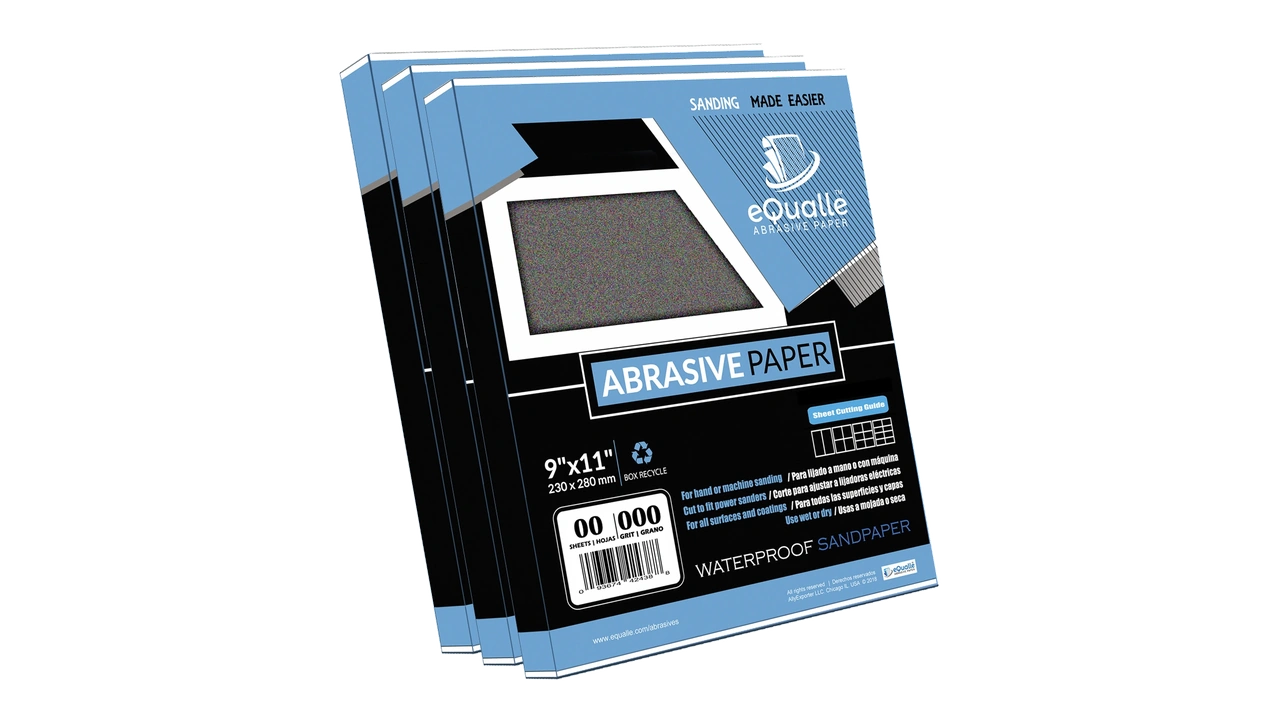
Quick Summary: Match grain to substrate—use silicon carbide for hard, brittle, or resin-prone surfaces and wet finishing; aluminum oxide or zirconia for tough, ductile metals and general wood stock removal; and keep plastics cool with light pressure and wet, fine-grit silicon carbide.
What Makes Abrasives Actually Cut
Abrasives don’t “sand” so much as they plow, chip, and slice at a micro scale. The way they do that depends on three coupled variables: grain mineral, bonding system, and backing.
Grain mineral
- Silicon carbide (SiC): Very hard (about 9.5 on Mohs), sharp, and brittle. It micro-fractures frequently, constantly exposing fresh edges. That makes it fast-cutting with a fine, consistent scratch—great for hard, brittle, or clog-prone substrates and for wet sanding.
- Aluminum oxide (AO): Slightly softer (~9 Mohs) but much tougher. It dulls more gradually, better for ductile materials (wood fibers, mild steel) and for bulk stock removal.
- Zirconia alumina (ZA) and ceramic alumina: Engineered for high pressure; excels in grinding and heavy deburring where self-sharpening microfracture under load matters most.
Bonding system
- Modern papers use resin-over-resin bonds for heat resistance. “Open coat” leaves more space between grains to reduce loading (good for soft woods and plastics); “closed coat” packs grains tighter for faster cut on harder materials. Anti-loading stearate topcoats are your friend on resinous woods and finishes.
Backing
- Paper A/C/D/F weights or film backings trade flexibility vs. flatness. A-weight paper conforms to profiles; film holds a uniform scratch and lasts longer at fine grits. Cloth and fiber backings handle higher pressure on metal.
Two more details drive results: grit grading and lubrication. FEPA “P” grades (P80, P180, etc.) dominate woodworking and finishing, while CAMI numbers appear on some U.S. products. Wet sanding with water or light surfactant reduces heat and clogging, especially with silicon carbide. In practice, the right choice is a combination: select the mineral by substrate behavior (ductile vs. brittle, resinous vs. clean), then adjust coat, backing, and lubrication to steer dust load, scratch uniformity, and heat.
Wood: when silicon carbide sandpaper wins
On wood, the common advice is “use aluminum oxide.” That’s broadly true for early grits and aggressive shaping because AO’s toughness resists dulling as it shears ductile cellulose fibers. But silicon carbide sandpaper has two important niches in woodwork where it consistently outperforms AO in my tests:
Between-coats leveling and finish sanding. When you’re abrading cured polyurethane, shellac, or lacquer, the substrate shifts from fibrous to brittle and load-prone. SiC’s sharper cutting points and frequent micro-fracture leave a more uniform scratch at P320–P800. Running wet with a few drops of dish soap keeps the sheet cool and clears debris. Under low magnification, scratch patterns look narrower and more consistent versus AO of the same nominal grit.
Hard, dense woods and end grain. On dense maple, jatoba, or even end-grain cutting boards, SiC can produce a cleaner finish at fine grits, especially when you care about clarity under oil or film finish. The grain’s brittleness is an asset here: as edges break, they renew without glazing, which keeps the cut “fresh” and reduces burnishing.
Practical points from controlled sanding on hard maple panels:
- P120–P180 bulk removal: AO or ZA discs on a random orbit with dust extraction removed stock faster and resisted loading.
- Transition at P220–P320: Switching to SiC smoothed torn fibers more efficiently and produced fewer random deep scratches, lowering visible swirl under raking light.
- Wet P400–P800 on cured finish: SiC sheets outlasted AO approximately 20–30% before scratch fidelity degraded, with less loading.
Actionable tips for wood
- Start coarse with AO (P80–P150), then swap to SiC at P220+ when your goal shifts to surface quality rather than stock removal.
- For resinous softwoods, use open-coat sheets with stearate and light pressure. If dust cakes, switch to SiC and wipe surfaces with mineral spirits between passes.
- Level clear coats with wet SiC P400–P800. Keep the pad flat and change water frequently to avoid re-depositing swarf.
- When chasing clarity on dense hardwoods, finish with SiC P400 dry, then burnish very lightly at P600–P800 before your first coat.
Metal: control heat, burrs, and finish
Metals behave differently: they’re ductile, generate heat fast, and can form adhesive smears (especially aluminum). Here, mineral choice follows load and pressure.
Ferrous metals (mild steel, tool steel): For heavy removal and deburring, zirconia or ceramic abrasives beat silicon carbide because they survive high pressure and heat without shattering. AO is a cost-effective middle ground for general prep. Silicon carbide still has a role at finer grits where you want a bright, uniform finish—think P600–P1200 on stainless—with coolant or wet sanding to maintain cut and avoid discoloration.
Non-ferrous metals (aluminum, brass, copper): Silicon carbide’s sharp edges slice instead of smearing, reducing galling. Open-coat, stearated SiC discs or sheets resist loading better than closed-coat AO for these alloys. Wet sanding with water or a light soapy solution prolongs life and evens the scratch.
Coatings and scale: On mill scale or baked coatings, START with ZA or ceramic fiber discs for speed, then step into AO or SiC for finish optimization. The bond and backing matter: fiber discs tolerate higher pressure; film-backed SiC maintains a more consistent scratch in higher grits.
From shop tests on 6061 aluminum plates:
- Dry AO P180 loaded predictably in under two minutes of continuous sanding; open-coat SiC lasted longer before the first wipe-down and produced less streaking.
- Switching to wet SiC P400 reduced surface haze and improved uniformity ahead of a brushed finish.
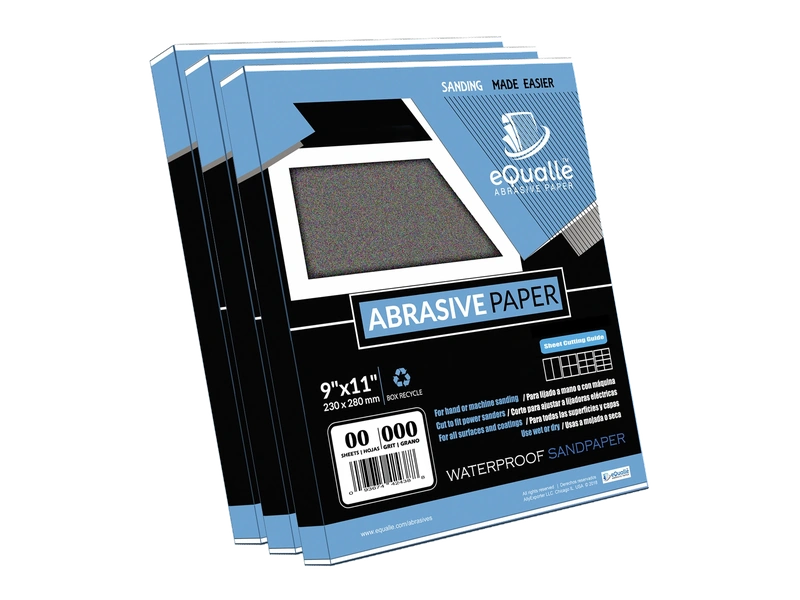
A note on product specs: According to a article, 180-grit silicon carbide sheets are commonly positioned as “for wood, metal, and plastic.” That aligns with field use—just remember to adjust pressure, lubrication, and backing to the specific alloy and goal.
Actionable tips for metal
- Use ZA or ceramic for heavy ferrous removal; switch to SiC at P400+ when chasing reflectivity or uniform micro-scratches.
- For aluminum, pick stearated, open-coat SiC and sand wet to prevent galling and streaks.
- Keep passes short; pause to cool the workpiece and avoid temper color or distortion.
- For brushed finishes, define your final grit (e.g., P320 or P400) and maintain a single scratch direction on the last pass.
Plastics and composites without melt
Plastics bring two headaches: heat-induced melting and immediate loading. The solution is a cool, light, and sharp cut with aggressive swarf evacuation—exactly where silicon carbide sandpaper excels.
Acrylic (PMMA), polycarbonate, and ABS: These thermoplastics soften quickly. Use SiC with very light pressure and high tool oscillation to let the grain slice without friction burn. Film backings hold a precise scratch at P600–P1500 for optical clarity on acrylic edges.
Epoxy laminates and fiberglass: The matrix is brittle and the fibers are abrasive. SiC maintains sharpness for clean matrix removal, but consider ceramic for heavy, initial leveling. Always capture dust; glass fibers are hazardous.
PVC and HDPE: Tend to smear when heated. Open-coat SiC at lower RPM, ideally wet, keeps chips from welding to the surface. Progress in smaller grit jumps to avoid deep scratches that require heat to remove.
In tests on 3 mm cast acrylic edges, wet SiC P800 followed by P1200 produced a near-polishable finish with minimal whitening. Dry AO at the same grit left a more irregular scratch that demanded additional passes—and increased the risk of edge melt when the operator leaned in.
Actionable tips for plastics and composites
- Sand wet whenever possible; add a drop of dish soap to break surface tension and float swarf.
- Keep pressure light and motion consistent; let the abrasive do the work to avoid heat spikes.
- Use film-backed SiC for fine grits (P600–P1500) where scratch uniformity affects clarity.
- Vacuum extraction and PPE are non-negotiable for fiberglass and carbon fiber dust.
Grit maps and repeatable workflows
With the right mineral chosen, grit sequencing determines how quickly you reach your target finish. The most efficient path is not always linear; it responds to the material’s behavior and your end goal.
Wood workflows
- Bare hardwood (maple, oak) for clear finish:
- P100 AO to flatten, P150 AO to refine, P220 SiC to remove torn fibers, P320 SiC as a pre-finish. For ultra-clarity, a light pass at P400 SiC before the first coat.
- Between-coats leveling (poly/lacquer):
- Wet P400 SiC to knock down nibs, P600 SiC to even sheen, stop there for adhesion; buff higher only if the system allows.
Metal workflows
- Mild steel weld cleanup to paint:
- ZA fiber disc 60 grit for bead, AO P120 to blend, AO P180 to refine, stop. If a brighter look is wanted, wet SiC P400 in one final pass.
- Aluminum plate to brushed finish:
- Open-coat SiC P180 dry, then wet P240 and P320 SiC with consistent stroke in the final direction.
Plastic workflows
- Acrylic edge prep to polish:
- Wet SiC P800, P1200, P1500. For polish, stop scratches at P1500 and move to compound with a foam pad at low speed.
General rules that save time and parts
- Don’t skip more than one grit step when scratch depth matters; planar removal steps can be coarser, but finishing jumps should be tight (e.g., P220 to P320, not P220 to P400).
- Switch to silicon carbide sandpaper the moment loading becomes your limiting factor—often at P220+ on wood finishes, immediately on plastics, and post-deburr on non-ferrous metals.
- Pair the coat to the substrate: open-coat for soft, gummy, or thermoplastic surfaces; closed-coat for hard, uniform materials.
- Backing choice affects flatness: film for consistent finish, paper or cloth for conformability. Use interface pads on curves to avoid edge dig.
Testing notes and performance checkpoints
As much as brand and spec sheets matter, your process control matters more. Here’s how I evaluate abrasives across materials in the shop to separate subjective “feel” from repeatable performance.
Cut rate and scratch fidelity
- I time a fixed-pressure, fixed-stroke pass on standardized panels or coupons and inspect scratch uniformity at 20–50x magnification. Consistent scratch width and density correlates with fewer visible swirls after finishing.
Heat and loading
- I shoot the workpiece and abrasive with an IR thermometer after timed passes. For plastics and aluminum, any rise over ~10–15°C in short cycles indicates technique or mineral mismatch. Loading shows up as dark streaks or glossy spots; if it appears within the first minute, switch to open-coat, add lubrication, or move to SiC.
Lifespan thresholds
- Instead of running sheets “until dead,” I note when the scratch starts to widen or smear at the same pressure. For finish-critical steps (P320+ on wood or P600+ on metals/plastics), changing early saves rework.
Dust control and safety
- Wood fines and composite dust are not benign. I use a sander with active extraction, a full-face respirator for composites, and wet methods where practical.
Actionable checkpoints you can adopt today
- Calibrate your final grit visually under raking light on scrap. Once you like the look, lock that grit and process for the project.
- Keep two tracks of sheets: “stock removal” (AO/ZA) and “finish control” (SiC). Label and reach accordingly.
- Track sheet life by task, not time. If finish quality is your metric, replace when scratch fidelity falls—not when the sheet looks worn.
How Do I — Video Guide
If you’re new to furniture refinishing, a quick primer on grit sequencing helps. A solid walkthrough titled “How Do I Sand Furniture? Sandpaper Grit 101” offers a beginner-friendly roadmap for which grit to pick at each stage of a flip and why it matters for the final look.
Video source: How Do I Sand Furniture? | Sandpaper Grit 101 - Know Which Grit to Use for Each Step of Your Flip!
150 Grit Sandpaper Sheets (50-pack) — 9x11 in Silicon Carbide Abrasive for Wet or Dry Use — Versatile medium grit that transitions from shaping to smoothing. Works well between coats of finish or for preparing even surfaces prior to paint. (Professional Grade).
Frequently Asked Questions (FAQ)
Q: What’s the main difference between silicon carbide and aluminum oxide sandpaper?
A: Silicon carbide is harder and sharper but more brittle; it micro-fractures to keep cutting cleanly, excels in wet sanding, and resists loading on finishes and non-ferrous materials. Aluminum oxide is tougher and better for bulk removal on wood and mild steel, especially at coarser grits.
Q: When should I switch from AO to silicon carbide on wood?
A: After primary flattening (typically by P180–P220), switch to silicon carbide at P220–P320 to improve scratch uniformity and reduce swirl visibility. Use wet SiC at P400–P800 for leveling cured finishes between coats.
Q: Is silicon carbide good for steel?
A: For heavy removal on steel, zirconia or ceramic is better. Silicon carbide is useful at finer grits (P400–P1200) for bright, uniform finishes, ideally with coolant or wet sanding to manage heat and maintain cut.
Q: How do I prevent plastic from melting while sanding?
A: Use silicon carbide with light pressure, low to moderate speed, and wet sanding. Choose open-coat or film-backed sheets, keep the surface flushed, and take frequent cooling breaks.
Q: What grit standards should I follow—FEPA or CAMI?
A: Most finishing workflows use FEPA “P” grits (e.g., P320). Match standards within a sequence to avoid unexpected scratch jumps; avoid mixing CAMI and FEPA numbers mid-process unless you confirm their equivalence with a test pass.