
Mastering Grit Progression: When to Switch Sandpaper
The morning you decide to sand a tabletop into something worth leaning on, the light matters. You roll open the garage door or step into the shop and watch the sun rake across the surface, highlighting every ridge, glue line, and blemish. At first, the coarser paper hums with purpose—80 grit chewing down cup and twist, turning saw marks into predictable scratches. But a few songs later, doubt creeps in. Do you grab 120 now, or stay longer at 80? If you switch too soon, deep scratches hide beneath a frost of finer lines, waiting to reappear as blotches under finish. If you wait too long, you’re wasting time and burning paper.
That confusion is universal, and it’s solvable. The core skill is reading the surface and moving through a steady grit progression at the right moments—not by guesswork, but by cues. The right switch points make sanding faster, paper last longer, and finishes flash like glass. Whether you’re flattening a walnut slab, prepping a fender for basecoat, or smoothing a 3D-printed part, the principles are the same: remove defects decisively, erase your own scratches step by step, and stop the instant you’re ready for finish. This article lays out exactly how to do that with clear checks, time-saving habits, and real-world examples. You’ll know when to start coarse, how far to jump, and the reliable signs that say, “Move on.” You’ll also see how wood, metal, and paint systems each shape the sequence—so you can pick grits confidently and avoid the classic trap of switching too soon or too late.

Quick Summary: Switch grits only after you’ve completely removed the previous grit’s scratches, confirmed under raking light, moving in controlled steps that balance speed with surface quality.
The first pass: setting the surface
No grit decision matters more than the one you make first. The opening pass either establishes flatness and shape quickly or condemns you to chase defects with finer paper that can’t touch them. A good rule: start as coarse as necessary to remove major defects in a few efficient minutes, not half an hour. On furniture stock with planer tracks or light milling marks, begin at 80 or 100. For severe tear-out, cupping, or reclaimed lumber, 60 (or even 40 on a belt sander) earns its keep. If boards are already clean from a wide-belt sander, 120 might be your first step.
Use a pencil grid to set the surface. Shade a light crosshatch over the area, then sand with overlapping passes until the grid disappears evenly. If islands of pencil linger, the surface isn’t flat; keep the coarse grit on. Change your attack angle about 10–15 degrees with each pass to keep coverage honest. On curved parts and edges, add a soft interface pad to avoid flat-spotting and burned-through corners.
Two checks tell you when to leave the opening grit:
- All machine marks and defects the grit can reasonably remove are gone, confirmed under raking light.
- The scratch pattern is uniform—no deep outliers slicing a different direction.
If you still spot isolated saw marks or a stubborn glue line, don’t jump ahead. Coarse grits remove material exponentially faster than fine ones; one more minute at 80 saves ten at 150. When both checks pass, you’re ready for the next step—before heat builds, paper clogs, and patience thins.
Reading the scratches like a map
Every switch depends on one truth: your next grit’s only job is to erase the previous grit’s scratches, nothing more. If any deep lines remain, they’ll telegraph through every higher step and bloom under finish. The fastest path is total removal once, at each stage.
Train your eyes and fingers with three habits:
- Raking light: Set a bright light low to the surface. Rotate the piece and watch scratches appear and fade. Coarse lines have a distinct direction; if you changed orientation slightly between grits, the old ones stand out.
- Alcohol or mineral spirits wipe: A light wipe temporarily darkens the fibers and sharpens contrast, revealing “ghost scratches” that ambient light misses. Let it flash off before continuing.
- Pencil witness lines: A quick scribble across a test patch makes progress obvious; when those markings vanish consistently, you’ve reached that grit’s capacity.
To verify removal, use a 45-degree rule: shift your sanding direction slightly (or your orbit path if you’re hand-guiding a random-orbit) at each grit. The surviving scratches will run “against the grain” of your new pattern, making them visible. If you see any mismatched tracks, stay put. On metals or primer, use the same checks; the reflectivity can hide trouble, so the wipe test and different scratch orientation are invaluable.
Time is a clue, not a metronome. If a 120-grit step takes as long as 80 did, you likely left deep scratches behind. By contrast, clean removal at each stage usually means each subsequent grit goes faster. Stop the moment the old scratches are fully erased; anything more simply polishes away lifespan you’ll want for the next step.
Smart grit progression for wood and metal
You don’t need every grit on the rack. You do need steady, sensible jumps. A reliable rule of thumb is to increase grit by roughly 1.4× to 2× each step. That’s why the common ladders work so well:
- Wood, general prep: 80 → 120 → 180 → 220 (optionally 320 before film finishes)
- Heavy stock removal: 60 → 80 → 120 → 150/180
- Metals and auto primer: 120 → 180 → 240 → 320/400 → 600 → 800+
- Clearcoat and polishing systems: 1000 → 1500 → 2000 → 3000 before compounds
Keep the ladder flexible. If you started at 100 instead of 80, it’s fine to go 100 → 150/180 → 220. If you’re sanding end grain or resinous woods that fuzz, consider adding a step (for example, 180 → 220 → 320) to tame fibers before finish.
Field-tested tips for choosing and switching:
- Step sizing: On bare wood, don’t skip more than one common step (e.g., 80 straight to 180) unless a card scraper or sharp plane has already refined the surface.
- Paper choice: Use open-coat, stearated papers for clog-prone woods and primers. On metal, switch to silicon carbide at finer grits for crisp, shallow scratches.
- Pressure control: Let the abrasive cut. Too much pressure closes scratches and loads the paper, fooling you into switching early.
- Replace early: If removal slows, don’t ride a dead disc. Fresh paper is cheaper than extra minutes at the wrong grit.
In practice, a walnut tabletop might run 80 → 120 → 180 → 220 before wipe-on varnish. An aluminum bracket could go 120 → 180 → 240 → 400 → 600 for a brushed look. For primer-surfacer on a fender, 400–600 is the sweet spot before basecoat—600 if your system shows scratches easily. You’ll know you’re on pace when each step gets quicker and the scratch pattern grows tighter, never mixed.
According to a article.
Wet sanding and finishing layers
Once you enter finish territory—seal coats, primer, clear—your goals shift. You’re no longer flattening wood cells or shaping metal; you’re refining film. That means smaller jumps, cleaner abrasives, and a gentle hand.
Between coats of film finishes (varnish, lacquer, polyurethane), most pros de-nib with 320–400 after the first build coat fully cures. You’re removing dust nibs and minor orange peel, not leveling to bare wood. If you can feel the abrasive digging or witness dull-through patches on edges, step back to lighter pressure or add a soft interface pad to distribute contact. On oil finishes, a light 400–600 hand rub between coats often leaves a velvety surface ready for the next layer.
Wet sanding changes the dynamics. Using mineral spirits, water with a drop of soap, or a manufacturer-specified lubricant keeps abrasives cutting cooler and cleaner, especially past 600. Silicon carbide excels here. For automotive clear or resin-rich coatings, the sequence 1000 → 1500 → 2000 (and sometimes 3000) sets you up for compounds and polish without haze. Keep your strokes consistent, flush away slurry often, and check under bright light; you must erase every previous step before moving up.
One practical safeguard: tape edges and high spots. Film is thinnest where it’s most vulnerable; if you cut through, you’re back to re-coating. Also, allow full cure windows—sanding too soon loads paper and can tear semi-cured finish, leading to drag marks that mimic deep scratches. Finishing is patient work; the right grit at the right time makes the whole stack look intentional.
Troubleshooting and time-saving habits
When sanding takes too long or surfaces still show defects, the culprit is usually one of three things: skipping a step, dull paper, or unclear inspection. Build these habits to correct course fast.
Practical checks and fixes:
- Mark and map: Shade pencil lines before each new grit. If they don’t clear uniformly in a minute or two, you likely advanced too early—drop back one grit, clean up, and resume.
- Keep paper clean: Use a rubber abrasive-cleaning stick on belts and discs. Vacuum dust frequently; loaded paper scratches unpredictably and runs hot.
- Control heat: If the disc feels hot or the surface smells scorched, lighten pressure and slow down. Heat polishes scratches shut, making them harder to see and remove.
- Protect edges: Add a foam interface pad on random-orbit sanders for curves and edges, and keep the pad flat. Tilting the tool digs trenches you’ll chase for multiple grits.
- Log your sequence: Note starting grit, steps, and time per step on a scrap. The next project gets easier when you’ve got a baseline.
Some materials need special handling. 3D prints often start at 120–200 to knock down layer lines, then jump 200 → 320 → 400 → filler-primer → 600–800 before paint. End grain on cutting boards benefits from 120 → 150/180 → 220 → 320, with a light water raise and final 320 pass. For oily exotics (teak, ipe), switch papers more often and consider a solvent wipe to reduce clogging; finer grits can skate on oil instead of cutting.
If you’re ever unsure, test a small zone. Sand that patch through your planned sequence, apply a dab of finish or a solvent wipe, and inspect. If it looks right, mirror those steps across the rest of the surface. That small rehearsal is faster than reworking an entire top because deep 80-grit lines hid under your 220.
Best Sandpaper Grit — Video Guide
This short, practical video breaks down which sandpaper grades to use when preparing automotive panels for paint. The presenter compares mid-range options, showing how each affects primer smoothness and paint adhesion. You’ll see where a middle grit shines and where a finer option prevents visible tracks after basecoat and clear.
Video source: Best Sandpaper Grit for Car Painting - 400, 600, 800 Grit?
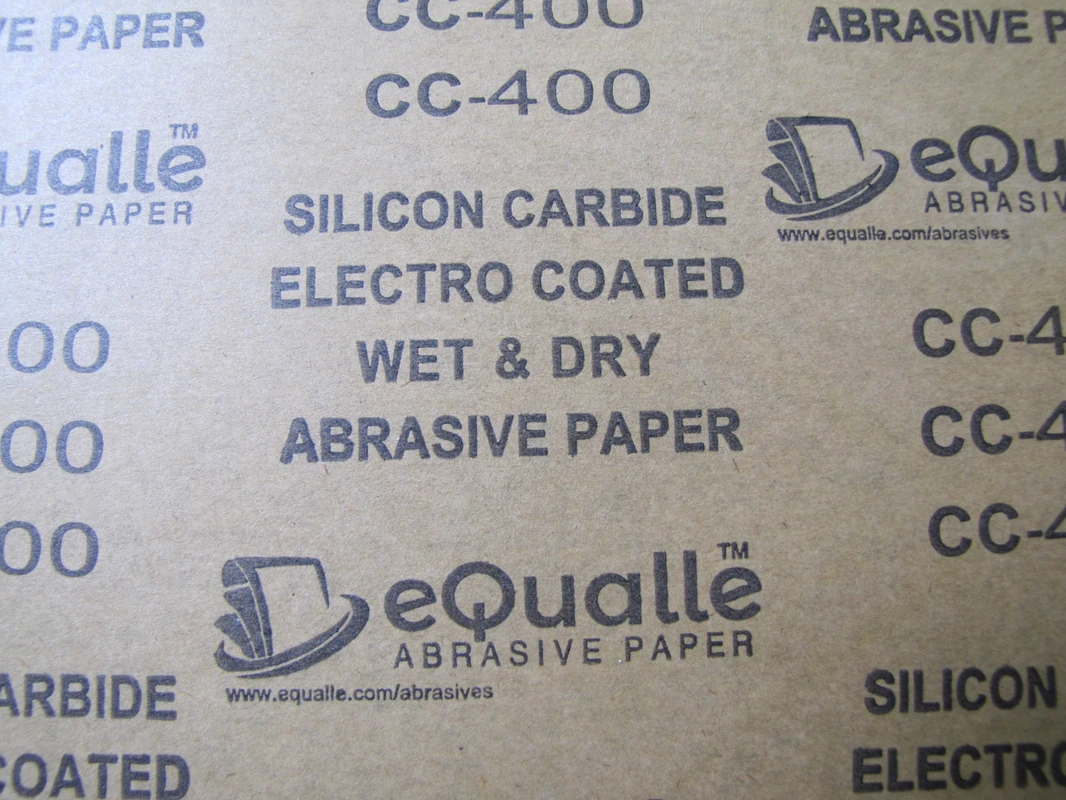
120 Grit Sandpaper Sheets (25-pack) — 9x11 in Silicon Carbide Abrasive for Wet or Dry Use — High-cut abrasive for refining rough wood grain, removing scratches, and preparing bare surfaces for priming or staining. (Professional Grade).
Frequently Asked Questions (FAQ)
Q: How do I know it’s time to switch to the next grit? A: Switch only after all scratches from the current grit are fully removed. Confirm under raking light and by changing your sanding direction slightly to reveal any stragglers. If the pattern is uniform and clean, move on.
Q: Can I skip from 80 straight to 180 or 220? A: Usually not on raw wood. That jump often leaves hidden deep scratches. A safer ladder is 80 → 120 → 180 → 220. You can skip more if a scraper or plane already refined the surface.
Q: What’s a good grit progression for primer before basecoat? A: Most systems are happy at 400–600 on primer-surfacer. Stop at 600 if your basecoat reveals scratches easily, or at 400 if the primer sands clean and your paint system allows it.
Q: How often should I replace sandpaper? A: Replace as soon as cutting slows or scratches look smeared rather than crisp. Fresh paper removes defects faster and cleaner; riding a dull disc tempts you to switch early and compounds problems.
Q: Do I need to sand between finish coats? A: For film finishes, a light 320–400 de-nib after full cure levels dust and small texture. For penetrating oils, a gentle 400–600 rub can improve hand feel. Avoid aggressive sanding that risks cutting through.