
Feather Your Drum Sander Starts to Avoid Divots
You spot it the second the sunlight slides across the boards: a faint trough that catches the eye with every step. The room is quiet now—dust settled, stain chosen, plans made—but that shallow divot where the machine paused refuses to disappear. If you’ve ever sanded a hardwood floor, you know this feeling. The drum sander is a capable partner and a stern teacher: get your starts and stops right, or the floor will hold the memory of every hesitation.
I’ve watched capable DIYers and seasoned pros alike wrestle with this step. The machine is heavy, the abrasive eager, and the pace of a room can pull your focus. You’re navigating doorways, outlets, thresholds; a kid calls from the hall; the cord snags. In one heartbeat you stop, the drum rides too long in a single spot, and a shallow trench appears—barely a millimeter, but enough to telegraph straight through finish. It’s not a failure of effort. It’s the physics of a spinning cylinder, gravity, and grit doing what they’re designed to do.
The good news is that a clean, smooth floor is more about rhythm than force—and feathering your starts and stops is the rhythm section. With a drum sander, you don’t just lower the drum; you introduce it. You don’t just stop; you exit. When done with intention, the transitions melt into the field like a fade in music. The sander’s weight, your stride, the lever, and even your breath link up so the abrasive never dwells, never digs, never “thunks” into the grain.
This piece is your guide to that feeling. We’ll break down why divots happen, exactly how to feather in and out, and how setup and room planning do half the work before you even touch the floor. You’ll learn what to do if a stop mark does appear and how to blend a repair so it vanishes. With a calm pace and a few practical checks, you’ll be the one in control of the machine—not the other way around.
Quick Summary: Keep the drum in motion before contact, lower and raise it gradually while moving, and plan your passes so every start and stop is lightly feathered into overlap—no divots, no chatter.
Why divots happen
Divots and stop marks are the fingerprints of a stationary drum meeting a floor. The abrasive is designed to cut efficiently under pressure; when that pressure is concentrated in one spot—even for a fraction of a second—it removes more wood there than in the surrounding area. That “more” doesn’t have to be much to be visible once stain or finish accentuates differences in sheen and grain.
Three forces conspire here. First, weight: a drum sander concentrates mass directly over the contact point. If you stop moving forward without lifting the drum, all that mass keeps cutting in place. Second, momentum: the drum spins fast and wants to keep spinning. If you lower it abruptly at the beginning of a pass, the machine bites in, and you’ll see a small trench right where you started. Third, grit: coarse abrasives (36–40) are aggressive by design. When dull or loaded with dust, they heat up and can cut unevenly, exaggerating small stalls or wobbles.
Machine variables matter too. Loose or uneven drum bearings can induce chatter—fine, evenly spaced lines across the floor—while an out-of-round drum or improperly installed belt will thump and telegraph a repeating pattern. Power supply affects the cut as well; a long, undersized extension cord can starve the motor, causing sluggish starts or surges that magnify dwell marks. On the floor side, cupping, high boards, and soft earlywood between hard latewood can all make the cut feel irregular, tempting you to linger—exactly the moment a divot is most likely.
The human factor is simply pacing and posture. New operators often look down at their hands and the lever, not at the far end of their pass. That shortens the stride and slows the body right when the drum touches down or lifts up. A subtle shift—eyes up, line chosen, stride steady—prevents the telltale dip. Divots aren’t mysterious; they’re the visible outcome of a pause. Control the pause, and you erase the mark.
Mastering drum sander starts and stops
Feathering is a sequence, not a single move. You’re coordinating body motion, lever action, and machine alignment to ensure the drum only cuts while the sander is already gliding—and eases in and out of the floor instead of punching and popping. Practice this choreography on a sheet of plywood first if you’re new to it.
- Start in position: Angle the machine 7–10 degrees to the direction of travel (slight diagonal). This reduces the chance of a visible straight-line stop mark and helps the abrasive track smoothly across boards.
- Begin moving first: Take two steps to build a smooth walking pace before lowering the drum. Think of “rolling into” the cut.
- Lower with intention: Ease the lever down over about one second, not a sudden drop. Listen for the pitch change as the drum kisses the floor. Keep your hips moving; your stride is the metronome.
- Keep a steady pace: Aim for a calm, consistent walk—neither rushed nor halting. A comfortable, even pace keeps pressure uniform and the cut even.
- Feather the lift: About 18–24 inches before your planned stop line, begin to raise the drum, again over about a second, while you keep walking. Let the abrasive “fade out” as you clear the zone where you’ll turn or overlap the next pass.
Use a visual cue. Chalk a soft line or lay a strip of blue tape where you’ll transition. Knowing you’ll lift slightly before the line prevents an instinctual last-second stop. On subsequent passes, overlap that feathered area by the same distance so the blends are layered and invisible.
Doorways and borders are where disciplines slip. Approach with a plan: stop lines should live under thresholds or in low-visibility areas. Never lower or raise the drum directly in the middle of a room unless you’re staging a deliberate blend. If your cord snags or someone interrupts, push the lever up fully while you’re still moving, then coast to a stop—never stop with the drum down.
Actionable tips:
- Pre-mark start/stop zones with chalk, and always feather 18–24 inches before each line.
- Keep your eyes on a target point at the far end of the pass to maintain stride.
- Count down your lever moves: “one Mississippi down,” “one Mississippi up” to avoid abrupt drops.
- Practice two dry runs per room pass—walking, turning, and lifting with the machine off.
- Keep the cord draped over your shoulder to prevent micro-stalls that cause dwell marks.
Setup, grit sequence, and room flow
Feathering technique works best when the machine is set up to be predictable. Start with the right abrasive sequence for your floor’s condition. For old finish or cupped boards, begin at 36 or 40 grit; for mildly worn floors, 50 or 60 grit may suffice. Move through each grit without skipping more than one step (36→60→80→100 or 40→60→80, for example). Each grit should fully erase the scratches and any faint stop shadows from the one before it. Rushing the sequence tempts you to linger with a finer grit—ironically creating new divots.
Fit the belt or drum sheet straight and snug; a misaligned seam can bump and mark the floor at every revolution. Empty the dust bag often to maintain suction and reduce heat. Use a heavy-gauge extension cord (12 AWG for longer runs) to keep the motor at full power. Listen to the machine: a smooth, even hum is your friend; a pulsing pitch points to imbalance, loose drive belts, or a damaged abrasive.
Plan the room like lanes on a track. Lay out your passes so you can walk full-length runs without mid-field turns. If the room forces a break—say, a peninsula or fireplace—create a logical transition zone where you’ll overlap from two directions, feathering both entries. Keep your first cut slightly diagonal to flatten the field, then follow with with-the-grain passes for final grits. Align your feathered start/stop zones consistently across grits so blends stack where you planned them.
According to a article, most visible start/stop marks trace back to a momentary pause with the drum in contact—proof that planning transitions is as important as steady hands.
Edges, vents, and thresholds deserve extra thought. Don’t aim a full-weight drop right at a floor vent. Approach it with the drum lifted, then lightly feather in, cross over, and feather out. At doorways, decide which room “owns” the stop line; hide your transitions under the threshold or in the less-visible room. Consistency across the entire grit sequence is what makes these choices disappear after finish.
Fine-tune the machine to help you
- Check the drum’s contact pressure; most rentals are pre-set, but an over-aggressive bite increases divot risk.
- Inspect the drum surface for resin glaze or built-up dust; clean or change abrasives before they load.
- Verify all wheels roll freely and at equal height to prevent tilt that concentrates cut on one side.
Fixing mistakes and feathering repairs
Even with care, you may find a faint stop mark under raking light or after a water-pop test. The fix is methodical blending, not spot grinding. Your goal is to spread the transition so the eye can’t locate where the extra material was removed.
First, mark the area with a pencil squiggle so you can track progress. If the divot is shallow and you’re still at a coarse or mid grit, sand across the mark on a slight diagonal over a longer path—starting your feather 24–36 inches before the mark and lifting 24–36 inches after. That lengthens the blend zone and erases the “edge” of the divot. Return to with-the-grain on the next pass and keep feathering your starts and stops in the same positions you’ve used across the room.
If you’re at the fine-grit stage, avoid parking a 100-grit pass directly on a defect. It will soften edges but won’t truly level the hollow—and you risk polishing the surrounding floor unevenly. Instead, step back one grit locally (e.g., from 100 to 80) for the blend passes, then re-progress through the finer grit to match the rest of the room.
For isolated end-grain or board-to-board dips, an edger with the same grit sequence can help, but work with the edger tilted so only the outer third of the disc kisses the feather zone, and move constantly. Follow with a buffer (screening) pass to unify scratch patterns between belt/drum and edger work. Under strong raking light, the blend should vanish.
Avoid the temptation to fill divots with wood filler and carry on; under a clear finish, the patch will often telegraph as a different sheen or color. Mechanical correction—a controlled, lengthened feather—creates the invisible repair you want. Before finishing, walk the room with light at a low angle and a pencil in hand. Touch every former start/stop zone. If you can’t find them, neither will anyone else.
When to re-rent and when to pivot
- If a repeating thump pattern (every few inches) covers the room, the drum or abrasive likely caused chatter. Re-sand diagonally one grit coarser to reset the field.
- If stop marks are localized and shallow, blend-service is enough; no need to re-rent the big machine.
- If you’re down to bare wood and the floor is thin, consider switching to a multi-disc sander for final leveling to preserve material while blending.
Heavy-Duty Drum Sander — Video Guide
Before you start, it helps to see proper handling in action. The Home Depot Rental’s short overview of the American Sanders EZ-8 shows how a rental drum sander is set up, how belts are installed, and what a smooth, even pass looks and sounds like. The presenter highlights pace, lever control, and dust collection—key elements behind clean starts and stops.
Video source: Heavy-Duty Drum Sander Rental | The Home Depot Rental
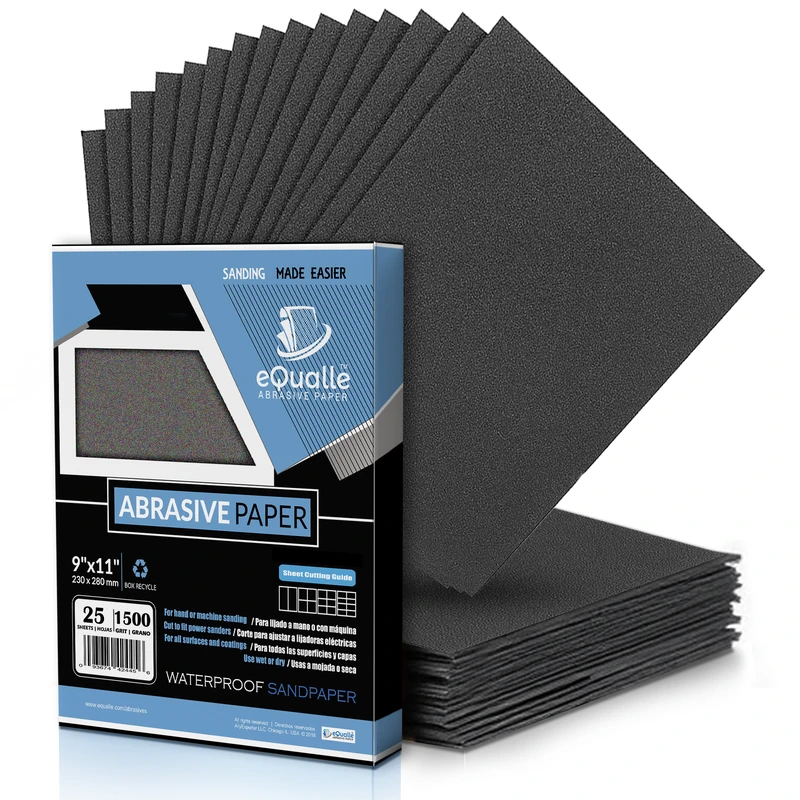
120 Grit Sandpaper Sheets (10-pack) — 9x11 in Silicon Carbide Abrasive for Wet or Dry Use — High-cut abrasive for refining rough wood grain, removing scratches, and preparing bare surfaces for priming or staining. (Professional Grade).
Frequently Asked Questions (FAQ)
Q: What does “feathering” a start or stop actually mean?
A: Feathering means lowering or lifting the drum gradually while you’re already moving, so the abrasive eases into and out of contact over 18–24 inches. That taper prevents the concentrated cut that creates divots.
Q: How fast should I walk with a drum sander to avoid divots?
A: Use a steady, comfortable stride—think a calm walking pace, not a shuffle. The key is consistency: start moving first, maintain even speed during the cut, and begin lifting while still moving so the drum never dwells in one spot.
Q: Can a random-orbit sander remove stop marks left by a drum?
A: A 6-inch random-orbit can soften very light shadows, but true divots need leveling over a larger area. Blend with the drum sander one grit coarser on a longer feather zone, then re-progress; finish with a buffer to unify the scratch pattern.
Q: What grit should I use to fix a visible start/stop trench?
A: Step back one grit from where you noticed the defect (e.g., from 80 to 60). Feather diagonally past the mark to spread the transition, then return to your original grit sequence and re-sand that lane for a uniform finish.
Q: How do I handle starts and stops in a small hallway or at a doorway?
A: Pre-plan stop lines under thresholds or in less visible areas. Approach with the drum up, build your pace, lower gently, then lift 18–24 inches before the line while still walking. Overlap from the opposite direction on the next pass to blend the transition.