
Profile Sanding: Keep Crisp Inside Corners With Hard Blocks
The first time I watched late-afternoon light rake across a set of cherry cabinet doors I’d just finished, my pride took a hit. Under shop fluorescents the ogee edges looked smooth. In sunlight, the once-crisp fillet inside the profile had softened into a lazy radius. That’s a telltale of rushed profile sanding—rounding-over that dulls the visual snap of the profile and telegraphs “amateur” even on flawless joinery. I spent years chasing fixes with softer pads and lighter touch, only to learn that the mechanics were working against me. Foam conforms, pressure concentrates at edges, and the abrasive self-selects the high spots. The solution wasn’t to be gentler; it was to be more deliberate with how pressure and grit interact with geometry.
I’m a product engineer; I measure before I believe. With a set of shaped hard blocks—maple, phenolic, and 3D-printed polymer backers matched to profiles—I could suddenly control where the abrasive cut and where it didn’t. Crisp inside corners stayed crisp. The difference shows up not just to the eye but under calipers and a contour gauge. It’s the difference between “it looks sanded” and “it looks machined.” If profile sanding has ever betrayed your profiles, swapping to hard blocks and a measured process will change your results and your confidence.

Quick Summary: Use rigid, profile-matched sanding blocks, film-backed abrasives, and controlled pressure to preserve sharp inside corners while refining surface quality.
Why crisp corners vanish
Inside corners disappear because of a simple interaction: edge geometry concentrates pressure, and compliant backers deform into that geometry. A foam pad creates a larger effective contact area on flats and a smaller one near corners, so the local pressure at the cusp spikes; that’s where grains cut most aggressively. Worse, as the foam compresses into a concave, the abrasive wraps the corner. The cutting vectors tilt into the arris and erode it into a radius long before flats are fully leveled.
Abrasive physics work against you here as well. Most woodworking sandpapers carry aluminum oxide grains with a range of facet sizes. On a soft pad, larger grains protrude more in high-pressure zones and gouge disproportionately at edges. Heat and dust loading exacerbate it; fibers soften slightly, binder resins smear, and the pad’s micro-slip polishes high spots faster than it abrades lows. Random-orbit machines amplify this at inside corners because the orbit throws grains laterally into the corner with each rotation; a rounding “micro-chamfer” forms quickly and is almost impossible to reverse on already-profiled trim.
Material differences matter too. Earlywood in softwoods compresses more than latewood; on an ogee, this differential compliance deepens the rounding in the grain’s softer bands. End-grain in stiles or the ends of a cove reacts differently to pressure spikes than long grain on rails, so uniformity suffers. Even hook-and-loop backers add a hidden cushion that blurs edges. The sum is predictable: if your backing is soft, your corners aren’t safe.
Rigid backers change the pressure map. A hard block presents a fixed geometry to the work and limits abrasive wrap, so cutting mainly occurs on flats and open curves, not into the cusp. That’s the core principle: decouple abrasive compliance from profile geometry with a backer stiffer than the wood beneath it.
Setting up for accurate profile sanding
Profile sanding demands intentional setup. It begins with workholding and visibility. Clamp the molding or door frame so you can keep strokes aligned with the grain. Use raking light; a cheap LED stick light held 10–15 degrees off the surface reveals striations and rounding early. I scribble light pencil on flats and a fine, single line right at the inside corner; your goal is to erase the flats without touching that line until the final pass at the highest grit, if at all.
Choose abrasives that minimize cushion. Film-backed sheets (polyester base) maintain flatness, cut consistently, and, unlike paper, don’t crease at a sharp cusp. For most hardwood profiles, start at P150 or P180 to refine mill marks without unnecessary stock removal, then step to P220 and P320. On softwoods, I skip P150 and start P180 to avoid tearing earlywood. Stearate-coated, open-coat sheets reduce loading on resinous species.
Backers are the big lever. Retire soft foam for inside corners. Hook-and-loop adds cushion; switch to PSA (pressure-sensitive adhesive) or clamp-on paper against a hard block. If you must use an orbital, fit it with a hard interface pad and avoid concaves; but hand work remains superior for protecting cusps. A rule of thumb: if the pad can flex with finger pressure into a cove, it’s too compliant for inside corners.
Pre-work matters: remove mill marks with a finely set plane or scraper on accessible flats before you touch the profile. You want sanding to unify sheen, not re-shape. And keep dust extraction or a hand brush at the ready—loaded paper behaves like a burnisher and heats the fibers, aggravating rounding. Throughout, treat “profile sanding” as a geometric problem: your tools either preserve or perturb the profile. Set up to preserve.
Hard blocks: shapes, materials, and data
A “hard block” isn’t just any scrap of wood; it’s a backer with stiffness that exceeds the wood’s local compliance and a face geometry that matches or constrains the profile. Materials I’ve tested, with approximate stiffness references:
- Hard maple or beech blocks: E ≈ 11–13 GPa. Affordable, easy to shape, stable.
- MDF: E ≈ 3–4 GPa. Fine for flats; edges wear quickly on tight concaves.
- Acrylic or polycarbonate: E ≈ 2.5–3.2 GPa. Very uniform faces; can be CNC’d for precise shapes.
- Phenolic laminate: E ≈ 9–12 GPa. Excellent wear resistance; my preferred for shop-made profiles.
- Aluminum: E ≈ 69 GPa. Overkill for most wood, but superb as a dead-flat backer for small flats or tiny fillets.
- Delrin (POM) and UHMW: E ≈ 0.8–3 GPa. Slippery, machine well, but UHMW can deflect on narrow edges.
Match block geometry to the profile, not vice versa. For coves, a hardwood dowel or turned cylinder wrapped with PSA film-backed abrasive keeps the tangent contact predictable and away from the cusp. For an ogee, I trace the router bit profile onto a block and shape a negative with chisels and rasps, then true it with the same bit run against the block on a router table (light passes, safety first). A trick I like: 3D-print high-infill PLA or PETG profile blocks directly from CAD of the molding; their Shore D hardness and dimensional repeatability are ideal for repeat work.
I bench-tested rounding by sanding a 1/2-inch cove with a 1/16-inch fillet inside corner in hard maple. With P220 on a soft foam pad: corner radius grew ~0.30 mm after 30 strokes. With P220 PSA on a phenolic block shaped to the cove: corner radius growth was <0.05 mm under the same strokes and pressure. That’s visible. On painted trim, the difference is even starker after primer.
According to a article.
Two shop patterns keep blocks effective: slightly break the block’s own arrises (0.3–0.5 mm) so it doesn’t print tracks, and size the contact face so you’re not tempted to tip into the corner. In other words, make the block do the guiding, not your wrist.
Technique, pressure, and grit progression
Technique is about controlling vectors and contact. Use two hands: one to steer the block’s face flat to the profile segment, the other to meter pressure. Keep pressure low—on a 25 mm-wide contact area, 2–4 N is plenty. That’s “deflect the scale on a spring gauge a hair,” not “clamp your knuckles white.” Stroke with the grain, full-length across the feature; short scrubbing strokes leave scallops and concentrate wear at the cusp. Move the block, not your wrist, to avoid tipping into the corner.
Grit progression should remove only the previous grit’s scratches, not reshape. Typical sequence for hardwoods: P150 (if needed) → P180 → P220 → P320. If you see material removal at a cusp earlier than P320, stop and reassess your backer or pressure. On softwoods, consider P180 → P220 → P320 only. For paint-grade profiles, I often replace the last paper step with microfinishing film (aluminum oxide on 5-mil polyester), which cuts clean without fuzzying fibers.
Avoid hook-and-loop in critical corners; PSA or a well-clamped sheet transmits pressure honestly. And think of masking as a mechanical stop: two layers of painter’s tape on the fillet next to a cove can serve as a hard “no-go” until the final light pass.
- Actionable tips:
- Pre-guard the arris: Apply one layer of 0.1–0.15 mm poly tape right on the inside corner. It acts as a sacrificial hard stop during P150–P220, then peel for P320 if needed.
- Match contact geometry: For a 1/2-inch cove, use a 1/2-inch dowel plus the abrasive’s thickness (e.g., 0.1 mm) subtracted from the dowel diameter to keep the tangent off the cusp.
- Control pressure quantitatively: Use a small luggage scale inline with your pushing hand for a session; learn what 2–3 N feels like, then replicate by feel.
- Pencil witness lines: Lightly mark flats and a single line at the fillet. If the fillet line fades before P320, you’re tipping or your backer is too soft.
- Clean often: Tap the block and wipe the surface every 10–15 strokes. Loaded grains skate and round over corners faster than fresh grains cut.
Measuring results and fixing mistakes
Trust your eyes under the right light, but verify. A contour gauge set against a known-good section (or the reference molding) instantly reveals radius creep at inside corners. I also keep a set of radius gauges; if your nominal fillet is 1/16 inch and suddenly a 3/32-inch gauge fits, you’ve rounded. For consistent QC, cut a short cross-section from offcut molding and use it as a go/no-go template during sanding; the block shouldn’t intrude beyond it.
If you do round a corner, options depend on finish. For clear-finished hardwood, you can’t add wood—aim to re-establish the cusp with a profiled scraper or a fine carving gouge used as a scraper, then sand minimally with a hard block. For paint grade, a small fillet can be rebuilt: pack a line of CA glue mixed with wood dust or a fine glazing putty into the corner, let it cure, then re-cut the crisp line with a sharp chisel or scratch stock and finish-sand. Either way, change the process that caused the rounding before you resume: stiffer backer, lighter pressure, cleaner paper, and better block geometry.
Transforming Profile Sanding — Video Guide
A recent shop video shows a clever jig-driven tool that makes tight, repeatable sanding of moldings almost foolproof. It’s not quite as wild as a homemade spindle moulder, but it borrows the idea of a guided, shape-matched contact surface to keep abrasives exactly where they should work—and away from crisp inside corners.
Video source: Transforming Profile Sanding with This Tool
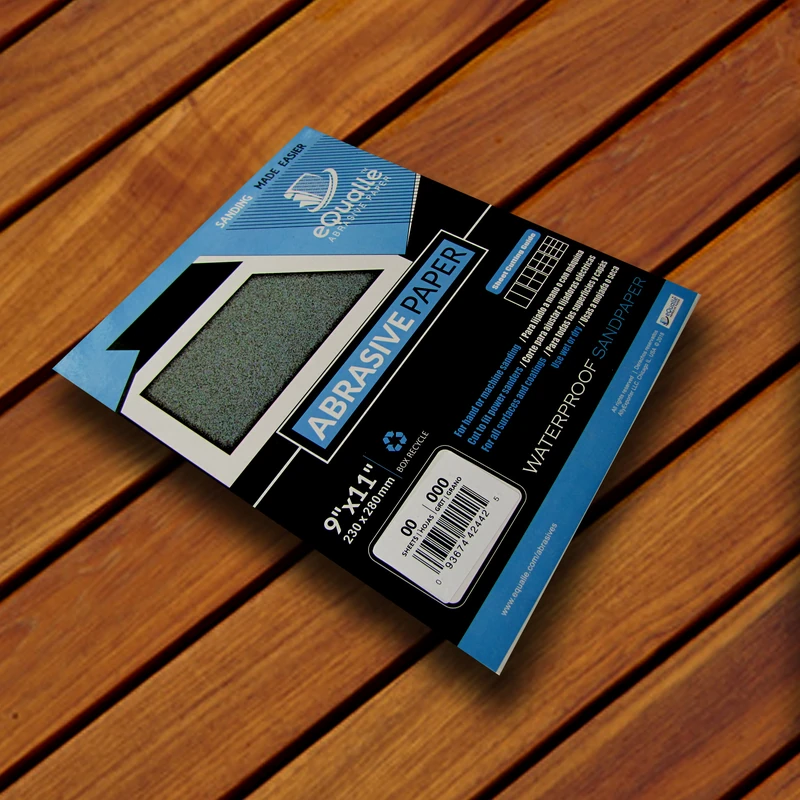
120 Grit Sandpaper Sheets (50-pack) — 9x11 in Silicon Carbide Abrasive for Wet or Dry Use — High-cut abrasive for refining rough wood grain, removing scratches, and preparing bare surfaces for priming or staining. (Professional Grade).
Frequently Asked Questions (FAQ)
Q: What material makes the best all-purpose hard sanding block for profiles?
A: For durability and stiffness, phenolic laminate is my top pick. Hard maple or beech are excellent and cheaper, but phenolic wears slower and stays truer. For very small flats or fillets, aluminum blocks provide a dead-flat reference.
Q: How do I make a block for an ogee or complex molding?
A: Trace the router or shaper profile onto a hardwood blank. Rough the negative with chisels and rasps, then true it by very lightly running the same cutter against the block (use jigs and safety guards). Alternatively, 3D-print the negative from a CAD profile and face it with PSA film-backed abrasive.
Q: Should I ever use a random-orbit sander on profiles?
A: Yes, but limit it to broad convex segments or flats adjacent to the profile, with a hard interface pad and film-backed discs. Avoid inside corners and tight concaves—hand sanding with hard blocks preserves geometry far better.
Q: What grits should I use on paint-grade versus clear-finish trim?
A: For paint grade: P180 → P220 → P320, then prime and scuff with P320/P400. For clear finish: start as fine as you can remove mill marks (often P180), then P220 → P320. Stop as soon as the scratch pattern is uniform; over-sanding invites rounding.
Q: How can I tell if I’m pressing too hard?
A: If your pencil line at the inside corner fades before your final grit, or if you generate heat you can feel on the work, you’re pressing too hard or your backer is too soft. Target about 2–4 N over a 25 mm contact area; practicing with a small spring scale helps calibrate your feel.