
2K Surfacer Timing: Primer Sanding Done Right
An evening garage hums with small, disciplined sounds: a compressor cycling, a tack rag flicking over a panel, a block sliding across primer with that dry, sandy whisper you only get when things are just right. You’re balancing patience and momentum—eager to shape the last skim of 2K surfacer yet wary of rushing into primer sanding and paying for it with shrinkage or telegraphed scratches weeks later. The temptation is familiar: the surface feels dry, the guide coat dusts off, and the panel seems eager. But urethane chemistry doesn’t care how close you are to paint day. Crosslinking, solvent escape, and film build will each have their say, and if you sand too soon, they’ll say it loudly in your topcoat.
This is the quiet skill of timing—learning your materials, your shop climate, and your abrasive cut so the first block pass is surgical, not speculative. You want that early, chalky “break” signaling a stable film. You want dust that powders, not ribbons that smear or roll. You want edges that feather without tearing and guide coat that disappears in an even halo, not in scallops. Most of all, you want to eliminate surprises after color: no witness lines, no swelling over body lines, no late print-through in the sun.
In this article, I’ll pin down the real-world wait times for sanding 2K primer surfacers, how environment and film build push those times around, and the cues that tell you a panel is truly ready. We’ll cover abrasive selection, blocking strategy, and sealing windows so you can move from surfacer to sealer with confidence—and do it once.
Quick Summary: At 70°F/21°C, most 2K urethane surfacers block best 8–24 hours after application (longer for heavier builds or cool shops); bake cycles shorten this, but sand only when the film powders cleanly with no clogging, then seal within the recommended recoat window.
What Cures in a 2K Urethane Surfacer
2K surfacers are more than “dry to touch.” They are curing polymers: an isocyanate crosslinker reacts with polyols to build a network while carriers (solvents/reducers) exit the film. Flash time between coats removes surface solvent, but the bulk of escape—and the critical rise in crosslink density that stabilizes the film—happens in the hours after the final pass. That’s the interval you’re managing before you sand.
Three interacting variables determine sandability:
- Solvent content and reducer speed: Slower reducers hang in the film longer, particularly in cool or humid spaces. Entrapped solvent under an apparently dry skin is the leading cause of post-paint shrinkage and print-through.
- Crosslink progression: Early film is plastic and loads paper easily. As crosslinking advances, the cut becomes crisp, dust powders, and scratch depth becomes predictable. Too far and you’ll work harder, but stability improves.
- Film build: High-build surfacer applied in 3–4 coats can retain solvent in the valley of the profile long after the surface skins. Heavier builds need longer waits to avoid haloing around filler edges during block work.
Typical manufacturer data sheets list “sandable in 2–4 hours” at 70°F/21°C. In practice, pros extend that to 8–24 hours for heavier applications, complex substrates, or when the goal is long-term stability under high-gloss topcoats. Warmth accelerates cure by promoting solvent diffusion and reaction rate. Conversely, low shop temperatures, high humidity, and sealed substrates (e.g., glazed OEM e-coat) slow the process.
Your job is not merely to hit a clock but to sand at the moment when the cut is efficient and the film won’t move later. That means pairing the book values with on-panel tests to verify readiness.
Dialing In Primer Sanding Windows
How long should you wait before sanding 2K primer surfacer? Use a baseline, then refine:
- Room temperature (70°F/21°C), medium reducer, 2–3 coats: 6–12 hours before initial block, 12–24 for heavier builds or humid shops.
- Cool shops (60–65°F/15–18°C): Extend to 18–36 hours; consider gentle heat to avoid “green” sanding.
- Warm shops (75–85°F/24–29°C): 4–8 hours may be enough for moderate builds; monitor for paper loading.
- Force-dry (140°F/60°C for 30–45 minutes, then cool): Many surfacers can be blocked 1–3 hours after cool-down, but watch for deep-solvent trapping in thick areas.
Don’t treat these as absolutes. Instead, verify:
- Powder test: Pass P320 or P400 dry across a small, flat area. If it powders cleanly, you’re ready. If it smears, strings, or cakes the abrasive, wait.
- Edge feather test: Lightly abrade a featheredge at a repair perimeter. A stable film feathers smoothly; a green film will tear or roll at the edge.
- Odor check: Strong solvent smell near the panel often indicates incomplete off-gassing in the bulk film, even if the surface seems dry.
- Fingernail push (gentle): On a masked margin, a green film can mar or dent; a ready film resists with minimal imprinting.
Sanding too soon creates risk in two ways. First, paper loads and drags, deepening random scratches and encouraging waves as you push to maintain cut. Second, you can compress or smear the still-plastic film, which later relaxes and “prints” the old scratch pattern through sealer and topcoat. The net effect is a panel that looks straight in the booth but reveals ghosts outdoors.
If you must keep schedule in a cool environment, control variables: warm the panel and room air, use appropriate reducer speed for shop temperature, and avoid overloading coats. Build in two or three medium-wet passes with full flash between rather than one heavy load that traps solvent. Above all, let the material, not the clock, dictate your first stroke.
Environment, Film Build, and Substrate
Environment governs diffusion. At lower temperatures, solvent molecules move more slowly, and the polymerization reaction lags. Relative humidity influences evaporation rate and can form a microboundary layer over the film that slows off-gassing. Air movement helps, but too much air across a fresh surface can “case harden” the skin, bottling solvent beneath.
Film build is integral. A high-build urethane laydown at 3.5–4.5 mils per coat will stack solvent in the valleys of bodywork and weld seams. Those internal pockets lag hours behind the visible surface. When you start blocking, the face looks perfect while the bulk film is still soft—inviting edge-lift and telegraphed scratches a week after buffing.
Substrate matters as well:
- Bare steel or aluminum with epoxy undercoat: Typically stable; the epoxy (fully cured) regulates absorption and supports uniform off-gassing.
- Polyester filler areas: Thick filler beneath surfacer is an insulator; temperature makes a bigger difference here, and so does total build.
- OEM e-coat or dense composites: Low porosity can slow solvent escape; add time or mild heat.
- Plastics: Thermal expansion and flexibility complicate scratch stability; give them the long side of any timing window.
Process tweaks mitigate risk. Use reducer and hardener speeds matched to the booth climate. Honor flash times—10–15 minutes is common for many 2K surfacers, but don’t recoat until gloss is gone and the film is dull-uniform to avoid solvent stacking. Apply consistent, moderate-wet passes; avoid flooding body lines or edges. If you bake, follow the tech sheet: ramp temperature gently to avoid rapid skinning and allow a cool-down to room temperature before evaluating sandability.
According to a article. This dovetails with real-world shop practice: minimize the delay between final sanding and sealer/topcoat so your mechanically keyed surface doesn’t glaze over or collect contaminants. If life intervenes and you miss the window, re-scuff thoroughly with the proper grit or an ultra-fine abrasive pad until the surface is uniformly deglossed and cleanly keyed.
Blocking Strategy and Abrasive Selection
Once the film is ready, abrasive control is the difference between a crisp, flat panel and a wavy one. Start with clear objectives: remove guide coat uniformly, maintain plane, and refine scratches so they don’t broadcast through sealer and color.
Grit progression, dry:
- P180–P220: Shaping coats if you’ve got measurable highs/lows; use a rigid block and a crosshatch stroke (about 45°/45°) to avoid trenches.
- P240–P320: First refinement pass on a stable surfacer film; ideal for flattening guide coat without digging.
- P400–P500: Pre-sealer refinement when you’re confident in the panel; many sealers comfortably cover P400 dry, some prefer P500.
Grit progression, wet (if allowed by your product):
- P600–P800: Final refine for sealer when chasing a tighter print risk window, especially under metallics and pearls.
On complex contours, use an interface pad on a DA with a clean, light touch and keep the pad flat to avoid toeing-in. Avoid soft blocks on large flats; they conform and follow waves. For tight radii and transitions, switch to smaller, firmer blocks and shorten your stroke. Re-apply a contrasting guide coat after each grit change and frequently blow down with clean, dry air; this reveals low areas and scratch remnants before you lock them under finer grits.
Four actionable, high-yield tips:
- Use a “clog check” coupon: Shoot a small test card when you prime the panel. Sand the card first; if it loads, the panel will too.
- Keep abrasives fresh: Once P320 starts to burnish more than cut, replace it. Dull paper rides over low spots and leaves inconsistent scratch depth.
- Elevate panel temperature modestly: Bringing metal to 80–90°F (27–32°C) before you start can yield a cleaner powder and more consistent dent response.
- Treat edges as a separate operation: Tape body lines during the first passes, then remove and lightly finish edges with a finer grit to prevent cut-through.
Finish with a meticulous blow-off and a lint-free solvent wipe appropriate to your system. If you’re going to wet-sand a final step, switch to clean water with a few drops of panel-wash soap, and squeegee frequently to read the surface. Any persistent dark water track in a scratch pattern indicates you’ve not fully refined.
Defect Control, Recoat, and Sealing Timing
Every sanding decision shows up later as either deep-gloss clarity or nagging defects. The main enemies after blocking are latent shrinkage, witness lines, edge burn-through, and adhesion lapses from missed recoat windows.
Shrinkage/print-through: If you sanded on the early side, you may see ghost scratches or ring halos over filler weeks after delivery—especially under dark, high-solids clears. Prevention is timing plus refinement: don’t rush the first block, and don’t stop refining at a grit your sealer can just barely cover.
Witness lines: Stack lines from aggressive DA work or from changing directions without fully crossing out the previous pattern. Keep your stroke disciplined. Guide coat religiously. If a suspicious line lingers after P400, drop back a grit on that spot and re-level before moving on.
Burn-throughs: Feathered edges at old paint transitions are fragile. If you expose the underlayer, stabilize it—spot-prime small areas and allow a mini-cure, or seal fully, depending on system guidance. Do not paint over a ragged featheredge.
Recoat windows and sealing: After your final sanding, most urethane systems specify sealing or topcoating within a defined time—often the same day. A practical target is to seal within 4–24 hours of final sand at 70°F/21°C. This ensures your mechanical key is fresh and uncompromised by shop dust or oils. If you exceed the window, re-scuff thoroughly with P600–P800 (or an equivalent ultra-fine pad and compound grit) until the surface is uniformly matte and clean.
Between surfacer coats, honor flash times (commonly 10–15 minutes until dull) and avoid long “dead” gaps that invite dust contamination. If your process requires you to wait multiple days before color, plan an intermediate seal coat after the block stage to lock the surface and reset the clock.
Finally, recognize when to stop. A high-build surfacer is not an infinite eraser. If you’re chasing a persistent low after two full prime/block cycles, revisit the substrate—correct the metal or filler rather than adding more urethane thickness. Excess build stresses the film, prolongs solvent escape, and magnifies the risk of later movement.
How to Apply — Video Guide
This concise demonstration follows a final surfacer application through to finish sanding and panel readiness for color. You’ll see the pacing of coats, correct flash observation, and what a proper powdering cut looks like when the film is truly ready. The presenter also shows controlled block techniques and grit transitions that prevent chasing defects.
Video source: How to Apply a Final Coat of Primer & Finish Sand it to Prepare for Paint
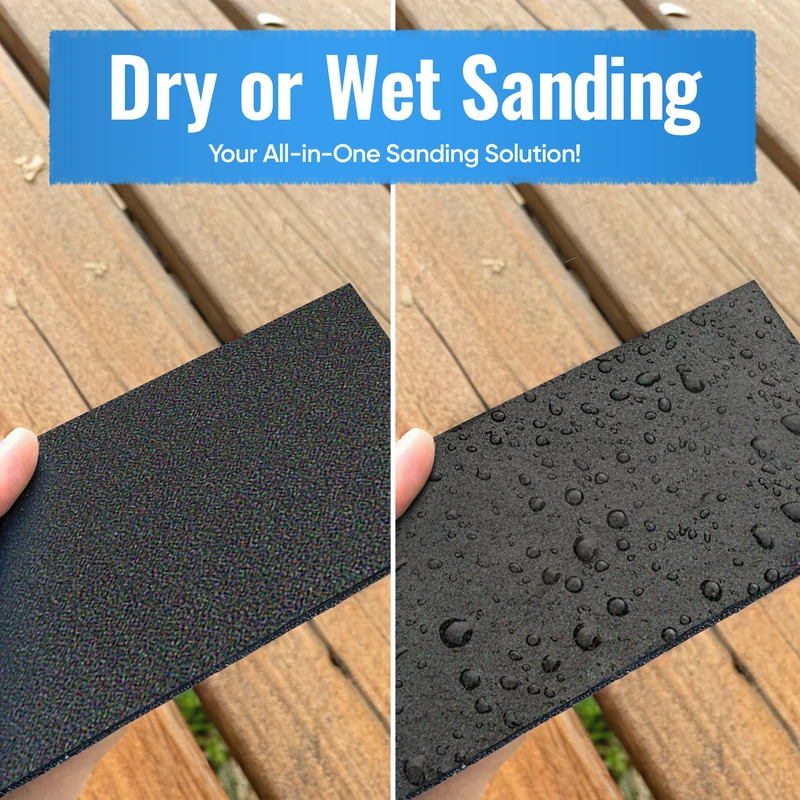
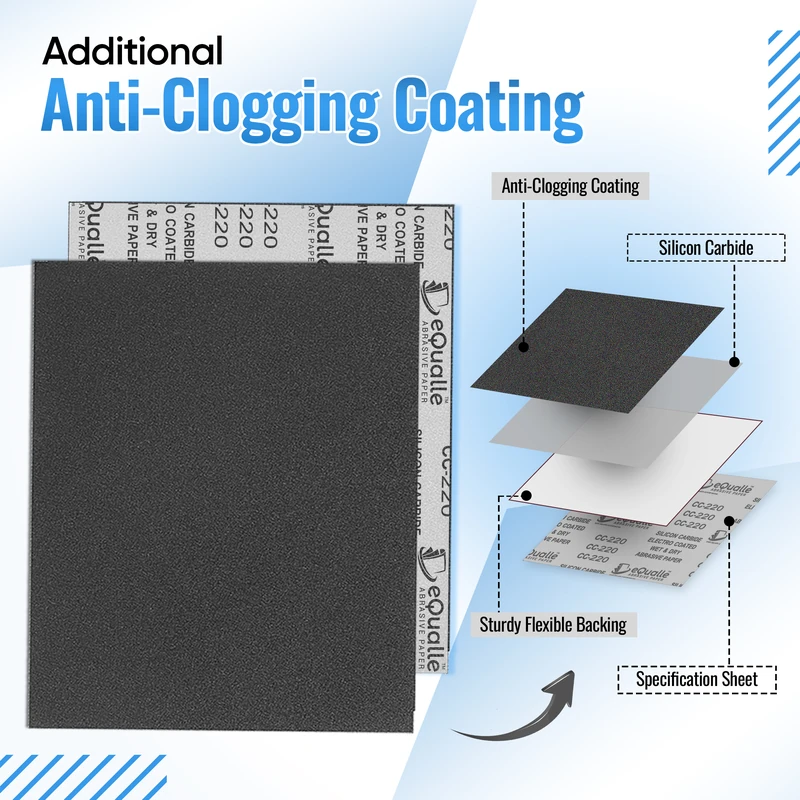
80 Grit Sandpaper Sheets (50-pack) — 9x11 in Silicon Carbide Abrasive for Wet or Dry Use — Durable coarse sandpaper made with Silicon Carbide for fast stock removal and surface leveling. Excellent for woodworking, metalwork, and fiberglass preparation. Works effectively for both wet and dry sanding before moving to 120 grit. (Professional Grade).
Frequently Asked Questions (FAQ)
Q: What is a safe wait time before sanding 2K primer surfacer at 70°F/21°C?
A: For 2–3 medium-wet coats, 8–12 hours is a practical starting point; extend to 12–24 hours for heavy builds, cool shops, or high humidity, and always confirm with a powder test.
Q: Does baking eliminate the need to wait before sanding?
A: No. A bake (e.g., 140°F/60°C for 30–45 minutes) accelerates cure and solvent escape, often allowing sanding 1–3 hours after cool-down, but readiness must still be verified by dust behavior and edge feathering.
Q: What grit should I finish at before sealer?
A: Many systems accept P400–P500 dry before sealer; for higher-risk finishes (dark colors, high-gloss clears), refine to P600–P800 wet if permitted by your tech sheet.
Q: How soon should I seal after the final sand?
A: Aim to seal within the same day—ideally within 4–24 hours of final sanding. If you exceed the window, thoroughly re-scuff with the prescribed fine abrasive to restore a clean mechanical key.
Q: My paper clogs immediately—what does that mean?
A: The film is still green. Wait longer or apply gentle heat; resume only when a test pass with P320–P400 produces a clean, chalky powder with no smearing or balling.