
Test Spots and Grit Choices for Orange Peel Removal
The hood looked clean under the shop LEDs—until the morning sun exposed the wavy, uneven texture that dulls reflections and makes any color look cheaper than it should. That ripple is what we call orange peel. You can ignore it, bury it under glaze, or chase it with aggressive paper and hope for the best. I’ve done all three. Only one delivers predictable results without gambling away clearcoat: a disciplined test spot to determine the true starting grit for orange peel removal.
On that morning, my coffee was still too hot to sip as I taped off a 2-by-2 inch square in the center of the panel. The plan was simple: measure, test, verify, scale. I logged the paint thickness at multiple points, found an average of 48 microns of clear, and circled two areas near body lines that read thinner—off-limits for sanding. I filled a sprayer with distilled water and a drop of pH-neutral shampoo for lubrication, staged a DA sander with a soft interface pad, and stacked discs from fine to coarse. The only open question was where to start: P3000? P2500? Would P2000 be necessary? Years ago I might have guessed. Today I let the paint answer.
I set the sander to a moderate speed, took a few crosshatch passes with a foam-backed finishing disc, then switched to a compound and microfiber pad to ensure the scratches could be polished out. Each step was a controlled variable: consistent pressure, counted section passes, same lighting angle for inspection. Success isn’t just a flatter surface—it’s a repeatable process you can scale across the panel without surprises. The test spot tells you the least aggressive path that still achieves the target finish. And when we’re dealing with micron-thin coatings, “least aggressive” is the only approach that survives the long term.
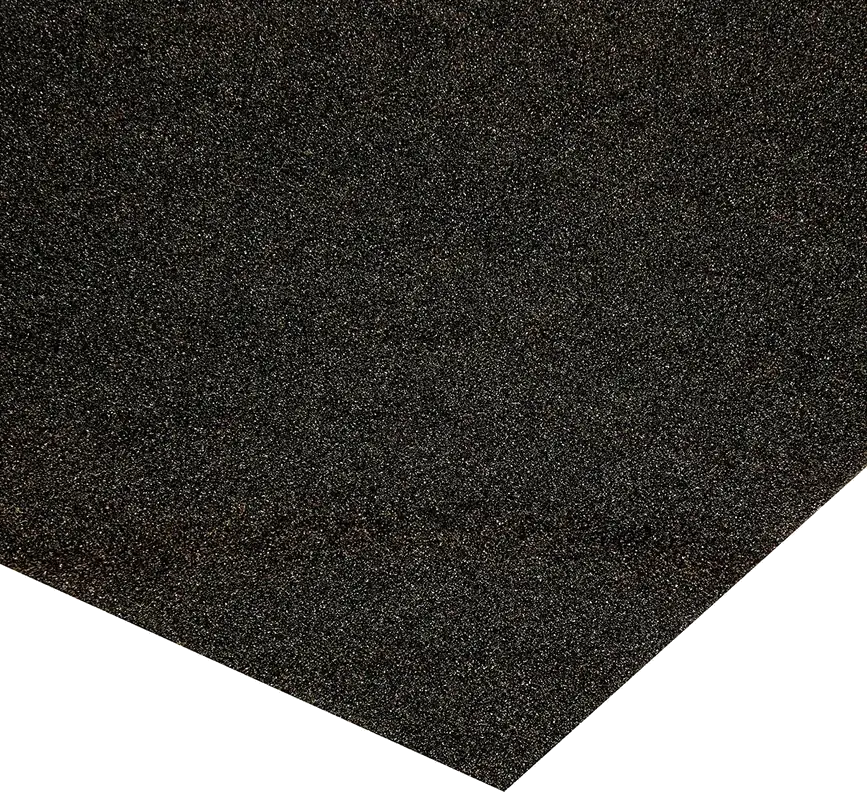
Quick Summary: Use a small, controlled test spot to identify the least aggressive starting grit that will flatten the texture and still polish out cleanly, then scale that process panel-wide.
Why a test spot beats guesswork
Every panel tells a different story. Factory clearcoats vary by chemistry, bake cycle, and thickness; repaints add another layer of variability—often literally. Guessing a starting grit invites three outcomes: undercutting (wasting time with overly fine abrasives), overcutting (eating unnecessary microns of clear), or worst of all, discovering too late that you can’t fully remove your sanding marks. The test spot replaces guesswork with data.
Here’s the core reason it works: orange peel is a topographical issue. Peaks and valleys in the clear reflect light unevenly. Leveling means shaving the peaks until they align with the valleys. The coarser the abrasive, the faster it knocks down those peaks, but the deeper the scratch you must later remove through compounding and polishing. Your starting grit is a balance between cutting speed and the scratch depth your polish system can reliably clear.
On test panels and production vehicles in my shop, I’ve measured typical modern OEM clearcoat between 40–60 microns. A careful, lubricated P3000 foam disc on a dual-action sander might remove about 1–2 microns per two crosshatch passes; P2500 can move you into the ~2–3 micron range; P2000 into ~3–5 microns; and P1500 can exceed that, depending on mineral type, backing, pressure, and dwell. Compounding to remove the sanding marks usually costs you an additional 2–4 microns. Your margin is not huge.
Because of that thin safety window, a test spot is non-negotiable. It answers three critical questions:
- Does the chosen grit flatten the texture to the target level within a reasonable pass count?
- Can my compound/pad/machine system fully remove the sanding marks without chasing haze?
- How many microns am I likely to spend to achieve the result?
With those answers, you scale up with confidence rather than hope.
Choosing starting grit for orange peel removal
The safest universal rule is “least aggressive that works.” But “works” must be defined. I define it as: visibly leveled texture after 2–4 crosshatch passes with a foam-backed finishing disc, followed by complete scratch removal using your compounding system in 1–2 sets without residual haze. That definition keeps you honest—fast enough to be practical, gentle enough to preserve clear.
My baseline sequence for the test spot:
- Inspect and measure
- Map paint thickness with a gauge and mark thin zones. Avoid edges and body lines.
- Under raking light, assess texture severity. If you can read a crisp light filament across the panel, peel is mild; if it breaks into ripples, plan for a coarser grit.
- Start fine, then step down only as needed
- Begin with P3000 foam-backed on a DA with a soft interface pad. Two crosshatch passes, slow arm speed, light to moderate pressure, high-quality lubrication.
- Wipe, dry, and inspect. If the peel remains largely unchanged, step to P2500 and repeat. If still insufficient after reasonable passes, test P2000. Reserve P1500 for severe texture or resprays with heavy peel, and only if your gauges and polishing system justify it.
- Prove polish-out before scaling
- After each sanding test, switch to your cutting combo (e.g., microfiber cutting pad with a non-diminishing compound), then a refining polish if needed. Ensure no sanding trace remains under raking light.
Suggested starting points:
- Mild factory peel: P3000 foam disc, possibly followed by P2500 only if needed.
- Moderate peel or hard clear: P2500 start; escalate to P2000 if the panel barely responds.
- Severe peel or resprayed panels: P2000 or, in limited zones, P1500—only after proving you can polish those marks out.
Expect the following trade-offs:
- Starting at P3000 increases time but preserves microns and often finishes with fewer polishing stages.
- Starting at P2000 reduces sanding time but demands a strong cut and adds risk if your finish system is marginal.
- A “hybrid” approach can work: P3000 over most of the area, brief P2500 or P2000 only where the texture is stubborn.
The point of the test spot isn’t to prove the coarsest paper can level paint—it’s to prove the finest paper that can do the job will finish predictably.
Abrasive science: film, foam, and mineral
Not all discs that say the same grit behave the same. Backing type and mineral composition change cut rate, scratch consistency, and the risk of rogue deep scratches. Understanding this helps you choose a starting grit that behaves like you expect.
Foam-backed finishing discs (e.g., structured abrasives) distribute pressure and conform to curvature, generating more uniform scratch patterns and reducing “edge bite.” They’re ideal for initial passes and for blending. They typically remove less material per pass but finish cleaner for the grit rating.
Film-backed paper with silicon carbide cuts fast and sharp, especially wet. It excels at rapid leveling but can leave more pronounced, sometimes less uniform scratches if you overload the disc or tilt the pad. Great for severe peel—but verify polish-out in the test spot.
Ceramic-aluminum oxide blends hold their shape longer on harder clears, maintaining a consistent cut over more passes. Good for predictability across large sections, especially when you must repeat a calibrated number of passes panel-wide.
Lubrication alters performance too. Distilled water with a small amount of pH-neutral shampoo lowers friction and helps float swarf off the surface so the abrasive doesn’t clog and gouge. Keep the panel and disc clean—residual swarf can create deeper-than-expected scratches that will skew your test spot conclusions.
The machine matters. A free-spinning dual-action sander with a soft interface pad tends to cut more evenly and reduces heat and strike-through risk compared to a rotary. Speed, pad orbit, and pressure control scratch depth. My controlled tests on urethane-cleared panels showed that halving your downforce can reduce removal by roughly 30–40% per pass, all else equal. If your test spot is borderline in effectiveness, ask whether you need coarser grit—or just more efficient technique (slightly more pressure, fresh disc, improved lubrication).
Finally, the principle that underpins reliable starting-grit selection is incrementalism backed by verification. Foam-backed finishing abrasives make that easy: they telegraph progress without racing past your safety margin. If you must step to a faster paper, do so because the test spot data said so, not because impatience did.
According to a article, beginning with the least aggressive approach on a small test area and stepping down only as necessary is the consistent, low-risk path—aligning with what the data and field practice show.
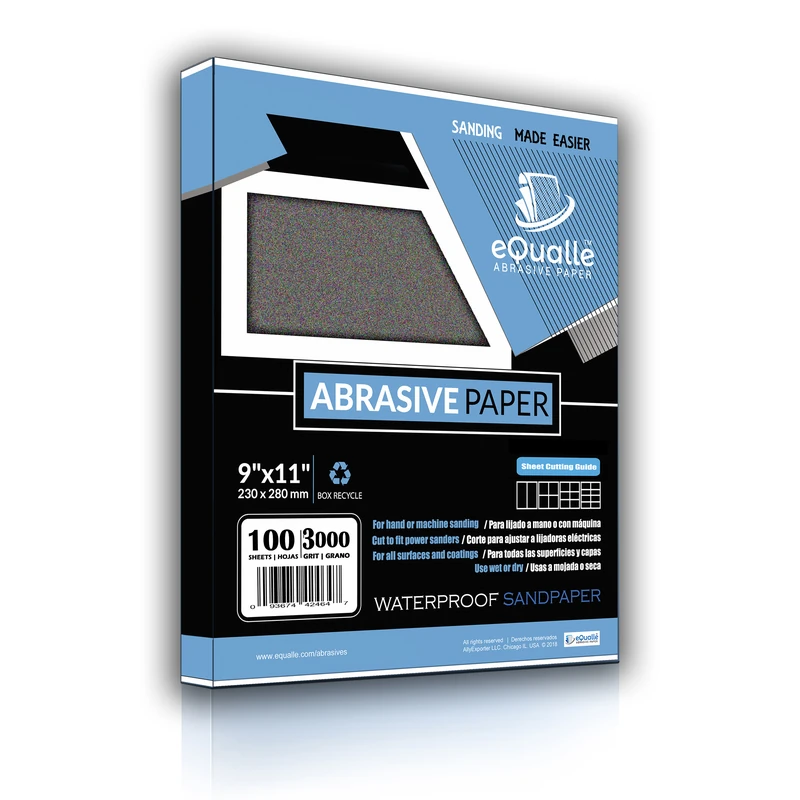
Validate removal: lighting, gauges, polish-out
The test spot is only as good as your inspection. If your lighting or technique masks sanding traces, you’ll scale a flawed process over the entire panel. Build a validation routine and repeat it exactly the same way every time.
Lighting
- Use a strong, focused light at a shallow angle (raking light) to exaggerate texture and scratches. LED penlights and tight-beam shop lights work well. Check from multiple angles to catch directional scratches.
- Add diffuse lighting to evaluate overall leveling and gloss. Texture can hide under harsh point light but reveal itself in soft reflections.
Panel prep and reveal
- Decontaminate and clay the area before testing so embedded particles don’t produce rogue scratches.
- Use a panel wipe after each step (sanding, compounding, polishing) to remove fillers and oils. A perfect finish covered in compound residue can look deceptively flawless.
Thickness and heat
- Re-check your paint thickness after the sanding and again after compounding. You’re looking for reasonable consistency with your expected removal for that grit and number of passes.
- Monitor panel temperature. Warm clear polishes differently and can hide or smear micro-marring. If the panel feels hot, wait. You want to measure reality, not a transient thermal effect.
Polish-out verification
- Prove the entire stack: sanding, cutting, refining. If your test spot needs an extra refining pass to clear faint matting, that’s acceptable—note it and bake it into the workflow.
- If you see residual linear scratches after what should have been enough cutting, stop and diagnose. Possible culprits: overloaded or worn disc, tilted pad, inadequate lubrication, or a compound/pad combo that simply lacks bite for that grit.
Mark your success boundary
- Tape a small untouched control strip beside the test spot to give you a live “before” reference.
- Photograph before/after with consistent angles and distance. It’s not just for the customer—it’s data you can reference if you need to adjust halfway through the job.
Good validation turns the test spot from a craft trick into a reproducible protocol. It is how you prevent the dreaded scenario of completing the hood and discovering a persistent haze you can’t quite dial out.
Workflow, risk control, and pro tips
Once the test spot gives you a green light, scale methodically. The goal is not only a flatter finish, but a predictable, low-variance outcome across complex curves and edges.
Working sequence
- Mask edges, emblems, and sharp body lines. Most strike-through happens on the last 10% of the job and 2% of the surface.
- Break the panel into overlapping sections about 12 by 12 inches, smaller on tight curves.
- Refresh your disc frequently. Foam-backed finishing discs perform best within a limited window; swapping earlier costs less clear than forcing a tired abrasive.
- Keep the pad flat. Tilting increases localized cut and introduces deeper scratches.
- Maintain a damp but not flooded surface. Over-wet can hydroplane the abrasive; under-wet increases friction and heat.
Risk control
- If you must enter an area that measured thin during prep, switch to a finer grit or polish-only and accept slightly more texture. Uniformity is desirable, but not at the expense of coating integrity.
- On repaints, test solvent resistance and hardness. Air-dried clears can be softer yet gummy; they load paper quickly and scratch unpredictably. Increase lubrication and reduce pressure, or wait for further cure if feasible.
- Use a guide coat or dry-erase marker mist on heavy peel areas. It helps visualize high spots leveling and prevents chasing “ghost” texture that’s actually uniform.
Actionable tips you can apply today
- Calibrate with passes: On your test spot, count exact crosshatch passes and note removal on your gauge. Use that same count per section panel-wide to keep material removal consistent.
- Mix your lube: 1 liter distilled water + 1 drop shampoo + 1 ml isopropyl alcohol. The low-surfactant solution reduces surface tension without foaming or drying too fast.
- Interface wisely: A 10 mm soft interface pad dramatically reduces edge bite and evens out pressure on curved panels—especially with foam-backed finishing discs.
- Clean as you go: After each section, rinse the disc in your lube bottle, wipe on a microfiber, and spin it dry on the machine at low speed before the next pass to prevent clogging scratches.
- Stop early, finish with polish: If you’re within 5–10% of your target leveling after the chosen grit, consider polishing rather than dropping a grit. Your clearcoat will thank you in five years.
A disciplined workflow turns your test spot from a one-off experiment into a standard operating procedure. The more rigor you put into the small square at the start, the less drama you’ll face when you reach the last square foot of the panel.
Frequently Asked Questions (FAQ)
Q: How big should my test spot be?
A: A 2-by-2 inch square is enough to see leveling behavior and prove polish-out without spending excessive clearcoat. Tape beside it to keep a live “before” strip for comparison.
Q: Will P3000 alone ever remove noticeable orange peel?
A: Yes, for mild texture on many factory clears, P3000 foam-backed can level enough in 2–4 passes to justify staying there. Validate with polish-out. If the peel barely changes, step to P2500.
Q: How do I know when to stop sanding and start polishing?
A: Stop when the surface shows uniform, matte coverage with no shiny low spots in your test area. That uniformity signals the peaks are leveled. Then switch to compounding to remove the sanding pattern.
Q: What if my compound won’t clear P2000 scratches?
A: First, confirm technique: fresh cutting pad, appropriate machine speed, adequate pressure, and panel wipe between sets. If residue-free scratches persist under raking light, either step your sanding finish to P2500/P3000 or upgrade your cut (stronger compound or more aggressive pad).
Q: How much clearcoat is “safe” to remove?
A: There’s no universal number, but for many OEM finishes, staying within a single-digit micron budget for sanding plus polishing is prudent. Always measure with a paint thickness gauge, avoid edges, and let your test spot dictate the least aggressive workable plan.