
Metal Surface Sanding Without Warping Sheet Metal
You remember the first time you chased a ripple across a car door with a grinder. The garage smelled faintly of solvent, a cool morning light cut through the dust, and the flap disc hummed with the promise of quick progress. A few passes later, the heat in your fingertips warned you: slow down. That slight drumhead sound under the sander turned your confidence into worry. Was the panel moving? Had a flat surface become a shallow bowl? Anyone who works with thin steel or aluminum knows the line between clean, flat metal and a stretched, heat-soaked wave is thinner than the sheet itself. It’s emotional because it’s permanent; every second you stay in one spot is material you don’t get back.
Metal surface sanding can be precise and satisfying when you understand how heat, force, and grit combine. The goal isn’t to “erase” material; it’s to gently shape and refine without introducing new problems. In practice, that means choosing the right abrasive, backing pad, and tool speed; moving with intention; checking thickness and temperature; and letting the panel cool. You start to hear the difference: a consistent hiss instead of a harsh scrape, a steady glide instead of a biting chatter. With a few small adjustments, your sanding becomes an exercise in restraint and control—clean edges, tight radii, flat spans, and no thin spots. Let’s turn that morning of doubt into a routine you can trust.
Quick Summary: To avoid thinning or warping sheet metal while sanding, control heat and pressure with the right abrasive, backing pad, motion, and cooldown timing—and measure progress often.
Understand heat, pressure, and thickness
If you think of sanding as “removing scratches,” you’ll lean too hard and stay too long. Think of it as “managing heat and shape,” and your approach changes immediately. Warping in sheet metal is mostly a heat story: friction raises temperature, the hot area expands, and when it cools, the lattice settles in a slightly different shape, often as a shallow dish or wave. Pressure makes this worse by concentrating force on a small footprint and removing more material in one zone than the rest. Over time, that local thinning behaves like a hinge line—flexing more than its surroundings and telegraphing through paint.
Know your baseline. Typical automotive outer panels are 20–22 gauge steel (about 0.8–0.9 mm), with door skins sometimes thinner. Aluminum panels may be similar or slightly thicker but soften faster with heat. Edges and crowns are naturally more vulnerable because there’s less supporting structure; an aggressive wheel or hard pad there will cut much faster than on a flat. When you feel a panel warming past “comfortably warm,” it’s also expanding. That tells you it’s time to pause or switch to a cooler-cutting method.
Pressure isn’t just how hard you push; it’s also what the tool does for you. A hard backing pad or small contact area multiplies pressure even if your hand feels light. Likewise, a coarse grit at high RPM cuts deep and hot. A lower speed, wider footprint, and more open abrasive structure spreads energy and reduces peak temperatures. Your target: consistent, shallow scratches that blend broadly with minimal heat buildup. The fastest way to get there often looks slower—lighter touches, moving frequently, and giving heat somewhere to go.
Choosing media for metal surface sanding
The media you choose sets the ceiling for how cool and controlled your sanding can be. Coated abrasives come in different grains (aluminum oxide, ceramic, zirconia), structures (closed vs. open coat), and formats (discs, belts, flap wheels, surface conditioning pads). For thin sheet, predictability and footprint matter more than raw removal rate. A dual-action (DA) sander with an interface pad and film-backed discs offers even pressure and a forgiving contact patch. Ceramic or premium aluminum oxide discs in open-coat configurations shed swarf better and tend to run cooler.
Think in ranges rather than fixed grits:
- Weld blending and heavy scale: 60–80 grit flap disc or fiber disc—but on sheet metal, limit dwell and consider stepping down the aggressiveness by using a worn 80 or a 3/32" soft interface pad under a DA with 80 grit.
- Shape refinement: 120–180 grit on a DA to flatten remaining high spots.
- Pre-finish smoothing: 220–320 grit to remove coarse scratches and prep for primer or polish steps.
Surface conditioning pads (often maroon, gray, or blue) don’t remove much thickness but are excellent for unifying a sheen and detecting low/high areas without committing to deep scratches. Wet sanding with silicon carbide sheets on a block (220–400 grit) gives excellent feedback and runs cooler—just keep the area clean and dry it promptly to avoid flash rust on steel.
Backing pad hardness is a quiet hero. A soft or medium pad on a DA flexes and spreads pressure, reducing gouging on crowns and edges. On an angle grinder, a flexible, soft pad under a fiber disc is more forgiving than a hard one. Likewise, lower RPM (and a steadier hand) often beats the “high and hot” approach. Your best results will come from combining a moderate grit, a compliant pad, and a tool speed that lets the abrasive cut instead of smear.
Smart tool motion and sequencing
Technique links your choices to outcomes. Imagine your toolpath like mowing a lawn: consistent, overlapping passes at a steady pace, rather than circling over one tuft until it’s bald. Keep the tool flat whenever possible; tipping up onto an edge concentrates force and removes a surprising amount of metal in a heartbeat. A light crosshatch pattern—say, 15–20 degrees to the long axis of the panel—helps average out hand bias and reveals highs and lows when the light rakes across the scratches.
Sequence your work. If you start with 80 grit to knock down a weld bead, switch promptly to 120 or 150 to transition from “cutting” to “blending,” and then widen the blended area with 180–220 so the repair dissolves into the surrounding panel. Resist the urge to “chase perfection” with a coarse disc—coarse grits distort shape quickly. Each grit should remove the scratches of the previous one with as little fresh heat as possible.
Edges and body lines demand special care. If you must sand near a sharp crease, support it from behind (a wood block or body spoon) and use a finer grit with a soft pad. On open spans, keep passes short—3 to 5 seconds per path—then lift, move, and return only after the metal cools to touch. With aluminum, cut that dwell time further; it transfers heat fast but loses strength with temperature more readily than steel.
According to a article, even experienced fabricators can thin panels quickly with aggressive wheels if they hover in one spot—proof that motion discipline matters as much as media.
Action sequence you can trust:
- Mark the area with a dry-erase or machinist’s dye to visualize high spots.
- Begin with the least aggressive tool that does the job.
- Sand in straight, overlapping passes; avoid spirals.
- Step up grits early; widen the blend with each step.
- Pause for cooldown when the panel feels warm, not hot.
- Wipe clean and inspect under raking light between steps.
Control heat with cooling and timing
Sheet metal remembers heat. Your job is to keep temperatures low and uniform. Start by managing the three levers you control every second: speed, pressure, and time-on-target. Lower the RPM on grinders when possible. On DAs, avoid pinning the pad down; let it kiss the surface and spin freely. Count your passes, then stop. If you can’t rest your knuckles on the metal comfortably, it’s time to walk away for a minute.
Introduce cooling intelligently. For steel, a light spray of water during hand sanding with silicon carbide paper reduces friction dramatically—just dry the surface promptly and wipe with solvent to minimize flash rust. During machine sanding, a fine mist from a spray bottle between passes can help, but avoid flooding electric tools and don’t “quench” hot spots with cold water; rapid thermal shock can lock in stresses. With aluminum, dry sanding at lower speeds and shorter passes is usually safer than wetting; clean radius blocks and fresh abrasives prevent clogging that creates heat.
Back-side support makes a difference. A dolly, block of hardwood, or sandbag under a flat span resists deflection and distributes force. That extra stiffness reduces local thinning and helps you feel when the tool begins to dig. Temperature checks with an IR thermometer are useful, but your fingertips are a reliable early-warning system—train yourself to check often.
Five heat-and-shape tips that pay off:
- Keep each pass under 3 seconds on open sheet; lift, move, and return after a brief cooldown.
- Use a soft or medium interface pad under DA discs to spread pressure and lower peak temps.
- Step grits early (80 → 120 → 180 → 220) instead of “finishing” with a coarse disc.
- Reduce RPM by 20–30% on angle grinders when working thin panels.
- Support edges and crowns from behind to resist local deflection and thinning.
Prep, inspect, and protect the finish
Sanding is only as good as your prep and inspection. Begin by cleaning thoroughly: remove grease and dust so abrasives cut metal, not contaminants. Use a marker or layout dye to coat the area lightly; your first passes will reveal high spots as the color disappears. On large flats, a straightedge or flexible sanding block rubbed with chalk can show where contact is uneven. Feel is as important as sight—run fingertips across the surface with a clean glove to detect subtle ripples.
Measuring progress isn’t overkill; it’s insurance. A simple sheet-metal gauge can confirm thickness on a hidden edge, and a micrometer can compare a suspect zone to a reference area. Expect to find edges a little thinner than centers—that’s common. Your goal is not uniform thickness everywhere but preserved structure with a flat, stable shape. If you’re approaching a place where the panel already feels flexible, switch to a finer grit and a hand block to maintain control.
Finish smart. After you’ve blended to 180–220, remove dust and recheck under raking light. If you’ll be priming, 220–320 scratches are generally ideal for mechanical adhesion; avoid polishing too smooth. For bare steel, dry the surface fully if you used any water, then wipe with a clean solvent and apply a suitable metal primer promptly to deter flash rust. Control your environment: moderate humidity and temperature changes can affect how the panel behaves during and after sanding. Carry that same restraint into subsequent steps—filler, primer, or paint all respond better to cool, consistent surfaces that haven’t been stressed or thinned.
Don’t forget ergonomics. Stable work positioning, good lighting, and ear and eye protection translate into steadier hands and fewer “oops” moments. When your posture is relaxed and your view is clear, it’s much easier to keep the tool flat, the pressure light, and the motion consistent. That calm, methodical approach shows in the final panel—straight, tight, and ready for finish.
Measuring without guessing
Precision is not complicated; it’s consistent habits. Start each job by identifying reference zones—areas you won’t sand—that define original thickness and shape. Compare often, not once at the end. Raking light from a clamp lamp or even your phone placed low to the panel will amplify surface changes; it’s a simple trick that reveals low spots earlier than your eyes alone.
Use the right feel-tools. A flexible longboard with a 220–320 grit sheet will “talk” to you through vibration and drag; it bridges over small lows and tags highs immediately. For small patches, a rubber or cork block prevents your fingers from digging hollows. When you must use a machine on a delicate area, add an interface pad and keep the tool moving in straight, shallow arcs. Your rhythm matters: count passes out loud if it helps you avoid parking the disc in one spot.
If distortion begins despite your care, don’t push harder—change tactics. Gentle planishing over a slapper and dolly or a few light shrinking passes (for carbon steel only, with a specialized shrinking disc) can recover a whisper of stretch, but both require restraint and a cool panel. For most DIYers, the safest “correction” is prevention: cutoff the heat source, widen the blend with finer grits, and give the metal time to stabilize before your next step. With a little patience, you’ll get the control you’re after without shaving your panel thin.
Basics of Sanding — Video Guide
A short, beginner-friendly tutorial called “Basics of Sanding Metal” walks through safe setup, tool choices, and the motions that protect thin sheet from heat and gouges. You’ll see how grit progression affects the surface, why backing pad softness matters, and how to keep a tool moving without digging.
Video source: Basics of Sanding Metal
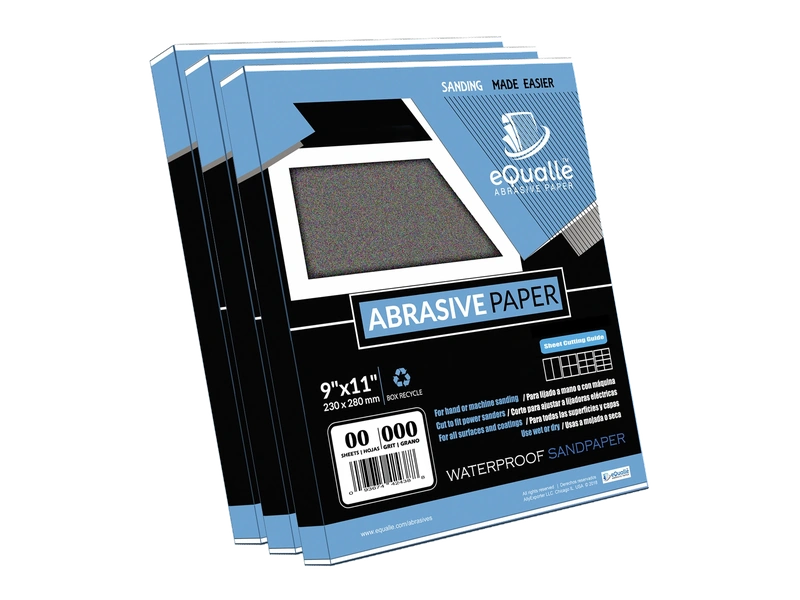
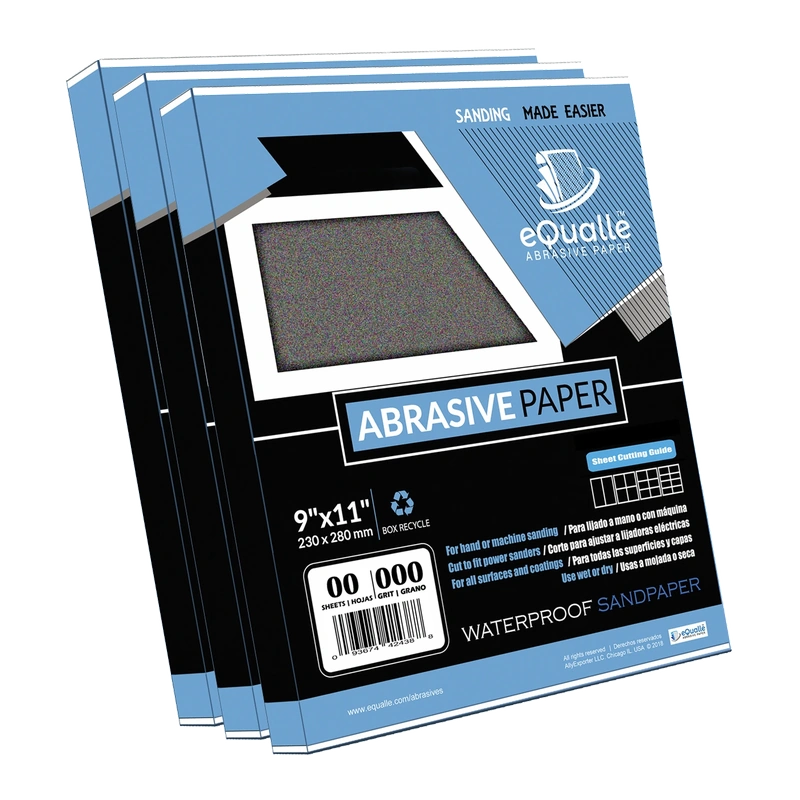
1500 Grit Sandpaper Sheets (10-pack) — 9x11 in Silicon Carbide Abrasive for Wet or Dry Use — Professional ultra-fine grit for satin or semi-gloss finishing. Removes micro-scratches from clear coats and paint touch-ups. Produces flawless textures and consistent results before final polishing. (Professional Grade).
Frequently Asked Questions (FAQ)
Q: What grit should I start with on 20–22 gauge steel?
A: If there’s no weld bead or heavy scale, begin at 120–150 on a DA with a soft interface. Only drop to 80 for isolated highs, then step back up quickly.
Q: How do I avoid sanding through edges and body lines?
A: Support from behind with a dolly or wood block, use a softer pad, reduce RPM, and move to a finer grit. Keep the tool flat and limit passes to a couple of seconds.
Q: Is wet sanding safe on bare steel?
A: Yes, for hand sanding with silicon carbide paper. Use light water, work cool, then dry and solvent-wipe immediately to prevent flash rust before priming.
Q: DA sander or angle grinder for thin sheet?
A: A DA with a soft interface and film discs is safer and cooler. Use an angle grinder sparingly, at lower RPM, with flexible backing and brief passes.
Q: Can I fix slight warping after sanding?
A: Minor lows may be blended with finer grits and careful planishing. Avoid aggressive shrinking unless experienced; prevention—cool passes and light pressure—is the best cure.