
Paint Stripping vs Sanding: The Hybrid Workflow
The porch rail felt like it had a story for every season—sun-baked summers, sleet-blown winters, and tenacious topcoats layered by different hands over the years. On a Saturday morning, coffee cooling on the steps, you press a thumbnail against the glossy surface and the film shears along a fracture line, curling up like a ribbon. It’s satisfying until it isn’t. Under the flake, there’s brittle alkyd over primer, over more alkyd, possibly over stain. You tug again. A chunk breaks free, revealing raw wood cross-grain scratches and a few resin pockets that never quite sealed. In that moment, the tactical argument—paint stripping vs sanding—stops being theoretical and turns into a process decision that will determine whether the new finish lasts or fails.
Professionals rarely leave this to guesswork. They read the surface like a forensic report: coating chemistry, film thickness, profile geometry, substrate species, moisture history, UV exposure, and the telltale signs of adhesion loss. The point isn’t to choose a side; it’s to deploy the hybrid workflow: strip first to evacuate bulk film safely and efficiently, then sand to engineer a clean, uniform surface profile for the next coating system. Done right, the hybrid method cuts abrasive consumption, reduces dust exposure, preserves crisp edges, and establishes a repeatable scratch pattern that primers can properly wet and lock into.
You set up a drop cloth under the rail. You mark off sections with painter’s tape and pick a tight-tolerance scraper with replaceable carbide blades. A citrus gel goes on the first bay, a low-odor solvent blend on the second. You watch the film blister, then lift it carefully to avoid gouging the latewood ridges. A HEPA vac whispers to your right, and a damp neutralizing cloth waits in a zip bag. The strip phase is controlled demolition; the follow-up sanding is precision machining. And when the last 180-grit pass reveals a uniformly matte field with no shiny low spots, you’ve done more than prep—you’ve built a substrate the next finish can trust.
Quick Summary: Strip to remove bulk coatings efficiently, then sand to refine the surface profile—this hybrid workflow delivers faster, cleaner prep and longer-lasting finishes.
Why a hybrid prep wins
The hybrid workflow—strip first, then sand—optimizes energy, tool wear, and surface quality. Stripping evacuates film mass using chemistry or controlled heat, which is thermodynamically more efficient than converting thick, clogged coatings into dust with abrasives. For architectural woods and detailed substrates with coves, beads, and returns, stripping preserves geometry: you avoid rounding edges, washing out profiles, or dishing earlywood by over-sanding. On metal, it prevents heat buildup and reduces the risk of warping thin panels.
The sanding phase that follows is not an afterthought; it’s where you engineer the topography coatings need. Adhesion is a function of clean surface energy and mechanical interlock. Strippers remove film; sanding sets a uniform anchor profile (micro-scratch) while aligning grain and addressing any raised fibers or etch left by caustics. Starting one to two grits coarser than your target finishing grit lets you remove soft residues and level micro-defects without generating deep grooves that take forever to chase out.
There’s also a health and safety dividend. Stripping lowers airborne particulates relative to aggressive sanding on old coatings, particularly critical where lead may be present. While sanding dust is still generated, it’s significantly reduced because you’re refining substrate, not grinding paint. With proper collection (a sealed sander plus a HEPA extractor and an anti-static hose), you control what’s left.
Economically, the hybrid method cuts abrasive spend. Coatings load paper fast—especially alkyd, latex, and oil-modified films—glazing discs and belts long before the abrasive dulls. Removing coatings chemically or thermally preserves abrasive sharpness for the material you actually want to shape: the substrate. And because you’re not fighting heat-glazed discs, your scratch pattern remains predictable, which shortens the grit ladder and reduces rework.
Finally, finish longevity. Coatings fail on dirty, unstable, or poorly profiled bases. Hybrid prep enhances cleanliness (residual stripper properly neutralized) and produces consistent tooth—creating a repeatable foundation that supports the spec’d primer and topcoats, whether waterborne acrylics, hybrid alkyds, conversion varnishes, or 2K urethanes.
Choosing strippers, tools, and safety
Select the stripper based on coating chemistry, substrate sensitivity, and environmental controls. Gelled solvent blends (often d-limonene/citrus with co-solvents) cling to verticals and are effective on alkyd and latex films, softening them without aggressive swelling of the wood. Caustic (lye-based) strippers excel at old oil enamels and varnish, saponifying the film; they require thorough neutralization and careful control to avoid raising grain or staining tannin-rich species like oak. NMP- and DBE-based formulations offer deep penetration with longer dwell but need robust PPE and ventilation. Consumer methylene chloride has largely been regulated out; if used industrially, it demands stringent exposure controls.
Heat tools have a place. Infrared systems drive heat into the paint layer, breaking bonds at lower surface temperatures (commonly 400–600°F on the film) than a standard heat gun, reducing scorch risk and fume generation. Traditional heat guns work but require vigilant distance control and continuous movement. Open flame should be avoided on wood due to ignition hazards and resin boil.
Core tools for strip-lift include:
- Sharp carbide scrapers with matched radii for profiles
- Pull scrapers for controlled force on flats
- Nylon or brass brushes to clear softened residue from pores
- Non-marring blades for delicate veneers
- Neutralizing wipes (white vinegar for lye residues; denatured alcohol or mineral spirits for solvent-stripped areas—test for compatibility)
Safety is non-negotiable. Use chemical-resistant gloves (nitrile or butyl depending on chemistry), splash goggles, a respirator with organic vapor cartridges plus P100 prefilters, and coveralls or sleeves. Work in ventilated areas with containment: poly sheeting, absorbent pads, and labeled waste containers. If there’s a possibility of lead, use lead-safe work practices: plastic containment, HEPA vacuums rated for lead dust, and no open-flame heating.
Workflow discipline matters:
- Pre-test in small zones to validate dwell times and lift behavior.
- Apply evenly at spec’d mil thickness to avoid dry spots.
- Maintain dwell under plastic wrap when needed to prevent evaporation, especially outdoors.
- Lift with the grain, minimizing gouging; change scraper edges often.
- Neutralize per product guidance and confirm by pH test strips or a solvent-wipe “feel” check—no waxy smear or greasy drag.
Once the coating mass is off and residues are neutralized and dry, you’re ready for the abrasive phase.
Grit roadmap and abrasive science
After stripping, sanding re-establishes a controlled surface topography. Start with a grit that removes residue films and levels minor scraper tracks without over-cutting. For most hardwood rails and trim: begin at 100–120, then progress 150–180 for primer, or 180–220 for clear/semi-transparent finishes. Avoid starting coarser than 80 unless you must correct deep damage; the extra passes to erase heavy scratches often cost more time than they save.
Abrasive selection:
- Aluminum oxide (AO): general purpose, durable on wood, predictable breakdown.
- Ceramic alumina: stays sharp under pressure, ideal for leveling tough hardwoods or removing minor mill glaze; efficient on random orbital and geared sanders.
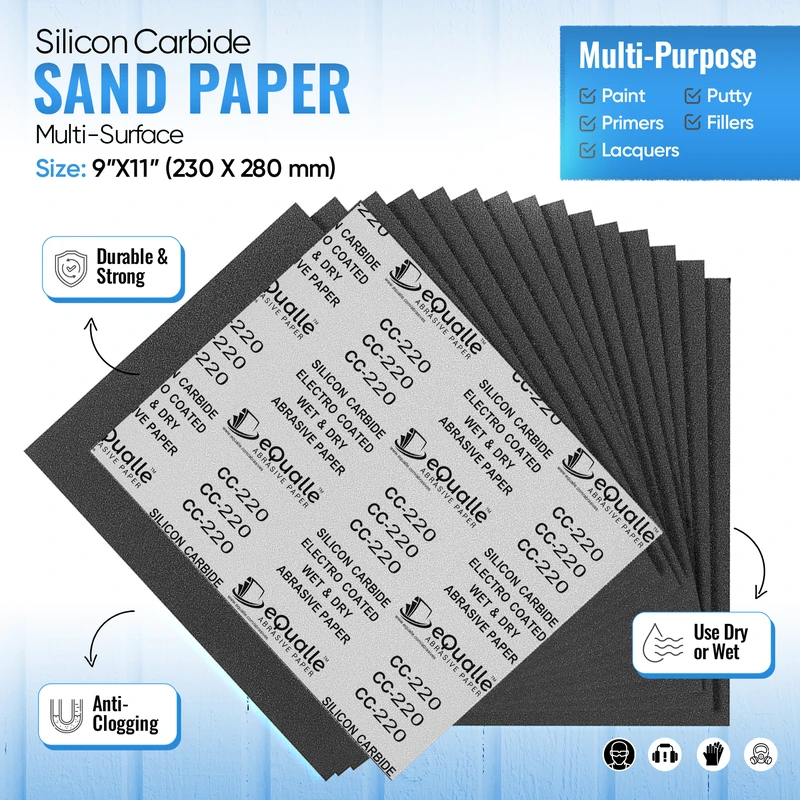
- Silicon carbide (SiC): sharp and brittle, superior for between-coats denibbing and on finishes; also effective on metals where a finer, consistent scratch is desired.
- Stearate-coated papers: reduce loading on resins and residual oils; excellent post-strip to keep the cut cool and clean.
- Open-coat vs closed-coat: open-coat reduces clogging on softer woods and residues; closed-coat cuts faster on dense species.
Machine control:
- 5 mm orbit random orbital (RO) for stock removal with lower risk of swirl.
- 2.5–3 mm orbit for finishing passes and reduced pigtailing.
- Interface pads to conform over profiles but beware of rounding edges; switch to a hard pad for flats you need dead-level.
- Always pair with a HEPA extractor and use the correct hole pattern; improved dust evacuation equals cooler cuts and cleaner scratch.
Scratch management is cumulative. Never skip more than 60–80 grit steps (e.g., 100→150→180). Use a raking light or guide coat (a whisper of graphite or dry pigment) to visualize remaining deeper scratches before advancing grits. On end grain, finish one grit finer than faces to equalize absorbency.
The hybrid method also stabilizes moisture interactions. Caustic strippers can raise grain; let the substrate equilibrate to ambient moisture, then knock back lifted fibers with your first grit. Solvent strippers may leave plasticizers; a mineral spirits wipe after final sanding can reveal contamination—watch for fisheye formation in a test patch of primer.
According to a article.
Actionable tips:
- Run a “clean-sheet” test: after your first sanding pass, rub the area with a white lint-free cloth dampened with alcohol; if you pick up color or oily smear, you need another neutralize-and-dry cycle before proceeding.
- Use a pencil grid on flats before final grit; it confirms uniform contact and highlights low spots without over-sanding highs.
- For profiles, swap to foam-backed abrasives or abrasive cords; maintain geometry by sanding with the profile, not across it.
- On metals post-strip, immediately solvent-wipe and prime or sand to 180 then prime within the same shift to avoid flash rust.
When paint stripping vs sanding saves time
The choice is contextual. Thick, multi-layer systems (old alkyd-on-alkyd with late latex caps) on detailed millwork are classic strip-first candidates. Sanding alone in these scenarios heats, smears, and loads, turning discs into burnishing pads that glaze instead of cut. Strip, lift with profiled scrapers, neutralize, then sand a predictable substrate at 120→180. You’ll preserve bead crispness and avoid the “melt-then-smear” defects that telegraph through new paint.
By contrast, intact coatings that are well-adhered but glossy generally favor sanding-only scuff-and-shoot. A uniform 220-grit scratch on stable film creates adhesion without the risks and time of chemical processing. The gray zone is selective failure: peeling on sun-exposed faces with tight adhesion in shade. Here, tactical hybridization works—strip failed zones to bare, feather-sand transitions 80→120→180, then apply a bonding primer that bridges old-to-new without printing edges.
Contamination drives decisions too. Silicone polishes, waxes, or cooking-oil aerosols make sanding-only risky; heat from sanding mobilizes contaminants, spreading them. Stripping with solvent gels pulls contaminants out first, reducing fisheye and cratering in topcoats. On exterior rails and doors, tannin bleed is another factor: aggressive sanding can open vessels; a controlled strip plus moderate sanding keeps pores tighter before a tannin-blocking primer.
Time math helps. Consider a 30-linear-foot porch rail with three coats. Pure sanding might consume 20–30 discs per bay due to loading, plus edge repair time. A citrus gel with 30–45 minute dwell strips 80–90% of film in one lift. Net: fewer discs (10–12 across the job), faster scratch progression, and lower rework. On metals, blasting may tempt, but in residential contexts, chemical strip plus 120→180 RO sequence avoids grit contamination and nearby collateral damage.
In high-exposure zones (UV, rain, freeze–thaw), hybrid prep builds longevity. New coatings adhere to clean, uniform profiles and don’t inherit subsurface stress from ancient layers. Where the clock is tight, prioritize: strip profiles and detailed joinery; scuff-sand broad flats if intact. The rule isn’t dogma; it’s a diagnostic: remove what’s unstable or inefficient to grind, then sand what must be engineered for adhesion.
Moisture, edges, and defect control
Surface preparation is as much about defect prevention as material removal. Water-rinsable strippers can elevate wood moisture; force-drying risks case-hardening and later adhesion loss. Instead, let the piece equilibrate to jobsite RH; confirm with a pin meter—target within 2% of baseline before priming. If grain is raised, a light mist and a controlled dry can pre-raise fibers; then a single 180-grit pass shears them uniformly rather than tearing.
Edges demand discipline. Abrasives cut faster at edges where pressure concentrates; protect arrises with masking tape during early passes, remove before final grit. On sharp profiles, trade the RO for a card scraper or profiled sanding blocks to maintain definition. If you do round an edge, correct before coating: a crisp micro-chamfer reads intentional and holds paint better than a thin, feathered arris.
Defect triage after stripping:
- Checks and dings: fill with epoxy putty for structural defects; micro-fills with fine cellulose or acrylic fillers for cosmetic issues. Sand flush with a hard block at 120→180.
- Extractives: wipe with alcohol; for stubborn resin bleed, heat-gun gently and blot while warm, then seal with a shellac-based blocker before your primer system.
- Residual stain halos: on clear-finish rehabs, consider a washcoat (very thin dewaxed shellac) after final sanding to level absorbency and reveal scratch. Then finish sand one grit finer.
Avoid burnishing. Pressing too hard with fine grits polishes wood, reducing mechanical tooth and possibly hindering primer wetting. Let the abrasive do the work; maintain fresh discs and adequate vacuum flow to keep the cut cool. Guide coats help detect hidden swirls; if you see comet tails (pigtails), check pad cleanliness, orbit type, and grit pairing.
Compatibility is the last gate. Caustic residues can degrade waterborne primer adhesion; solvent residues can inhibit cure. Run a taped crosshatch adhesion test on a primed sample panel if you’re uncertain. A 24-hour check with adhesive tape pull is cheap insurance. Then commit to coating within the window—don’t let a perfectly prepped surface sit unprotected in a dusty or humid environment.
Oven Cleaner vs — Video Guide
A recent shop test video compares an oven-cleaner hack to a dedicated citrus-based paint remover and follows with sanding to show how each route affects workflow. It’s a useful watch because it goes beyond hype, revealing dwell-time realities, residue behavior, and how much cleanup sanding is truly required after each chemical path.
Video source: Oven Cleaner vs Citristrip Paint Remover & Sanding Furniture
100 Grit Sandpaper Sheets (25-pack) — 9x11 in Silicon Carbide Abrasive for Wet or Dry Use — Balanced coarse grit combining power and control—perfect for blending rough sanding marks before progressing to finer grades like 150 or 180. (Professional Grade).
Frequently Asked Questions (FAQ)
Q: Do I always need to strip to bare wood before repainting?
A: No. If the existing coating is well-adhered, not excessively thick, and free of contamination, scuff-sanding (e.g., 220 grit) can be sufficient before a compatible bonding primer. Strip when you have systemic failure (peeling, checking), multiple aged layers that are brittle, profile details at risk of rounding, or contamination that sanding would smear.
Q: What grit should I start with after stripping?
A: On most hardwood trim and rails: 100–120 for the first pass to remove residues and level scraper marks, then 150–180 for primer, or 180–220 if you’re going to a clear finish. Avoid starting coarser than 80 unless correcting deep damage; it adds unnecessary scratch removal later.
Q: How do I prevent raised grain and tannin issues after a caustic stripper?
A: Neutralize thoroughly per product guidance, allow the wood to return to ambient moisture, then sand lightly at 120→180. Seal with a tannin-blocking primer (shellac or specialized acrylic) before topcoating, especially on oak, cedar, or redwood.
Q: Can I just sand off peeling paint to save time?
A: You can, but it’s often slower and riskier. Sanding heavy, brittle coatings loads discs, rounds edges, and can trap unstable layers beneath new paint. Stripping removes bulk film efficiently; sanding then refines the substrate. Hybridizing typically shortens total labor and improves durability.
Q: What’s the safest approach if I suspect lead paint?
A: Use lead-safe practices: contain the area with plastic, avoid open flame and uncontrolled heat, use chemical strippers or infrared tools to minimize dust, wear a properly fitted respirator (P100 with OV cartridges if using solvents), and collect debris for hazardous disposal per local regulations. Finish with HEPA vacuuming and wet-wipe cleaning before sanding under dust extraction.