
Random Orbital Sanding for Primer: Grit Progression
Dust hangs in the light like confetti that forgot how to fall. The garage is quiet except for the soft hum of a random orbital sanding pad skating across a fender. It’s not glamorous work—no roaring engine, no instant “after” reveal. It’s the slow, steady patience of building a perfect surface, one pass at a time. Maybe you’ve been here: a weekend blocked off, panels taped, guide coat misted, coffee growing cold as you chase the last hint of waviness under a strip light. The urge to rush is strong. But the truth is simple—the clarity of your paint job isn’t decided in the booth; it’s decided here, with your grit progression and the way you control your sander.
Early on, I learned how deceptive “looks smooth” can be. The panel that feels silk-slick at 180 grit can turn into a roadmap of scratches once basecoat hits it. That’s why sequence matters. Grits aren’t just numbers; they’re a language that translates the surface from rough-shape to uniform tooth. And when you combine the right progression with measured technique—consistent pressure, flat pad, disciplined movements—the panel rewards you. You feel it as the machine starts to glide instead of chatter. You see it when the guide coat disappears evenly. You hear it in the change of pitch as the panel flattens.
If this is your first full prep, take heart. Most “mysteries” in paint problems are procedural, not personal. The fix is rarely exotic—more often it’s the right starting grit, a smarter step between stages, or a moment spent swapping to a softer interface pad before the last pass. In this guide, we’ll demystify grit progression for primer and paint prep, and we’ll put special attention on technique, including how to get the most from a random orbital sander without leaving swirls that haunt your clear.
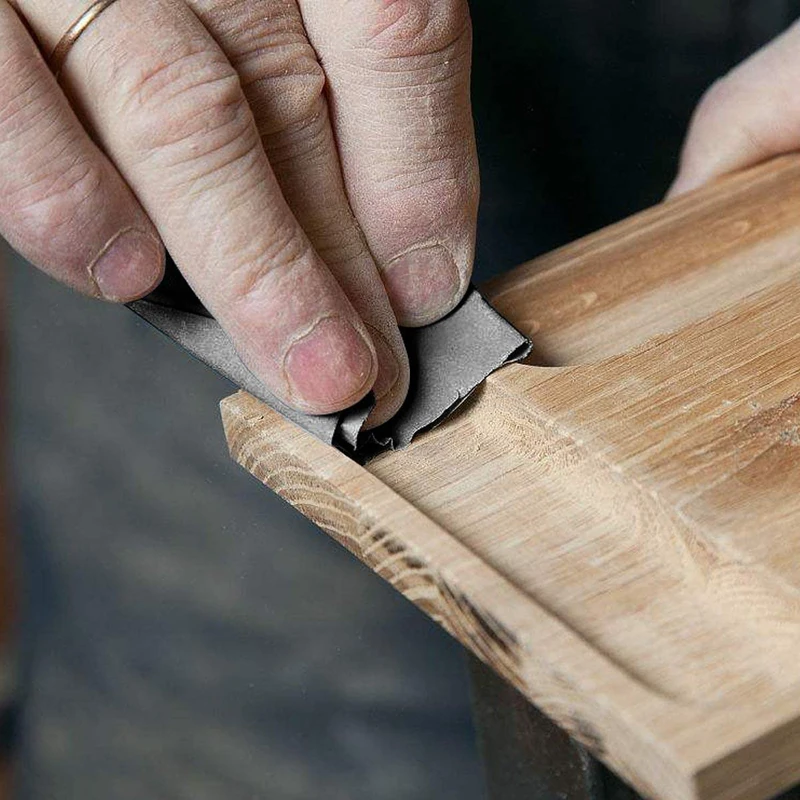
Quick Summary: A clean, consistent grit progression—backed by disciplined random orbital technique—turns primer into a flat, uniform canvas that lets paint lay smooth and defect-free.
What a flawless surface requires
Perfect paint starts with uniformity—uniform flatness and uniform scratches. Primer and paint don’t erase problems; they magnify them. Think of each grit as controlling “scratch depth.” Coarser grits cut fast to level highs and shape repairs, but they leave deep valleys. Finer grits remove those valleys while maintaining just enough micro-tooth for the next layer to grip. Miss a step, and you risk telegraphing scratches or trapping texture that becomes orange peel.
A reliable workflow begins with the end in mind. If your target is basecoat over sealer, your final scratch should usually be in the P400–P600 range depending on system and color. Metallics and pearls are more revealing; they generally prefer finer, around P600. Solids are more forgiving and can be fine with P400 or P500. Clear lays best over a consistently dulled, de-nibbed surface, not a shiny one.
Guide coat is your best teacher. A light mist over primer exposes low spots, pinholes, and texture—if guide coat lingers after a full, even pass, you’re not flat yet. Use your hands, too. With a clean glove, glide across the panel to feel subtle waves your eyes may miss. On big flats—doors, hoods, roofs—mix machine sanding with block sanding to maintain straightness. Machines keep you efficient; blocks keep you honest.
Finally, approach edges and body lines with humility. These are thin areas that burn through quickly, especially with coarse grits. Roll them with a soft pad and lighter pressure, or switch to a hand block when you get close. Treat edges last, and never chase small defects with a coarse disc near a sharp crease—you’ll cut through before you even notice.
Dialing in random orbital sanding technique
A random orbital sander can be your best friend or your worst enemy. Done right, it flattens primer quickly without visible swirl. Done wrong, it leaves “pigtails” and cross-scratches that jump out after paint. Start by matching the tool to the task. A 3/32" (2.5 mm) orbit excels at finishing and refining scratches; a 3/16" (5 mm) orbit removes material faster for shaping. Hard backing pads cut flatter but risk swirls; softer pads conform better for finishing. An interface pad (3–10 mm foam) between the disc and the pad helps the last grit “float” over small contours, reducing swirl and cut-throughs.
Speed and pressure matter more than most people think. Let the sander’s weight and motion do the work—too much force stalls the orbit and digs trenches. Keep the pad flat, move methodically in overlapping passes, and change direction (horizontal to vertical) each full pass to avoid tracking. Vacuum extraction helps two ways: it keeps abrasive sharp by pulling dust away, and it prevents those dreaded pigtails from embedded debris.
Time your transitions. Don’t rush from P180 to P400 in one leap; the scratch depth difference is too big. Use sensible steps—P180 to P220/240, then P320/360, then P400/500 or P600 as needed. Each step should fully remove the previous scratches before you move on. If the guide coat is still clinging in arcs or pinholes, you’re not done with that grit yet.
Actionable technique tips:
- Use light, even pressure—just enough to keep full pad contact; pressing hard kills the random orbit and creates swirls.
- Make slow, overlapping passes—about 1–2 inches per second—so the abrasive has time to cut evenly.
- Swap to a soft interface pad when you move to P400 and finer to minimize swirl marks and edge cut-through.
- Clean or replace discs at the first sign of loading; debris makes pigtails that will print through paint.
- Vacuum-sand whenever possible; it keeps the cut cool and the scratch pattern clean.
Smart grit progression for primer
Your best grit progression depends on where you’re starting and what you’re spraying next. Here are proven sequences that keep you efficient and safe:
- Existing paint, scuff-and-seal:
- Scuff with P320–P400 on flats; use a gray or maroon scuff pad in tight areas with a scuff gel.
- If sealing before base, finish at P400–P500. Metallics prefer P500–P600.
- Feathered repair with filler, then primer surfacer:
- Shape filler at P80–P120 by block; refine the featheredge to P180.
- First primer leveling pass: P180–P220 to knock texture; then P320–P360 to refine.
- Final before sealer/base: P400 on solids, P500–P600 on metallics/pearls.
- Bare metal to epoxy, then build primer:
- Prep metal at P80–P120 (or a surface conditioning disc that equals ~P120–P150).
- Epoxy per tech sheet; block epoxy or move to a high-build primer if needed.
- Level primer P220, refine P320, finish P400–P600 depending on color/topcoat.
Featheredges are the stress test. Where old paint, filler, and primer meet, use a finer grit (P220–P320) to soften the step, then prime to bury it, and re-level with P320. Jumping too coarse at a featheredge can undercut it and cause halos later.
Block where it counts. On long flats, guide coat and block with P220–P320 to straighten the panel before you ever pick up P400. The random orbital can then quickly unify the surface to final scratch without introducing waves.
Primer type steers your ceiling. High-build primers can hide P180–P220 scratches, but only if you bury them and fully level afterward. Sealers want a finer, uniform tooth—think P400–P600. Read your paint system’s sheet and bias finer for sensitive colors.
It also helps to hear what experienced refinishers keep on hand and why. According to a article, keeping a mix of P80 for rough shaping, P180–P220 for early primer work, and P320–P400 for refinement—with P500–P600 for paint prep—covers most real-world jobs without gaps.
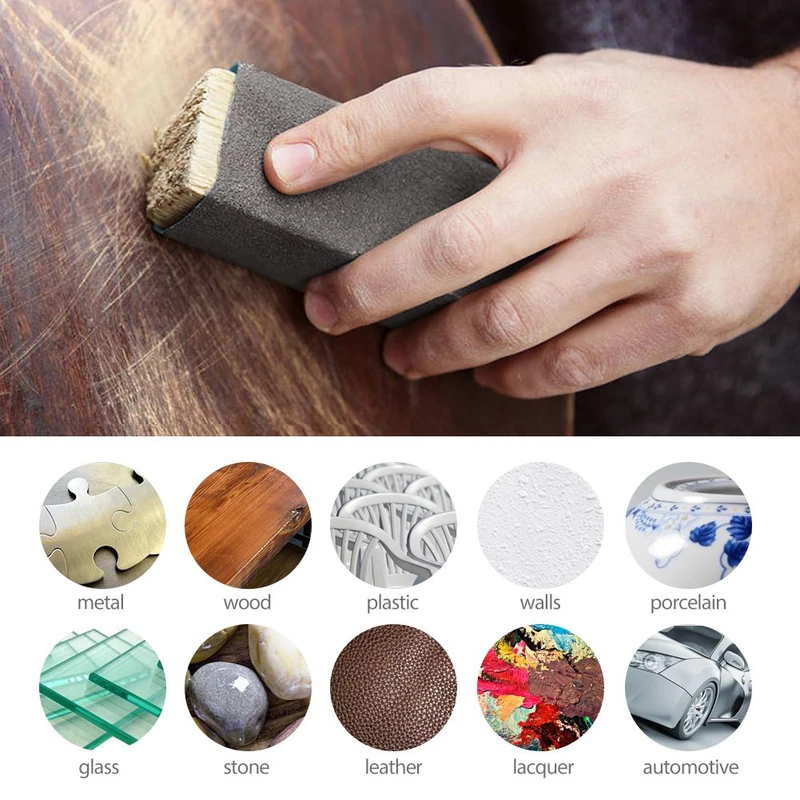
Paint-ready finishing and de-nibbing
The last 10% of prep often saves 90% of finish headaches. Once your panel is flat at P320–P360, the move to P400–P600 is about creating a uniform micro-tooth and erasing directional remnants. Switch to a soft interface pad, reduce pressure, and slow down. Re-mist guide coat lightly; it will reveal isolated scratches you missed.
De-nibbing is your insurance policy—knock down tiny specks, dust, or nibs that would stand proud under paint. For solids heading straight to base, P400–P500 dry on a random orbital, then a gray scuff pad in edges and jambs, is common. For metallics/pearls or sensitive clears, many finish at P600 dry or P600–P800 wet to minimize any visible scratch. If you wet sand, use clean water with a drop of car-wash soap for glide, and keep a separate bucket for clean rinsing. Avoid soaking edges and body lines.
Tight areas need adapted tools. A soft hand block, foam pads, or Scotch-Brite-style scuff pads reach recesses the machine can’t. Your goal isn’t shine—it’s a consistent, fully dulled surface with no shiny dots (glossy pits often signal contamination or low spots) and no deep, visible lines.
Before wiping panels, blow with clean, dry air, then tack in one direction with a fresh tack cloth. Use a dedicated surface prep solvent per your paint system and lint-free towels; allow full flash-off to avoid solvent trapping. If you burn through to filler or metal, stop and spot prime or seal as directed—don’t bury bare spots under basecoat.
Small, high-yield habits:
- Always reapply a light guide coat before the final grit.
- Mark minor lows with a pencil, not a marker, to avoid bleed.
- Change to a fresh disc for the final grit—dull abrasives burnish instead of cutting, leaving surprise scratches after paint.
Common mistakes and easy fixes
Skipping grit steps
- Symptom: Straight-line or arc scratches that reappear under base/clear.
- Fix: Add an intermediate step (e.g., P220 between P180 and P320). Stay on each grit until the guide coat and prior scratches are fully erased.
Overpressure with the sander
- Symptom: Swirls and pigtails; pad stalls or chatters; hot, loaded discs.
- Fix: Let the orbit work. Reduce pressure to the sander’s own weight plus a touch. Increase vacuum extraction and clean discs frequently.
Neglecting edges and body lines
- Symptom: Breakthroughs, thin primer, or shiny, un-sanded edges that cause adhesion issues.
- Fix: Tape a protective edge during coarse passes. Address edges last with light pressure, a soft interface pad, or a hand block.
Inconsistent guide coat use
- Symptom: Hidden lows and texture that show up as orange peel or dieback.
- Fix: Mist guide coat at every stage where flatness matters—post-primer, post-P220/P320, and pre-final grit.
Dirty surface or contaminated abrasives
- Symptom: Random deep scratches (pigtails), fisheyes after paint.
- Fix: Keep abrasives in sealed sleeves, blow panels thoroughly, and wipe tools and pads between stages. Discard any disc that touched the floor.
Rushing the final pass
- Symptom: Patchy tooth; visible scratches in reflections; poor metallic lay.
- Fix: Slow your hand, overlap 50%, and crisscross your final P400–P600 passes. Fresh discs only, with a soft interface pad.
If you’re ever unsure whether your final scratch is fine enough, do a quick test panel or spray-out. It’s far cheaper than discovering an issue under a full coat of base.
How to prep — Video Guide
Before you jump into your next panel, it helps to see the process in action. This short video walks through practical steps for getting a car ready for paint, with clear demonstrations of how to sand primer correctly and where grit changes make the biggest difference.
Video source: How to prep your car for paint. Primer sanding tricks.
100 Grit Sandpaper Sheets (50-pack) — 9x11 in Silicon Carbide Abrasive for Wet or Dry Use — General-purpose coarse sandpaper for smoothing rough surfaces and removing old coatings. Works well on wood, metal, and resin projects. Designed for wet or dry sanding between aggressive 80 grit and finer 150 grit stages. (Professional Grade).
Frequently Asked Questions (FAQ)
Q: What grit should I finish at before basecoat?
A: For solid colors, P400–P500 dry is typical; for metallics and pearls, P600 dry or P600–P800 wet minimizes visible scratch. Always follow your paint system’s tech sheet and err finer for sensitive colors.
Q: Can I jump from P180 straight to P400 on primer?
A: It’s risky. The scratch depth difference is large, so P400 may not fully remove P180 scratches. Add a middle step such as P220/240, then P320/360, before finishing at P400–P600.
Q: How do I prevent pigtails with a random orbital sander?
A: Use vacuum extraction, light pressure, and clean discs. Keep the pad flat, move slowly with 50% overlap, and discard any disc that shows loading or contamination. A soft interface pad helps at P400 and finer.
Q: Should I wet sand or dry sand for final prep?
A: Both work. Dry sanding with extraction is cleaner and faster to inspect; wet sanding can refine to a slightly finer finish and reduce dust. Match the method to your shop setup and the manufacturer’s recommendations.
Q: Do I need a guide coat at every stage?
A: Use guide coat whenever flatness matters or when you change grits on primer. It’s the easiest way to confirm you’ve removed previous scratches and leveled lows before moving on.