
Between Coats Sanding with Mineral Spirits Inspection
Saturday evening, shop lights warm and low, you step back from the walnut tabletop you’ve been nursing all week. The early coats looked flawless under bright noon sun, but now the halogen rakes across at a shallow angle and the truth shows up: a faint swirl here, a dust nib sitting high there, and a few dull patches that don’t reflect like their neighbors. You think about skipping the next step to “save time,” but experience taps you on the shoulder—between coats sanding is where good finishes turn great. You grab a clean microfiber, dampen it lightly with mineral spirits, and wipe. Instantly the surface darkens and evens out, as if a preview of the final film just loaded on screen. The wipe doesn’t just wet the surface; it reveals it. Scratches that were invisible in ambient light show up as pale arcs. Tiny silicone fisheyes you’d have missed are now bright craters. A couple of dull flats from incomplete scuff-sanding glow like signposts. Ten seconds in, you know exactly what needs correction.
I’ve spent years testing abrasives and solvents on test panels and production pieces: catalyzed varnish, oil-based polyurethane, waterborne poly, shellac, and conversion finishes. Again and again, a controlled solvent wipe with mineral spirits proves to be the fastest, most reliable way to inspect scuff-sanded oil-based films before the next coat. Used correctly, it doesn’t harm a cured oil-based layer, it doesn’t raise grain, and it provides a realistic “wet look” that predicts the final build. It’s the moment of truth, and it costs only a rag, a small pour, and two minutes.
This article unpacks the why and how, grounded in material science: how mineral spirits’ refractive index exposes scratch patterns, how abrasive choice affects scratch depth and adhesion, and how to build a repeatable wipe–sand–inspect cycle that takes your finish from acceptable to glassy. We’ll also talk about safe use, compatibility across finish types, and the traps that lead to fisheyes or adhesion loss—so your next coat goes down with confidence.
Quick Summary: A light mineral-spirits wipe after between coats sanding exposes hidden scratches and nibs, verifies uniform scuff, and—once flashed off—sets you up for a defect-free next coat.
Why a solvent wipe reveals the truth
Mineral spirits works as an inspection tool because of optics, not magic. When you scuff-sand a cured oil-based film (polyurethane or varnish), you create a dense field of fine, shallow valleys. Dry, those micro-scratches scatter light and look uniformly dull; subtle pattern problems hide in the haze. When you lightly wipe with mineral spirits, its refractive index is closer to the cured resin than air is, so the valleys “fill” optically and stop scattering. The surface temporarily behaves like a higher-build, wetter film, and any anomalies pop: deeper-than-average scratches remain visible, un-sanded islands stay glossy, and dust nibs telegraph as bumps you can both see and feel.
Performance-wise, I evaluate three things during the wipe:
- Uniform scratch field: Under raking light, the sheen should be consistent. Glossy patches indicate you missed scuffing there; hyper-dull tracks indicate coarse grit tails or sanding through to earlier layers.
- Defect mapping: Nibs, pips, and micro-bubbles appear as tiny high spots with “moats” around them. These need a few targeted passes with a hard block to level.
- Edge risk: At edges and corners, the wipe can reveal burn-through as abrupt changes in color or reflectivity. Back off pressure there on the next sanding pass.
Why mineral spirits versus naphtha or water? For oil-based films, mineral spirits is slow enough to give a generous inspection window (typically 5–15 minutes to fully flash in normal shop conditions), doesn’t raise grain, and won’t attack a cured coat. Naphtha evaporates faster—useful in cold shops—but shortens the viewing window. Water lacks the refractive match and can raise grain at sand-throughs or exposed wood pores. On waterborne finishes, manufacturers often discourage strong solvent wipes; more on that in the troubleshooting section.
Safety and process notes:
- Use a clean, lint-free microfiber or white paper shop towel; avoid colored rags that might shed dye.
- Lightly damp—don’t flood. You’re inspecting, not wet-sanding.
- Ventilation matters. Even low-odor mineral spirits needs fresh air and solvent-safe gloves.
Abrasives that win at between coats sanding
Between coats sanding is about control: creating shallow, uniform micro-scratches that improve intercoat adhesion without cutting through. Abrasive choice drives that outcome. Here’s what repeated shop tests and microscopy have confirmed.
Abrasive type:
- Aluminum oxide (A/O): The workhorse. Fractures slowly, stays sharp, good for consistent scuffing. Most stearate-coated A/O papers resist loading on finishes, which keeps scratch depth more uniform across a panel.
- Silicon carbide (SiC): Sharper initially, fractures to very fine points, and excels at finishing harder films like catalyzed varnish or conversion finishes. It also works well on waterborne poly, which tends to be tougher and more brittle.
- Film-backed vs paper-backed: Film backers distribute pressure better and resist edge tearing, yielding more consistent scratch fields—especially useful on wide flat areas. Paper can conform better to subtle undulations but tears sooner.
Grit selection (FEPA P-scale):
- P220–P280: Coarse for intercoat work—safe only for leveling obvious dust nibs or sags with a hard block, very light pressure.
- P320–P400: The sweet spot for most oil-based between-coat scuffs. P320 averages around the mid-40 µm range; P400 around the mid-30 µm range. Both create shallow valleys that a subsequent coat will readily bury.
- P500–P800: Use for ultra-thin waterborne films or as a final pre-rub on high-gloss builds where you want minimal scratch imprint.
Witness-marking is non-negotiable. A quick pencil crosshatch on the surface before scuffing tells you when you’ve made uniform contact. After sanding, a mineral spirits wipe instantly shows any unbroken graphite at low spots or glossy islands you missed.
Loading is the silent killer of consistency. As a finish warms under friction, abraded resin packs into the grit, turning paper into a burnisher. Stearate coatings mitigate this. So does swapping sheets early and dusting with compressed air or a soft brush. If I see streaks under the solvent wipe that track with my hand motion, that’s my cue the abrasive loaded and cut unevenly.
According to a article, woodworkers often debate whether to wipe with water or mineral spirits after scuffing. For oil-based films, mineral spirits wins for both optics and compatibility; for waterborne finishes, many pros opt for water or manufacturer-approved cleaners.
Actionable abrasive tips:
- Use film-backed P320 or P400 with a firm foam interface pad on flats; switch to hand blocks for nib knock-down.
- Keep a dedicated pack of P500–P800 for waterborne scuffs to avoid deep scratch telegraphing.
- Mark witness lines before scuffing; don’t stop until they’re gone uniformly.
- Replace sheets at the first sign of loading streaks—early changes cost less than rework.
Field method: wipe, sand, inspect, repeat
A repeatable cycle is more valuable than any single trick. Here’s the field-proven sequence I use on oil-based polyurethane and varnish:
- Prep the surface:
- Vacuum thoroughly using a brush head. High points collect dust that becomes nibs later.
- Optional: very light solvent wipe now (mineral spirits) to preview defects before sanding, especially on complex grain or to map nibs. Let it flash off fully.
- Scuff-sand:
- Target grit: P320 or P400 film-backed discs or sheets.
- Use a soft interface pad on a random-orbit sander for flats; a hard block for nibs. Corners and edges get hand-sanding with worn paper to avoid burn-through.
- Apply minimal pressure—let the abrasive do the work. One to two light passes is usually enough on a properly cured film.
- Dust removal:
- Vacuum again. Avoid compressed air in dusty shops—it redistributes instead of removing.
- Wipe with a dry, clean microfiber to pick up loose fines. Skip traditional tack cloths on waterborne and high-gloss oils; some contain resin that can cause fisheyes.
- Mineral spirits inspection:
- Lightly dampen a fresh microfiber; one or two spritzes from a solvent-safe bottle or a small pour into a tray works. Do not saturate the surface.
- Wipe in overlapping passes. Study under raking light. Map issues: glossy islands (missed scuff), track-pattern scratches (loaded paper), high nibs (need block-leveling).
- Let it flash off. In a 20–22°C (68–72°F) shop with moving air, thin wiping films typically evaporate in 5–15 minutes. Cooler, still, or humid conditions may double that. The surface should return to a uniform matte with no solvent smell.
- Correct and proceed:
- Spot-sand mapped defects; re-wipe locally to confirm correction.
- Once fully flashed, apply the next coat per product instructions.
Timing matters. You want the prior coat fully cured to a scuff-sandable state; “dry to touch” is not “ready to sand.” Oil-based polys often need 12–24 hours at 21°C (70°F) and 50% RH; alkyd/phenolic varnishes can vary. If your abrasive gums, you’re too early. If white dust trails stay tacky, wait longer.
For waterborne finishes, modify step 4: use a water-damp microfiber or manufacturer-approved cleaner rather than mineral spirits. Some waterborne systems warn against solvent wipes that can leave residues or interfere with intercoat adhesion. Always test on a scrap panel.
Actionable process tips:
- Use a single raking-light source at 10–20° to the surface; move the light, not your head.
- Keep a defect log on blue tape stuck to the bench edge; list spots to revisit after flash-off.
- When in doubt about cure, stop and wait. Sanding too soon costs more time than it saves.
Troubleshooting nibs, fisheyes, and adhesion
Mineral spirits is a diagnostic tool as much as a cleaner. It won’t fix defects, but it will tell you what’s wrong before you bury it under more finish.
Dust nibs:
- Cause: airborne dust settling in the wet film.
- What the wipe shows: bright peaks with small shadows; after the wipe, they remain as tactile bumps.
- Fix: isolate and level with a hard block and P320–P400. Over-wide random-orbit passes can dish around the nib and leave a halo.
Swirl marks and grit tails:
- Cause: too coarse a grit or loaded paper.
- What the wipe shows: repeating arcs or straight lines depending on motion. The arcs persist “wet” because they are deeper than the surrounding scratch field.
- Fix: step back to a clean P320/P400, even out pressure, and crosshatch your passes.
Fisheyes/cratering:
- Cause: surface contamination (silicone, oil, wax). The wipe dramatically exaggerates these by lowering surface tension locally; they look like little donuts.
- Fix: stop. Clean aggressively per manufacturer instructions. Some pros use fisheye eliminators, but that’s a last resort. Identify the contaminant source: silicone polishes, tack cloth residue, compressor oil, or hand lotion.
Adhesion risks:
- Oil-based films: A proper scuff plus a full flash-off of mineral spirits is compatible. Problems arise from flooding solvent, trapping it under fast next-coats, or sanding too soon on a soft film.
- Waterborne films: Many labels recommend water-only wipes or specialized cleaners. Even fully flashed mineral spirits can leave trace residues that certain waterborne systems dislike. Always consult the TDS.
Edges and profiles:
- Wipe inspection will reveal burn-through as abrupt changes in reflectivity. When in doubt, hand-sand profiles with a worn P400 and reduce pressure drastically. Re-seal exposed wood before proceeding.
Rag choice and contamination:
- Use new, solvent-clean rags or high-quality microfiber. Laundered cotton can carry detergent and fabric softener residues that create fisheyes. If your wipe suddenly causes odd beading, suspect the rag first.
Practical cautions:
- Ventilate and keep ignition sources away. Mineral spirits has a relatively high flash point compared to naphtha, but treat it with equal respect.
- Dispose of solvent-wet rags properly. If they’ve contacted oil-based finish, they can self-heat; lay them flat to dry outdoors or store in a sealed, water-filled metal container per local regulations.
Actionable troubleshooting tips:
- If you see cratering under the wipe, pause finishing and deep-clean. Don’t bury contamination.
- When swirl marks persist “wet,” switch abrasive types (A/O to SiC) and reduce pressure.
- For persistent nibs, isolate them with pencil circles, level with a block, then re-scuff globally.
Improper sanding between — Video Guide
A concise walkthrough titled “Improper sanding between coats of finish—how to avoid it” breaks down the fundamentals: choosing the right grit, applying light pressure, and inspecting under good light to achieve a silky-smooth film. The host demonstrates why over-sanding or using loaded paper leads to swirl marks and how a consistent scratch pattern is the real target, not aggressive leveling.
Video source: Improper sanding between coats of finish- HOW TO AVOID IT!
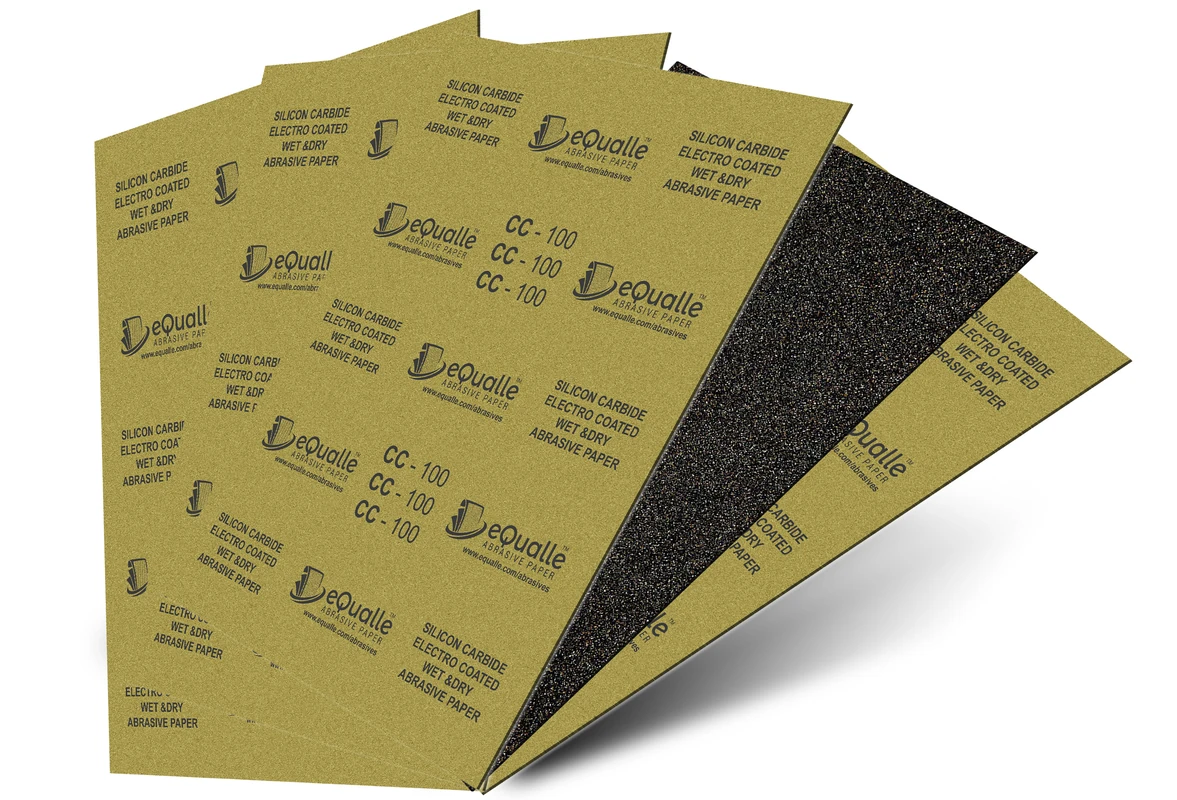
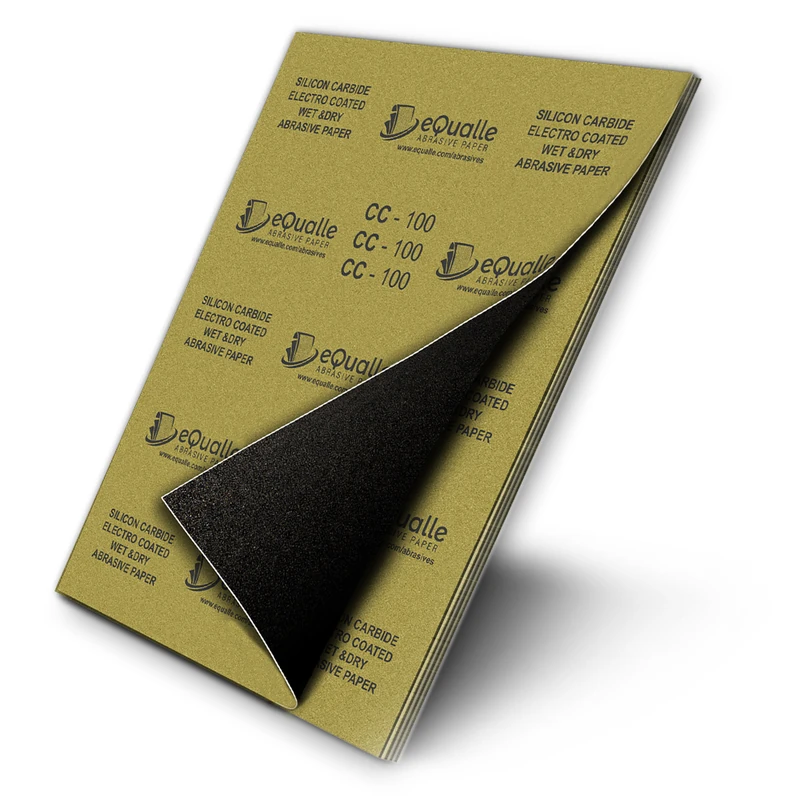
400 Grit Sandpaper Sheets (25-pack) — 9x11 in Silicon Carbide Abrasive for Wet or Dry Use — Ultra-fine abrasive for refining surfaces before polishing or coating. Commonly used in auto body repair and resin finishing. Produces flawless smoothness with wet or dry sanding. (Professional Grade).
Frequently Asked Questions (FAQ)
Q: Is mineral spirits safe to wipe on waterborne polyurethane between coats?
A: It’s not recommended by many waterborne manufacturers, as residues can interfere with adhesion. Use a water-damp microfiber or the brand’s approved cleaner, and always test on a scrap panel before committing.
Q: How long should I wait after a mineral-spirits wipe before recoating?
A: Allow full flash-off—typically 5–15 minutes for a light wipe at room temperature with airflow. The surface should return to a uniform matte with no solvent odor. Cooler or still air conditions may require more time.
Q: What grit should I use for between coats sanding on oil-based poly?
A: P320 or P400 is the sweet spot for uniform scuffing without deep scratches. Use P220 only for targeted nib knock-down, and consider P500–P800 for very thin or harder waterborne films.
Q: Does a mineral-spirits wipe improve adhesion, or is it only for inspection?
A: It’s primarily a visual and cleanliness check. Adhesion comes from a proper scuff-sand that increases surface area and provides mechanical keying. The wipe removes fines and reveals misses so you can correct them.
Q: I see fisheyes after wiping—what now?
A: Stop and deep-clean. Fisheyes signal contamination (often silicone or oil). Replace rags, check for tack cloth residue or compressor oil, and use the manufacturer’s recommended cleaner before reattempting a scuff and wipe.