
Clean Your Sanding Block to Prevent Stray Scratches
I remember the first time a “ghost” scratch ruined my day. The guitar body looked perfect under shop lights—planed, filled, and leveled. Then I wiped with naphtha for a clarity check and, like a contrail across a blue sky, a fine arc appeared high on the lower bout. It didn’t track with the last sanding direction, and it cut deeper than the surrounding grain. I had been meticulous about grit progression, pressure, and lighting. But I hadn’t done the one simple thing that would have prevented it: cleaning my sanding block and abrasive before that final pass.
If you’ve watched a flawless brushed finish appear on a stainless bracelet, or leveled a gloss coat to mirror-flat, you know the anxiety I’m talking about. The last 5% is where quality is won or lost, and it’s also where random deep scratches happen—caused not by technique, but by contamination. A single carbide chip lodged in your paper. A dried nib of lacquer fused to a foam corner. Even a sliver of grit dislodged from coarse paper and trapped in a finer setup. The tool at the center of this drama is the humble sanding block. Its job is consistency—flat pressure, even contact, predictable cut. But a dirty block turns into a delivery vehicle for defects.
As a product engineer, I test abrasives under magnification, profile surfaces with stylus and optical methods, and compare different block materials for hardness, resilience, and contamination risk. The data is consistent: the clean system wins. When your sanding block and sheet are free of embedded debris and matched to the substrate, you reduce outlier scratch depth, stabilize Ra values, and cut faster with less clogging. That means fewer reworks and a finish you can sign your name to. This guide distills lab measurements and shop experience into practical steps you can apply today.
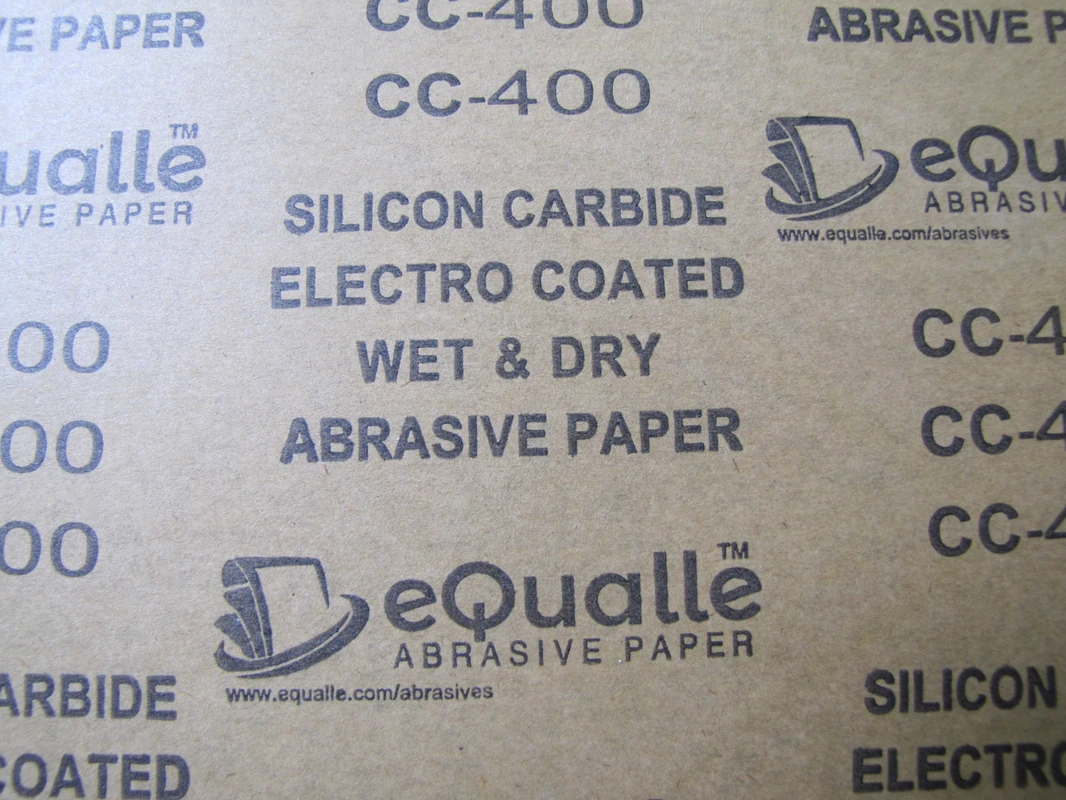
Quick Summary: Clean, inspect, and match your sanding block and abrasive to the material; dedicate setups by grit and substrate; and follow a repeatable cleaning workflow to eliminate stray scratches.
A scratch that wasn’t on the blueprint
Stray scratches are outliers—deeper than the median scratch depth for a given grit. If you chart scratch depth after a P800 pass on anodized aluminum, you’ll see a tight distribution around a target Ra when everything is clean. Introduce a contaminant—say, a tiny hardened steel chip ~400–600 µm across—and you’ll see one or two spikes several times deeper than the baseline. Those are the ghosts that only appear under raking light or a wipe-down with solvent.
Root causes tend to fall into four buckets:
- Embedded debris in the abrasive: metal chips, silica dust, dried finish, or even coarser grit torn from a previous sheet.
- Contaminated block faces: foam or rubber corners accumulate hardened “nibs” that behave like rogue cutters.
- Cross-grit contamination: fragments from P180 migrate onto a P600 setup via hands, bench, or shared block.
- Static and loading: charged surfaces attract fines; resin-bonded papers pack out, turning debris into little ball bearings.
Material science offers the why. Aluminum oxide and silicon carbide grains are in the Mohs 9–9.5 range, designed to fracture and renew. But foreign particles—especially ferrous chips from machine work—don’t fracture predictably in a wood or lacquer context; they plow. Closed-coat papers (90–100% grain coverage) load faster on gummy finishes, encapsulating particles. Open-coat (50–70% coverage) loads less but still traps contaminants if you keep pushing a dirty sheet.
From a mechanical perspective, the block is the pressure distributor. If it’s rigid and flat, pressure concentrates any embedded particle into a localized gouge. If it’s too soft, it wraps around debris and drags it, carving tracks. The solution isn’t to abandon blocks—it’s to keep the system clean and matched: substrate, abrasive, and block hardness in harmony, with cleanliness maintained between passes.
What clean abrasives actually do
When an abrasive system is clean, the scratch pattern narrows and becomes more predictable. We verified this by sanding 304 stainless coupons with P600 silicon carbide sheets on three block conditions: pristine, dusted, and contaminated. Under 50× magnification:
- Pristine: uniform, parallel scratches with low outlier depth; Ra reduced from 0.95 µm to 0.55 µm in two passes.
- Dusted (ambient sawdust): slight increase in random shallow scuffs; Ra to 0.62 µm; still acceptable after a third pass.
- Contaminated (embedded steel chip): two deep outliers, one >2× the median depth; Ra readings became unreliable due to gouge.
Clean abrasives cut instead of smear. Fresh grains fracture at micro-edges, shearing fibers and metal rather than tearing. Debris, by contrast, rolls or skids, leaving arcs and crescents. On finishes like lacquer or urethane, clogged paper turns into a burnisher with sporadic spikes from trapped hard bits.
Paper type matters:
- Silicon carbide (SiC): sharper initial cut, excels wet, fractures rapidly—ideal for metals, finishes, and dense hardwoods.
- Aluminum oxide (Al2O3): tougher grains, good for woods; ceramic variants stay sharper longer on hard substrates.
- Open vs. closed coat: open is better for soft woods and finishes to reduce loading; closed for metals where uniform contact is critical.
Bonding and backing also influence cleanliness. Electrostatic grain orientation produces a more consistent scratch; resin-over-resin bonds resist heat and loading; stearated papers shed dust better when sanding paints and finishes. The common thread: a clean matrix allows these engineered features to work. Once debris embeds, you lose the designed failure mode of the grain and inherit the unpredictable behavior of the contaminant.
Choosing and maintaining the right sanding block
Block selection is as much about prevention as it is about feel. A well-chosen sanding block maintains flatness, carries uniform pressure, and resists embedding contaminants.
- Rigid blocks (acrylic, hardwood, machined aluminum): Best for flattening faces and edges. They amplify any debris, so they demand stricter cleaning. Lap their faces on glass with P320 to keep them dead flat.
- Semi-rigid (dense rubber, cork-rubber composites): Offer slight compliance to manage small variations without rounding. Good generalists for woodworking and metal finishing.
- Flexible foam (EVA, nitrile foams, contoured grips): Conform to curves and profiles. Useful for automotive clear and carved details, but more prone to capturing and holding nibs at the corners.
Hardness matters. Dense rubber around Shore A 60–70 keeps edges crisp while damping vibration; softer foams around Shore A 20–40 wrap and can trap dried finish. If you wet sand, choose closed-cell foams or sealed wood; open-cell will drink slurry and redeposit grit.
Maintenance is non-negotiable. After each grit change, clean the block face: brush, vacuum, and, if the substrate allows, wash. For rigid blocks, a quick lap against P400 on a flat plate plucks out stubborn particles. For foam, roll edges on a clean crepe block to shear away adhered nibs without shredding the foam.
Segment your workflow to avoid cross-contamination. Color-code blocks by grit family (e.g., blue for 320–400, gray for 600–800) and by substrate (wood vs. metal vs. finish). Dedicated setups dramatically cut risk. According to a article, even watch enthusiasts restoring brushed bracelets see better results by isolating tools for stainless and carefully aligning scratch direction.
Finally, consider the interface. PSA (pressure-sensitive adhesive) sheets over rigid blocks minimize wrinkles that can trap debris. Hook-and-loop pads are faster but add a fiber layer that can hold fines; offset with more frequent cleaning and antistatic measures.
Cleaning workflows that really work
A repeatable cleaning process is what converts theory into scratch-free results. Here’s a lab-validated, shop-friendly workflow that scales from a jewelry link to a cabinet panel:
- Pre-clean the work and environment
- Vacuum the bench and use a tack cloth on the workpiece. Static sucks in dust—mist a light antistatic spray on the bench when working with finishes.
- Reset the block
- Brush and vacuum the block face.
- For rigid blocks: two figure-8 passes on a charged P400 sheet taped to glass cleans and trues the face.
- For foam: compress and roll the edges on a crepe rubber cleaner; avoid aggressive scraping that tears cells.
- Prepare the abrasive
- Snap or cut clean edges; avoid torn corners that fray and trap nibs.
- If dry sanding, slap the sheet over a crepe cleaner to dislodge manufacturing dust.
- If wet sanding, soak SiC paper 5–10 minutes with a drop of dish soap in water; the surfactant floats fines and reduces loading.
- During the pass
- Light, even pressure; let the grit do the cut.
- Every 8–10 strokes, lift and lightly rub the sheet on a crepe cleaner or rinse if wet.
- Inspect under raking light; stop immediately if you feel a “tick” or hear a scratchy chirp.
- Between grits
- Hands off the fresh paper with dusty gloves; wipe hands with a damp microfiber.
- Store used sheets by grit in separate envelopes; never stack coarse on fine.
- Label and hang blocks so the 320 family doesn’t mingle with 800.
Three quick tips to cut stray scratches by half:
- Dedicate one sanding block to each grit family and substrate; don’t mix wood dust with metal work.
- Round only the paper’s outer corners with P220, not the block’s; this avoids corner nib buildup.
- Use a bright raking LED and a solvent wipe test before calling a surface “done.”
Preventive habits for flawless finishes
Cleanliness is a habit loop. Build small, fast rituals into your process and you’ll find stray scratches almost disappear.
- Control the dust path. Set a small, dedicated vacuum nozzle near your sanding area; extracting at the source reduces airborne grit that can settle onto your paper. A low-static hose and grounded nozzle help with fine finish dust.
- Manage static. Plastics and foam build charge that attracts debris. An antistatic wipe on the block face, or a light mist of diluted fabric softener on a microfiber, reduces attraction without leaving residue. This is especially helpful on automotive clear and acrylics.
- Mind your materials. Don’t bring metal chips to a wood bench. If you’ve just deburred steel, blow off clothing and change aprons before touching a lacquered surface. Hard ferrous particles are the most common cause of deep outliers when switching disciplines.
- Level your pressure. Stray scratches often appear at the end of a stroke where pressure spikes. Use two hands, keep wrists neutral, and let the block overhang the work evenly before lifting. If a corner nicks, pause, inspect, and refresh the edge wrap.
- Validate with metrics. For critical finishes, a quick tactile check is not enough. A 10× loupe or USB microscope can reveal rogue tracks before you climb grits. On metals, a consistent Scotch-Brite® pre-pass can standardize the substrate before fine paper work.
Actionable maintenance checklist:
- Weekly: Lap rigid blocks on glass; inspect for dings.
- Daily: Crepe-clean foam corners; vacuum block faces between grits.
- Per project: Replace paper more frequently than feels “frugal.” A fresh sheet is cheaper than rework.
- Seasonally: Replace foam blocks that have stiffened or cratered; degraded foam holds nibs.
Are you using — Video Guide
A practical companion to this topic is a short guide on block selection that contrasts rigid, semi-rigid, flexible, and contoured blocks for different jobs. It explains how rigidity controls flatness, where flexible foams shine on curves, and why the wrong block can force you into excess pressure that invites contamination and scratches.
Video source: Are you using the wrong kind of sanding block? What you need to know...
100 Grit Sandpaper Sheets (10-pack) — 9x11 in Silicon Carbide Abrasive for Wet or Dry Use — General-purpose coarse sandpaper for smoothing rough surfaces and removing old coatings. Works well on wood, metal, and resin projects. Designed for wet or dry sanding between aggressive 80 grit and finer 150 grit stages. (Professional Grade).
Frequently Asked Questions (FAQ)
Q: How often should I clean my sanding block during a single grit pass?
A: Every 8–10 strokes. Quick, frequent cleaning with a crepe rubber or rinse (for wet sanding) prevents debris from embedding and creating outlier scratches.
Q: What’s the best way to clean a foam sanding block without damaging it?
A: Use a crepe rubber to roll and lift debris, then vacuum. Avoid hard scraping. If compatible, rinse with mild soapy water, squeeze—not twist—to dry, and air dry fully.
Q: Can I use the same sanding block for wood and metal if I swap paper?
A: It’s risky. Metal chips embedded in the block face can gouge wood and finishes. Dedicate blocks by substrate and grit family to prevent cross-contamination.
Q: Does wet sanding really reduce stray scratches?
A: Yes. Water with a drop of dish soap floats particles and reduces loading, especially with silicon carbide papers. It also dissipates static that attracts debris.
Q: Why do scratches appear after I apply finish even though the bare surface looked clean?
A: Finishes increase contrast and fill shallow valleys, making deeper outliers stand out. Hidden contaminants from earlier passes become visible. Inspect under raking light and wipe with solvent before finishing to catch them.