
Hook and Loop Sanding Discs: Storage & Humidity Care
The morning the storm rolled through, I reached for a sleeve of hook and loop sanding discs that had sat overnight on the bench. The disc stack had a faint wave to it—just enough curl to feel wrong when I pinched the edges. A minute into the first pass on white oak, the orbit pattern started to chatter. The grit looked fine, but the face felt warmer than it should, and the pad sounded different—thinner, harsher. When I peeled the disc, the loops carried a trace of condensate and dust paste. Five more minutes and the edge was lifting under lateral load. The disc flew off.
If you sand for a living, you know it’s never just the disc. It’s the air in the room, the cabinet you chose, the way your pad breathes, and how last night’s humidity set your morning up for failure. Moisture targets the interfaces that make sanding work: the resin bonds that hold abrasive grains, the paper or film backing that carries them flat, and the nylon hooks and loops that transmit torque without tearing. Humidity makes paper swell and cockles a disc into a shallow dish; it softens certain binders, increases coalesced dust, and raises pad temperature under friction. All of that adds up to slow removal, swirl risk, and premature wear.
The good news is that humidity is predictable, and storage is controllable. With a disciplined approach—sealed containers, desiccant management, acclimation habits, and right-sized RH control—you can keep discs flat, pads cool, and interfaces clean. The difference shows in surface prep: tighter scratch patterns, fewer witness marks after finish, and lower cost per square foot. This article breaks down the mechanics of moisture damage, shows how to protect your discs and pads, and gives you field-ready workflows you can use today.
Quick Summary: Control humidity and storage variables to keep discs flat, hooks gripping, and grit cutting; the result is smoother prep and longer pad and disc life.
Moisture: The Silent Abrasive Killer
Moisture sabotages abrasive performance through three predictable pathways: backing deformation, bond softening, and interface contamination. Paper-backed discs are hygroscopic; they absorb water, grow in-plane, and curl when one face sees more moisture than the other. Even film backings can cup if stored under tension with uneven humidity. Once a disc is no longer planar, contact pressure shifts to the rim, scratch density becomes non-uniform, and heat spikes at the edges. That’s the first step toward hook fatigue and premature disc release.
Resin systems—typically phenolic or urea-formaldehyde—control grain retention and edge consistency. Elevated RH, especially combined with temperature swings, can plasticize some bond systems and trap water between coat layers and stearate topcoats. The result is faster dulling, higher loading in resinous species, and a “smear” effect that complicates finish adhesion. Meanwhile, the hook-and-loop interface relies on dry, resilient nylon hooks engaging clean loops. Moisture plus fines creates a paste that rounds hook tips and matted loops. Add friction heat, and you risk hook softening and creep, particularly on older pads with oxidized base foam.
What you’ll see on the workpiece:
- Swirls that “telegraph” through the next grit up, even with correct progression.
- Edge overcutting from dished discs, especially on edges and field-to-wall transitions.
- Higher dust temperature and sweet, resin-like odor—signs of bond softening.
What you’ll see on the disc/pad:
- A measurable camber when placed on a known-flat plate.
- Paste-like buildup at the center vent holes and near the edge.
- Hooks that look glossy or mushroomed under magnification.
Actionable controls:
- Keep discs flat, sealed, and shaded from radiant heat; avoid open racks in variable-RH shops.
- Stage discs the night before in a controlled cabinet (40–50% RH) to equalize moisture content.
- Use pad protectors and clean hooks with low-pressure air and a stiff nylon brush—never solvents.
Protecting hook and loop sanding discs from humidity
Storage is a system: container, atmosphere, support, and handling. Start with a sealed, rigid container that keeps discs flat—something that resists bowing and blocks vapor ingress. Mylar or heavy polyethylene zip pouches inside a gasketed case work well. Insert a humidity indicator card to make RH visible at a glance. Add a regenerable desiccant, sized to container volume; silica gel or molecular sieves are both viable, but silica gel is easier and safer to recharge on-site.
Support matters. Discs should lie flat on a rigid plate or within a clamp-style carrier that distributes pressure evenly. Avoid tight elastic bands; they impose circumferential tension and promote cupping when moisture changes. Never store discs on their side in partially filled sleeves—gravity-induced creep appears after as little as 24 hours in warm rooms. For shop cabinets, choose double-sealed doors and thermal mass (e.g., MDF shelves) that damp temperature swings.
Acclimation is the quiet workhorse. If your shop runs 45% RH and the worksite is at 60%, bring only what you need and pre-stage discs in a small, controlled tote with its own desiccant. Open the tote only when swapping discs, and keep handling with clean, dry gloves. If a disc feels cool to the touch in a warm room, it’s probably below dew point; wait until it warms to ambient before mounting, or you’ll condense water into the loops.
Practical tips:
- Use 1–2 units (30 g each) of color-changing silica gel per 5 liters of container volume; regenerate at 250°F (120°C) until fully dry.
- Place a 40–50% RH indicator card inside every disc pouch; replace cards quarterly.
- For floor-sanding discs, store by grit in rigid, gasketed totes with foam separators to prevent edge distortion.
- Label every pouch with receipt date and last regeneration date; rotate FIFO to keep shelf time consistent.
Controlling shop RH and temperature
Abrasive performance thrives within a narrow environmental band: 35–50% relative humidity and 60–77°F (16–25°C). Control at the cabinet level is good; control at the room level is better. A small-capacity dehumidifier with a continuous drain and an RH controller can stabilize a sanding room or finishing bay. Pair it with a data logger to track daily cycles, including overnight spikes when HVAC set-backs occur. Consider dew point: if cold tools or floors sit below room dew point, you’ll get transient condensation that contaminates hooks and loads discs before the first pass.
Airflow is part of the equation. High-static dust extraction reduces airborne water bound in fine particulates and, critically, removes heat at the cut zone. Heat drives humidity problems by raising pad temperature, softening hooks, and accelerating binder creep. Keep vacuum filters clean, use antistatic hoses, and check your sander’s pad vents for blockages that raise interface temperature. For small shops, an insulated cabinet dedicated to abrasives, controlled by a simple RH controller and a desiccant-assisted mini-dehumidifier, creates a microclimate that remains stable even when the main bay doors open.
According to a article, high-performance ceramic discs engineered for hook-and-loop pads depend on a firm, consistent mechanical hold—exactly the condition that stable RH preserves.
Set points and checks:
- Target 40–45% RH when sanding solid wood; 45–50% for waterborne finishing compatibility.
- Avoid rapid swings >10% RH per hour; allow 2–4 hours for discs and pads to equilibrate when moving between zones.
- Keep storage cabinets 2–3°F (1–2°C) warmer than room air to stay above dew point after doors open.
- Use a portable psychrometer to spot-check RH near storage, at the sander, and inside closed cabinets.

Field workflows for mobile crews
Job sites amplify humidity risk: open windows, wet subfloors, HVAC off or in construction mode. Mobile crews need a layered defense that starts in the van. Never leave disc sleeves loose in bins; they will curl on hot days and absorb moisture on rainy ones. Instead, use gasketed cases (IP67-rated if possible), with discs sealed in mylar pouches grouped by grit. Each pouch gets its own small silica-gel packet and an RH card. Transport cases ride off the van floor to avoid condensate zones and should be opened only indoors.
On site, designate a staging tote as the “clean box.” It holds the next two grits, pad protectors, and a brush. Only clean hands go in. Between passes, cap the tote. If the ambient RH is above 55%, keep the tote closed except during disc changes. If you must sand in humid spaces (bath remodels, basements), run a portable dehumidifier for at least 30 minutes before you begin and during breaks; even a small unit can pull the immediate area around your work below 50% RH and reduce paste formation in loops.
Worst-case, if discs take on moisture, resist the urge to “bake them flat.” Gentle, controlled drying in a sealed container with fresh desiccant works; high heat warps backings and embrittles bonds. If a disc has visible dish after drying, demote it to rough work or toss it—the edge-load penalty costs more than the disc.
Mobile-ready tips:
- Keep a 3-tier kit: van stock (sealed), site stock (sealed), and active tote (opened as needed).
- Regenerate desiccant the evening before a humid-day job; color-change beads take out guesswork.
- Use a small IR thermometer to ensure discs are at ambient and above dew point before mounting.
- Log site RH/temperature at start and mid-day; adjust workflow (longer rest between passes, more vacuum) when RH >50%.
Inspection, rotation, and shelf life
Discs aren’t immortal, and humidity shortens their useful window. Build rotation and inspection into your sanding workflow. First-in, first-out (FIFO) is mandatory: date every pack on receipt and every pouch when first opened. Keep a small inspection plate—a piece of 1/2-inch glass or a granite tile—in the cabinet. Before mounting, place a suspect disc on the plate and gently press the center; if the rim lifts more than a millimeter or you see a rocking motion, the disc is cupped. Don’t try to force it flat on the pad; you’ll overcut edges and stress hooks.
Examine the loop face. Healthy loops look matte and uniform; humidity-exposed loops look matted, glossy, or clumped with fines. A nylon brush can restore the nap if contamination is light; if loops are bonded with paste, discard. Inspect the abrasive face for resin micro-cracks that appear as faint, irregular lines; these often form after aggressive heat cycles in humid conditions and lead to erratic scratch patterns in the next grit. For film-backed discs, check for a “memory” curl—persistent camber after several hours in controlled RH signals polymer creep, and those discs should be downgraded.
Shelf life depends on storage quality, but a practical rule:
- Paper-backed discs: 12–18 months in controlled RH; sooner if stored open.
- Film-backed discs: 18–24 months; still inspect for curl and bond integrity.
- Stearate-coated grits: Shorter effective life if stored above 55% RH due to clumping risk.
Maintenance cadence:
- Quarterly: audit cabinet RH, regenerate desiccant, and cull aged stock.
- Monthly: clean pad hooks with compressed air and a nylon brush; replace pad protectors.
- Each shift: spot-check disc flatness on the plate and verify RH card colors.
Small habit, big payoff: write the open date on each pouch and aim to consume opened pouches within 30 days. You’ll standardize performance and reduce the variability that humidity sneaks into your scratch patterns.
Stop Melting Your — Video Guide
In this short technical video, a microscope reveals how heat and contamination degrade sander pads, causing discs to release mid-pass. You’ll see how hooks deform and glaze when run hot, why dust-and-moisture paste prevents proper engagement, and how speed and pressure choices drive premature wear.
Video source: Stop Melting Your Hooks (why sanding discs fly off your sander)
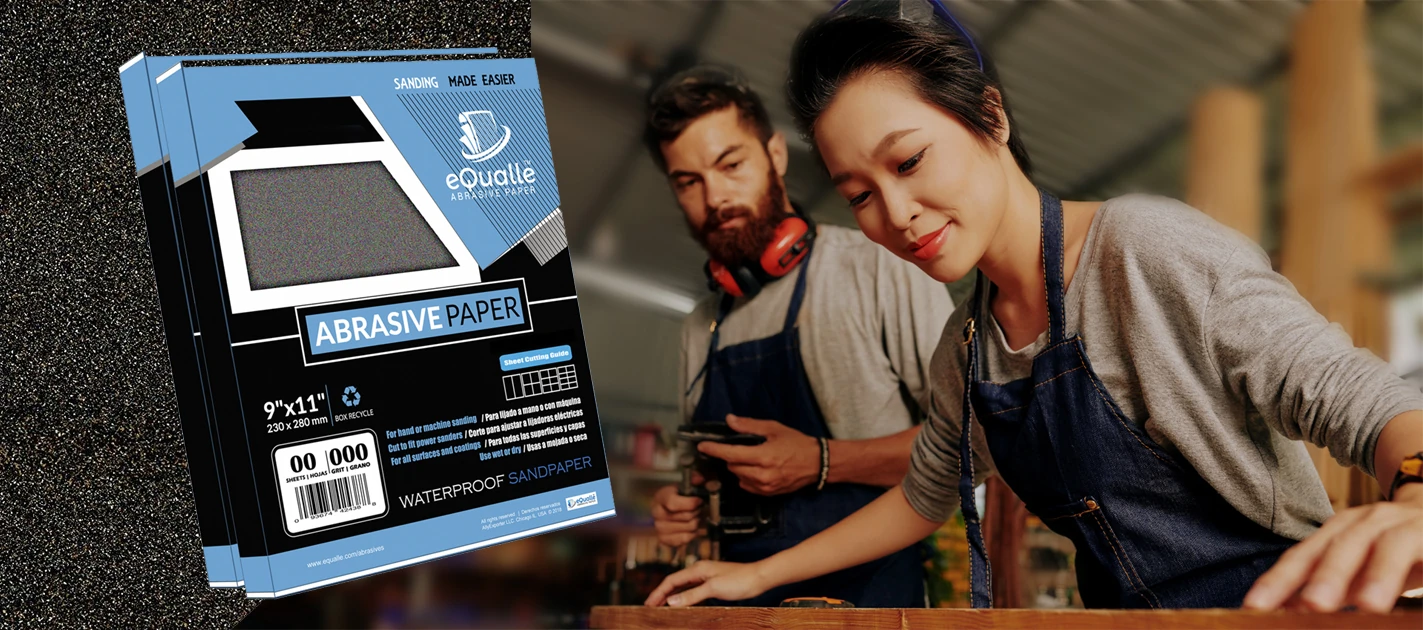
360 Grit Sandpaper Sheets (25-pack) — 9x11 in Silicon Carbide Abrasive for Wet or Dry Use — Ultra-controlled abrasive for gentle refinement and removing faint imperfections before clear coating or buffing. (Professional Grade).
Frequently Asked Questions (FAQ)
Q: What RH and temperature should I target for disc storage?
A: Aim for 40–50% relative humidity and 60–77°F (16–25°C). Stability matters more than perfection—avoid rapid swings and keep storage slightly warmer than room air to stay above dew point after door openings.
Q: Can I flatten a curled disc by heating it?
A: High heat often damages resin bonds and sets a different curl once the disc cools. Instead, place the disc in a sealed pouch with fresh silica gel at room temperature for several hours. If measurable dish remains, discard or reserve for rough work.
Q: Do desiccants really help, and which should I use?
A: Yes—properly sized silica gel or molecular sieve packets maintain a dry microclimate inside sealed pouches and cases. Use color-changing silica gel for easy recharging feedback and regenerate at 250°F (120°C) until indicators return to dry state.
Q: How does humidity affect PSA discs versus hook-and-loop?
A: PSA relies on adhesive tack, which drops sharply in high humidity or on condensate, leading to lift and residue. Hook-and-loop is mechanical, but moisture plus fines contaminate loops and soften hooks under heat. Both systems need dry storage; hook-and-loop also benefits from pad protectors and regular hook cleaning.