
Dustless Sanding With Antistatic Hoses
A few minutes into sanding your living room wall, it happens: that gray haze settles over the floor like a film. Your sleeves are dusted. A fine grit coats your phone screen. Worse, the vacuum hose seems to wear a fur coat of powder that you can’t brush off. You pause, tap the hose, and a static snap bites your wrist. This is the moment most of us realize that sanding dust doesn’t just land—it clings. And it doesn’t cling by accident.
Whether you’re prepping drywall, flattening tabletops, or smoothing primer before paint, the goal is the same: a clean surface, fewer defects, and faster progress. That’s exactly why dustless sanding has become the modern gold standard in shops and home projects alike. It isn’t a promise of zero dust anywhere; it’s a system that captures virtually all airborne and settle-prone dust at the source so it doesn’t stick to you, your tools, or your work.
The result is more than comfort. Fine particles lodge in finishes, clog abrasives, and swirl back into your lungs and eyes if airflow isn’t well-managed. Static electricity turns a regular hose into a magnet for that mess—both literally and figuratively—so cleanup doubles and your finish suffers. Once you work with a proper antistatic hose connected to a capable extractor, the difference is immediate: hoses stay clean, dust funnels where it should, and the air feels clearer.
Today, we’ll unpack why fine dust clings in the first place, how antistatic hoses disrupt that cycle, and how to choose and set up a system that makes dustless sanding not just possible, but reliable. We’ll also cover practical tips for airflow, grounding, and maintenance so your results stay consistent—job after job.
Quick Summary: Antistatic hoses and well-matched extractors turn dustless sanding from a hopeful claim into daily reality by reducing static cling, improving capture, and protecting your finish.
Why Fine Dust Clings and Shocks You
If you’ve ever felt a zap from a vacuum hose or noticed dust frosting the outside of it, you’ve met the triboelectric effect. As dust particles race through a non-conductive hose—most commonly plastic—friction strips electrons and builds static charge. That charge has to park somewhere, and a standard hose acts like a giant capacitor. The more dust you move, the more charge you accumulate. Eventually it arcs to you or anything nearby at a different potential, and you feel that sting.
Static explains why the dust that should be inside your extractor ends up decorating the hose, your clothes, and even nearby surfaces. Charged particles and charged hose walls attract each other. Think of tiny, lightweight particles as obedient to two forces at once: airflow trying to move them along, and electrostatic attraction trying to pin them in place. When the static wins, you get clinging dust, clogged corrugations, and reduced suction because the boundary layer inside the hose turns turbulent with stuck debris.
Environmental factors stack the deck. Low humidity (common in winter or climate-controlled shops) makes static worse because dry air is a poor conductor. The drier the air, the longer charges persist. Particle size also matters: the finer the dust, the more easily it charges and the more surface area it presents to stick. Sanders generate some of the finest particulates in a shop, so the problem shows up most vividly when you sand paint, primer, drywall joint compound, or hardwood.
There’s a mechanical side to this too. Ribbed hoses add flex but also surface area and eddies where dust can lodge. Long hose runs and tight turns multiply friction and the opportunity for charge buildup. All of this adds up to the same frustration: you’re cleaning as much dust off your hose and floor as out of your work. The fix isn’t just “more suction.” It’s a hose and extractor setup designed to control charge and keep airflow smooth.
How Antistatic Hoses Enable Dustless Sanding
Antistatic hoses tackle the root cause of dust cling: accumulated charge. They’re formulated with conductive or dissipative materials woven into the hose wall or coating, and paired with fittings designed to transfer charge away from the hose and into ground via the extractor. Instead of acting like an insulator that hoards electrons, an antistatic hose bleeds charge continuously. The outcome is straightforward: less dust sticking to the hose, fewer shocks, and steadier airflow that keeps particles moving toward the filter or bag.
This matters most during dustless sanding, where control at the point of generation is everything. Your sander’s shroud, pad holes, and interface with the abrasive create a mini airflow system. When suction is tuned correctly and static is neutralized, fine particles lift through the paper and into the hose before they can escape into the air or embed in your finish. You’ll notice fewer “pills” underneath the disc and a more consistent scratch pattern because the abrasive cuts, instead of smearing over a dust buffer.
An effective setup pairs the antistatic hose with:
- A dust extractor or shop vacuum with variable suction, so you can match airflow to the tool. Too much suction can stall a random orbit sander; too little leaves dust behind.
- A high-efficiency filter (ideally HEPA) and a bag or separator that prevents rapid filter clogging, sustaining airflow over long sessions.
- Properly sized hose diameter for the tool. Smaller hoses work well with sanders and detail tools; larger ones shine with planers and track saws.
You’ll still see dust if the system is unbalanced. For example, a brand-new abrasive on softwood can produce more chips than fines, and mismatched hose/adaptor connections can leak. But with a conductive hose and good extractor, most people move from constant wiping to light touch-up—sometimes nothing more than a quick damp cloth on the bench. That’s dustless sanding in practice: not perfect, but reliably clean enough to jump straight to finishing.
Choosing the Right Hose and Extractor
Start with hose diameter. For sanders, 27–28 mm (about 1–1/8 in.) inside diameter is common; 32–36 mm (1–1/4–1–3/8 in.) offers a bump in airflow that helps with higher dust loads or longer runs. If you primarily use larger tools (planers, routers, miter saws), a 2.5 in. system can move bigger chips without choking. Keep hose length as short as your workspace allows to limit friction and preserve suction; add a wall-mounted extension when you truly need reach.
Next, look for antistatic ratings from the manufacturer. True antistatic hoses have conductive cuffs and wire or carbon-impregnated liners that maintain continuity end-to-end when connected to a grounded extractor. Smooth-bore interiors reduce turbulence compared to highly corrugated shop-vac hoses, which improves transport of fines and keeps noise down. Swivel cuffs prevent kinking at the tool end and ease the “hose dance” when you’re moving between panels or cabinets.
Extractor choice matters as much as the hose. A unit designed for fine dust will have:
- Variable suction to match tool needs.
- Automatic tool-triggered start/stop so extraction runs only when you sand.
- A bag or pre-separator to protect the filter and maintain steady airflow.
- Sealed HEPA filtration for health and cleanliness, particularly indoors.
Cyclone separators are a smart add-on, especially if you do long sanding sessions. They pull most debris out of the airstream before it reaches your extractor. According to a article. That “first stage” capture prevents filter caking that robs suction. Many kits include antistatic components and flexible hoses to minimize shocks and improve safety.
Compatibility can be tricky, so plan your connectors. Keep a small kit of step-downs, rubber cuffs, and a few wraps of high-quality tape on hand to seal odd couplings. If your shop has both woodworking and paint-prep tools, consider maintaining two hoses: a narrow, ultra-flexible antistatic hose for sanders and a larger one for chip-heavy tools. Color-coding or labeling helps you grab the right one fast.
Setup, Grounding, and Airflow Best Practices
Even with the best gear, performance hinges on setup. Antistatic hoses can only dissipate charge if they have a path to ground, and airflow only stays strong if leaks are sealed and the system breathes freely.
Follow these steps to dial in your system:
- Confirm continuity: With the extractor unplugged, attach the hose and cuffs fully. Many antistatic setups carry ground through the machine chassis to the outlet ground. If your extractor provides a dedicated ground point, use the supplied strap or wire as directed.
- Seal the air path: Test-fit all connections at the tool and separator. Gaps around adapters leak suction and invite fine dust to escape. A snug rubber cuff is better than a loose hard plastic step-down.
- Tune suction: Start at mid-power. On a random orbit sander, too much suction can stick the pad to the surface and create swirl marks. Use the sander speed control and extractor dial to find a sweet spot where the pad glides and dust disappears.
- Keep filters and bags fresh: A caked filter starves airflow. If your extractor offers a filter-clean pulse, use it between passes and replace filters on schedule. Empty or change bags before they’re packed.
- Mind the hose path: Avoid tight bends and dragging the hose edge across sharp corners. Support long runs with hooks or bungees and keep the hose off the floor when possible to reduce abrasion and trip hazards.
Actionable tips to cut fine dust cling further:
- Maintain indoor humidity between 35–50%. Slightly higher humidity helps dissipate static without sacrificing finish quality.
- Use antistatic sleeves or cable socks to bundle the hose with your sander cord, preventing rub and micro-leaks at the tool end.
- Choose abrasives with clean, well-aligned holes that match your pad; misaligned holes choke airflow and leave dust behind.
- For drywall or primer, use mesh abrasives or interface pads designed to promote airflow through the disc.
Finally, adopt a pre-session check: verify pad holes are clear, the hose is fully seated, and the extractor bag isn’t near full. Two minutes up front saves twenty later trying to vacuum out a clogged hose rib or re-sand a dusty panel.
Safer, Cleaner Shops and Better Finishes
When antistatic hoses reduce fine dust cling, your shop changes in subtle but powerful ways. Air feels clearer, cleanup shrinks to a quick once-over, and your finishes stop surprising you with tiny craters or fibers that seem to appear from nowhere. Dust that used to settle back onto your work stays in the airstream, and your abrasives cut longer because they don’t cake up with fines.
Finish quality benefits in three key ways:
- Fewer nibs and inclusions: With dust captured at the source, you sand to a uniform scratch pattern rather than grinding dust into the surface.
- More predictable film build: Primer and topcoats level better when the substrate is truly clean, reducing blushes and pinholes.
- Less rework: You won’t be resanding between coats because of the particles that landed mid-cure.
Health and comfort improve too. Even with masks and good habits, airborne fine dust is persistent; keeping it in the hose instead of the room reduces exposure and saves your lungs and eyes from irritation. And without static buildup, those distracting hose zaps disappear, letting you focus on the task.
For productivity, consider these upgrades:
- Tool-triggered extractors eliminate “on/off” fiddling and ensure dust capture starts the moment your sander spins.
- A cyclone or separator protects suction on long sanding days, preventing the slow fade that leads to dusty surprises.
- Keep a labeled bin for used discs; replacing a loaded abrasive in time keeps dust generation lower and finish quality higher.
One note on safety: antistatic hoses help dissipate charge, but they’re not a license to ignore combustible dust risks. Avoid sparks, maintain clean floors, and never vacuum hot material. Treat your extractor like any power tool—inspect it, keep it clean, and follow the manufacturer’s grounding guidance. The reward is a shop that stays orderly and a surface that’s ready for finish the moment you put the sander down.
Testing DUSTLESS Sanding — Video Guide
Curious how these ideas look outside of spec sheets? In a recent creator review, a dustless sanding tool is put through its paces with different grits, materials, and suction settings. The host highlights setup details that matter—hose behavior, extractor power, and how quickly discs load—while noting the trade-offs between portability and capture efficiency.
Video source: Testing DUSTLESS Sanding Tool - BUY or BUST?
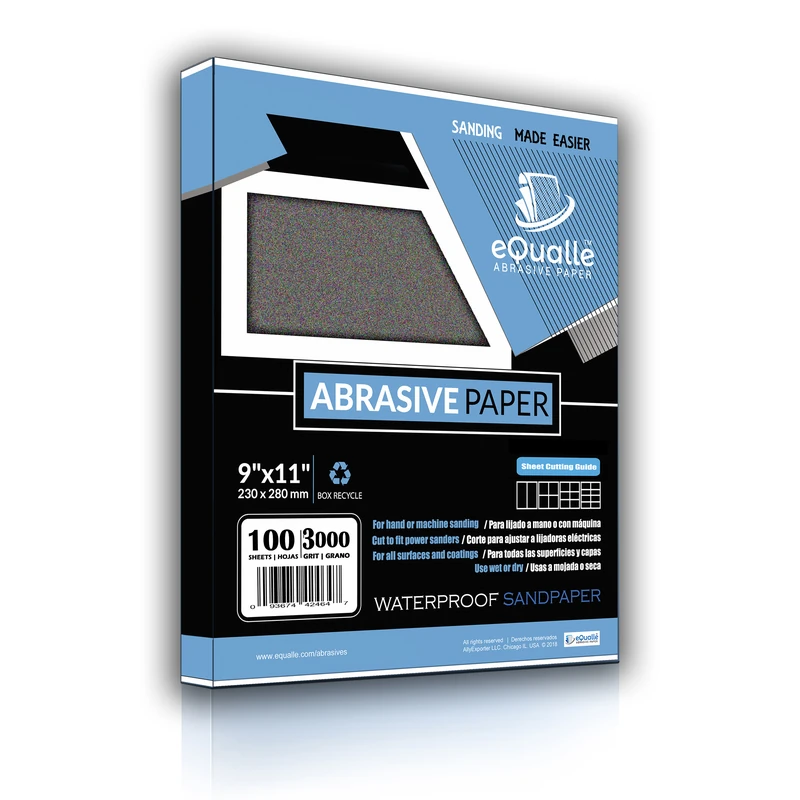
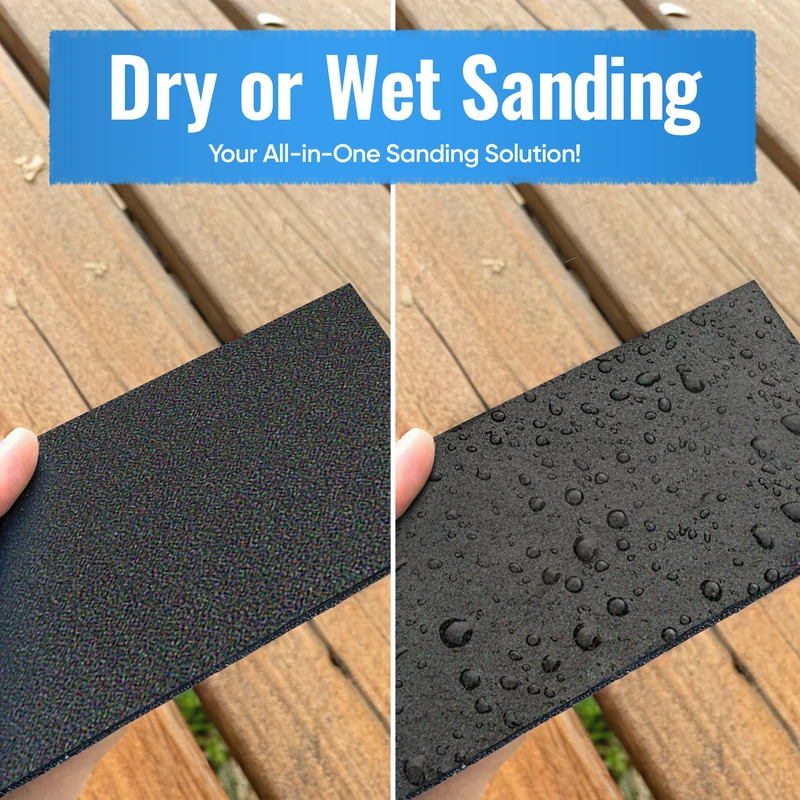
360 Grit Sandpaper Sheets (10-pack) — 9x11 in Silicon Carbide Abrasive for Wet or Dry Use — Precision grit for removing haze and small surface defects. Ensures scratch-free sanding on wood, plastic, or metal. Ideal for both wet and dry use before the polishing stage. (Professional Grade).
Frequently Asked Questions (FAQ)
Q: Do antistatic hoses really reduce fine dust cling?
A: Yes. Conductive materials in the hose wall and cuffs let static charges bleed to ground instead of building on the hose. That prevents dust from sticking to the exterior and keeps interior airflow smoother, improving capture and reducing shocks.
Q: Can I retrofit my regular shop vacuum for dustless sanding?
A: Often, yes. Add an antistatic hose with compatible cuffs, a high-efficiency (preferably HEPA) filter, and a dust bag or cyclone separator to protect suction. Use adapters to seal all tool connections and tune suction so your sander glides rather than stalls.
Q: What hose diameter is best for sanders?
A: For most random orbit and detail sanders, a 27–32 mm (about 1–1/4 in.) hose balances flexibility and airflow. Larger 36 mm or 2.5 in. hoses move more air but can be cumbersome for hand sanding and may require different adapters.
Q: How do I ground the system to avoid shocks?
A: Use a certified antistatic hose connected to an extractor designed to carry ground through the hose and fittings. Many systems are grounded via the power cord’s earth; some provide a separate bonding point. Follow the manufacturer’s instructions and avoid DIY grounding that bypasses safety features.
Q: Is HEPA filtration necessary for dustless sanding?
A: It isn’t strictly required for capture, but HEPA greatly improves air quality by trapping the finest particles that escape bags and standard filters. For indoor work or frequent sanding, HEPA is a practical upgrade that keeps the workspace and your lungs cleaner.