
Sandpaper Grit and Substrates: Loading and Strength
I still remember the first Saturday I committed to rescuing a dented maple desk I’d found curbside. The top had rings, a sagging finish, and hairline cracks where the veneer had started to lift. On another bench sat a bent aluminum rack from my commuter bike that I planned to reinforce with a bonded gusset. Two projects, one shop, and the same decision staring me down: which sandpaper grit to reach for first. That choice doesn’t feel dramatic, but it quietly dictates how finishes lay down, how adhesive joints carry load, and whether your paper clogs or cuts cleanly. I rubbed a thumb across the desk, feeling the finish crumble like chalk, then looked at the aluminum rack and pictured how an epoxy bead would wet into its scratches. Different materials, different failure modes—yet both hinge on the way we engineer a surface.
With wood, you can go by touch and sheen. With metal and composites, you need to think like a lab tech: scratch geometry, real area of contact, and debris evacuation. I’ve seen projects stall because a sheet of P80 packed up in minutes on resinous pine, and I’ve seen bonds fail because a mirror-smooth aluminum panel left epoxy nothing to hold onto. That’s why I approach sanding like any other test procedure: define the substrate, define the target performance, then choose an abrasive system to create the right profile with minimal damage. It’s not glamorous, but it’s where craftsmanship meets material science. Standing in that shop, dust collector humming, I laid out a simple plan: clear the old finish on the maple with an open-coat aluminum oxide, run a three-step grit progression, and control my pressure. For the aluminum, I’d establish an anchor profile, degrease, and avoid polishing away the very texture I needed. In both cases, the feel under my fingertips would be backed by data and a few hard rules—because surfaces remember everything we do to them.
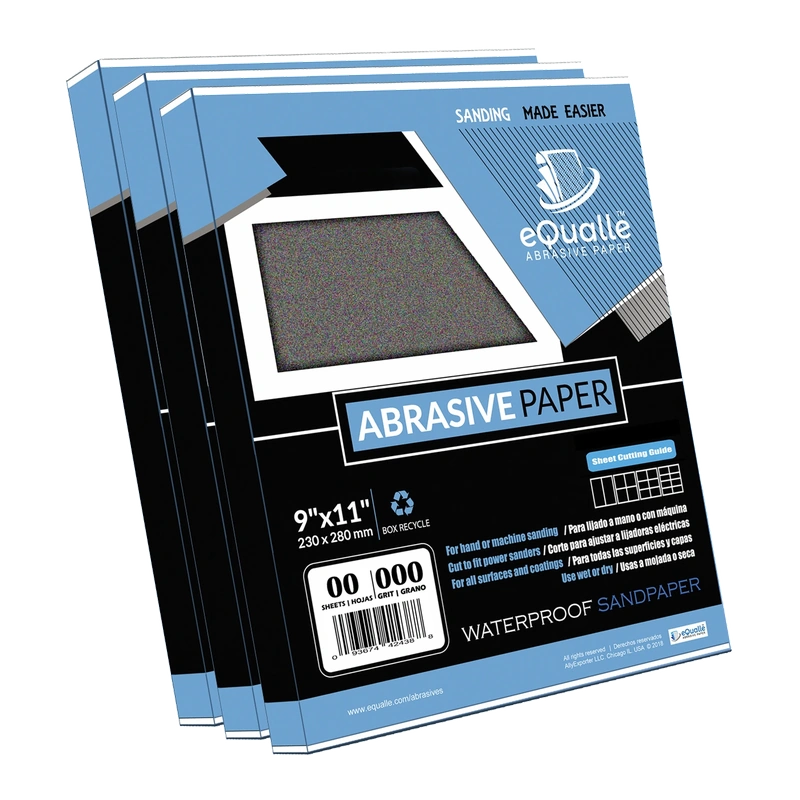
Quick Summary: The right pairing of sandpaper grit and substrate controls scratch geometry, abrasive loading (clogging), and ultimately whether coatings and adhesive joints reach their designed strength.
From Feel to Physics: Why Surfaces Matter
Surface preparation governs how forces move from one material into another—through friction, mechanical interlock, or true molecular adhesion. Under a microscope, even a “smooth” panel is a landscape of peaks and valleys. When you sand, you sculpt that landscape. Three aspects are crucial:
- Geometry: Scratch depth and spacing set the anchor profile. Too shallow, and finishes or adhesives rely on weak boundary layers. Too deep, and you introduce stress risers and reduce net cross-section, especially critical in composites and thin veneers.
- Topography metrics: Roughness parameters like Ra (average roughness) and Rz (peak-to-valley height) correlate with wetting and bond area. For many wood glues and structural epoxies, a moderate Ra with uniform lay is better than extremes.
- Real area of contact: For frictional joints and coatings, more effective contact area (up to a point) increases shear transfer and decreases the chance of localized failure.
Two different “loading” behaviors matter here. First is mechanical loading: how a bonded joint, coating, or laminate carries force after prep. Second is abrasive loading: how quickly your sandpaper clogs with swarf, wood resin, or paint—killing cut rate and glazing the surface. Substrate properties drive both. Soft, gummy woods and cured finishes tend to cake closed-coat papers; aluminum generates ductile chips that smear and pack. Brittle composites produce fine dust that can either clear well or embed, depending on grit and coat density.
The goal is a controlled, reproducible profile with minimal thermal damage. Heat is an uninvited co-author: it can soften resins, smear aluminum, or prematurely fracture abrasive grains. Control downforce, stroke speed, and dust extraction to keep temperature and debris in check. Done right, you get consistent scratch patterns that translate directly into predictable adhesive or finish performance. Done poorly, you inherit hidden defects: crushed earlywood, burnished metal that resists wetting, or fiber cuts that trigger delamination. In short, a surface is a performance interface—treat it like one.
How sandpaper grit tunes adhesion and strength
“Grit” is shorthand for the engineered particle size that writes your scratch pattern. FEPA “P” grades (common in most modern sheets) map to average abrasive sizes; the grit you pick sets scratch depth and spacing at given pressure and backing stiffness. A few useful reference points:
- P80 ≈ 201 μm particles: rapid stock removal, deep anchor profile; high risk of subsurface damage on brittle substrates.
- P120 ≈ 125 μm: aggressive but more controlled; common first-pass for paint removal and pre-bond prep on metals.
- P180 ≈ 82 μm: balances cut and surface uniformity; strong candidate for primer-ready wood and many adhesive preps.
- P240 ≈ 58.5 μm: refines peaks without fully burnishing; often sweet spot for composite bonding and between-coat scuffing.
- P320–P400 ≈ 46–35 μm: finish sanding and sealer scuffing; too smooth for many structural bonds.
- P600+ ≈ 26 μm and finer: polishing and clearcoat work; generally not preferred for primary structural joints.
Scratch depth is not equal to particle size; it typically lands around 10–30% of the abrasive particle diameter depending on pressure, pad hardness, and substrate modulus. For adhesive bonding, you want uniform valleys that increase effective surface area and disrupt boundary contamination, while avoiding undercut grooves that concentrate peel stresses. That’s why many wood and epoxy-metal bond procedures land in the P120–P240 range: enough profile to grip, not so coarse that you cut fibers or create notch-like features.
Strength is directional. In lap shear, a moderate, uniform profile improves stress transfer and delays interfacial failure. In peel (mode I), overly deep scratches can act like crack starters. On composites, coarse grits can sever fiber crowns or introduce microcracks into the resin, reducing delamination resistance—even if the joint initially feels “rough enough.” On aluminum, grits too fine can burnish and smear oxides, degrading wetting; too coarse can lower net section at thin edges and trap voids. The engineering answer is a short, controlled progression (e.g., P120 → P180 → P240) matched to substrate and adhesive chemistry. Test coupons make this visible: shear strength rises from polished to moderately abraded surfaces, then plateaus or declines as damage outweighs added area. The sweet spot moves with materials, but the physics stays the same—engineer the texture, don’t guess it.
Abrasive materials, backing, and coating choices
Grit number is only half the story. Abrasive mineral, backing, and coat density control cut behavior, heat, and clogging.
Mineral choice:
- Aluminum oxide (AO): Tough and moderately friable. Great all-rounder for wood and ferrous metals. Fractures to expose new edges under pressure, maintaining cut rate.
- Silicon carbide (SiC): Sharper and more brittle. Excels on hard finishes, glass, and non-ferrous metals, and in wet sanding where its sharpness shines with coolant.
- Zirconia alumina (ZA): Self-sharpening under heavy pressure. Best for aggressive stock removal on metals; overkill for delicate veneers.
- Ceramic alumina: Highest microfracturing toughness; thrives in high-pressure belt sanding with cool cuts. Ideal for heavy metal removal, not for final pre-bond scuffs.
Backing:
- Paper (A–F weight): Lighter A/C for contours and finishing; heavier E/F for belts and flatting with consistent pressure.
- Film: Dimensionally stable, ultra-uniform scratch patterns; excellent for between-coat work and composite finishing.
- Cloth: Durable for belts and drums; conforms under load but can “round” edges if pressure isn’t controlled.
Coat density:
- Open-coat: Spaces between grains help eject debris; preferred for resinous woods and soft paints to reduce loading.
- Closed-coat: Maximum grain coverage for fast, uniform cutting on metals and hard finishes; more prone to clog on gummy substrates.
- Stearate/anti-loading topcoats: Waxy additives that prevent paint and resin from sticking; extend life during finish removal and between-coat scuffs.
Heat and debris management are the real differentiators. Open-coat AO with a stearate layer at P80–P120 clears gummy pine and old varnish better than tightly packed, closed-coat sheets. On aluminum, SiC wet sanding around P180–P240 with a few drops of water or mineral spirits reduces smearing and evacuates chips before they weld to the paper. Film-backed P320 produces consistent, shallow scratches that make primer bite uniformly without telegraphing under thin coatings.
In adhesive prep, a too-compliant backing can round peaks, reducing effective roughness. Conversely, overly stiff backing on curved composite skins can produce non-uniform gouging. Choose the compliance to match geometry, then let grit and mineral do the real work.
According to a article
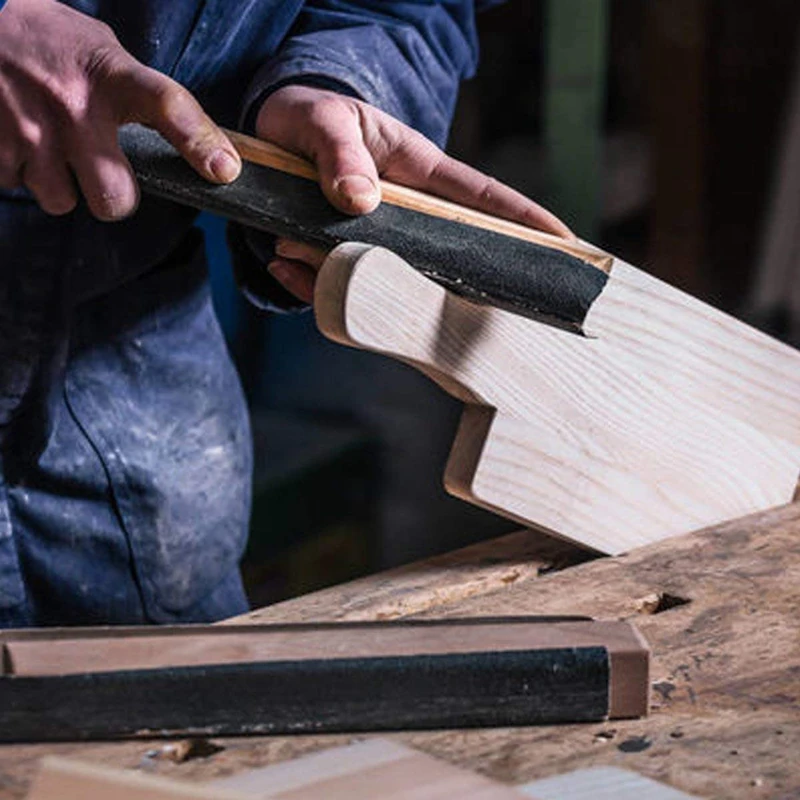
Substrate-specific playbook: wood, metal, composites
Different substrates respond to grit and pressure in different ways because their microstructures and deformation behaviors differ.
Wood (hardwood vs softwood)
- Behavior: Earlywood compresses more than latewood; coarse grits can produce washboarding that soaks unevenly. Resinous softwoods load papers quickly; closed-coat grits glaze and burnish.
- Targets:
- Stripping/leveling: P80 → P120 open-coat AO. Vacuum between steps. Avoid lingering at P80—stop once flat.
- Finish-ready for clear coats: P150 → P180 → P220 or P240 film-backed for uniformity; higher than P240 can reduce stain absorption and cause blotching.
- Glue joints: P120–P180 light passes; avoid over-sanding end grain which becomes a capillary sponge and weakens bonds. Clean with a dry brush or vacuum; skip solvent wipes that can drive oils deeper.
- Loading control: Open-coat stearated sheets; frequent dust extraction; light pressure to reduce heat and resin smear.
Metals (aluminum, steel)
- Behavior: Ductile chips can smear and cold-weld to the abrasive, glazing the surface. Oxide layers affect wetting more than base metal. Overly fine sanding can polish and seal pores, hurting adhesion.
- Targets:
- Pre-bond prep: Degrease first. P120 → P180 or P240 SiC or AO. Aim for uniform, non-directional scratch; finish with a clean vacuum and lint-free wipe using a compatible solvent.
- Pre-paint: P180 → P240 → P320 depending on primer system. Etch or conversion coatings may follow; don’t sand past the profile the primer is designed to wet.
- Loading control: Wet sanding for aluminum at fine grits; closed-coat with aggressive dust extraction at coarse grits. Keep pressure moderate; let the mineral cut, not rub.
Composites (fiberglass, carbon fiber)
- Behavior: Brittle resin with strong, anisotropic fibers. Coarse grits risk cutting fibers; heat can soften matrix and embed debris. Dust is fine and abrasive—control it.
- Targets:
- Pre-bond scuff: P180 → P240 AO or SiC on firm pads; cross-hatch pattern without exposing or fraying fibers. Stop once gloss is uniformly broken.
- Between lamination layers: P120–P180 while green (within recoat window) or P180–P220 after full cure, depending on system. Beware amine blush on epoxies—wash before sanding.
- Cosmetic finishing: P240 → P320 → P400 film-backed before primers; avoid polishing that reduces primer bite.
- Loading control: Vacuum-at-source; light, consistent passes; avoid edge dwell to prevent resin troughs or fiber protrusion.
Grit sequences minimize work and damage. Avoid skipping more than 1.5–2× grit steps (e.g., P80 to P150 is fine; P80 to P240 often leaves deep scratches that the fine grit can’t erase efficiently). Think of each step as erasing the previous peaks, not just making numbers go up. When bonds or coatings matter, record your sequence and pressure—repeatability is performance insurance.
Process controls, test data, and practical tips
Surface prep pays off when it’s controlled. A few practice-proven controls and tips make the difference between “seems fine” and “measurably better.”
Control downforce and speed
- Tip: For handheld sanding, aim for light, even pressure—about 1–2 kgf (2–4 lb) on a 5–6 inch random orbital. Excess pressure dulls grains, creates heat, and polishes rather than cuts.
- Why it matters: Stable pressure produces uniform scratch depths and lowers thermal damage, especially on resins and softwoods.
Use short, logical grit progressions
- Tip: Move in 1.5–2× particle size steps (e.g., P120 → P180 → P240). Stop as soon as the previous scratch pattern is erased uniformly; don’t “polish” past your target.
- Why it matters: Each step is efficient and prevents deep-scratch telegraphing under coatings or into joints.
Manage contamination and oxides
- Tip: Degrease metals before sanding to avoid smearing oils into scratches. After sanding, use a vacuum and lint-free wipe with a compatible solvent. Bond or prime promptly to minimize re-oxidation.
- Why it matters: Clean, freshly abraded surfaces wet better. Delays can regrow oxides that reduce adhesion, particularly on aluminum.
Match mineral and coat to substrate
- Tip: Use open-coat, stearated AO for painted wood or softwoods to reduce loading; use SiC wet at fine grits on aluminum to prevent smearing; use film-backed sheets for consistent finishing scratch on composites and primers.
- Why it matters: The right system cuts cooler, clears debris, and leaves a more predictable profile.
Verify, don’t assume
- Tip: Quickly assess roughness by reflecting a raking light across the surface or using cheap replica tape/optical comparators if available. For bonding trials, run small lap-shear coupons with your exact prep.
- Why it matters: Visual and coupon checks catch burnishing, deep scratches, or contamination before they become field failures.
Data trends from shop tests mirror published studies: polished surfaces underperform; moderate, uniform abrasion improves shear; overly coarse or heat-damaged surfaces lose toughness. In peel-dominated scenarios, avoid gouges and aim for shallow, evenly distributed texture. These are not absolutes—adhesive chemistry and coating systems shift the optimum—but they’re reliable starting points you can validate in your workflow.
How Do I — Video Guide
If you’re tackling furniture, a clear walkthrough helps convert theory into muscle memory. The video titled “How Do I Sand Furniture? | Sandpaper Grit 101 - Know Which Grit to Use for Each Step of Your Flip!” breaks sanding into approachable stages: stripping, leveling, and finishing. It explains how to choose a starting grit based on the condition of a piece, then sequence upward so each pass erases the last set of scratches without wasting effort.
Video source: How Do I Sand Furniture? | Sandpaper Grit 101 - Know Which Grit to Use for Each Step of Your Flip!
60 Grit Sandpaper Sheets (50-pack) — 9x11 in Silicon Carbide Abrasive for Wet or Dry Use — Extremely coarse Silicon Carbide abrasive for rapid material removal and shaping. Ideal for stripping paint, smoothing rough lumber, or cleaning rusted metal. Suitable for wet or dry sanding, it prepares surfaces for smoother grits like 80 or 100. (Professional Grade).
Frequently Asked Questions (FAQ)
Q: What’s the difference between FEPA “P” grit and ANSI/CAMI grit numbers?
A: They use different sieving scales; for the same number, FEPA “P” typically indicates slightly different particle size than ANSI/CAMI. Most modern papers list FEPA “P” grades—stick to one system through a project for consistency.
Q: What grit should I use before bonding aluminum with epoxy?
A: Degrease, then sand with P120 → P180 or P240 using AO or SiC. Aim for a uniform, matte finish with non-directional scratches. Clean and bond promptly to minimize oxide regrowth.
Q: My paper clogs instantly on pine—what fixes it?
A: Switch to open-coat, stearated aluminum oxide, use P80–P120 for stripping, reduce pressure, and maintain active dust extraction. If needed, step up one grit (e.g., P150) once the finish is off to reduce clogging.
Q: For clear finishing hardwood, how high should I sand?
A: Typically P150 → P180 → P220 or P240. Higher grits can burnish and reduce stain uptake or cause blotching. Film-backed papers improve uniformity before sealer.
Q: Can I skip from P80 directly to P240 to save time?
A: You can, but it’s inefficient. The fine grit will struggle to remove deep P80 scratches, leading to longer sanding times and residual grooves that show under finishes. Step through P120 or P150 first for best results.