
Sandpaper Grit Chart: Signs You Moved Up Too Early
Late Saturday light rakes across the dining table you promised to refinish by the weekend. The room smells faintly of oak and the cool edge of denatured alcohol you wiped on earlier to “preview” the grain. You wanted this one to feel different—no shortcut gloss, no telltale chatter under finish—so you mapped your progression ahead of time: 80 to level, 120 to refine, then 180 and 220 to close the fibers. You glanced at your sandpaper grit chart, convinced that jumping one rung early couldn’t hurt because the surface looked “pretty good.” Then you lifted the sander, wiped the dust, and those faint arcs showed up under the window’s low-angle light. You told yourself they’d disappear at the next grit. They didn’t.
Hours later, the stain test on a scrap board refuses to lie. It pools dark where deep scratches lurk and stays light where you glazed the wood. The color bands telegraph up like growth rings you didn’t earn. Every craftsperson faces this crossroads: keep pushing forward and hope the finish hides the flaws, or step back a grit and fix the scratch geometry now. The second choice is faster in the end, and it’s the one that separates “good enough under shop lights” from dead-flat elegance under sunlight, task lighting, or a buyer’s flashlight.
If you’ve ever wondered exactly when the substrate is truly ready for the next finer paper—or why your orbital sander sometimes produces pigtails that only reveal themselves after dye—this guide is for you. We’ll translate scratch patterns into decisions, tie real-world checks to the numbers behind grit sizing, and show how to recover when you’ve moved up too soon. Reference the sandpaper grit chart as a roadmap, but trust what raking light and disciplined testing reveal. Your finish will thank you.
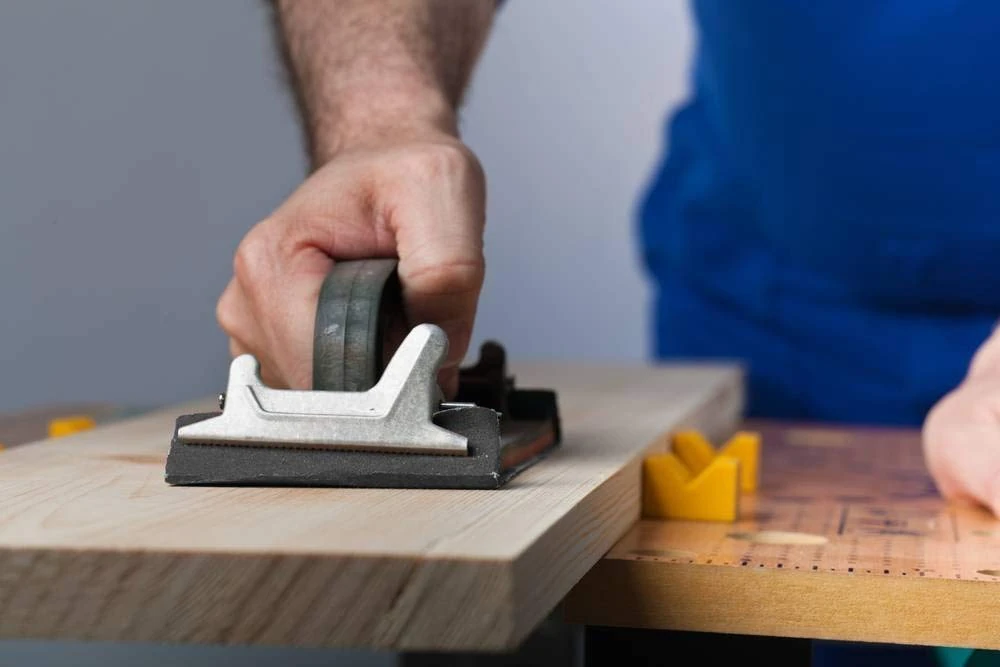
Quick Summary: Advancing grit too early leaves a mismatched scratch system that telegraphs under finish; use raking light, pencil grids, and consistent scratch removal percentages to decide when to move on.
What ‘Ready for Next Grit’ Really Means
“Ready” is not about overall smoothness—it’s about scratch uniformity and depth reduction. Each grit must fully replace the previous grit’s scratches with a shallower, consistent pattern. Coarse abrasives perform micro-plowing and fracture, cutting deep troughs that finer abrasives must flatten, not merely polish. If any deep scratches remain, finer papers will burnish the surrounding peaks and entomb those trenches for your stain or topcoat to highlight.
Key indicators of readiness:
- Uniform scratch direction and spacing: After switching grits, rotate your sanding direction 10–15 degrees (or switch from cross-grain leveling to with-grain refinement). When all older, differently oriented scratches are gone, you’re ready.
- No “outlier” grooves: Under raking light at 15–25 degrees, outliers appear as brighter or darker tracks that run against the dominant pattern. If you see any, you’re not ready.
- Consistent surface sheen: Wipe with mineral spirits or alcohol. A ready surface reflects evenly, without dull patches or darker micro-valleys.
Practical checks:
- Pencil grid: Lightly scribble a grid, then sand until all marks are removed at a consistent rate. If isolated pencil remains after the bulk is cleared, that area holds deeper scratches or low spots—do not advance.
- Scratch sampling: Work a 12-inch square to completion before committing the whole surface. Time each grit. If a finer grit isn’t removing the prior scratches within a reasonable multiplier (typically 1.2–1.5x the previous grit’s time for the same area), you moved up early or your paper is dull.
- Tactile test with a hard block: Drag a clean, flat sanding block with fine paper lightly across the surface. It should “skate” uniformly. Catching or “grabbing” often means remnants of deeper trenches or raised grain islands.
Avoid the two classic pitfalls: over-polishing too soon (which burnishes fibers and reduces finish adhesion) and undercutting too little (which leaves coarse striations). “Ready” is where none of the previous scratch family survives and the surface energy, visually and tactilely, is evenly distributed.
Reading the sandpaper grit chart in practice
Charts list particle sizes, but surface prep lives in how those numbers compound. The median particle sizes (FEPA P-scale) are useful guides: P80 ≈ 201 µm, P120 ≈ 125 µm, P180 ≈ 82 µm, P220 ≈ 68 µm, P320 ≈ 46 µm, P400 ≈ 35 µm, P600 ≈ 26 µm. Each step should reduce scratch depth enough to be economical without wasting time. A practical rule: jump by about 1.4–1.7x in particle size ratio. That means P80 → P120 (1.6x), P120 → P180 (1.5x), P180 → P220 (1.2x), P220 → P320 (1.5x). Larger jumps, like P80 → P180, can work on forgiving woods with aggressive orbit sanders, but they rely on perfect technique and fresh abrasives.
Interpreting the chart:
- Closed-coat vs open-coat: Open-coat grits shed dust better and resist loading on resinous woods and finishes, preserving cut rate. Closed-coat cuts a cleaner scratch on hardwoods for the same nominal grit.
- CAMI vs FEPA (P): Don’t mix them blindly in a single progression; P320 (FEPA) and 320 CAMI aren’t identical in cut or scratch morphology.
- Substrate sensitivity: Softwoods crush; hardwoods cut. On pine, avoid over-jumping after P120 or you’ll polish growth rings and trap low-density troughs. On tight-grained hardwoods, smaller steps above P180 pay dividends in stain uniformity.
Actionable tips:
- Standard wood workflow: Level at P80 or P100 only as needed, refine at P120, smooth at P150–P180, then close at P220–P320 depending on finish. For film finishes (varnish/lacquer), stopping at P180–P220 maintains tooth; for penetrating dyes, P220–P320 evens absorption.
- For painted or primed surfaces: After primer, use P220–P320 to flatten nibs; don’t jump straight to P400 unless the primer has fully leveled.
- For sealer sanding: Wait for full cure. Then scuff at P320–P400 with light pressure; larger jumps aren’t necessary because you’re not removing coarse wood scratches—just leveling dust and fibers.
- Track time per grit: If your P220 pass consistently runs long, your P150/P180 work is incomplete. Adjust at the earlier stage, not by over-sanding at P220.
Let the sandpaper grit chart set expectations, but let raking light, loading behavior, and cut-rate confirm the story in your hands.
Telltale Symptoms You Advanced Too Soon
Advancing too early produces a mismatch between the scratch depth you have and the scratch depth your current grit can efficiently remove. These are the most reliable signs:
- Zebra banding under raking light: Alternating matte and semi-gloss patches indicate uneven scratch families. The dull bands are valleys left by a coarser grit; the shiny bands are burnished plateaus from your finer grit.
- Persistent pigtails (ROS swirls): Random orbital sanders can emboss tight crescents when a single oversized grain or trapped chip rides under a disc. If pigtails persist beyond 60–90 seconds with a fresh finer grit on a 12-inch test area, you advanced prematurely or your disc is contaminated.
- Outlier trenches: Long, isolated grooves that ignore your new scratch direction. These often come from a stray grit particle or over-pressure at coarse stages. If visible after a few passes at the finer grit, step back.
- Stain telegraphing on samples: Apply dye to a sanded offcut. Dark veins that do not follow grain figure are usually residual coarse scratches; grayish dull halos are glazed regions from premature polishing.
- Heat and loading: When a finer grit immediately loads with dark, smeared dust, it’s burnishing rather than cutting. Coarser remnants are forcing the finer paper to rub, not slice.
- Inconsistent dust color or granularity: Coarse cutting yields heavier, coarser dust; as you refine, dust becomes lighter and talc-like. If you still produce gritty dust at P220+, you’re re-attacking deep features you should have resolved earlier.
Diagnostic workflow:
- Stop and isolate: Mark a 6x6 inch square around a problem zone and test whether one additional minute with the current grit meaningfully reduces the defect. If not, drop back one grit.
- Index and re-orient: When you step back, alter your sanding angle by 10–15 degrees and use a hard pad/block to address valleys without rounding edges.
- Verify with solvent wipe: Use mineral spirits or alcohol. If the defect line pops quickly when wet and vanishes when dry, it’s a topographic scratch and not a color artifact—you must cut it out.
By training your eyes to these patterns, you’ll prevent the expensive mistake of “polishing errors,” where you spend time at fine grits that cannot possibly correct coarse geometry.
Corrective Actions and Recovery Paths
When you’ve confirmed you moved up too early, recovery is a matter of re-establishing the correct scratch family with the minimum necessary backstep—no further. Drop one grit at a time and validate.
Recovery steps:
- Step back one grit: If P220 failed, return to P180. Change to a fresh disc and clean the surface thoroughly to remove rogue grains. Work a defined area in overlapping passes until all earlier scratches disappear under raking light.
- Use a harder interface: A firm pad or rigid sanding block promotes flattening versus contour following. Soft pads are great at P320+ for final blending, but they’ll skate over valleys you need to cut now.
- Crosshatch method: Sand with a light diagonal bias (e.g., 10 degrees off grain) for the corrective grit, then finish the same grit with the grain to confirm uniformity. This two-pass approach makes outliers obvious under light.
- Clean between grits: Vacuum, then tack with a lint-free cloth. A single stray P80 grain can spawn pigtails across your P220 pass.
- Control pressure and speed: Let the abrasive cut. Excess pressure dulls grains and slows removal. On a 5 mm orbit sander, aim for 10–12 seconds per linear foot at P180 for steady stock removal; prolong contact only if defects persist.
If finish is involved (e.g., sanding between coats), ensure full cure before stepping back or you’ll smear and load. Film finishes that aren’t fully hard will clog even P320 instantly. Penetrating oils can remain soft for days to weeks; test with a fingernail in an inconspicuous spot. If your substrate includes reactive finishes or oils, curing time dominates sanding behavior—scratch strategy alone won’t fix gummy drag. According to a article, raw linseed oil can take months to fully cure; sanding too soon only glazes the surface.
When spot-correcting:
- Feather, don’t dish: After removing the defect with the corrective grit, expand the blending zone one grit at a time to avoid creating a shallow depression that will telegraph under finish.
- Re-sample: Repeat your solvent preview and raking light check. If any banding or outliers remain, do not advance. The small time penalty now prevents exponential rework later.
Recoveries are fastest when you keep abrasives fresh, use the right pad stiffness for the task, and respect the geometry: cut valleys flat first, then polish peaks—never the reverse.
Process Control: Dust, Light, and Documentation
Most premature grit changes are process, not skill, failures. Control these variables and your decisions become clear and repeatable.
Lighting:
- Use raking light at 15–25 degrees. A movable LED bar or strong task lamp set low across the surface reveals scratches better than overhead lights.
- Switch viewing angles: Rotate the work or the light to cross-check. Some scratch families hide unless the light and sightline are offset.
Dust extraction and airflow:
- Maintain high CFM with a clean HEPA vac and an unclogged hose. A clogged pad interface or spent disc traps particles that cause pigtails and glazing.
- Check disc perforations: Align vacuum holes; misalignment reduces capture and allows swarf to recirculate under the pad.
Tooling parameters:
- Orbit size: 8 mm orbit removes stock faster but increases swirl risk at finer grits; 5 mm is a good all-rounder; 2.5–3 mm excels for final refinement.
- Pad hardness: Hard pads flatten; soft pads follow. Use hard/medium up to P180–P220; switch to soft only when you’re confident the topography is uniform.
- Pressure: The sander’s weight plus two fingers is enough. If your motor pitch drops significantly, you’re pushing too hard and dulling grains.
Inspection tools:
- 5–10x loupe or USB microscope: Correlate what you see at magnification with what appears under finish. This builds intuition for when a scratch is “shallow enough” to hand to the next grit.
- Scratch map: Keep a quick log—grit, time per square foot, defect notes. If P220 always requires excessive time, you know to extend P180 next session.
Actionable process tips:
- Use a pencil grid every grit change to prove uniform removal.
- Always rotate scratch orientation slightly between grits; then end each grit with-the-grain.
- Replace discs at the first sign of heat or glazing; a “cheap” fresh disc saves expensive minutes.
- Preview with mineral spirits or alcohol before advancing; never decide dry under overhead light.
- Standardize on one scale (FEPA P or CAMI) for a project to avoid inconsistent scratch behavior.
These controls transform sanding from guesswork into a repeatable workflow where the decision to advance is objective, fast, and validated.
How Do I — Video Guide
A helpful primer for newcomers to furniture refinishing walks through which grits to use at each stage, why you shouldn’t skip critical steps, and how to recognize when a surface is ready to move on. It demonstrates leveling, refinement, and pre-finish scuffing, tying visual checks to practical progression choices.
Video source: How Do I Sand Furniture? | Sandpaper Grit 101 - Know Which Grit to Use for Each Step of Your Flip!
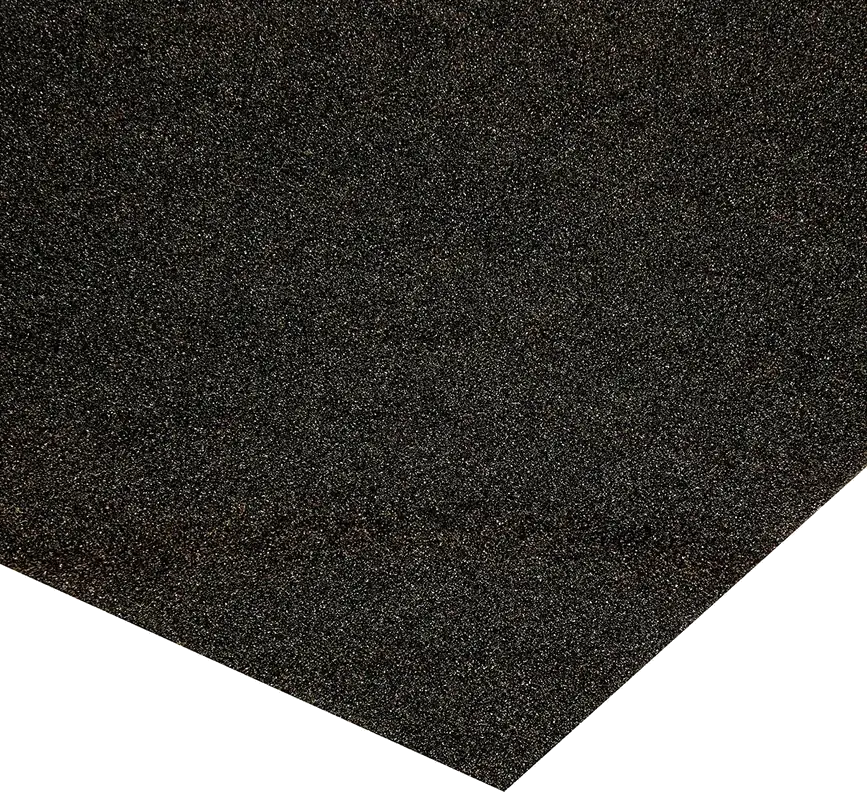
60 Grit Sandpaper Sheets (25-pack) — 9x11 in Silicon Carbide Abrasive for Wet or Dry Use — Extra-coarse Silicon Carbide abrasive for rapid stock removal and reshaping. Excels at stripping paint, smoothing rough lumber, or eliminating heavy rust on metal surfaces. (Professional Grade).
Frequently Asked Questions (FAQ)
Q: How do I know if I can skip a grit without risking defects?
A: Only skip when your current grit removes all prior scratches quickly and cleanly and your next grit has sufficient bite to erase the new pattern within a normal time window. Validate by finishing a small test area under raking light and solvent wipe. If removal time at the finer grit spikes or outliers persist, don’t skip.
Q: Why do swirl marks appear at P220 and finer even when the surface looks good dry?
A: Fine grits can burnish peaks, masking deeper troughs. Under dye or finish, the troughs telegraph. Also, a single rogue particle trapped under a disc can emboss pigtails invisible when dry. Clean between grits, replace discs early, and inspect under raking light with a solvent preview before advancing.
Q: Should I sand to P320 or stop at P180–P220 before staining?
A: For oil-based stains, P180–P220 maintains absorption and yields even color. For waterborne dyes or when chasing ultra-smooth film finishes, P220–P320 can even out surface energy. Always run a scrap test matched to your schedule and product.
Q: What’s the fastest way to recover from a bad grit jump on a big tabletop?
A: Isolate a one-square-foot area, step back one grit with a hard pad, crosshatch until all prior scratches disappear, and time the pass. If the time is excessive, you may need to drop an additional grit. Only then scale the method across the top, verifying under raking light every few feet.
Q: Can wetting the surface help decide when to move up a grit?
A: Yes. A light wipe with mineral spirits or denatured alcohol temporarily increases contrast, revealing residual scratches and low spots. If the sheen is uneven or distinct lines pop, stay on the current grit. Ensure full evaporation before continuing to sand.