
Hybrid Stacks: Ceramic Sanding Discs then SiC Finish
The shop’s still cool when I flip the lights and crack the door for that first line of dawn air. Coffee down, vac on, sander in hand—today’s a maple slab that’s cupped like a canoe and freckled with epoxy fills. I’ve lost hours in the past chasing flatness and finish, switching abrasives blindly, glazing a disc, then overcorrecting and digging a trench that shows up the second I wipe with mineral spirits. You’ve probably been there too: the hum of the sander rising, the pad warming your palm, swirls appearing from nowhere once the finish hits. It’s the moment that turns a good day in the shop into a rework shift.
What changed my rhythm? A simple, reliable system I now teach to every tech and DIYer I train: a hybrid stack—shape aggressively with ceramic sanding discs, then finish with silicon carbide (SiC). The first time I ran this order end to end on a walnut tabletop, the scratch story made sense. Ceramic took the high spots down without bogging or burning, then SiC closed the grain and refined the scratch to a level that wiped perfectly clean under raking light. Same on an aluminum bracket with a weld bead: ceramic to break and flatten, SiC to chill the heat and brighten the sheen.
I’ve used this stack on hardwoods, stainless, powder coat, body filler, and epoxy pours. It’s not magic; it’s mechanics. Ceramic grains keep cutting as you lean in—they micro-fracture and stay sharp under pressure—while SiC is friable and crisp, slicing a cleaner, shallower valley that translates to a finer, colder finish. Once you get the hang of grit choices, backing pads, and pressure control, your scratch patterns become predictable. That means fewer “oh no” moments at the end and more projects that go straight to finish without detours. Pull up your stool—I’ll walk you through the exact playbook I use in the shop, from grit maps to dust control and real-world workflows that make this hybrid approach pay off every time.
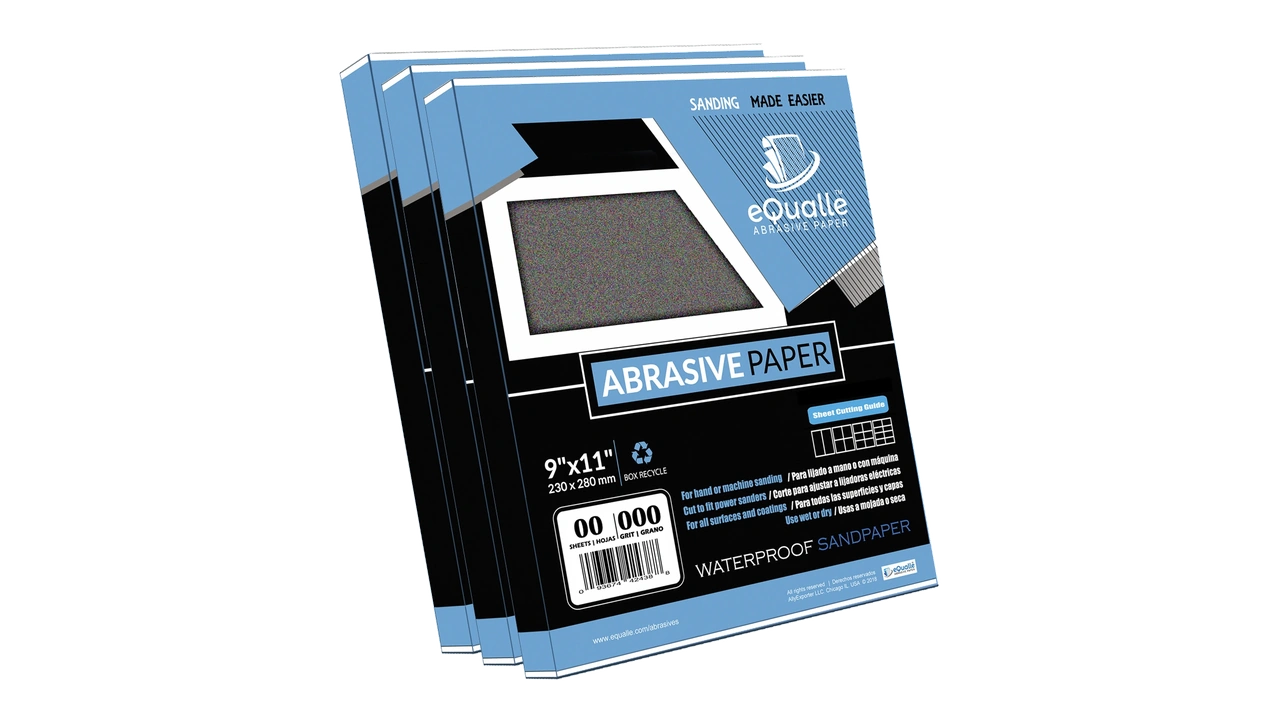
Quick Summary: Shape with ceramic to move material fast and cool, then switch to SiC to refine the scratch and lock in a consistent, low-heat finish across woods, metals, and coatings.
Why a Hybrid Stack Works
Ceramic and silicon carbide aren’t interchangeable—they’re purpose-built for different stages of the job. Ceramic alumina grains are tough and engineered to micro-fracture under pressure, constantly exposing fresh edges. That’s why ceramic sanding discs keep their bite in heavy cuts, even as heat and force rise. They thrive on pressure and speed; give them contact and they’ll level cupping, knock down epoxy proud of wood, and chew weld crowns with minimal loading.
SiC, by contrast, is hard and brittle. The grain’s geometry and friability create a sharper, more pointed cut. Instead of plowing like a dull wedge, SiC leaves a tighter, shallower scratch valley. That’s gold for finishing: fewer deep scratches to chase, lower surface temperatures, and a brighter or clearer surface under finish or polish. It’s why SiC is the go-to on glass, stone, and between-coats scuffing—it shears instead of smearing.
The hybrid sequence leverages those strengths. Ceramic first to control shape: flatten, pull down high spots, and align the surface. SiC second to refine: close the scratch pattern, reduce fuzzing on open-grain woods, brighten metals, and prep for sealers or paint. Heat management plays a big role. Ceramic’s efficiency means fewer passes to target thickness, which reduces overall heat soak. When you swap to SiC, its cooler cutting action trims the peaks without rewarming the substrate. That temperature discipline prevents glue joints from creeping, keeps resins from smearing, and avoids the bluing or warping that shows up later.
One more mechanic: scratch orientation. On broad panels, I’ll skew the sander slightly with ceramic to align the initial scratch, then cross-sand at a mild angle with SiC. The micro-scratch checkerboard disguises any lingering directionality, so finish light catches evenly. Hybrid stacking isn’t about owning more discs—it’s about handing the right tool the right task, so your final surface is calmer, cleaner, and faster to seal.
Dialing Grits: Ceramic Then SiC
Let’s put numbers to the method. The exact grits depend on substrate, tool, and desired finish, but these progressions will keep you out of trouble.
Hardwoods and plywood veneers
- Shape: 60 or 80 grit ceramic until flat and consistent. Don’t leave until all witness marks from prior tooling are gone.
- Refine: Jump to 120 SiC, then 150/180 SiC. Stop at 180 for film finishes or 220 for oil. Open-grain woods (oak, ash) often look best stopping at 180 to avoid sealing pores shut.
Epoxy over wood, or resin-heavy surfaces
- Shape: 80 ceramic to knock proud resin flush; touch 120 ceramic if needed to remove 80’s deep marks.
- Refine: 180 SiC, 220 SiC. For high-gloss pours, continue with 320/400 SiC before polishing compounds.
Metals (aluminum, mild steel, stainless)
- Shape: 60 ceramic for welds or heavy scale; 80 ceramic for general flattening.
- Refine: 120 SiC, 220 SiC. For a brushed look on stainless, finish with 320 SiC and a straight-line pass using a hard pad or belt.
Primers, fillers, and clear coats
- Shape: 80 ceramic on cured filler (light pressure), 120 ceramic on primer build.
- Refine: 220 SiC, then 320/400 SiC for clear prep, always with low pressure and clean abrasives.
Actionable tips:
- Don’t skip grit more than 50% when switching families. 80 ceramic to 120 SiC is a safe jump; 60 to 220 is asking for ghosts.
- Time your passes: if 80 ceramic needs three slow passes to clear a pencil grid, 120 SiC should need roughly two lighter passes to erase the 80’s scratch, no more.
- Use your light: raking LED at 20–30 degrees across the surface tells the truth about remaining valleys. Move on only when the scratch is uniform.
- Keep a “witness strip”: tape off a 1-inch lane; remove the tape between grits to reveal whether the previous grit’s scratches are truly gone.
Switching at the right moment matters. If you’re still out-of-flat, stay with ceramic; SiC isn’t meant to bulldoze. If you’re flat but fuzzy or showing heat haze, you waited too long to swap—drop to SiC sooner and lighten up your pressure. On sensitive veneers, keep ceramic in the 100–120 range and cut your dwell time; let SiC handle most of the refining to avoid cutting through.
Choosing ceramic sanding discs for the job
All ceramic sanding discs aren’t equal. Backing, coat type, and hole pattern control how they cut, run cool, and survive in your workflow. In the shop I treat them like cutting tools; select for the material, not just the grit.
Start with backing. Paper (C- or D-weight) is flexible and cost-effective for wood; film backings track flatter on metals and leave more consistent scratch. Fiber discs on a 4.5" grinder move serious stock on welds—pair with a hard backing plate—but they’re less forgiving on thin sheet. Mesh-backed ceramic discs shine for dust extraction on drywall, plaster, and high-load woods; the full-surface airflow keeps the grain clear and temperatures down.
Coat matters. Open-coat ceramic helps prevent loading in resinous woods; a stearate topcoat further reduces clogging when you’re scuffing finishes or working soft materials. Closed-coat ceramic bites harder into metals and dense hardwoods. If you hear the sander skate or see rapid glazing, you either have the wrong coat for the job or your pressure is off.
Interface pads and hooks are not afterthoughts. Hard pads keep the face flat on metals and slab flattening. Soft or waffle interfaces conform to profiles and reduce pressure points on veneers and painted panels. Choose disc diameter to match your footprint: 5" for control on edges, 6" for faster panel work, 9" mesh discs on drywall sanders for walls and tables that welcome a wide footprint.
A note on stroke and RPM: pairing aggressive ceramic with a long-stroke (5–7 mm) sander increases cut, while a short-stroke (2.5–3 mm) paired with SiC refines without chattering. Ceramic wants speed and pressure; SiC wants finesse and cleanliness. Keep both families in your drawer, but deploy them intentionally.
According to a article
Selection checklist I use:
- Backing: film for metals and flatness; paper or mesh for wood and dust-heavy work.
- Coat: open-coat with stearate for resinous or painted surfaces; closed-coat for dense stock and metals.
- Venting: multi-hole or mesh for extraction; solid for grinders with dedicated fiber discs.
- Pad hardness: hard plate for flattening and welds; soft interface for contours and final passes.
Shop Setups for Dust and Heat Control
You can have the right discs and still lose the finish to dust and heat. Control those two, and your hybrid stack really sings.
Dust extraction is non-negotiable with ceramic. It’s not just lung safety; it keeps grain edges open so ceramic can self-sharpen instead of smearing. Match your disc’s hole pattern (or go mesh) to a vac with consistent static pressure. I run a 6" ROS with a HEPA vac, auto-start, and a smooth bore hose to prevent “whip” at the pad. On mesh discs, zero hole alignment means airflow across the entire face—huge for drywall, plaster, and resin-heavy wood.
Heat is a sneaky finisher-buster. On metals, a quick-touch test lies; use an IR thermometer or watch the color of the swarf. Blueing means you need a cooler cut: reduce pressure, increase extraction, or switch sooner to SiC. On wood and epoxy, a “sweet” smell or tack on the disc means resin is mobilizing—back off and clean the disc, then lighten your hand.
Actionable tips:
- Duty cycle your heavy cuts. With 80 ceramic on a grinder, run 45–60 seconds, then air-cool the part or mist with a denatured alcohol spritz (away from sparks). Overheating warps thin metals and prints heat checks into finishes.
- Clean discs between passes. A gum rubber cleaning stick or a quick blast from the compressor pulls resin and dust off, extending the disc’s effective life.
- Keep spare interface pads. A loaded or heat-curled interface transfers swirls; swap it when it gets shiny or wavy.
- Map your vac settings. Too much suction can “suction cup” the pad and restrict movement; use the vac’s bleed or sander regulator to balance glide with extraction.
Finally, manage edges. Ceramic cuts fastest at the disc’s perimeter—great for welds, dangerous for thin veneer. Float the pad flat and let extraction lift a hair of weight off. When you switch to SiC, go lighter still; let the grain do the refining, not your forearms.
Real-World Workflows on Wood, Metal, Auto
Let’s run a few shop-proven workflows using the hybrid stack so you can mirror them tomorrow.
Flattening a maple tabletop with epoxy fills
- Pencil-grid the surface. Start with 80 grit ceramic on a 6" ROS and a hard pad. Work overlapping lanes until the grid is uniformly gone. Clean the disc every lane.
- Verify flatness with a straightedge and raking light. If faint router-track lows remain, take a second, lighter pass with 120 ceramic—don’t overstay.
- Switch to 150 or 180 SiC with a medium pad. Two light passes cross-lapped at 20 degrees, then a final pass with the grain. Stop here for film finishes; go to 220 SiC for oils.
Dressing a 304 stainless weld on a handrail
- Knock the crown with a 60-grit ceramic fiber disc on a grinder and a hard backing plate. Keep your travel moving; don’t plant in one spot.
- Blend the HAZ with 80 ceramic on a 5" ROS, hard pad. Watch heat—alternate sides if possible.
- Swap to 120, then 220 SiC on a short-stroke sander to align the blend. Finish with 320 SiC Scotch pad equivalent if you want a directional brush.
Leveling body filler and prepping primer for paint
- After rough shaping with a sanding block, run 80 ceramic on a DA to level filler high spots. Keep pressure even; avoid dishing.
- Apply primer build. Block sand with 120 ceramic to reveal highs and lows; stop when the guide coat disappears consistently.
- Switch to 220 SiC for surfacing, then 320/400 SiC for clear-coat prep. Light pressure, clean discs, and vacuum on. If in doubt, stop early and wipe with a cleaner to check scratch.
Scuff-sanding cured epoxy for a high-gloss polish
- 120 ceramic to remove nibs and ripples. If orange peel is deep, start at 80 ceramic with a quick pass.
- 220, 320, 400 SiC sequentially, each with a clean pad. Wipe between each grit to catch stragglers.
- Proceed to 800/1000 SiC wet, then polishing compounds. The hybrid start keeps heat low and scratch uniform for a truer final gloss.
Common mistakes to avoid:
- Skipping from a coarse ceramic directly to a very fine SiC. You’ll chase ghosts you can’t see until finish goes on.
- Bearing down with SiC as if it’s ceramic. You’ll flatten the grain edges and smear resins; lighten up and let SiC slice.
- Running clogged discs “just a little longer.” That heat spike will telegraph as swirls or halos under clear coats.
Norton MeshPower 9" — Video Guide
Earlier this week, Mark Wilson from our sister team at AMES Taping Tools sat down with Jevaris from Norton Abrasives to break down 9-inch mesh-backed ceramic discs—why they cut fast, how the open mesh evacuates dust, and what that means for drywall, plaster, and large-panel sanding. They cover how mesh designs solve hole-alignment headaches and keep abrasives cooler and cleaner, plus practical setup advice for pairing discs with vacuums and wide-footprint sanders.
Video source: Norton MeshPower 9" Ceramic Sanding Discs
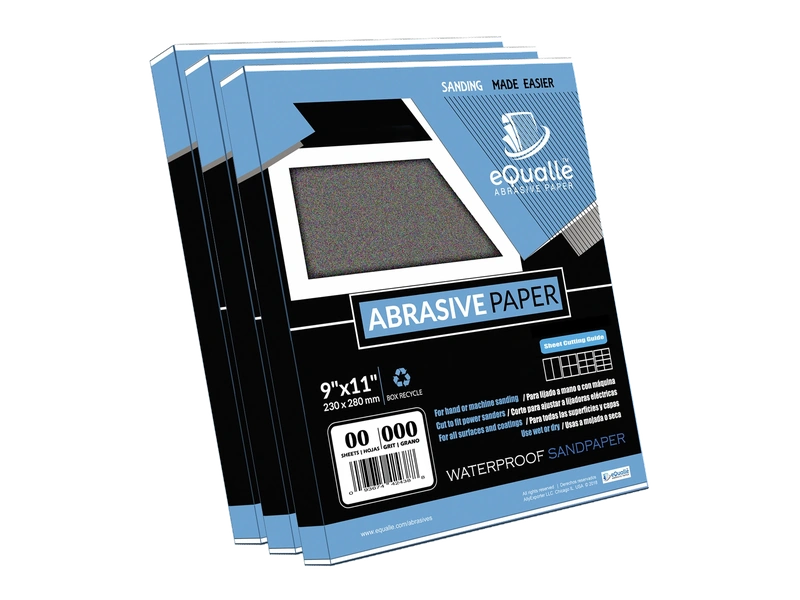
2000 Grit Sandpaper Sheets (50-pack) — 9x11 in Silicon Carbide Abrasive for Wet or Dry Use — Precision polishing grit designed to remove haze and restore clarity to clear coats and high-gloss automotive paint. (Professional Grade).
Frequently Asked Questions (FAQ)
Q: Why start with ceramic and finish with SiC instead of the other way around?
A: Ceramic thrives under pressure and removes material quickly without glazing, so it’s ideal for shaping. SiC’s sharper, friable grain refines the scratch and runs cooler, producing a cleaner finish that’s ready for sealing, paint, or polish.
Q: Can I finish with ceramic only if I don’t have SiC on hand?
A: You can, but expect a slightly deeper, more visible scratch at equivalent grits. If you must stay with ceramic, add an extra intermediate grit (e.g., 80→120→180→220) and lighten pressure significantly on the last passes to minimize scratch depth.
Q: Does SiC work well on metals, or is it just for wood and coatings?
A: SiC excels at refining metals because it cuts cool and leaves a bright, tight scratch. Use ceramic to remove scale or welds, then switch to 120–320 SiC to blend and prep for a brushed or polished finish without overheating thin sections.
Q: Mesh discs versus multi-hole paper—what should I use?
A: Mesh offers full-face extraction, great for drywall, plaster, resinous woods, and general dust control. Multi-hole paper or film can track flatter on metals and fine finishing. For hybrid stacks, many pros run ceramic in mesh for aggressive, clean cutting, then SiC on film or fine mesh for uniform refinement.
Q: How do I know when to switch from ceramic to SiC?
A: When the surface is flat and uniform and you’re no longer removing significant material—confirmed by a clean pencil grid and consistent scratch under raking light—swap to SiC. If heat rises or resin smears, you waited too long; switch earlier and reduce pressure.