
Hand Block vs Foam Pad at 3000 Grit with Wet Dry Sandpaper
A quiet Saturday morning. The car sits under a soft blanket of light in the garage, coffee warming your hand while a fine mist of water beads on the quarter panel. You can trace every reflection in the clear coat, but you also see it—the subtle texture that steals depth from the shine. This is the moment 3000 grit is made for: not heavy correction, but refining the surface until it looks liquid. You unroll your hose, set out your towels, and face a familiar decision. Do you reach for a traditional hand block for tactile control? Or do you grab a foam pad that glides over curves and spreads pressure more forgivingly? When you’re working with wet dry sandpaper at this level, the choice can be the difference between a perfect finish and chasing new marks.
If you’ve ever sanded by hand and marveled at the control only to struggle near a complex curve, you’re not alone. Conversely, a foam pad can make edges safer—but also too soft if you need to flatten minor orange peel. At 3000 grit, the stakes feel lower than at coarser stages, but the truth is your base is set long before compound hits the panel. Today, we’ll unpack what 3000 grit really does, where a hand block outperforms, where a foam pad is a clear win, and how to combine both for the fastest path to a swirl-free, even surface. Whether you’re finishing automotive clear, polishing plastics and headlights, or refining lacquered wood, a measured approach with the right tool and wet dry sandpaper will help you cross the finish line with confidence.
Quick Summary: Use a hand block at 3000 grit for flatness and precision; use a foam pad for curves and safety—combine both with light pressure, clean water, and short, controlled passes.
What 3000 grit really does
By 3000 grit, you’re not cutting; you’re refining. The goal is to turn previous sanding marks—often from 1500–2000 grit—into a uniform, shallow haze that compounds can remove quickly. Think of it as pre-polish shaping: you’re not reshaping the panel, you’re evening out the micro-topography so the polish spends its time on shine, not correction.
On a flat hood or fender, a consistent 3000-grit finish reduces rotary or DA polishing time and lowers heat risk. It also decreases the need for aggressive compounds that can leave haze in dark colors. On curved bumpers, mirror caps, or sculpted rocker panels, 3000 grit is where you “blend” the surface so transitions feel smooth, not stepped.
A few truths about this stage:
- 3000 grit is safer, not safe. You can still burn edges and thin clear coat, especially on sharp bodylines or thin plastics.
- Water is not optional. Using 3000 grit dry invites loading and random deep scratches. Keep a gentle spray or mist going.
- Pressure matters more than you think. More pressure doesn’t mean faster refinement—it just creates directional marks that are harder to remove.
A typical workflow is 1500/2000 grit for leveling and defect removal, then 3000 grit for refinement, followed by compound and polish. If you’re working on soft clears, cured lacquer, or delicate plastics, 3000 can serve as your only sanding step before a fine compound. The better your 3000-grit uniformity, the quicker you’ll reach a mirror finish—often with one less polishing step.
Hand block vs foam pad: feel and physics
The difference between a hand block and a foam pad comes down to two variables: contact patch and feedback. A hand block (rigid or semi-rigid) concentrates pressure over a flatter plane. That’s ideal for keeping surfaces honest—flattening minor orange peel, aligning your scratch pattern, and maintaining edge discipline. With a block, your fingers don’t “telegraph” into the surface, which helps avoid scallops and waves.
A foam pad (especially a soft interface pad on a DA, or a handheld foam sponge) spreads pressure and conforms to contours. This is an advantage where curves and transitions dominate, because the pad hugs the shape rather than forcing flatness. The trade-off is that highly compliant foam can round off edges and fail to knock down micro high spots—fine for safety, not for flattening.
Here’s how that plays at 3000 grit:
- Flat panels and glossy materials that show everything (black automotive clear, piano black plastics, high-gloss lacquer): favor a hand block to achieve straight, uniform strokes. Your polishing steps will be faster and more predictable.
- Complex curves, compound shapes, and sensitive edges (bumpers, spoilers, headlight domes): favor a foam pad to distribute pressure and reduce strike-through risk. You’ll create a uniform haze without cutting peaks aggressively.
- Mixed panels: start with a block on the flats, then switch to foam for curves and edges. This blended approach delivers both flatness and safety.
As you decide, consider your clear coat thickness, previous sanding steps, and the paint system’s hardness. Hard clears tolerate a slightly firmer interface; soft clears benefit from more forgiveness. Either way, 3000 grit rewards restraint: let the abrasive do the work, and lead with control over speed.
Dialing in 3000 grit with wet dry sandpaper
At this refinement level, technique is the multiplier. Pairing the right backing with wet dry sandpaper helps you maintain a consistent scratch, limit loading, and avoid surprise trails that show up under bright light.
- Lubrication: Use clean water with a drop of soap or a dedicated sanding lubricant. Re-wet the panel every 2–3 passes. Replace slurry-soaked towels frequently.
- Stroke discipline: Sand in short, overlapping passes (about one-third overlap). Change direction between sets—crosshatching improves uniformity and visibility of missed zones.
- Inspection rhythm: Every 6–8 passes, squeegee and inspect under strong, raking light. If earlier grit marks are still visible, don’t push harder—go back to the previous grit briefly, then return to 3000.
Actionable tips for real-world results:
- Keep your 3000-grit media fresh: If it stops cutting or drags, replace it—spent abrasives burnish rather than refine.
- De-tune edges: Add one extra layer of tape on panel edges and sharp bodylines. Unload pressure as you cross them.
- Pre-lap foam pads: Work them for 10–15 seconds on a wet test surface to remove manufacturing residue before touching your project.
- Mark your work: With a wax pencil, grid the panel lightly. Erase your marks as you sand—helpful for even coverage without overworking zones.
- Measure, if possible: A simple paint thickness gauge can warn you away from thin areas before you sand them.
As you evaluate products, you’ll encounter foam-backed discs, sanding sponges, and sheet abrasives labeled for wet/dry use. Each has its place. According to a article, compact 3-inch wet/dry sanding sponges are popular for fine, controlled work on models, plastics, and spot refinements—perfect when a large pad feels clumsy. The key is matching tool to task: a soft sponge for curved trim, a semi-rigid hand block for flat, high-visibility panels, and a foam interface pad on a DA when you need speed with a gentle touch.
Edges, curves, and risk management
Edges are where most sanding regrets begin. Clear coat is thinner on ridges and sharp transitions, and even 3000 grit can abrade faster than you realize. Prioritize four guardrails to keep you in the safe zone while still achieving a refined finish.
- Tape and approach: Mask edges with high-quality tape, adding an extra wrap on the sharpest lines. Sand up to, not over, the tape with your block. When it’s time to blend, switch to a foam pad and feather lightly across the transition.
- Tool angle: Keep your block or foam pad flat to the surface. Nose-down angles compress the abrasive into a small point of contact and can “dig.” Let the surface shape dictate pad tilt—not your wrist.
- Pressure zoning: On curves, your pad naturally concentrates toward the outside radius. Counteract that by decreasing pressure as you cross curves. With a block, this may mean lifting slightly at the apex; with a foam pad, it may mean slowing your pass and widening your overlap.
- Time-in-zone: Curves and edges get less time, not more. If you’re struggling to even the haze near a contour, step back: you may be trying to correct a leveling issue with a refinement tool. Return briefly to a previous grit with a firmer block, then finish again with 3000 grit.
On plastics like headlights, the same rules apply—but heat adds another variable. Keep your media and surface wet, reduce stroke length, and extend your inspection intervals. For guitar bodies or lacquered furniture, treat edges with the same care you’d give a fender line; tape is your friend, and a foam pad is usually the safer finisher.
Finally, remember confirmation bias: the moment you “see” uniformity, your brain wants to be done. Counteract that by inspecting under a second light source or changing your viewing angle. Uniform haze now means fast, clean polishing later.
From sanding to shine: the next steps
A great 3000-grit finish shortens the path to gloss. Your polishing plan should complement the defects you just created—uniform, shallow marks that respond quickly to a moderately aggressive compound, followed by a fine polish.
A common two-step on automotive clear after 3000 grit is:
- Medium-cut compound on a low-to-medium aggressiveness pad (microfiber or medium foam), slow-to-medium machine speed, moderate pressure at first, tapering to light pressure to finish each section.
- Finishing polish on a soft foam pad, lower machine speed, very light pressure, working longer cycles for clarity rather than cut.
On harder clears, you may still need a stronger compound first, but your 3000-grit prep allows you to finish cleanly. On softer systems, you might jump straight to a fine polish, especially if your 3000-grit scratch pattern is impeccable.
For plastics and wood, heat control matters as much as pad choice. Shorter cycles, more frequent pad cleaning, and cooler pads help prevent re-hazing or swelling. Cleanliness is power: rinse your panel between steps, blow out pads with compressed air or wash them regularly, and keep compound dust off the surface you’re trying to perfect.
Two quick diagnostics:
- If you see faint directional lines after your first compounding set, your 3000-grit coverage was uneven. Revisit the area with 3000 grit briefly using the correct backing—block on flats, foam on curves.
- If you’re chasing random deep marks that won’t clear, you likely trapped debris under your abrasive. Replace media, rinse everything, and check your towels.
With sound sanding discipline and a measured polishing plan, the time you spend at 3000 grit pays off twice: less correction needed now, and less haze to clean up later.
When to pair 3000 grit with wet dry sandpaper
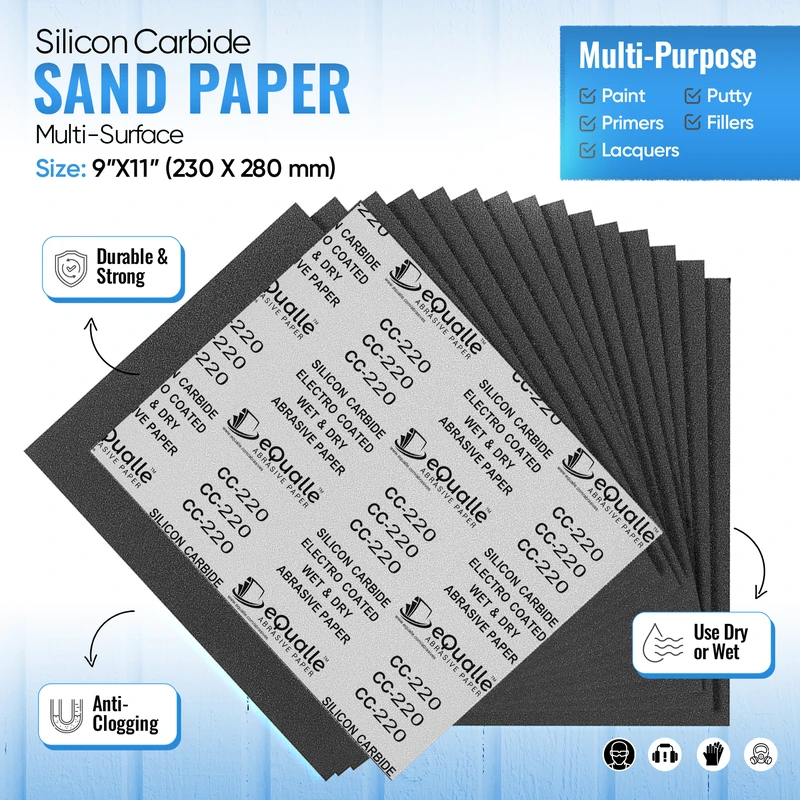
You can certainly dry sand at higher grits, but wet sanding at 3000 offers two practical advantages: cleaner cuts and cooler surfaces. Wet dry sandpaper is engineered to resist disintegration in water, float away debris, and minimize loading—all of which produce a cleaner, more uniform scratch. That means faster polishing and fewer mystery marks under inspection lights.
Choose wet sanding for:
- Dark colors, piano blacks, and glossy plastics that reveal even faint trails.
- Heat-sensitive materials (headlights, acrylics, thin clear coats) where temperature spikes risk haze or distortion.
- Situations where dust control matters—home garages, small shops, or multi-use spaces.
Choose dry sanding for:
- Quick spot refinement where water management is impractical.
- Early test passes to “map” defects before a full wet workflow.
- Environments where electrical safety is a concern around water.
Technique shifts slightly with water involved:
- Keep a steady, light mist—standing puddles reduce feedback; too little water raises friction.
- Wipe or squeegee between sets to actually see progress. Milky slurry hides defects.
- Ventilate well and towel-dry panel gaps to avoid trapped moisture.
If you’re working by hand, wet sanding also prolongs the life of your sheets or discs. On a DA with a foam interface, water smooths vibration and helps the pad glide—especially useful on complex surfaces. Keep towels and compressed air close to clear residue off edges and trim, and you’ll preserve that crisp, factory look even as you refine the final 5% of the finish.
Gator Finishing Auto-Zip — Video Guide
A short overview video highlights compact wet/dry micro-sanding kits sold through common auto parts retailers. The presenter opens a kit, shows the range of foam-backed grits, and demonstrates how the small, flexible forms reach tight spots without digging in.
Video source: Gator Finishing Auto-Zip Wet/Dry Sand Kits!!!!
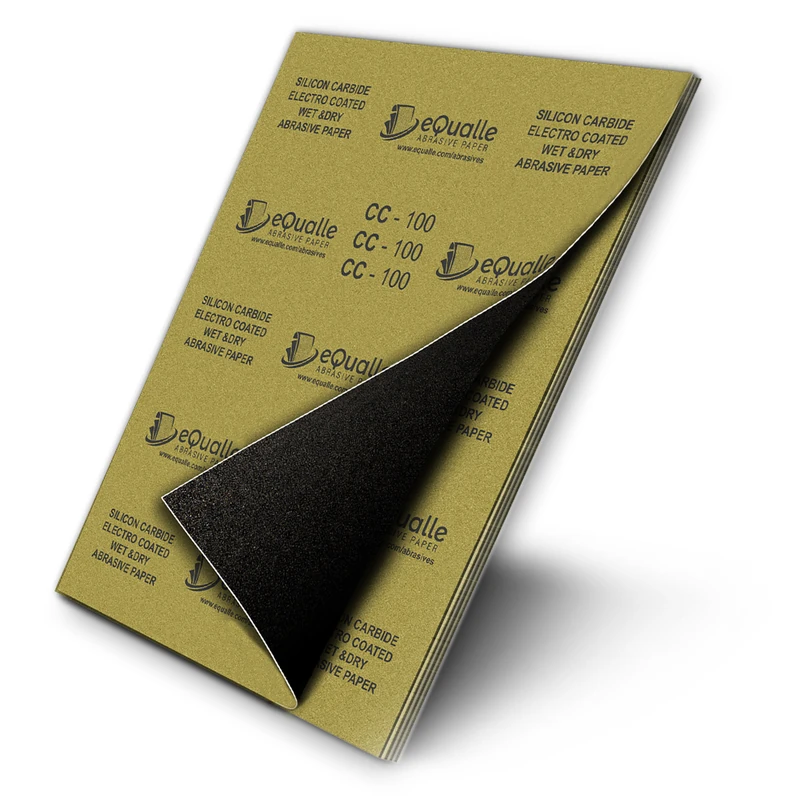
60 Grit Sandpaper Sheets (10-pack) — 9x11 in Silicon Carbide Abrasive for Wet or Dry Use — Extremely coarse Silicon Carbide abrasive for rapid material removal and shaping. Ideal for stripping paint, smoothing rough lumber, or cleaning rusted metal. Suitable for wet or dry sanding, it prepares surfaces for smoother grits like 80 or 100. (Professional Grade).
Frequently Asked Questions (FAQ)
Q: Should I finish at 2000 or 3000 before polishing?
A: If time allows, finish at 3000. It creates a shallower, more uniform scratch that polishes faster and with less heat. On very hard clears, 2000 may be fine, but 3000 typically saves time overall.
Q: When is a hand block better than a foam pad at 3000 grit?
A: Use a hand block on flat, high-visibility areas where you want straight, consistent refinement and the ability to gently level micro high spots. It provides better feedback and keeps your surface true.
Q: When is a foam pad the safer choice?
A: On curves, edges, and complex shapes. A foam pad distributes pressure and conforms to contours, reducing the risk of strike-through and uneven cutting. It’s ideal for blending around bodylines and trim.
Q: Can I dry sand with 3000 grit?
A: Yes, but wet sanding with wet dry sandpaper generally delivers a cleaner, more uniform scratch and better temperature control. If you dry sand, clean abrasives frequently and inspect more often.
Q: How much pressure should I use at 3000 grit?
A: Light, even pressure—just enough to keep the abrasive engaged. Let the grit do the work. If progress stalls, refresh your media or revisit the previous grit briefly rather than pushing harder.