
Glass Sanding and Final Polishing Options
You notice it at odd times—the way sunlight catches on a faint swirl in a windowpane, the soft haze on a cherished vase, the hairline arcs on a glass tabletop where a key once skittered. Maybe it’s the bathroom mirror that never quite looks “clean,” no matter how you wipe, or the aquarium panel that robs the fish of their color. Living with glass means living with light, and light has a way of making every imperfection visible. Still, it’s not just about looks. For many of us, fixing a piece of glass is also about giving shape to our care: preserving a family heirloom, restoring a work surface we use daily, or simply taking pride in the details of our space.
That’s where a methodical approach to finishing comes in. Glass sanding may sound intimidating at first—sandpaper and glass aren’t an obvious pairing—but when done deliberately, it’s the step that evens out subsurface defects so the final polish can do its job. Think of it as moving from coarse to fine storytelling: first, you correct the big narrative problems (scratches and chips); then, you refine the sentences (polishing) until the clarity returns. The goal isn’t just sheen; it’s optical quality without distortion and without the “lens” effect that can appear when you overwork a localized area. Whether you’re considering a DIY fix on a coffee table edge or planning a more technical refresh on a window, you have options—from matte to glossy, from hand-worked details to machine-polished expanses. In the guide ahead, I’ll help you map those options to your needs, with tools, compounds, workflows, and safety essentials laid out so you can proceed with confidence and care.
Quick Summary: Achieve distortion-free results by using a controlled grit progression for defect removal, then match a polishing compound, pad, and machine speed to your target finish.
From Haze to Clarity: What Polishing Does
Final polishing restores the way glass transmits and reflects light by removing, not merely hiding, micro-scratches and shallow pits. At a microscopic level, scratches have edges that scatter light, creating haze or visible lines. Polishing smooths those edges and levels the field so light passes cleanly through or reflects predictably without diffusion. This matters for everything from tabletops and mirrors to display cases and aquariums, where even slight distortion can be distracting.
There are two main approaches to finishing the surface. One is topical polishing, where you use a fine compound to clear minor water spots, wiper marks, or light scuffs. This is effective when defects sit at or near the surface and haven’t created deep valleys. The other is sub-surface correction, which pairs sanding with polishing to remove deeper scratches by flattening the surrounding area first. The choice depends on defect depth and your tolerance for visual change. Topical polishing can deliver quick clarity for mild issues; sub-surface work is the precise route when you can catch a scratch with a fingernail.
Compounds do the heavy lifting in the final stage. Cerium oxide is the classic choice for glass because its chemistry interacts with silica to enhance mechanical abrasion and yield a bright, clear finish. Diamond-based polishes, available in pastes or suspensions at graded microns, offer a more aggressive but controllable cut for technical work or heavily tempered surfaces. Colloidal silica slurries can refine to an optical level on smaller parts like lenses or watch crystals, though they require careful handling and patience.
How you deliver the polish matters. Felt or rayon pads concentrate the compound and maintain contact, while a rotary or dual-action (DA) machine determines the motion. Rotary tools cut faster but require steadier hands to avoid creating heat and distortion. DA machines are more forgiving but may add time. The ultimate aim: a uniform, blended correction that reads as invisible in natural light from multiple angles.
Where Glass Sanding Fits in the Process
Glass sanding sits between assessment and polishing. If a scratch is shallow enough that your nail glides over it, you might jump straight to a fine polish. If your nail catches—even slightly—sanding is your friend. It removes material uniformly around the defect, turning a deep, narrow groove into a broader, shallower depression that a polish can then erase.
Three principles govern successful sanding. First, start with the least aggressive grit that will cut the defect, then step up in consistent increments. For most work, that means beginning around P400–P600 for pronounced scratches, P800–P1000 for moderate scuffs, and P1500–P2000 for light marks, always working wet to control dust and heat. Second, keep the area broad and your edges feathered. Localized sanding can create a slight dish, visible as a magnifying spot once polished. Mask a generous oval around the defect with low-tack tape to remind yourself to blend your strokes several inches beyond the scratch. Third, confirm each stage. Before moving up a grit, dry the area and inspect under a bright, raking light. If you still see lines from the coarser grit, you aren’t ready to progress.
Wet sanding protects you and the glass. Use distilled water with a drop of dish soap or a splash of glycerin to lubricate the abrasive and keep swarf suspended. A firm but cushioned backing pad prevents edge-digging; a rigid block is risky on curved surfaces, while an unbacked sheet can leave uneven pressure. On vertical panes, keep a spray bottle handy and work in small sections to prevent drying.
Machine sanding can increase consistency but raises the stakes on heat. A DA sander with interface foam and hook-and-loop films allows controlled pressure and overlap. Keep the tool moving and the surface wet; pause often to cool and check your work. When in doubt, slow down. The time you “save” with an aggressive grit or fast machine is easily lost correcting a dish or haze later.
Choosing Compounds, Pads, and Tools
Your final polish depends on three choices working in concert: the abrasive type, the pad material, and the motion/speed of your tool. For most clear-glass finishing, cerium oxide is the go-to. It’s forgiving, readily available, and polishes efficiently at low to moderate speeds. Mix it as a creamy slurry, not a watery soup—think yogurt rather than milk—so it stays under the pad and cuts consistently. Diamond compounds shine when you need predictable, graded steps on hard glass or when chasing fine, stubborn trails left by tempered or chemically strengthened panels. Use micron ratings as your “grit”; for example, 6 µm to remove faint sanding haze, followed by 3 µm and 1 µm for high clarity. Colloidal silica can deliver a final “snap” on small parts but is rarely necessary for household panes.
Pad selection influences both cut and finish. True wool felts (firm) offer fast, even contact for larger flats. Rayon felt and synthetic felts run slightly cooler and can be friendlier on thin or tempered glass. Leather and microfiber pads have niche roles for ultra-fine or curved work. Keep dedicated pads for each compound grade and clean them thoroughly between sessions—cross-contamination drags coarse scratches into your fine stage.
Tool choice balances risk and efficiency. A rotary polisher at 600–1200 RPM can correct quickly with cerium oxide, but it demands steady movement and light pressure to avoid creating hot spots. A dual-action polisher (5–8 mm throw) is more forgiving, especially on vertical panes, and still clears mild to moderate haze with patience. Hand polishing remains viable for small areas, edges, and decorative pieces; a cork-backed block or firm felt hand pad gives you control that machines can’t in tight quarters.
According to a article
Practical notes to keep outcomes consistent:
- Mix fresh slurry often. As cerium loads with glass, it slows down and can mar. Refresh instead of pressing harder.
- Mark your work zone with a wax pencil. It helps maintain even overlap and track progress under bright light.
- Avoid sealed or coated glass unless you’re prepared to strip and reapply the coating. Polishing can remove hydrophobic layers or low-E surface treatments.
- Manage temperature. Glass dislikes thermal stress; cool the work with frequent spritzes and avoid direct sun.
Step-by-Step: Final Polish Workflow
This is a repeatable, conservative process you can scale from a 2-inch scratch to a full tabletop edge. Adjust the grit and pad sizes to your project.
- Assess and mask
- Clean with isopropyl alcohol and lint-free wipes. Circle each defect with a wax pencil.
- Run a fingernail across scratches. If it catches, plan for sanding; if not, test a small area with polish first.
- Mask a generous zone around the defect with low-tack tape to protect adjacent finishes and remind you to blend.
- Wet sand as needed
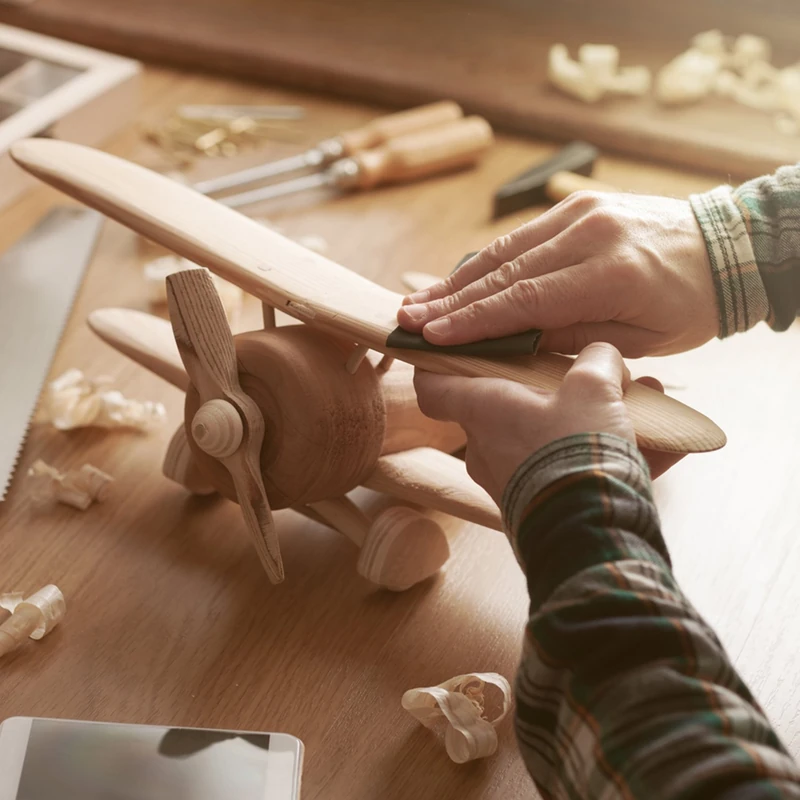
- Start at the mildest grit that effectively cuts: P800–P1000 for moderate issues. Use a foam-backed film disc or sheet on a cushioned pad.
- Lubricate with distilled water plus a drop of dish soap. Sand in straight strokes, switching direction with each grit (e.g., horizontal, then vertical) to make scratch patterns easy to identify and remove.
- Rinse, dry, and check under raking light between grits. Progress through P1000, P1500, and P2000 (or 3000) until only a uniform, fine haze remains.
- Prepare your polish
- Mix cerium oxide with distilled water into a thick, consistent slurry.
- Prime your pad (felt or rayon) by working a small amount into the fibers so it doesn’t sling or grab.
- Polish with control
- Rotary: Set 600–900 RPM, minimal pressure, and keep the pad flat. Work overlapping passes in a slow, steady pattern; re-wet as needed.
- Dual-action: Use medium speed (4–5 on most tools). Maintain constant motion with 50% overlap. Expect longer cycle times but safer heat control.
- Hand: Use a firm felt block with circular micro-movements and light, even pressure.
- Refine and check
- Wipe the area, inspect at multiple angles and in natural light. If you see faint cloudiness, repolish with fresh slurry or step to a finer compound (e.g., 3 µm diamond, then 1 µm).
- Blend beyond the repair area to avoid a visible “spot” of higher clarity.
- Clean and protect
- Rinse thoroughly to remove residual cerium or diamond. A final wipe with glass cleaner restores sparkle.
- Optional: Reapply any protective coatings once you’ve confirmed uniform clarity.
Pro tips for consistent, high-quality results:
- Tip 1: Preheat the pad with a few seconds of light spinning on the surface to reduce initial grab, but keep the glass cool with frequent misting.
- Tip 2: Use a black inspection card and a bright LED at a low angle; move both slowly to reveal residual scratch patterns.
- Tip 3: If you must localize a deep repair, finish with a large pad and low-cut pass over a wider zone to blend optical properties.
- Tip 4: Keep one spray bottle of plain water and another with a mild soap mix; switch to plain water for the last passes to maximize clarity.
- Tip 5: Replace worn abrasives early. Dull sanding films burnish rather than cut, making haze harder to clear.
Safety always comes first. Work wet to minimize respirable dust, wear cut-resistant gloves around edges, and use eye protection. Avoid thermal shock—no direct sunlight, no hot pads on cold glass, and no sudden temperature changes. If a pane is already cracked or heavily tempered with visible stress marks, consider consulting a professional before attempting sub-surface work.
Finishes: Matte, Satin, or Optical Clear
Not every project calls for a mirror-like finish. The “right” final polish depends on use, aesthetics, and how the piece will interact with light in real life. For example, frosted edges on a tabletop or shelf can hide small chips and soften the visual boundary, adding a designer touch while being forgiving of future wear. Shower panels and partitions often look best with a satin edge—clean, uniform, and less reflective of water spots than high-gloss.
To achieve a matte or satin finish intentionally, stop your abrasion series before the polishing stage. For a soft satin, finish wet sanding at P800–P1000 and then refine lightly to P1500 with consistent strokes. For a denser matte (sea-glass look), finish around P400–P600 but maintain perfect uniformity; unevenness shows immediately under grazing light. On small decor pieces, switch to non-woven abrasive pads in fine or very fine grades to create a controlled texture without tracks. If you prefer a semi-gloss edge, complete sanding to P2000 or 3000, then perform a brief, low-pressure polish to brighten without reaching full optical clarity.
Optical clear finishes demand care in blending. If you fixed a local scratch on an otherwise perfect pane, a broad, gentle final polish pass across a larger area prevents a bright, “over-corrected” halo. When polishing aquarium faces or display cases, inspect both in transmitted and reflected light—look from inside the tank as well as outside. Distortion that’s invisible in reflection can become obvious when viewing through the glass.
Consider maintenance. Matte textures disguise fingerprints and minor scuffs but can hold mineral deposits longer, so a squeegee routine helps in wet areas. High-gloss edges and faces repel grime more easily, especially when paired with a hydrophobic coating made specifically for uncoated glass. Whatever finish you choose, consistency is the marker of quality—uniform scratch patterns for matte, uniform clarity for gloss.
How To Polish — Video Guide
If you’re new to finishing workflows, it helps to watch a disciplined progression from coarse to ultra-fine. In a practical tutorial on polishing epoxy resin, the creator walks through sanding from very low grit all the way to 8000, then shifts into the polishing phase to reach a deep, reflective shine. While the material is resin rather than glass, the logic is identical: each step erases the tracks of the last, and skipping stages only adds work later.
Video source: How To Polish Epoxy Resin Like A Pro!
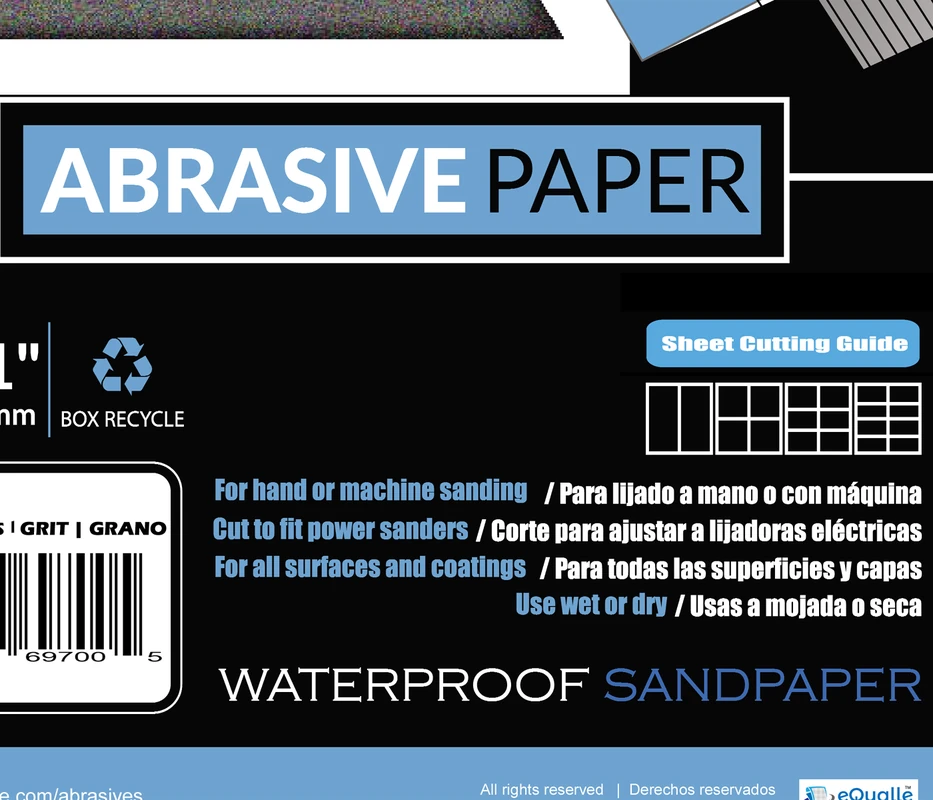
800 Grit Sandpaper Sheets (25-pack) — 9x11 in Silicon Carbide Abrasive for Wet or Dry Use — Ultra-fine grit for pre-polish refinement on paint, clear coats, or resin. Smooths imperfections without damaging the base layer. Provides optimal control when used wet or dry before 1000 or 1200 grits. (Professional Grade).
Frequently Asked Questions (FAQ)
Q: Can deep scratches in tempered glass be fully removed?
A: Sometimes, but with caveats. If a scratch catches a fingernail, sub-surface sanding and polishing can reduce or eliminate it, but tempered glass is more prone to distortion and stress cracks under heat. Work wet, keep pressures light, blend widely, and stop if you detect rainbow stress patterns or audible “ticking.” For safety-critical panes, replacement may be wiser.
Q: What’s the best polishing compound for most clear-glass projects?
A: Cerium oxide is the default because it’s effective, relatively safe, and produces a bright finish at moderate speeds. For stubborn haze or when refining after high-grit sanding, diamond pastes at 3 µm and 1 µm can add sharpness. Always test on a small area first and avoid coated or specialty glass unless you plan to recoat.
Q: How do I avoid creating a “lens” or visible spot where I polished?
A: Blend beyond the defect. Sand and polish a larger oval around the repair, keep the pad flat, and finish with a low-pressure, fine pass that extends well past the center of the work. Inspect in both reflected and transmitted light. If a bright spot appears, widen your final blend with a finer compound.
Q: Is wet sanding always required before polishing?
A: No. If defects are mild—water spots, faint wiper marks, very fine swirls—you can often correct with cerium oxide alone. Use sanding only when your nail catches on a scratch or when prior attempts at topical polishing fail to clear the haze. When in doubt, start with the least aggressive method.
Q: How long does a typical final polish take?
A: For a palm-sized area with moderate haze, plan 30–60 minutes, including inspection and cleanup. Deeper scratch repairs that require sanding can stretch to 1–2 hours or more, especially when working cautiously to preserve optical flatness. Patience pays off in both clarity and safety.