
Epoxy Sanding: Alcohol Wipe Test for Scratches
The last coat looked perfect under the shop LEDs. I’d leveled the resin on a walnut river table, hit the edges with a soft interface pad, and feathered out a few dust nibs from the pour. The project felt done—until I rolled it near the garage door and the afternoon sun lit up a faint swirl field across the surface. That punch-in-the-gut moment is familiar to anyone who’s chased a flawless epoxy finish. The fix wasn’t a magic compound or more buffing. It was a simple process check: wipe with alcohol to check scratches. In the world of epoxy sanding, this humble step tells you immediately whether your scratch pattern is uniform enough to move up a grit or if you’ve just created a shinier version of the same defects.
I learned to keep a squeeze bottle of isopropyl alcohol alongside my abrasives. On a leveled surface that’s been sanded to, say, 400 or 600 grit, a quick alcohol wipe flashes off in seconds and simulates how the resin will look when coated or polished. Deep random-orbit “pigtails,” coarser-grit carryover, or missed edges jump out at you under raking light. No more guessing. Over time, that tiny checkpoint turned into a habit—and it’s saved me hours of corrective sanding, failed recoats, and blown polishing stages. In this guide, I’ll explain the physics behind the alcohol reveal, lay out measured grit strategies, compare solvent choices with epoxy chemistry in mind, and share a workflow you can test immediately. If you’re serious about epoxy clarity and consistency, mastering this one check during epoxy sanding improves both speed and outcomes.
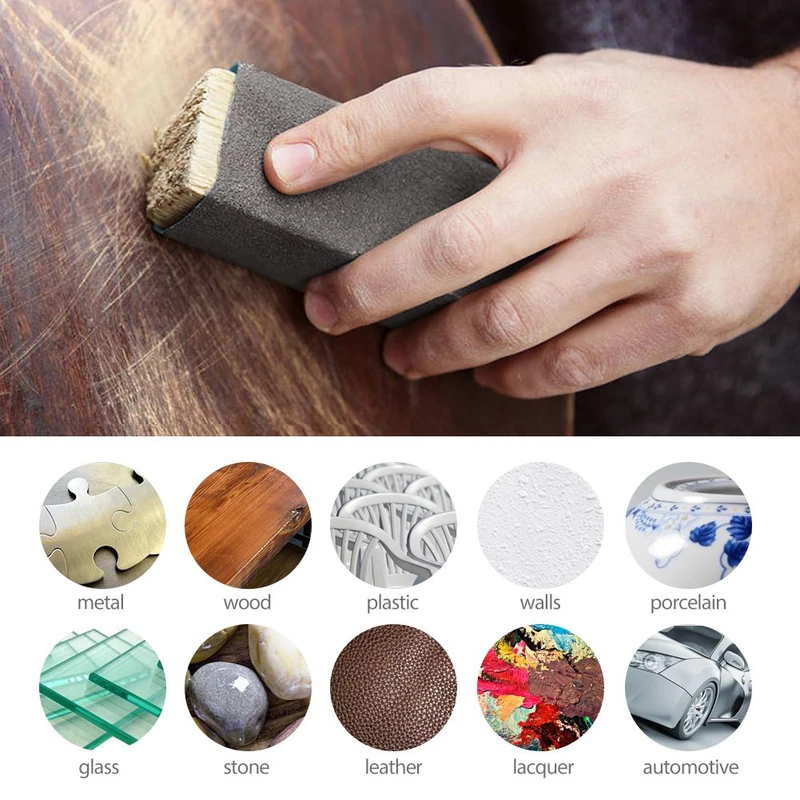
Quick Summary: A fast alcohol wipe wets epoxy to mimic a final clear coat, revealing hidden scratches so you can correct your sanding sequence before committing to a recoat or polish.
Why an alcohol wipe reveals scratches
A sanded epoxy surface looks cloudy because micro-scratches and valleys scatter incoming light. The primary culprit is the air-filled voids between the abrasive furrows; with a refractive index gap between air (~1.00) and epoxy (~1.55), you get strong diffuse reflection that reads as haze. When you wipe with alcohol—typically isopropyl alcohol (IPA) whose refractive index is around 1.37–1.38—you partially bridge that gap. The alcohol fills the micro-valleys, reduces scattering, and temporarily approximates the way light will transmit through the resin once it’s coated, polished, or otherwise “wetted out.”
That wetting doesn’t hide everything. Deeper grooves, pigtails from a clogged disc, or inconsistent scratch orientation still telegraph through because their geometry is too large for the index-bridging effect to mask. Think of it as a preview mode: small, uniform scratches vanish; significant defects persist. This is exactly what you need to decide whether to move up a grit or continue refining at the same step.
There’s also a thermal effect to consider. Alcohol evaporates fast and cools the surface, which can slightly alter the perceived clarity for a few seconds. The fix is simple: observe under raking light immediately after the wipe, then again once dry. In practice, I use a low-angle LED or natural oblique daylight to highlight directionality and defect contrast. I also isolate small zones—about 12 × 12 inches—so I can control the wipe window and verify consistency before advancing.
Technique matters:
- Use a clean, lint-free microfiber folded into quarters. Saturate, don’t drip.
- Wipe in one direction with light pressure. Don’t scrub—just wet the surface.
- Inspect from two angles: raking light and near head-on, a step or two back.
- Re-wet only as needed; avoid pooling in cracks or wood pores adjacent to the resin.
If you can still spot swirls or random scratches after the wipe, you’re not ready to progress. Go back one grit or spend more time at the current step until the wiped surface looks uniformly “clear.”
Grit ladders and epoxy sanding strategy
A disciplined grit ladder is what makes the alcohol wipe meaningful. You’re aiming to replace larger, deeper scratches with smaller, more uniform ones at each step, always erasing the previous grit’s pattern before advancing. For epoxy surfacing and polishing, a practical ladder looks like this:
- Flattening and leveling: 120 or 150 on a firm pad (only if necessary), then 180–220 to remove planer marks or high spots.
- Recoat-ready prep: stop at 220–320 for mechanical tooth if you’re applying another epoxy or topcoat within the manufacturer’s spec.
- Polish-ready refinement: 320 → 400 → 600 → 800 → 1000, then cushioned abrasives (1500–3000) and compounds if you want optical clarity.
Know your particle sizes. On the FEPA P-scale:
- P400 ≈ 35 µm average abrasive particle size
- P600 ≈ 26 µm
- P800 ≈ 21.8 µm
- P1000 ≈ 18.3 µm As a rule of thumb, typical scratch depths for friable abrasives are roughly 10–30% of the average particle size, depending on pressure, backing hardness, and resin temperature. That puts P800 scratch depths on the order of a few microns—still visible under harsh light on a glossy black pigment, but easily removed by 1500+ cushioned abrasives or a medium polish.
Use the alcohol wipe test as a pass/fail at each rung:
- After 220: clarity will remain low, but you’re checking for coarse stragglers from 120/150.
- After 400: the wiped surface should look uniformly translucent with no directional streaks.
- After 800–1000: it should look acceptably clear, with defects only visible if you hunt for them.
Process controls that matter:
- Sander settings: Use a 5–7 mm orbit random-orbit sander at medium speed for leveling; drop speed slightly for 800+ to reduce heat and fresh swirls.
- Interface pads: Hard pad for flattening, medium for 220–400, soft foam for 600+ to conform without cutting trenches.
- Vacuum extraction: Essential for epoxy to prevent loading; a dust-free scratch is a shallower scratch.
- Cross-hatching: Alternate passes at 45° to the previous grit’s direction. Your alcohol wipe should show that the new orientation has fully replaced the prior one.
Red flags the wipe will expose at once: pigtails (tight comma-shaped swirls indicating a contaminated disc), miss zones near edges or corners, and “ghost” coarser scratches that stowed away from earlier steps. Don’t climb until those are gone.
Solvent choices and surface safety
When the goal is simply to preview clarity and find scratches, isopropyl alcohol is my default. It flashes clean, is widely available, and plays nicely with fully cured epoxy. But not all solvents or concentrations behave the same, and solvent choice matters if you’re between coats.
- Isopropyl alcohol (IPA): 70% works, 91–99% evaporates faster and leaves less water behind. If your epoxy is near porous wood, 70% can raise grain at the boundary; 91%+ minimizes that risk. For cured epoxy, both are generally safe for a wipe-and-inspect step.
- Denatured alcohol (ethanol with additives): Also effective for the reveal and residue-free on cured epoxy. Variability in denaturants can affect smell and evaporation rate. Use only after full cure per the epoxy manufacturer.
- Water: A spritz can mimic “wet look,” but it evaporates slowly, leaves minerals if your water isn’t deionized, and can wick into wood pores. I avoid it unless I’m wet-sanding with a surfactant.
- Acetone: Very aggressive. While it removes oils well, it can carry contaminants into micro-porosity and may soften or craze partially cured epoxy. I reserve acetone for tool cleanup, not wiping an epoxy surface I care about.
Timing with respect to cure and recoat windows is critical. Within a primary chemical bond window (often up to 24 hours, but follow your resin’s technical data sheet), avoid solvents. If you need to wipe—and the resin is outside that window—let it reach full cure first. If amine blush is suspected (waxy film in humid, cool cures), wash with warm water and a mild detergent, rinse thoroughly, and dry before sanding. The alcohol wipe is a diagnostic for scratches, not a replacement for proper surface prep.
- For recoating over cured epoxy: Sand to 220–320, remove dust with vacuum and a clean microfiber. If you wipe, use a minimal amount of 91%+ IPA and let it fully evaporate before coating. Avoid tack cloths that can leave residues incompatible with epoxy.
- For final polishing: After wet-sanding through 1000–3000, a final alcohol wipe shows whether you’re ready for compound or if 1000 grit scratches are still present.
According to a article, a quick solvent wipe can reveal whether your sanding is uniform enough to proceed, but it won’t fix cloudy resin by itself—you’ll still need the correct grit progression or a fresh coat to truly restore clarity.
Safety essentials: ventilate, keep away from ignition sources, and wear nitrile gloves. IPA is flammable, and the wipe step should be brief, controlled, and followed by full evaporation before any heat-generating sanding resumes.
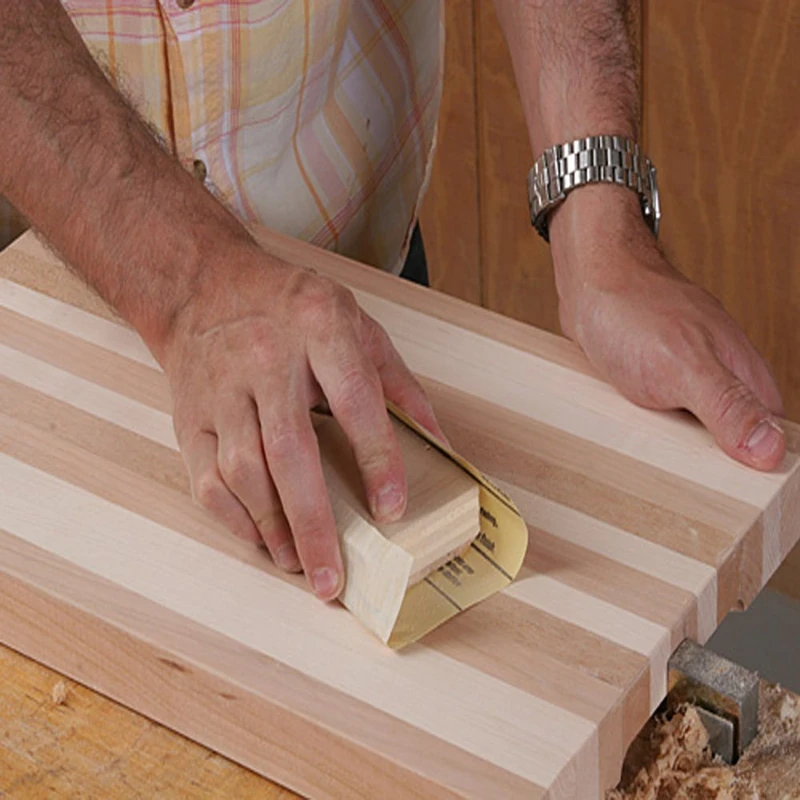
Abrasive materials and scratch mechanics
Not all abrasives cut epoxy the same way. Understanding grain type, coating, and backing helps you predict scratch morphology and avoid problems the alcohol wipe will later expose.
- Aluminum oxide: The workhorse for 120–400. It’s tough, micro-fractures moderately, and maintains a consistent scratch while resisting premature dulling. Use open-coat with stearate loading to reduce clogging on epoxy.
- Silicon carbide: Sharper and more brittle; excels in wet-sanding from 400–1200. It sheds dull tips quickly, producing finer, more uniform scratch fields in water or with a drop of dish soap as a surfactant.
- Ceramic (and ceramic-alumina blends): Extremely hard and self-sharpening under pressure, good for initial leveling or removing cured drips. On epoxy, use with care; it can cut aggressively and leave deeper troughs if paired with a hard pad and high pressure.
- Cushioned abrasives (e.g., Micro-Mesh, 1500–8000): These use a resilient backing that conforms to micro-topography, distributing pressure and minimizing stray deeper scratches. Ideal when you’re chasing optical clarity before compound.
Backing and pad interface influence scratch depth as much as grit. A soft foam interface spreads pressure peaks, reducing trenching at high grits. The trade-off is less flattening power—so finish your leveling before switching to soft interfaces. Your alcohol wipe will quickly tell you if you made that transition too soon: look for low spots that stay dull when wet, bracketed by shiny ridges.
Heat is another scratch amplifier. Epoxy softens slightly under friction, which can smear rather than cut, creating broader, hazy troughs that are harder to remove. Mitigate by:
- Dropping sander speed at 800+
- Using minimal pressure; let the abrasive cut
- Employing wet-sanding from 400 onward to carry away swarf and cool the surface
Disc hygiene matters. A contaminated disc seeds “pigtails” (tight arcs) caused by a hard particle trapped under the pad. The alcohol wipe makes them plain as day, but prevention is better:
- Vacuum often with a central extraction hole or multi-hole pads
- Knock the disc on your palm between passes
- Retire discs early—cheap compared to rework
With the right abrasive sequence and interface choices, your wipe test becomes a predictable green light rather than a surprise inspection.
Workflow, troubleshooting, and pro tips
Here’s the repeatable workflow I use for resin tables, bartops, and flat castings when the goal is a clear polish. Adjust the early steps if you’re stopping at a recoat-ready scratch.
- Flatten and clean
- Scrape drips and nibs with a sharp cabinet scraper. If needed, level with P150–P180 on a firm pad, low-medium sander speed.
- Vacuum thoroughly. If amine blush is suspected, wash with warm water and a bit of dish soap, rinse, and dry.
- Establish a uniform baseline
- Sand at P220, cross-hatching in overlapping passes. Keep the sander moving—slower than you think—to allow even dwell.
- Vacuum and perform a quick alcohol wipe to confirm no coarse scratches remain. Some haze is expected; you’re checking for outliers.
- Refine scratches
- Progress: P320 → P400. Switch to a medium pad at P320 and a soft interface pad at P400 if the surface is already flat.
- At each step: vacuum, then wipe with alcohol under raking light. Only move up when the wiped surface shows uniform “wet clarity.”
- Shift to wet-sanding
- From P600 onward, use silicon carbide with water plus a drop of dish soap. Very light pressure, straight or gentle circular strokes by hand for critical edges; RO sander at lower speed for fields.
- Inspect with an alcohol wipe after P800 and P1000. By P1000, you should see near-final clarity when wet.
- Final polish
- Move to 1500–3000 cushioned abrasives. Then compound: start with a medium-cut polish on a foam pad at low RPM; finish with a fine polish. A final alcohol wipe between compounds helps spot any remaining 1000-grit ghosts before you lock them in with gloss.
Troubleshooting the wipe reveal:
- Persistent arcs or commas after the wipe: pigtails. Replace the disc, re-sand at the current grit with lighter pressure, verify pad cleanliness.
- Dull islands that stay matte when wet: low spots. Go back a grit with a firmer interface to re-flatten, then re-climb.
- Milky veil that improves when wet but returns when dry: micro-smearing from heat or loaded paper. Reduce speed, use fresh abrasives, switch to wet-sanding earlier.
Five actionable tips I rely on:
- Mark and track defects: Circle visible scratches with a wax pencil after the wipe so you can target them at the same grit before progressing.
- Control your test light: A movable LED bar at 20–30 degrees reveals directionality better than overhead lights.
- Tag your discs: Keep each grit in separate, labeled sleeves; a stray P320 disc in the P800 pile is a silent project killer.
- Time-in-cut, not passes: On epoxy, count seconds per square foot rather than arbitrary passes to normalize removal across the panel.
- Dry your tests fast: If using 70% IPA, follow the wipe with a gentle blast of clean air to evacuate water and minimize boundary artifacts near wood.
Remember: epoxy sanding is fundamentally about predictability. The alcohol wipe doesn’t replace good technique—it confirms you executed each step correctly.
How To Polish — Video Guide
There’s a solid walkthrough online that mirrors this workflow: a maker starts at a low grit and climbs methodically all the way to 8000 before polishing. The video highlights how long to dwell at each stage, when to switch from dry to wet sanding, and how to read the surface under light so you don’t advance too soon.
Video source: How To Polish Epoxy Resin Like A Pro!
400 Grit Sandpaper Sheets (50-pack) — 9x11 in Silicon Carbide Abrasive for Wet or Dry Use — Ultra-fine abrasive for refining surfaces before polishing or coating. Commonly used in auto body repair and resin finishing. Produces flawless smoothness with wet or dry sanding. (Professional Grade).
Frequently Asked Questions (FAQ)
Q: Why does wiping with alcohol make scratches disappear temporarily?
A: Alcohol fills micro-scratches and better matches epoxy’s refractive index than air, reducing light scatter. Deep defects still show, which is why it’s a reliable check for whether you’ve removed the previous grit’s scratches.
Q: Which alcohol concentration should I use on epoxy?
A: 91–99% isopropyl alcohol evaporates faster and leaves less water, giving a cleaner preview. 70% works but can raise grain near wood boundaries. Use only on fully cured epoxy and let it flash off completely.
Q: Is it safe to use acetone to check scratches?
A: I don’t recommend it. Acetone is aggressive, can interact with partially cured epoxy, and may carry contaminants into the surface. Stick to IPA or denatured alcohol for the wipe test on cured resin.
Q: What grit should I stop at if I’m recoating with epoxy?
A: For mechanical adhesion, sand to 220–320, clean dust thoroughly, and recoat within your epoxy’s specified window. The alcohol wipe can still help you verify uniform scratch, but avoid heavy solvent use right before coating.
Q: How do I prevent pigtails that the alcohol wipe keeps revealing?
A: Use dust extraction, keep discs clean, minimize pressure, and switch out loaded or contaminated abrasives early. A soft interface pad at higher grits and slower sander speed also reduce the risk of pigtails.