
Boat sanding: prevent water intrusion when wet
At first light the dock is quiet, the kind of quiet that lets you hear the soft clink of halyards against aluminum and the faint wake of an early fisherman nosing out of the harbor. Your boat sits beaded with dew, the hull cold to the touch, the fairing long since blocked, pencil guide coat mapping the highs and lows that still need attention. Today is wet-sanding day—the stage that promises the fastest path to a flat, paint-ready surface and, just as quickly, the path to trouble if water finds its way into seams, cores, or unsealed fastener penetrations. Boat sanding isn’t just about cutting a surface; it’s a managed interaction between abrasive, fluid, substrate, and time. The difference between a mirror topcoat and a creeping blister months later often comes down to how you control where the water goes, how long it stays, and what it carries with it.
On wood, water can wick under plank laps or into opened seams by capillary action. In cored fiberglass, every pinhole is a potential straw into balsa or foam. On aluminum, slurry left to dry under a toe rail is a galvanic electrolyte waiting to happen. Even gelcoat, seemingly impervious, has pinholes and hairline crazing you don’t see until they telegraph back after a hot August haul-out. So you wrap the cleats, tape off the garboard, cap the deck screws poking through the toerail underside, and stage towels, a wet vac, and a spray bottle. You think about water like a liquid abrasive carrier that must touch only the zones you intend and never linger in places you don’t. That’s the mindset of controlled wet sanding: a system tuned to move water and slurry away from risk, through each grit step, and out of the hull—fast.

Quick Summary: Control water flow, contact time, and slurry pathways at every step of wet sanding to protect seams, cores, and coatings while maintaining abrasive efficiency.
Why wet sanding risks water intrusion
Wet sanding trades heat and dust for lubricity, cleaner scratch patterns, and longer abrasive life. The tradeoff is an active liquid phase—water with or without surfactant—that can infiltrate through discontinuities you’d otherwise manage dry. Three mechanisms matter most: capillary action, hydrostatic pressure, and surfactant-driven wetting.
Capillarity: Any narrow gap—plank seams, pinholes in primer, marginal bedding around fasteners—acts like a capillary tube. Water flows “uphill” into those gaps, pulling fines with it. Finer slurry increases capillary uptake.
Hydrostatic head: Even a small pool arrested by a tape edge can build pressure. A 3 mm head over a pinhole can push water past a thin primer film over minutes. The longer the dwell, the deeper the drive.
Surface tension: Additives (soap, specialty lubricants) lower surface tension, which improves glide and cuts but also increases wetting and penetration into microdefects.
Substrate-specific risk varies. Wood swells differently across grain, which can trap fines in seams and impede swelling later. Balsa and end-grain cores are notorious for wicking; a single unsealed deck fastener is a direct conduit. On aluminum, bare edges and dissimilar-metal hardware become galvanic pairs in the presence of retained moisture and salts in slurry. Gelcoat and cured epoxy are comparatively resistant but not impermeable; microcracks and amine blush complicate adhesion if moisture is trapped.
Risk management starts before the first grit. Map every through-hull, fastener penetration, and seam. Decide where you will allow water to contact, where you will divert it, and how fast you will remove it. Plan the directionality of sanding passes—from “dry” to “wet” areas—and the drainage path so you never chase slurry into seams. Engineer the work area like a temporary wash bay with berms, drains, and immediate extraction, scaled to a hull.
Design a leak-safe boat sanding workflow
Treat the workflow like fluid logistics. Your goal is to meter water in, keep it moving across the abrasive interface, and evacuate both water and fines before they locate weak points. Start with staging: have two spray bottles (plain water and very light soapy water), a small gravity-fed squeeze bottle for edge work, absorbent microfiber towels, a wet vac with a squeegee head, low-tack waterproof tape, butyl rope or non-hardening sealant, and temporary plugs for hardware holes.
Sequence matters. Work from topsides down to maintain gravity-assisted drainage. Sand “away” from seams and through-hulls—i.e., orient your stroke so slurry flows toward open hull panels you can immediately wipe and vac. Break large panels into zones with sacrificial tape “dams” that you relocate as you progress. For porous zones or suspect pinholes, run with plain water only; reserve soapy solution for fully sealed coats where you need extra glide.
Actionable tips:
- Pre-seal vulnerabilities: Press butyl rope over seam lines, around fastener tips, and along the underside of toerails to create removable water stops. Mask unbedded hardware holes with waterproof tape backed by a rubber washer.
- Meter water, don’t flood: Use a fine-mist spray to keep the cut wet. Avoid hose or continuous flow; standing water increases hydrostatic drive and picks up more fines.
- Work in time boxes: Two to three minutes of wet exposure per 2x2 ft section, then immediate squeegee and vac, followed by towel dry. Reset the clock with each re-wet.
- Scribe drains: With tape, create 1–2 mm channels that lead off the work area. Align them to gravity so slurry exits where you can capture it.
- Color-code bottles: Blue cap for soapy, white for plain water. Plain water only within 8 inches of any seam, core edge, or suspected pinhole.
For wood, shorten wet contact windows and bias toward damp-sanding with film-backed abrasives. For cored glass, never wet sand within 4 inches of unsealed hardware or cutouts; dry sand or temporarily encapsulate these edges with fast-cure epoxy before proceeding. For metal, rinse quickly and neutralize chloride-rich environments; then dry aggressively to limit corrosion pathways.
Abrasives, backers, and slurry control
Your abrasive stack-up influences both cut quality and how much water you need. Choose media and interfaces that manage heat with minimal liquid, maintain flatness, and resist edge fray that can channel water.
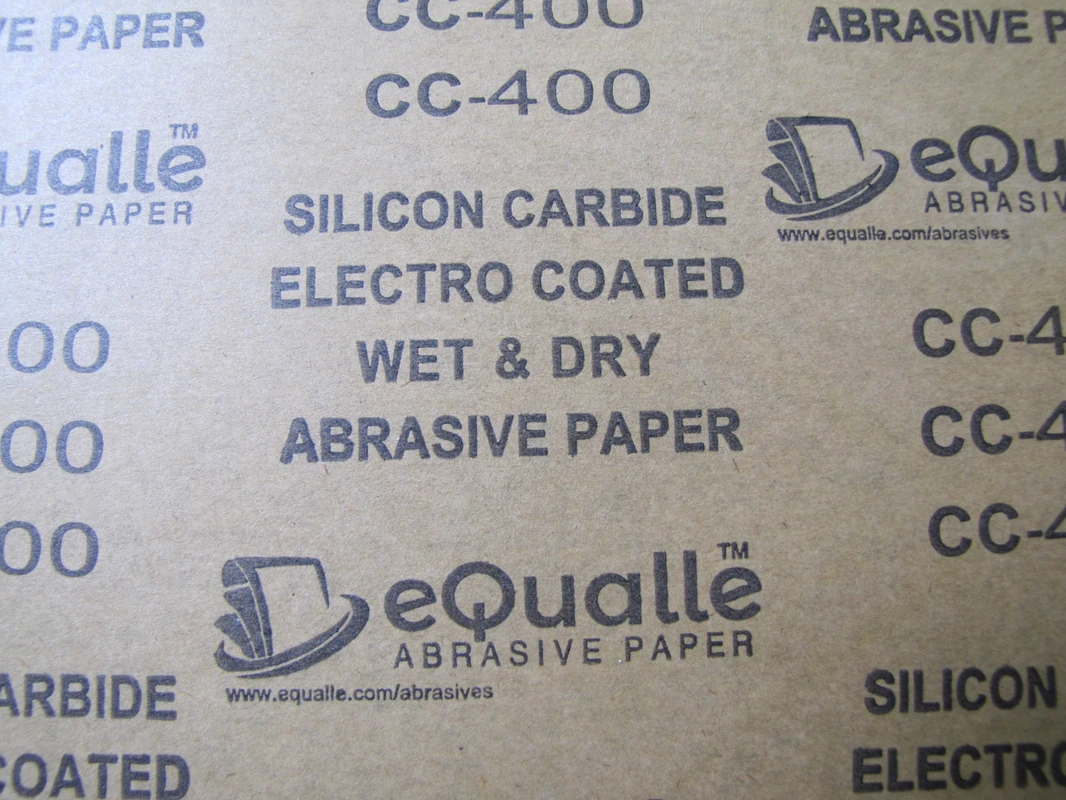
Media selection: For initial leveling of high-build primer or gelcoat, silicon carbide in waterproof film discs (not paper) provides sharp, consistent cutting in wet environments with lower water demand. For refined steps (P600–P1000), switch to stearate-free, waterproof film or foam-backed finishing abrasives to minimize loading without lubricants that can migrate.
Backing pads and interfaces: A closed-cell foam interface pad limits water infiltration compared with open-cell foams. Seal the edges of your pad with waterproof tape if the hook-and-loop shows wear—frayed edges act like wicks. Stiffer backers maintain plane on large topside panels, reducing dwell and water time required to remove guide coat.
Disc management: Change discs before dulling forces you to increase pressure (which squeezes water into defects). With silicon carbide, monitor scratch uniformity; when it starts to burnish rather than cut, rotate. Keep discs in a dry case; pre-wet only at the point of use.
Control slurry with a squeegee-and-vac cadence. Squeegee the worked area every 30–45 seconds, directing flow to your taped channels. Keep the wet vac nozzle trailing the squeegee. Slurry that lingers cools the surface but also loads pores; get it off the hull and into the vac canister fast. If you see milkiness refilling behind the squeegee, you’re flooding—reduce spray volume.
For epoxy substrates, remember amine blush. Even if you plan to wet sand, first wash cured epoxy with warm, soapy water and a Scotch-Brite pad, then rinse and dry before introducing abrasive. Blush is water-soluble; sanding it into scratches can hinder adhesion. According to a article, dust and debris in seams can create later swelling issues—similarly, slurry fines left in gaps become lodged contaminants. Keep the interface clean and the slurry moving off the boat, not into it.
Grit pathing for minimal water: fairing primer at P220–P320 wet; high-build primer at P320–P400; pre-topcoat at P600–P800 wet or damp; buff-out prep at P1000–P1500 if needed. Avoid jumping more than 150 grit steps to keep contact time down.
Sealants, primers, and cure windows
Coating systems can be your ally or your liability during wet sanding. The less permeable the layer you’re working, the lower the intrusion risk—provided you respect cure times and film integrity.
Epoxy primers and high-build: Two-component epoxy primers, once fully cured, are comparatively moisture-resistant and wet-sand well. Many systems allow wet sanding after 24–72 hours at 20°C, but deeper solvent release can require longer. If you introduce water too early, micro-channels can open as coalescence finishes. When in doubt, extend the cure or sand dry at coarser grit.
Urethane primers: 2K urethane surfacers wet-sand nicely but can absorb moisture at edges and pinholes. If you must wet sand them, maintain short exposure cycles and force-dry afterward. Recoat windows tighten with moisture exposure; always re-scan the PDS.
Seal edges before you sand: Any exposed core edges, scarf joints, or fastener holes should be encapsulated with fast-cure epoxy or a compatible sealer. Temporary measures (e.g., shellac, masking compound) are useful only as short-term barriers; plan to remove and properly seal before final coating.
Guide coats and pinhole mapping: Use a dry-applied guide coat to minimize water in early leveling. When pinholes appear, stop. Spot-fill with catalyzed fairing compound or epoxy squeegee techniques, cure fully, then resume. Don’t “polish over” defects with extra water; you’re just irrigating them.
Be mindful of surfactants. Many pros add a drop of dish soap to the water bottle to reduce drag. That’s reasonable on fully sealed, nonporous coats—but within 200 mm of any seam, fastener, or suspect edge, use plain water. Lower surface tension improves glide but also helps the liquid breach micro-gaps. After wet sanding, rinse with clean water, then towel and forced-air dry. If the next step is a topcoat, allow a minimum of overnight dry with airflow and warmth to purge trace moisture from pores and scratches.
On polymeric primers, anecdotal shop wisdom suggests that trace moisture from wet sanding dissipates during dry-down if the film is intact. Still, don’t rely on wishful thinking—verify with a moisture meter or conduct a solvent wipe test to ensure no residual haze or fisheye risk before you lay paint.
Drainage, airflow, and dry-down protocols
Preventing intrusion isn’t just about limiting water entry; it’s also about accelerating exit. Fast, complete dry-down after each zone and at day’s end is central to avoiding hidden moisture.
Stage drainage: Keep the boat slightly bow-high so gravity biases slurry down and aft along your planned channels. Use absorbent “diapers” at low points—keel-to-hull joints, scupper inlets, under rub rails—and replace them often.
Active extraction: A wet vac fitted with a rubber squeegee shoe should trail your squeegee in one hand, nozzle kept at 10–15 mm standoff to avoid seal chatter. Empty canisters frequently; a full canister reduces suction and leaves film behind.
Forced airflow: Set up fans to cross-ventilate the worked area. Use indirect warmth—infrared panels or warmed, dehumidified air—to keep the substrate a few degrees above ambient to drive moisture outward. Avoid heat guns near thin primer edges; localized heating can telegraph stack lines.
Moisture verification: On wood, a pin meter reading should return to baseline (typically under 12% for above-waterline work) compared to unworked adjacent wood. On fiberglass, use a non-invasive meter as a comparative tool—read before wet sanding, immediately after towel dry, and 60–90 minutes later. The curve should trend back to baseline. If it doesn’t, you have entrapment.
End-of-day purge: After your last pass, rinse sparingly to remove residual fines, squeegee, vac, and towel. Remove all temporary butyl dams to prevent water pooling beneath them overnight, then re-dry those zones. Leave fans and dehumidifiers on, and re-check moisture in the morning before proceeding.
Salt is the hidden enemy. If you’re working dockside or on a boat with salt residue, pre-rinse with fresh water before any wet sanding, and increase rinse frequency. Chlorides accelerate corrosion and osmotic behavior when trapped under coatings. Keep your water source clean—distilled or filtered if your tap is hard or contaminated. Hard water leaves mineral films that interfere with subsequent coats.
Finally, document your dry-down: section worked, time wet, time to vac, towel, and fan-on; temps and RH; and moisture readings. Good records prevent you from painting over moisture the next day because “it looked dry.”
Prepping Boat for — Video Guide
A practical demonstration helps connect theory to practice. In a video prepping a Boston Whaler Montauk for paint, the presenter shows how high-build primer, strategic filling, and sanding interplay to achieve a fair, sealed surface ready for topcoat. The process highlights careful defect mapping, selective filling of pinholes, and patience with cure times before sanding.
Video source: Prepping Boat for Paint (Boston Whaler Montauk) - Filling & Sanding High Build Primer
220 Grit Sandpaper Sheets (25-pack) — 9x11 in Silicon Carbide Abrasive for Wet or Dry Use — Refined medium-fine abrasive for final surface leveling on primed or sealed materials. Great for smooth touch-ups before finishing. (Professional Grade).
Frequently Asked Questions (FAQ)
Q: Is it ever safe to add soap to wet-sanding water near seams?
A: Use plain water within 200 mm of seams, fasteners, or any unsealed edge. A drop of soap lowers surface tension, increasing wetting and the chance of intrusion. Reserve soapy water for fully sealed panels and late-stage finishing grits.
Q: What grit range is best for wet sanding high-build primer without flooding the surface?
A: Start around P320 and progress to P400–P600 depending on the system. Use waterproof film-backed abrasives, light spray misting (not continuous flow), and squeegee/vac every 30–45 seconds to minimize dwell time.
Q: How do I verify moisture is gone before topcoating after wet sanding?
A: Measure with a moisture meter (pin-type for wood, non-invasive for composites) and compare to baseline areas. Additionally, allow overnight dry with airflow and mild heat. A solvent wipe test should flash uniformly without hazing or fisheyes.
Q: Can I wet sand over epoxy that might have amine blush?
A: First remove blush with warm, soapy water and a non-shedding pad, then rinse and dry. Only then proceed with wet sanding. Blush is water-soluble; sanding it into scratches compromises adhesion.
Q: What temporary barriers work best to block water at fastener holes?
A: Low-tack waterproof tape over a small rubber or nitrile washer works for topside holes. For larger penetrations, press-fit tapered rubber plugs or use a bead of butyl rope around the perimeter. Always remove and thoroughly dry these areas at day’s end before re-sealing for the next session.