
Open Coat Sandpaper and Hook Pads: Keep the Grip
You didn’t expect the disc to let go mid-pass. One second your sander was skating smoothly over the maple tabletop, the next it was shrieking, the pad hot to the touch, and the abrasive arced across the garage floor like a lost frisbee. You pick it up, dust clinging to the loops on the back. The hooks on your pad look tired—flattened in patches, glossy at the edges. You brush them with your thumb and they barely bite. You’ve got a weekend, a project deadline, and a finish you care about. Right now, all you want is for the abrasive to stay put and cut cleanly.
If this sounds familiar, you’re not alone. Hook-and-loop systems are workhorses for random-orbit and palm sanders, but they’re quietly sensitive to heat, dust, and pressure. On wood, paint, primer, or composites, the balance between abrasive, pad, and technique decides whether you glide or struggle. Small changes—switching to open coat sandpaper that sheds dust instead of hoarding it, or slipping on a thin pad saver—can turn the job around. Bigger changes—like replacing a cooked pad—can restore control and save money you’d otherwise burn through in prematurely worn discs.
This article is a calm, practical walk-through of hook performance on worn backing pads: how to diagnose slipping, how to match abrasives and interfaces to your work, when open coat sandpaper helps, and how to clean and cool your setup so it keeps its grip. Whether you’re tuning a cabinet door or resurfacing drywall patches, we’ll focus on clear choices that keep your sanding predictable, efficient, and safer for both your material and your hands.
Quick Summary: Worn hooks lose grip from heat and dust; choose appropriate discs (often open coat sandpaper), clean and cool your pad, use pad savers/interfaces, and replace the pad when hooks are flattened or glossy.
The quiet culprit: worn hooks and lost grip
Hook-and-loop works because thousands of tiny hooks on your backing pad snag onto loops on the disc. Over time, hooks round off, melt, snap, or clog with debris. The result is subtle at first—discs need a firmer press to seat, then they creep, then they fling off. Heat magnifies all of it: a pad that’s too hot to touch is also hot enough to soften plastic hooks, especially around the perimeter where centrifugal force and pressure are highest.
Common causes of hook failure include:
- Excess downforce: Pressing hard slows the pad, increases frictional heat, and polishes hooks flat.
- Clogged abrasives: A loaded disc runs hotter and grinds fine dust into the hook field, fouling grip.
- Mismatched backings: Heavy film or thick fabric loops can over-stress fine hooks not built for that load.
- Misalignment: Mounting a disc off-center creates wobble, edge heat, and uneven wear on the hook ring.
Signs your hooks are on the way out:
- Glossy, matted hook surface or shiny arcs where the disc edge sits.
- Disc spin marks on the workpiece (the disc isn’t tracking evenly).
- The disc peels up with almost no resistance, or creeps during use.
- You must “burnish” the disc on to make it hold, and it still pops loose hot.
Before you blame the abrasive, check the pad. Remove the disc and drag a piece of painter’s tape over the hook field; if it lifts noticeable dust, you’ve got contamination. Compare the pad center to the edge—if the edge hooks are visibly shorter or slick, the pad’s life is limited. Some loss of grip is inevitable, but knowing the pattern and causes helps you decide whether cleaning, technique changes, or a new pad will restore performance.
Matching discs to pads and interfaces
Not all discs are created equal, and not all pads share the same hook geometry or heat tolerance. Balancing those factors keeps the system in its sweet spot.
Disc backings vary:
- Paper (A/C weight) with thin loop: Light, flexible, seats easily on fine hooks; great for wood finishing.
- Film (polyester) with loop: Smooth cut and strong edges; slightly heavier; demands healthier hooks.
- Mesh/Net: Excellent dust flow; lighter looped backings; benefits from strong suction alignment.
- Foam-backed: Adds conformity but increases thickness; more leverage on hooks; better on fresh pads.
Interface layers matter too:
- Pad savers (1 mm): Take abrasion and heat at the hook surface, preserving your main pad’s hooks.
- Foam interfaces (3–10 mm): Improve contour sanding; spread pressure; but higher thickness increases torque on hooks and can heat the edge—best on good pads.
Practical combinations:
- Fresh or high-quality hook pads pair well with film discs and mesh for aggressive cutting and tidy dust control.
- Tired pads often regain life with lighter paper-backed discs and a thin pad saver to refresh the hook surface.
- For contours, use a soft interface but drop sander speed a notch to reduce edge heat and hook strain.
Actionable tips:
- Always “seat” the disc: Align holes, place center first, then smooth outward with your palm to avoid trapped dust puckers that weaken grip.
- Test loop compatibility: If a disc feels gritty or stiff on the back and won’t fully seat, try a lighter loop or add a pad saver.
- Keep it thin when hooks are suspect: Choose lighter backings and minimal interfaces to reduce leverage on worn hooks.
- Match diameter and hole pattern precisely: Misaligned holes reduce suction and raise heat, accelerating hook wear.
Reduce clogging with open coat sandpaper
Open coat sandpaper spaces abrasive grains apart, leaving a portion of the backing exposed. Those gaps give swarf and dust somewhere to go instead of smearing across the surface or glazing the disc. Less loading means cooler sanding, and cooler sanding preserves hook integrity. When your hooks already struggle, reducing heat and dust contamination can make the difference between steady progress and constant reattachment.
Where open coat shines:
- Resinous woods (pine, fir), where pitch quickly loads closed-coat discs.
- Paint and primer leveling, where soft binders clog fast.
- Early grits (80–150) on wood, where chip size is larger and airflow helps keep temperatures down.
Where closed or semi-open may be better:
- Hardwoods at fine grits (180–320) where you want a more uniform scratch.
- Between coats on finishes where dust extraction is excellent and loading is minimal.
The synergy with hook longevity is practical: an open coat disc runs cooler, so the pad’s plastic hooks spend less time above their softening point. Fewer sticky fines migrate into the hook field, so the micro-hook tips remain clean and sharp. If you’re noticing discs that only hold when cold, swapping to open coat for the early passes can reduce peak temperatures and keep the grip consistent.
Selection advice:
- Pair open coat grits with efficient dust extraction (aligned holes, clean shop vac filter) to maximize airflow.
- Consider net discs for extreme dust control, but verify your pad hooks are healthy; net’s thin loop can be kinder to tired hooks.
- Step through grits promptly. Don’t over-sand with a loading grit—move to the next grit once the previous scratch is uniformly removed.
Industry insight can help steer expectations. According to a article, newer hook-and-loop disc designs focus on better attachment and longer life—advances you’ll only fully benefit from if your backing pad is in good condition and your sanding setup keeps heat and dust in check.
Cleaning, cooling, and storage habits
Your pad’s hook field is like a tiny forest: keep it clean and cool, and it lasts; let heat and debris accumulate, and it withers. A few intentional habits dramatically extend grip life and stabilize performance.
Cleaning routine (after each session):
- Pop the disc off while the pad is still slightly warm (not hot). Warm hooks release dust more easily.
- Roll low-tack painter’s tape over the hook face to pick up fines. Replace tape as it loads.
- Brush gently with a stiff nylon brush in multiple directions. Avoid metal brushes; they cut hook tips.
- Blow off with low-pressure air from a distance. Don’t blast at close range; you can fray hooks.
Cooling discipline:
- Let the sander idle against nothing for 5–10 seconds after a heavy pass so airflow cools the pad and disc.
- Use lighter pressure and higher speed for cutting, not brute force. If the pad feels hot, take a break.
- Rotate two discs of the same grit on large panels; swapping gives each a cool-down, lowering cumulative heat.
Storage best practices:
- Store sanders with the pad face-up or on a clean pad saver, not on a dusty bench.
- Keep discs flat in sleeves; avoid curling that prevents full contact and worsens edge heat.
- Avoid solvents or cleaners on the hook field; many plastics soften or embrittle, shortening life.
Actionable tips:
- If hooks look matted, place a fresh pad saver and test grip; it often restores hold for several more sessions.
- For stubborn resin buildup, a quick wipe of the disc’s loop (not the pad hooks) with mineral spirits—fully dried before reuse—reduces transfer of pitch back to the hooks.
- Mark the pad edge with a Sharpie index line and rotate your hand position every few minutes; even small posture changes balance edge wear.
When to replace pads and upgrade
Even with good habits, hooks have a service life. Replacing a worn pad at the right time saves discs, improves surface quality, and reduces frustration.
Clear replacement cues:
- Hooks are visibly flattened, glossy, or sparse—especially in an outer ring under the disc edge.
- Discs eject at speed despite correct seating and moderate pressure.
- The foam backing under the hook plate is collapsing or torn, causing rocking and uneven contact.
- You need increasingly thick interfaces just to keep discs attached—often a sign the underlying hooks are done.
Choosing a new pad:
- Match hardness to task: hard pads for flat stock and leveling; medium for general work; soft for contours and finish sanding.
- Check hook density and temperature rating. High-temp hooks resist softening during long sessions.
- Consider a multi-hole pattern compatible with your most-used discs for better dust extraction and cooler operation.
Upgrades that protect the new pad:
- Add a dedicated pad saver (replace as it thins or fuzzes).
- Use open coat sandpaper in your coarse grits to reduce early heat spikes that punish hooks.
- Tune your technique: let the sander’s orbit do the work; avoid clamping pressure; keep the pad moving and centered.
Simple replacement workflow:
- Power off, remove the old pad (typically a center screw or three/four-bolt pattern).
- Clean the sander’s flange; any grit here leads to wobble and hot spots.
- Install the new pad to spec torque; over-tightening can warp the plate.
- Apply a pad saver, then mount a fresh disc carefully aligned.
- Run the sander free for a few seconds to verify balance and airflow before touching the work.
A new pad backed by cooler-running processes almost always pays for itself through fewer thrown discs, longer abrasive life, and a more consistent finish.
Brief Description of — Video Guide
In this short YouTube piece, a seasoned woodworker breaks down the basics of abrasive papers—what the grains are, how coatings differ, and where each type shines or struggles. It’s a quick refresher on fundamentals that directly influence heat, loading, and surface quality.
Video source: Brief Description of Sandpaper Told By Woody
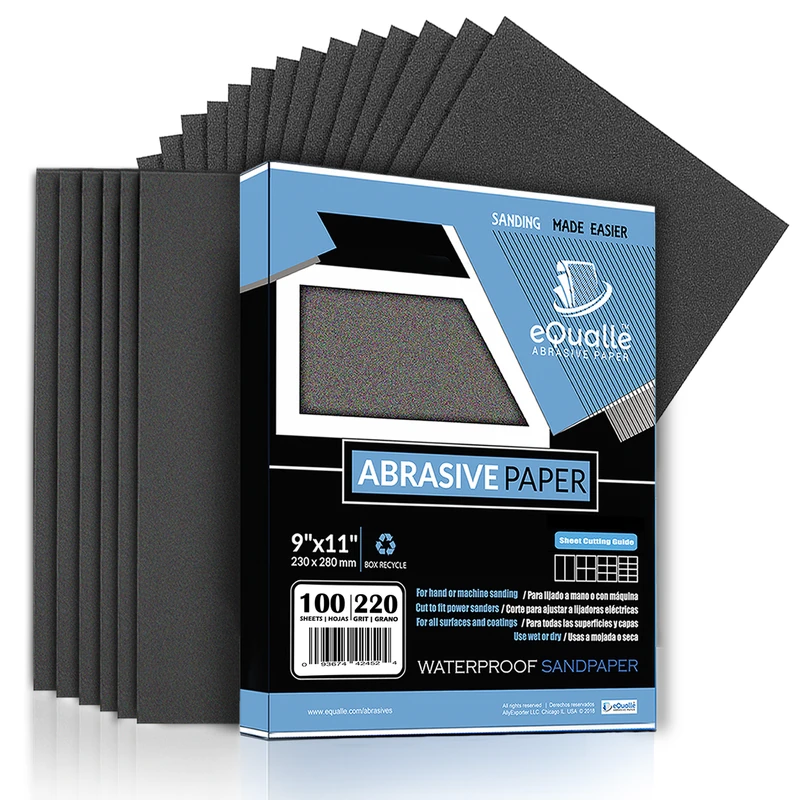
220 Grit Sandpaper Sheets (100-pack) — 9x11 in Silicon Carbide Abrasive for Wet or Dry Use — Fine finishing grit for final surface preparation before painting or coating. Offers uniform cutting on wood, metal, and plastic. Leaves a smooth, paint-ready finish suitable for wet or dry sanding. (Professional Grade).
Frequently Asked Questions (FAQ)
Q: How do I know if my hook-and-loop pad is too worn to keep using?
A: If discs peel off with minimal effort, eject during use, or you see glossy, flattened hook zones—especially around the edge—the pad is at end of life. Collapsed foam or wobble also signals replacement time.
Q: Will open coat sandpaper actually help discs stay attached?
A: Indirectly, yes. Open coat runs cooler and sheds dust, which reduces heat softening and contamination of the hooks. Cooler, cleaner hooks maintain stronger grip, especially on pads showing light wear.
Q: Can I revive melted hooks with heat or a wire brush?
A: No. Additional heat worsens softening, and metal brushes cut hook tips. Clean with tape, nylon brush, and air. If hooks are melted smooth or sparse, replacement is the reliable fix.
Q: Do pad savers reduce cutting performance?
A: A thin saver (about 1 mm) has negligible impact on cut but can dramatically extend pad life. Thicker foam interfaces can slightly mute aggressiveness; use them when you need contouring, not for general flat sanding.
Q: Why do discs fly off more at the edge of big panels?
A: Long, continuous passes build heat at the pad perimeter where speed is highest. Combine that with dust loading and slight misalignment, and hooks near the edge lose bite first. Use lighter pressure, ensure proper hole alignment, and let the pad cool between sections.