
Hand Sanding Without Burnishing: Finish-Ready Control
The night I learned the cost of polishing too early, the shop smelled like coffee and cherry shavings. The radio was a soft buzz under the hum of the lights, and the new side table glowed—already gleamed, really—before a drop of finish ever hit it. I’d fussed over it for hours with hand sanding, stepping grits because I wanted “perfect.” When I finally wiped on the first coat of oil, the top took it like glass. Not in a good way. The oil sledded across the surface, pooling near the edges, leaving weak, hungry patches in the middle. The apron and legs drank color like I’d hoped; the top shrugged it off. What looked flawless was actually overworked—burnished.
I stood there, rag in hand, watching blotches spread like bad news. The cherry’s pores were sealed shut by my own impatience and pride. I’d chased shine instead of texture, warmth, and tooth. That’s the trap. Done right, hand sanding is control—the difference between crisp details and a muddy edge, between a stain that pops and one that streaks. Done wrong, it’s a lid on the jar. You can polish later. The trick is knowing when to stop, when to let your grits work, and when to step away before the surface turns slick and stubborn.
The next morning, I backed up a grit, reintroduced the block, and dialed in the pressure. I stopped at 180 before color, sealed, then crept back to 220 after. The oil glowed this time, not skated. I’ve carried that lesson into every project since—wood, paint, even metal. Don’t burnish the surface before it’s time. You’re not finishing yet; you’re preparing to finish. That small change in mindset saves hours and salvages beauty you can’t sand back into existence later.
Quick Summary: Control sheen and tooth by stopping your sanding at the right grit before color or first coats, then refine after sealing—don’t burnish the surface too early.
Stop Polishing Too Soon: Why It Matters
Burnishing is more than a shiny preview of the final look; it’s compressed, closed-off fibers that reject color and struggle to bond with film finishes. When you push grits too high too early—especially with aggressive pressure, dull paper, or heat—you forge a slick plane that won’t absorb evenly. Oil and water-based products can bead or streak, and pigment-rich stains may just sit on top, wiping away in patches. End grain becomes a special kind of trouble: it can polish smooth on the surface yet stay thirsty just below, causing unpredictable blotching.
This isn’t just about wood. On painted MDF, sanding too fine can produce a too-slick primer surface, leading to adhesion issues or orange peel. On metals, polishing before you address scratches or pits just buries defects in gloss; worse, you may trap contaminates or heat-affected zones that telegraph through later. Early shine is deceptive. It’s better to leave microtexture (tooth) for the first coat to bite, then tune the surface as the finish builds.
Heat is a sneaky culprit. Hand sanding seems gentle, but if you bear down, especially with a folded piece rather than a block, you can quickly generate enough friction to seal pores. Combine that with worn paper and dust loading, and you’re basically ironing the wood. Instead, aim for crisp scratch patterns that march cleanly in one direction, each grit erasing the last—without pressure dents, glazing, or mirror patches.
High-grit abrasives have a job; they just don’t belong before the finish has something to climb onto. Think of the first coat like primer for beauty: it needs a keyed surface. Save 320 and up for after the first sealer or between finish coats. That rhythm—prep, seal, then refine—separates the pro-looking build from the “Why won’t this take?” mystery.
Dialed-in Hand Sanding: Grits With a Purpose
The fix isn’t complicated. It’s deliberate. Hand sanding can be faster and cleaner than you think if you use grits like steps on a ladder: only as high as you need before color or first coat, then resume after sealing.
- For softwoods (pine, fir, cedar) before stain or clear: 80/100 to level, then 120, finish at 150–180. Stop. Apply color or first coat. After sealing, scuff at 220.
- For most hardwoods (oak, maple, walnut, cherry) before stain or clear: 120 to flatten, then 150, finish at 180–220 depending on finish. Oil likes 180; water-based can handle 220. Seal, then sand 220–320 between coats.
- End grain: Stop one grit lower than adjoining face. If faces are 180, stop end grain at 150. Apply a thinned sealer or washcoat, then sand to match the face grit.
- Veneer: Be conservative. Start at 150, end at 180 before color. Let your finish do the heavy lifting.
Rules of thumb I use in the shop:
- If you can see a soft sheen in raw wood under raking light, you’re probably at your pre-finish limit.
- Pores still visible and crisp? Good. Glassy and smeared? You’ve gone too far.
- Don’t jump grits by more than 50% (e.g., 80 to 120 to 180). Skipping creates deep scratches that push you into over-sanding.
- Change paper as soon as dust clogs. Loaded paper polishes rather than cuts.
Match grit to chemistry. Oil/varnish blends love a little tooth for mechanical grip; pure oil wants open pores to color evenly. Water-based products raise grain—use that to your advantage: stop at 180–220, apply a light mist, dry, then a quick 220 pass to clip the fuzz. For paint, don’t overshoot either. Primer likes a 220 scuff, not a 400 ice rink. The aim is clean, uniform scratches that say “ready” without saying “finished.” Hand sanding done right makes that line unmistakable.
Reading the Surface Like a Pro
Your fingertips can lie; your eyes in the right light won’t. Train yourself to read surfaces so you stop before burnish happens. Work under raking light—an angled beam across the board. You’re looking for a consistent scratch pattern, no shiny islands, no dull troughs. Draw pencil hatch marks across your part before each grit; sand until the marks disappear uniformly. If some linger, that area is low or you’re lifting the block—keep it flat and patient.
Do the dust test. Fresh-cutting paper makes fine, dry dust that falls away cleanly. When the dust cakes or smears, especially on hardwoods, you’re polishing. That’s your cue to lighten pressure, clear the paper, or step back a grit. Feel matters, but only after you’ve confirmed with light. Slickness alone is not success; it can be a warning.
Use the bead test before finishing: Place a single drop of mineral spirits on the surface and watch. Even wetting that spreads and darkens uniformly means your pores are open and consistent. If the drop domes or streaks, you’ve got localized burnish or contamination. On end grain, compare the rate of darkening to the face grain; if it’s drastically different, adjust your sanding schedule or plan a washcoat.
A sanding block is non-negotiable on flats and long edges. Your fingers dig, compressing early and latewood differently, creating scallops you’ll “polish” trying to fix. On curves, use a flexible pad or make a shaped block. Scrapers are your friend for tricky grain—curl, birdseye, or reversing grain that tears at low grits. A well-burnished card scraper leaves a ready-to-finish surface with minimal fiber collapse. And yes, scrapers can burnish too if you push heat into a spot; a light touch keeps the cut clean.
According to a article, end grain especially rewards a smart sequence: stop lower, seal, then bring it up—proof that control, not maximum grit, wins the day.
Watch the temperature. If the surface feels warm after a pass, you’re pressing too hard or staying in one spot too long. Heat is the engine of burnish. Keep paper fresh, strokes even, and your pace steady. Let the abrasive cut—don’t force it. That’s the difference between “almost ready” and “why won’t this stain?”
Step-by-Step Schedules That Avoid Burnish
Here are field-tested sequences that protect tooth early and chase polish later, where it belongs.
Stained oak tabletop (oil-based stain + polyurethane)
- Flatten with 120 on a hard block, working with the grain. Pencil the surface and erase the marks fully.
- Progress to 150, then 180. Inspect under raking light; stop here. Wipe with mineral spirits to preview—look for even wetting.
- Vacuum and tack lightly. Apply stain per manufacturer’s dwell time. Wipe uniformly; let cure.
- Seal with a light coat of dewaxed shellac or your chosen sanding sealer. Dry per label.
- Scuff sand 220 on a soft pad. Don’t cut through edges; support them with a block.
- Apply first polyurethane coat. Level nibs with 320 after cure.
- Continue building coats, scuffing 320–400 between. Reserve 600+ for the final rub-out if you want sheen control.
Cherry side table (Danish oil + wipe-on varnish)
- Start at 120, remove milling marks. Move to 150, then stop at 180. Do not exceed 180 before oil to avoid splotchy, sealed pores.
- Clean thoroughly. Warm oil slightly (in a water bath). Flood, wait, wipe dry.
- After 24 hours, buff lightly with 220 on a soft pad. If you see gloss patches in raw wood you missed, scuff them back now, not later.
- Apply a thin wipe-on varnish coat. Dry. Scuff 320. Repeat until you hit build and clarity. Optionally finish with 0000 non-steel synthetic pad and wax after full cure.
Painted MDF cabinet door (primer + enamel)
- Knock down mill fuzz with 150 on a block; avoid edges. Switch to 180 for a consistent surface. Stop.
- Prime with a high-build primer. Let it cure hard.
- Sand primer level with 220 on a flat block; do not exceed 320 before color. You want tooth for enamel.
- Wipe clean. Spray or brush enamel. Nib sand 320–400 between coats as needed. Final coat lays on the prep you protected.
Curves and profiles (routered trim)
- Use a folded strip around a foam pad at 150, then 180. Follow the profile—don’t roll edges flat.
- For inside coves, wrap paper around dowels sized to the radius. Stop at 180 before stain, 220 before clear.
- After sealer, bump to 220–320 with a soft interface to prevent flats.
Metal prep for clear coat (aluminum accent plate)
- Level with 180 or 220 to remove scratches. Move to 320. Stop.
- Clean with solvent; avoid touching with bare hands.
- Apply self-etching primer or clear system as directed. Rub out later to achieve the final sheen—don’t chase mirror before your coating has bite.
The common thread: stop the early climb, start finishing, then refine. By keeping tooth when it counts, you’ll avoid the polished-too-soon headache and preserve the crispness you built on the bench.
Fixing Over-Polished Surfaces
If you’ve already polished the life out of a surface, don’t panic. The path back is about restoring uniform tooth without creating new problems. Start by stepping back one or two grits. If you finished at 320 and the color won’t take, drop to 220 with a block. Use light, even strokes; you’re trying to cut through the glazed layer, not carve waves. Check with raking light and the mineral spirits drop. When the wetting evens out, you’ve reopened the door.
On blotchy hardwoods like cherry and maple, a washcoat of dewaxed shellac (1 lb. cut) can even absorption and help you move forward. Let it dry, scuff 320, and try your color or build again. End grain that went glassy benefits from a similar approach: cut back to 150, apply a thin sealer, then bring both face and end grain up together. If your finish is already on and it’s patchy, consider stripping just the affected area, feathering your sand lines far wider than the blotch to stay invisible after recoat.
Card scrapers are excellent rehab tools. A few strokes shave away burnished fibers without forcing heat. Keep the burr sharp; a dull scraper polishes. For paint prep that went too shiny, a gray scuff pad plus 320 grit restores adhesion without deep scratches that print through.
Avoid aggressive solvents or “deglossers” unless the product specifically calls for one; they can drive contaminants into pores or soften glue lines. Speaking of glue lines, over-sanded edges often telegraph because the surrounding wood is polished while the glue is not. Skim the whole area uniformly to reset the field.
Practical tips to prevent repeat mistakes:
- Pencil witness lines before every grit and don’t stop until they’re evenly gone.
- Keep paper fresh. If dust loads after a few strokes, swap it. Loaded paper polishes, not cuts.
- Use blocks on flats, shaped blocks or foam on curves; never bare fingers on long passes.
- Limit pressure. Let grit do the work. Warm wood is a warning sign.
- Stop a grit early before color or first coat; refine after sealing, not before.
Rehearsing this reset only takes a few projects to become second nature. Once you’ve seen how easily finishes come alive on a surface with the right tooth, you won’t be tempted by early shine again.
Hand Sanding Basics — Video Guide
There’s a helpful walkthrough on foundational techniques in a video often titled along the lines of “Hand Sanding Basics,” where Gator Finishing demonstrates core moves, tool choices, and grit progression. It highlights why consistent pressure, clean paper, and proper blocks matter far more than muscling through grits.
Video source: Hand Sanding Basics
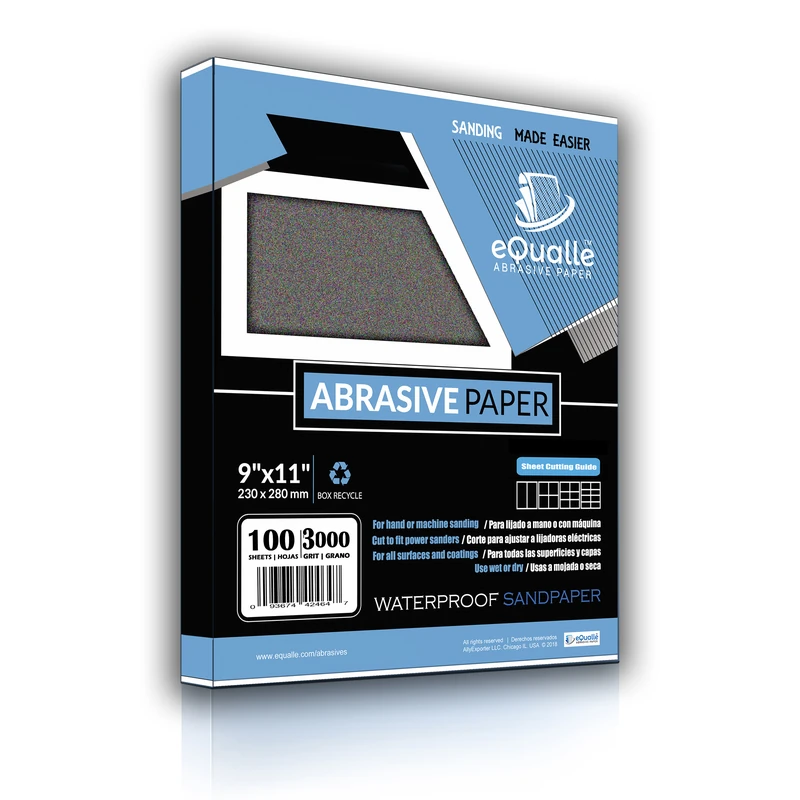
800 Grit Sandpaper Sheets (100-pack) — 9x11 in Silicon Carbide Abrasive for Wet or Dry Use — Smooth-polish abrasive for refining gloss layers on clear coat, resin, or composite surfaces before final buffing. (Professional Grade).
Frequently Asked Questions (FAQ)
Q: What’s the highest grit I should sand to before staining hardwood?
A: For most hardwoods, stop at 180–220 before stain. I prefer 180 for oil-based stains to keep pores open and color even. Save 220–320 for after sealing or between coats.
Q: How do I know if I’ve burnished the wood?
A: Look under raking light. Shiny islands in raw wood, smeared-looking pores, warm surface temperature, and dust that smears instead of powders are all signs of burnish.
Q: Will raising the grain fix over-polished spots for water-based finishes?
A: It can help, but it’s not a cure-all. Mist the surface, let it dry, then lightly sand 220. If shiny patches persist, drop a grit (e.g., back to 180) to reestablish uniform tooth.
Q: Should I use steel wool between coats?
A: Use synthetic pads instead, especially with water-based finishes that can rust steel fibers. Between coats, 320–400 grit or a gray pad levels nibs without cutting through or polishing too much.
Q: Why is a sanding block so important?
A: A block keeps the surface flat and distributes pressure evenly, preventing finger grooves and localized burnishing. On curves, use a flexible pad or shaped block to maintain the profile.
Q: Can I ever go to 400 or higher on bare wood?
A: Only when the finish system calls for it (e.g., French polish prep or certain specialized topcoats), and even then, you’ll usually apply a sealer first. In general woodworking, 400 on bare wood risks sealing pores too soon.