
Cross-Grain Scratch Removal and Swirl-Free Sanding
You notice it when the light finally goes low—when the shop door is cracked open and the last warm rays rake across a table top you’ve sanded twice already. That gentle, angled light doesn’t care how long you’ve been at it; it reveals everything. Faint arcs bloom across the surface where the random orbit sander tracked over a bit of resin buildup. A few shallow cross-grain scratches you thought were gone glow like contour lines. You’d swear the raw wood was perfect an hour ago; now it looks like a constellation of halos you didn’t ask for.
I’ve had those moments at the worst times—right before stain or with the client on the way. The fix isn’t a miracle product; it’s process discipline. Cross-grain scratch removal and swirl suppression aren’t brute-force problems. They’re about controlling scratch geometry, abrasives, machine setup, and the final with-the-grain refinement that erases orientation footprints before finish locks them in. Once you see sanding as micro-machining—each particle cutting a groove with a known profile—the path to clean, uniform reflectance becomes predictable, even on tricky woods like maple, walnut, or oak.
The turning point for many pros is learning to separate stock removal from scratch refinement. You cut fast with the right tool, then refine with the right pattern, then proof the surface under the right light. Nothing fancy—no mysticism—just understanding how orbit size, pad hardness, and grit progression control the size and direction of the grooves you’re leaving behind. The rest is discipline: keep discs sharp and clean, regulate pressure, and let dust extraction actually extract. Once those habits stick, the late-afternoon light stops being an adversary and turns into your quality-control partner.
Quick Summary: Remove swirls and cross-grain scratches by pairing the right abrasives and machine setup with disciplined, directional refinement and raking-light verification.
Where swirls come from
Swirl marks are the visible signature of three things interacting: scratch geometry, coating optics, and wood figure. Your random orbit sander (ROS) leaves a stochastic field of arc-shaped scratches because the disc rotates while its center orbits. On bare wood, these arcs can blend enough that they look matte and uniform. Under dye, pigment, or even a water pop, the arcs reappear because directional grooves trap color and scatter light differently than the surrounding surface. The more uniform the scratch depth and orientation, the less your eye sees pattern in reflected light.
Variables that magnify swirls include dull or loaded abrasives, soft interface pads, excessive downforce, and high orbit amplitude at fine grits. Loaded discs cut hot and smear, creating “J-hooks”—crescent scratches with a deeper end cut that telegraph dramatically under stain. A soft interface pad increases local compliance, so peaks in the workpiece push into the abrasive and grow the effective scratch depth. The result is a topography that reads like a subtle washboard at oblique angles.
Species matter. Diffuse-porous woods like maple are unforgiving because their closed pores don’t mask directional defects; they broadcast them. Ring-porous species like oak may tolerate a slightly coarser terminal grit because open pores break up reflected light, but cross-grain scoring across latewood bands can look like a zipper once stained. Curly or figured stock complicates the game. Grain reversals act like tiny ramps that exaggerate pad deflection; if you push hard to “make it cut,” you imprint arcs that are hard to chase later.
Machine dynamics also matter. A 3/16-inch orbit ROS cuts fast but is more prone to visible arc geometry at P180 and finer. A 3/32-inch orbit ROS or a linear sander reduces arc amplitude at finishing grits. Finally, dust extraction is not cosmetic—it cools the scratch interface and keeps abrasive grains exposed. Over time, the best swirl prevention isn’t extra passes; it’s avoiding the conditions that etch arcs in the first place.
Optimizing cross-grain scratch removal
When you inherit cross-grain scratches—from a belt sander, a planer defect, or aggressive ROS work—the solution is surgical: change direction, change grit, and refine scratch geometry in controlled steps. The goal isn’t merely to “sand more”; it’s to replace deep, oriented grooves with a uniform, shallower field that’s finally tuned with the grain.
Start with a grit that is just coarse enough to erase the offending scratches in 3–5 passes, no more. For obvious cross-grain tracks in hardwood, that’s often P100–P120 with a 3/16-inch orbit ROS and a hard or medium pad. Sand in a controlled cross-hatch: 7–10 degrees off the grain for the first pass set, then 7–10 degrees off in the opposite direction. This avoids re-trenching the same groove and ensures you intersect every scratch at an angle that fully severs it. Keep pressure to the weight of the tool plus a light guiding hand; more weight only deepens arcs and heats the interface.
Once the scratch field is replaced, progress by sensible ratios: roughly 1.3–1.5× grit steps (P120 → P150 → P180 → P220). At P180 and finer, switch to a 3/32-inch orbit ROS or a firm block with the grain. Your last two steps before finish should be strictly with-the-grain to align the micro-topography with the wood fibers and minimize cross-grain scatter.
To confirm that cross-grain scratch removal is complete before you climb grits, use a pencil grid or a light alcohol or water mist. The momentary darkening exposes any leftover cross-grain grooves. If you see persistent oriented lines after two refinement steps, drop back one grit and re-establish a uniform, intersecting scratch field. Don’t skip the final directional refinement: even perfect ROS work at P220 can leave faint arcs that dye will amplify. A 2–3 pass hand-sand with a hard block and fresh P220/P320, strictly with the grain, is the cheapest insurance you can buy.
Abrasives, pads, and machine setup
Abrasive choice determines the shape and stability of your scratches. Film-backed discs cut flatter and hold grain density better than paper on flat work, which means more uniform scratch depth and fewer random deep grooves. For heavy leveling, ceramic or ceramic/aluminum-oxide blends at P80–P120 maintain cut under heat and resist loading. For finish steps (P180–P320), high-quality aluminum oxide on film with a light stearate coat limits clogging without smearing resins.
Mesh abrasives paired with strong extraction reduce dust loading dramatically, especially on resinous species, but they can imprint slightly more visible arcs at fine grits if paired with soft interface pads. Keep interface pads thin (2–5 mm) and firm when you need flatness. Reserve thicker, softer pads for contours and edges where conformity trumps swirl risk.
Orbit and speed matter. Use a 3/16-inch orbit for P80–P150 when you’re still replacing deep scratches efficiently. Shift to a 3/32-inch orbit at P180 and finer to minimize arc amplitude. Run at mid-to-high OPM (8–10k), but temper speed on heat-sensitive finishes or veneers. Never muscle the tool—downforce beyond the weight of the sander plus a guiding hand only increases scratch depth and heat, growing swirls you’ll have to chase later.
Extraction is a performance variable. A tightly sealed pad with efficient holes or a multi-hole mesh disc hooked to a capable extractor keeps grain tips sharp and cool. If your sander allows, tune suction to avoid pad stiction that can introduce chatter patterns on large panels. Clean or swap discs the moment you see color streaking or feel drag—those are your cues that grains are dull or clogged and about to cut unevenly.
According to a article, many pros see fewer swirls when they use a ROS specifically to clear cross-grain scratches, then finish with controlled, with-the-grain passes. That sequence leverages the ROS’s speed for removal but still respects directional optics.
Finally, don’t neglect edges and end grain. Back-cut end grain with a finer grit than the faces (e.g., stop at P220 on faces, P320 on end grain) to harmonize color uptake and prevent an “outlined” look after finish.
Workflow for stain-grade surfaces
Stain-grade work is unforgiving. The objective is a surface that accepts color uniformly while hiding its own machining history. The following staged workflow balances speed with optical control.
Establish flatness and remove prior defects.
- Flip a bright raking light to 15–25 degrees. Mark the surface with a light pencil grid.
- Flatten with P100–P120 on a ROS (3/16-inch orbit, firm pad). Sand a cross-hatch at low pressure until the grid is gone and any cross-grain defects are visibly replaced by a uniform scratch field.
Intermediate refinement.
- Move to P150, repeat the cross-hatch. Verify under raking light and a quick water or alcohol mist. If any cross-grain lines persist, step back and rework them now rather than burying them.
Directional alignment.
- Shift to a 3/32-inch orbit ROS at P180 and sand with-the-grain only. Light passes, slow pace, full overlap. If using mesh, consider switching to film-backed discs to tighten the scratch field.
Preview color uptake.
- Water-pop uniformly with a damp microfiber or spray to reveal any orientation. Let dry thoroughly. Alternatively, wipe with naphtha to simulate finish reflectance without raising grain.
Final refinement.
- Hand-sand with a hard block and fresh P220 (or P320 for dense species) strictly with the grain, 2–3 passes. Vacuum and tack between steps. If dyeing dark, stop at P180/P220 to promote even absorption; for light stains or clear, consider P220/P320.
Four actionable tips for stain-grade success:
- Use a light, consistent stroke rate: target roughly 1–1.5 inches per second with full pass overlap to avoid “hot spots.”
- Replace discs early, especially at P180 and finer; dull grains imprint arcs that dye will exaggerate.
- Keep a dedicated, firm interface for flats; reserve soft pads for profiles only.
- After the final hand-sand, rotate the panel and re-check under raking light from two angles; directional defects often show up from only one orientation.
If you’re finishing floors, apply the same logic at scale: screen or disc-sand crosswise early to erase belt marks, then progress to with-the-grain passes with tighter grits and a smaller orbit. The last cuts before stain should be strictly aligned to the room’s dominant grain direction.
Quality control and defect detection
You can’t fix what you can’t see. Build a simple, repeatable inspection routine that catches cross-grain scratches and swirls before color or sealer locks them in. Start with light: a bright LED at a shallow angle (15–25 degrees) exaggerates topography. Move the light across the panel in overlapping sweeps. Rotate the work 90 degrees and repeat; many cross-grain lines are invisible until the light grazes them from a particular direction.
Use contrast methods sparingly but smartly. A fast-evaporating solvent like naphtha or alcohol darkens the surface long enough to reveal oriented defects without swelling fibers. For a higher-contrast check, lightly water-pop with a fine mist, wait 3–5 minutes, then inspect. This double-checks both scratch geometry and potential blotching. On pale, diffuse-porous woods, a faint pencil crosshatch between steps provides a simple indicator that the current grit has reached every square inch.
Magnification helps. A 10× loupe lets you read scratch density and depth; uniform fields mean the prior grit is truly gone. If you see random deeper lines, that’s a sign of stray grit or a loaded disc. Swap the abrasive, vacuum the surface and pad, and resand the affected area with the current grit until the anomaly disappears.
Don’t forget thermal cues. If the panel feels warm to the touch after a pass, your scratch field is probably too deep due to pressure, speed, or loading. Back off. And keep your environment clean: airborne grit can embed under a pad and cut rogue grooves that won’t blend out at your current step. A quick blast of compressed air across the pad and panel before every pass reduces this risk. Build these checks into your normal cadence; a minute of disciplined inspection can save an hour of rework after stain.
Wood Repair - — Video Guide
If sanding alone won’t erase damage—say, a localized cross-grain gouge—the right repair technique matters. A helpful overview comes from a tutorial demonstrating cross-grain repair using a burn-in stick. The presenter fills a damaged area, levels the repair flush, and blends the sheen so the fix disappears under finish. While it’s a repair, not a sanding pass, the lesson transfers: control the substrate geometry and orientation before you chase color or sheen.
Video source: Wood Repair - Cross Grain Repair
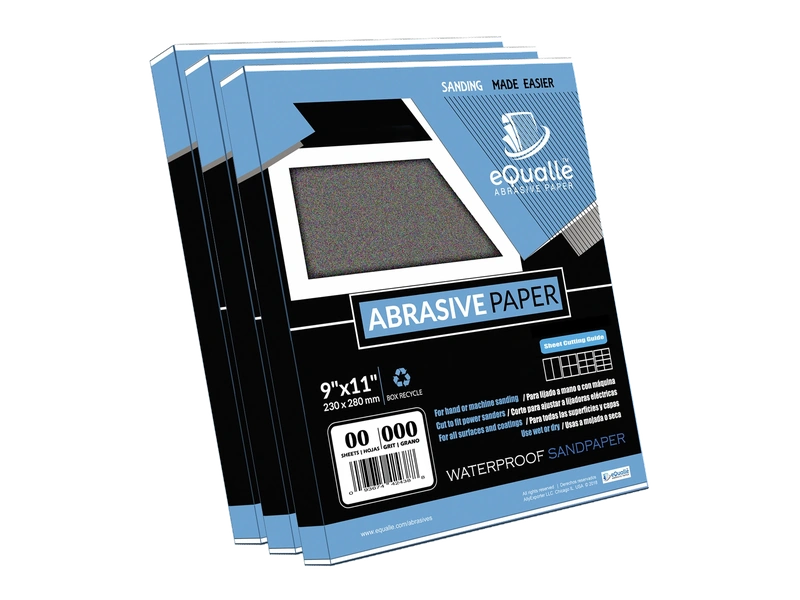
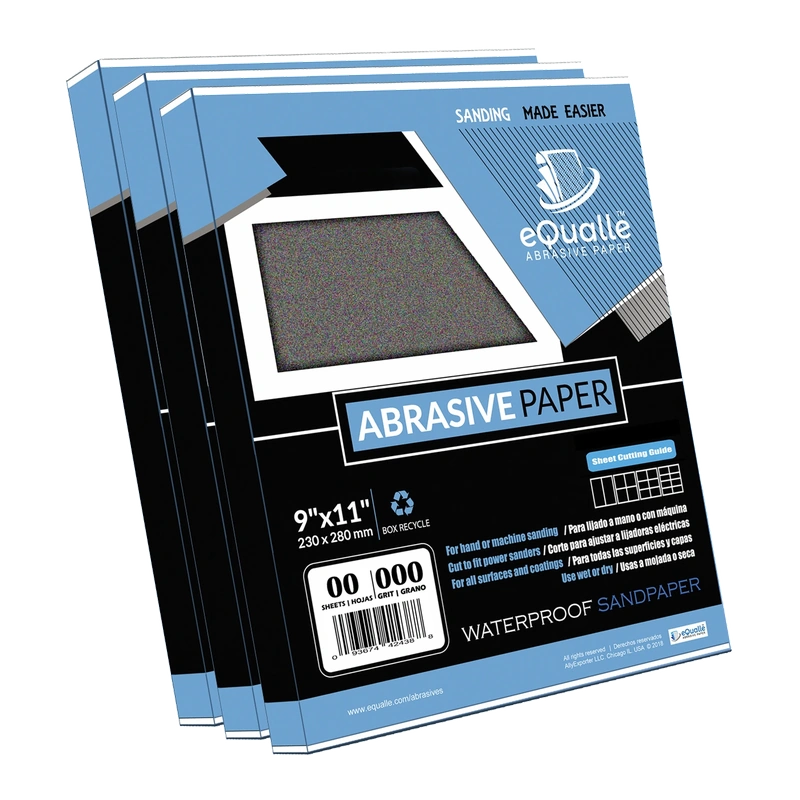
800 Grit Sandpaper Sheets (10-pack) — 9x11 in Silicon Carbide Abrasive for Wet or Dry Use — Smooth-polish abrasive for refining gloss layers on clear coat, resin, or composite surfaces before final buffing. (Professional Grade).
Frequently Asked Questions (FAQ)
Q: What’s the fastest reliable way to remove orbital swirls before stain?
A: Replace them with a uniform scratch field at an appropriate grit (often P150), then refine with a smaller-orbit sander at P180–P220 and finish with a hard-block hand-sand strictly with the grain. Keep pressure light and discs sharp to prevent reintroducing arcs.
Q: Should I finish at P180, P220, or P320 for stain-grade work?
A: For dark dyes and pigment stains on hardwoods, stop at P180–P220 to balance color uptake and smoothness. For light tints or clear-only finishes on dense species (maple, walnut), P220–P320 can improve clarity. Always test on offcuts under the intended finish schedule.
Q: How do I know if cross-grain scratches are fully removed before moving up a grit?
A: Use a pencil grid, raking light from two directions, and a quick solvent or water mist. Any persistent oriented lines after two refinement passes mean you should step back one grit and re-establish a uniform field before proceeding.
Q: When should I switch from a 3/16-inch to a 3/32-inch orbit?
A: Use 3/16-inch for stock removal (P80–P150) to erase defects quickly. Shift to 3/32-inch at P180 and finer to minimize arc amplitude and improve surface uniformity, then finalize with a hand block with the grain.
Q: Do mesh abrasives reduce swirls compared to film-backed discs?
A: Mesh improves dust extraction and reduces loading, which helps, but paired with soft pads it can imprint more visible arcs at fine grits. For the final steps on flats, a firm pad and film-backed discs typically yield the tightest, most uniform scratch field.