
Edger Sanding: Feathering Walls into the Field
The room is quiet except for the faint rasp of the edger and the soft hiss of dust moving through the vac hose. You’re on your knees at the wall line, where the baseboard shadow intensifies every scratch and every missed nib. This is the boundary where great floors are proven: that 6–12-inch zone between the edger’s orbit and the field left by the big machine. If you’ve ever pulled finish and seen a faint halo around the room the next morning, you know this transition can make or break a project. Edger sanding is not glamorous, but it’s where precision shows. Your field is flat and clean, the joints look tight, and the grain is bright. Now the edge has to meet it—seamlessly.
You sweep a raking light across the perimeter. The swirl pattern at 12 o’clock is visible, and the drum lines from the last cut are faint but present at the feather point. You angle the edger’s plate two degrees, heel-light, toe-committed, and clock your stance so the scratch trails into the room at 10–2 o’clock. You double-pass the perimeter with uniform overlap, then shift to a finer grit to expand the blend zone. The goal is simple: erase the handoff. No cratered swirls, no dish-outs under the base, and no plateau difference when you palm-sweep from wall to field. If you can’t feel the transition with your fingertips, you’re halfway there. If you can’t see it under hard side light, you’ve nailed it.
Homeowners won’t ask about feathering. They’ll only see a continuous sheen, color that doesn’t darken at the border, and a floor that feels monolithic under bare feet. Contractors know this takes intent—abrasive selection with predictable scratch geometry, platen control to avoid burnishing, pressure discipline, and the patience to screen the perimeter until it disappears. This article breaks down a reliable workflow to feather the wall edge into the field so your first coat looks like your final vision, not a surprise.
Quick Summary: Control scratch pattern, grit sequencing, machine angle, and screening to feather edge cuts invisibly into the field and prevent halos, swirls, and chatter.
Why feathering edges matters
Feathering is the controlled overlap between the edger’s orbital scratch and the big machine’s linear scratch, designed to equalize both cut depth and scratch size before finishing. Without a deliberate feather, you invite three common defects:
- Haloing: A tonal ring around the room where edger scratches trap more pigment or reflect light differently than the field.
- Plate dish-outs: Localized depressions under baseboards caused by over-pressure or lingering in one spot.
- Transfer lines: A visible step where the last drum pass meets the edger’s reach, often revealed by raking light or after the first coat.
From a surface-preparation standpoint, the feather zone is where abrasive performance is most critical. The objective is uniform removal with minimal heat and consistent scratch geometry. Heat leads to burnishing, glazing the surface and sealing fibers, which then reject stain or take polyurethane differently. Conversely, under-cutting with a too-coarse grit leaves deep grooves that require aggressive screening later, risking over-thinning the top wear layer.
Think of the transition as a composite of three variables: cut direction, scratch depth, and pressure distribution. Cut direction should bias into the room so the scratch tails meet the field at a shallow angle. Scratch depth must step down progressively through the feather zone—never jumping more than one grit grade at a time. Pressure distribution is about stance and plate attitude: toe-down drives the cut, heel-down cools and flattens; keeping the tool moving prevents thermal spikes.
Aim for a feather width proportional to the grit you’re finishing with. On new installs finishing at 100–120 field grit, a 6–8-inch feather band is adequate. On refinish cuts or stain jobs finishing at 120–150 field equivalent, expand to 8–12 inches to ensure the edger’s finer scratch fully overlays the field’s final pass. The smaller and more uniform the scratch family in this zone, the more invisible the transition will be after finishing.
Abrasive sequences that actually blend
Feathering success starts with an abrasive sequence that respects both removal rate and scratch shape. Your goal is to synchronize the edger path with the field’s final scratch family, then micro-refine at the wall line.
- Stock removal pass (edges): If the field first cut is 36 or 40 grit on the drum, mirror the edge with 40 grit on the edger. Use a tough grain (zirconia or ceramic blend) with open coat to limit loading. Keep the edge pass light and mobile—no stalling under baseboards.
- Intermediate pass: When the field steps to 60 grit, bring the edge to 60 or 80 depending on floor hardness. On dense species (maple, hickory), 60 is safer; on softer oak or fir, you can move to 80 earlier.
- Pre-feather pass: As the field hits 80 or 100, the edge should be 100. Use a fresh, sharp paper—dull 100 grit behaves like a glazed 150 and will burnish instead of cutting.
- Feather pass: Match or exceed the field’s final grit by one step at the perimeter. If the field final is 100, feather at 120 around the room and expand 6–12 inches into the field with light overlaps.
- Screening: Integrate a 100–120 mesh screen on a buffer to unify. On stain jobs, take the perimeter to 120–150 equivalent and screen at 120–150 to normalize micro-scratch.
Sequencing matters more than heroics with pressure. A predictable recipe removes surprises at finish. Closed-coat papers cut cleaner but run hotter; open-coat mitigates loading on resanded finishes. Stearated papers run cooler and resist loading under aluminum oxide factory finishes, but too much stearate can smear heat-affected areas—watch your dwell time.
Three actionable tips for abrasive setup:
- Switch discs at 50–60% life in the feather zone. “Good enough” discs leave inconsistent scratch that only shows after finish.
- Use a medium-hard backing pad for your feather grits; soft pads conform too much and amplify dish-outs near trim.
- Sort discs by batch or vendor; mixing different scratch signatures in the same grit can telegraph in finish.
Dialing in edger sanding for seamless blends
Mechanical control is where consistency lives. Edger sanding near a wall demands control of three angles: plate angle (toe vs heel), clock angle (how the machine’s scratch aligns to the room), and travel angle (your path relative to the wall). The ideal blend biases cut direction into the field while keeping the highest energy under the edger’s toe just inside the baseboard, never against it.
- Plate angle: Maintain a slight toe-down attitude (1–3 degrees) for the cut, shifting heel-down for a cooling pass as you feather. Heel-down pass reduces high spots and flattens the scratch dish.
- Clock angle: Clock your edger so the scratch flows 10–2 o’clock relative to the wall. That means your body is offset and you’re arcing the machine so scratch tails point into the room, not along the wall.
- Travel angle: Work in 18–24-inch strokes with 50% overlap. On return strokes, reduce pressure and slightly widen the path to start expanding the feather.
Your stance drives pressure mapping. Keep your lead foot in line with the scratch direction; don’t pivot off the machine. Short, consistent strokes beat long, heavy sweeps that build heat. If you feel the plate pulling or glazing, you’re heeling too hard or dwelling.
Control heat. Edgers generate thermal spikes faster than big machines. Rotate discs frequently, vacuum between grits, and let the plate spin down on the floor to avoid scoring at startup. On resin-rich old finishes, a quick, cool 60-grit pass can “open” the surface before your planned grit to prevent glazing.
Interface pads and plate dressing: Dressing a new edger plate (breaking sharp edges, ensuring flatness) stabilizes scratch and prevents ring marks. A thin interface pad can help in feathering by slightly decoupling plate vibration from the floor, but avoid over-soft interfaces that hollow the perimeter.
According to a article.
Edge-to-field alignment test: After your feather pass, lay a raking light 6–12 inches off the wall. Run your fingertips across the transition. You should feel no step and see a uniform matte without arcs. If you detect a shadow arc, repeat a light heel-down pass with your feather grit, then plan to screen with a 120 mesh to equalize.
Contour control at walls and obstacles
Feathering gets harder where geometry changes—radiators, stair nosings, bullnosed treads, and door casings. Each obstacle risks inconsistent pressure and over-cut edges. The key is tool selection and micro-movements.
- Baseboards and out-of-flat walls: Many walls aren’t straight. Use short, segmented strokes and keep the machine’s toe tangential to the wall. If the wall bows, narrow the path to avoid pushing the toe deeper and dishing.
- Radiators and tight recesses: Radiator edgers or right-angle head tools with 5–7-inch discs can extend reach while maintaining a consistent scratch family. Match abrasive grit to your main edger sequence and keep a medium-hard interface to prevent scalloping.
- Stair nosings and transitions: For bullnoses, shift to a flexible abrasive with a foam interface for the radius itself, but end your blend on the flat leading into the field with your standard feather grit to avoid a halo at the nosing line.
- Door jambs and casings: Score the shoe molding line with a scraper to break finish and minimize tear-out. Keep the edger’s toe aimed slightly away from the trim and finish with a card scraper where the machine can’t maintain angle control.
Obstacle strategy tips:
- Pre-cut the perimeter with a sharp scraper or multi-tool to remove thick finish ridges that would load your first abrasive pass.
- For painted baseboards, blue-tape the lower edge as a visual fence; it cues your return stroke and helps keep the toe off the paint.
- Use a pencil line to mark your intended feather width around obstacles; rechecking this line curbs the temptation to shrink or over-expand the zone in tight spaces.
Consistency matters more than aggressiveness. The feather zone must remain wide and even—even if you have to switch to a smaller edger. Resist the urge to “get it done” in corners with a too-coarse grit; you’ll pay for it during screening when those deeper scratches remain visible.
Screening, inspection, and finish prep
Even with perfect edger technique, the feather blend usually needs a unifying pass. Screening equalizes micro-scratch and evens out pressure-induced sheen differences.
- Screen selection: For clear finishes on natural floors, 100–120 mesh often balances cut and refinement. For stain, step to 120–150 mesh to tamp down visible arc remnants. Use a maroon pad beneath the screen to maintain even contact without bite-through.
- Perimeter focus: The buffer’s pad driver can overhang into the wall if you’re not careful. Walk the buffer so the pad’s outer third barely kisses the baseboard line, then expand outward in overlapping arcs to fold the feather into the field. Rotate your body position so the machine doesn’t “walk” away from the wall.
- Dust control: Vacuum after every screening pass; screen dust is fine and can clog pores, skewing stain uptake. Use a clean, dedicated vac head for the perimeter to avoid re-depositing grit.
- Raking light and tactile check: Before calling it done, kill the overheads and use a bright, low-angle light to scan the room. Palpate the feather band with your palm flat. Your fingers can feel steps the eye misses.
Pre-finish wetting-out test: For water-based finishes, a controlled denatured alcohol wipe on a small, inconspicuous perimeter section can preview how light will reveal scratch families. For oil-based, a drop of mineral spirits can simulate color lift. If a halo appears, revisit your feather pass or add a quick hand sand with a 120 grit foam-backed pad to knock down outliers.
Final prep:
- Tack cloth or microfiber dampened slightly with water or solvent system-compatible cleaner to pick up fines.
- Seal coat strategy: If you suspect any residual halo risk on stain jobs, consider a washcoat (e.g., a compatible sealer) to moderate uptake variations at the feather zone before full-color application.
- Ventilation and cure planning: Keep airflow gentle and uniform; high-velocity perimeter drafts will flash the edge faster than the field and can visually amplify a barely-there scratch disparity.
Troubleshooting lines, swirls, and chatter
Even pros encounter edge artifacts. Systematic diagnosis prevents repeats.
- Visible line at 6–10 inches from the wall after first coat: This is the classic “transfer line.” Root cause is grit mismatch—edge finished at a lower grit than field—or insufficient feather width. Remedy: After cure, abrade the line area with 120–150 screen, expanding 6–12 inches, then recoat. For severe lines on stain, spot abrade, restain carefully, and feather color into the field.
- Swirl halos under raking light: Typically from a soft interface pad, too much heel pressure, or running a dull disc. Remedy: Re-edge lightly with a fresh feather grit (120), toe-biased, then screen at 120. Ensure disc rotation speed is stable; voltage drop can change RPM and scratch behavior.
- Chatter reflection from the drum telegraphing at the feather: The field has micro-chatter that the edger didn’t erase. Remedy: Take the field back one grit and re-cut the chatter zone, then rebuild your edge sequence to match. Minor chatter can sometimes be knocked down with a sharp 100 screen and lots of patience, but don’t rely on screening to fix structural chatter.
- Burnishing and stain rejection at edge: Heat glazed the edge, especially on dense species. Remedy: Break glaze with 100–120 grit fresh paper on the edger or a hand block, then screen. Pre-test stain uptake before committing coat.
Four field-proven tips to avoid trouble:
- Never jump more than one grit between edge and field at the feather. Match, then exceed by one at the perimeter.
- Change stance, not pressure, to adjust your cut. Reclock your body to change scratch angle instead of leaning harder.
- Keep the feather band consistent in width—chalk line it if needed. Inconsistent width shows as variable reflectance.
- Vacuum and inspect between every grit. Dust masks scratch detail and tempts you to rush.
Edger Sanding Tips — Video Guide
In this short pro clinic, a veteran contractor demonstrates how to dress a new edger plate, set the correct machine attitude, and produce clean, consistent wall-line scratches that blend invisibly into the field. He explains why small adjustments to toe/heel pressure and clock angle change scratch geometry, and shows how to correct a persistent perimeter line without over-cutting.
Video source: Edger Sanding Tips for Wood Floor Pros | Lenny Hall NWFA at City Floor Supply
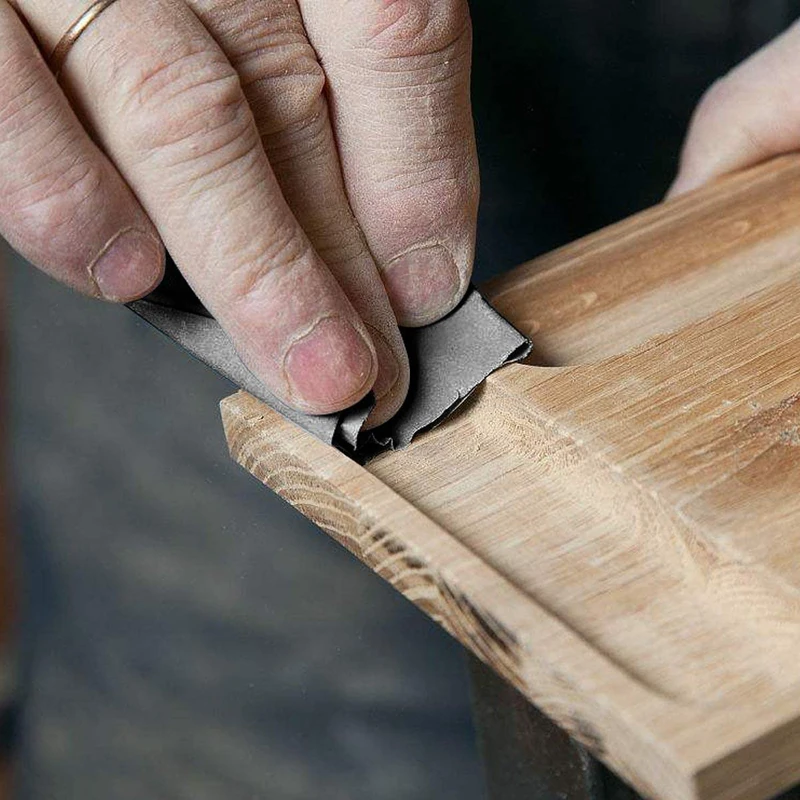
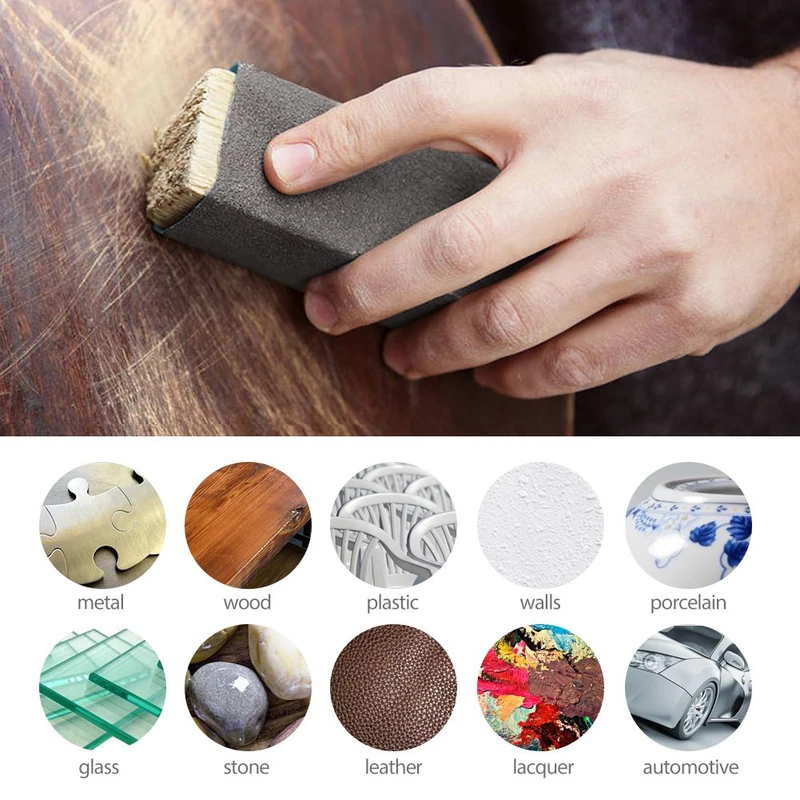
240 Grit Sandpaper Sheets (10-pack) — 9x11 in Silicon Carbide Abrasive for Wet or Dry Use — Smooth-cut abrasive for soft blending, de-nibbing, and light surface preparation before polishing or coating. (Professional Grade).
Frequently Asked Questions (FAQ)
Q: How wide should my feather zone be from the wall into the field?
A: Plan for 6–8 inches when finishing the field at 100–120 grit on natural floors, and 8–12 inches when finishing finer or staining. The feather must be wide enough to fully overlay the field’s final scratch with your edge’s finer grit and a screening pass.
Q: What grit should I use on the edger to match a 100-grit field finish?
A: Cut your edge to 100 grit, then perform a feather pass at 120. Follow with a 100–120 mesh screen over the entire floor to unify scratch families. On stain jobs, consider stepping the feather to 150 before screening at 120–150.
Q: How do I stop swirls from showing at the wall line?
A: Use fresh abrasives, maintain a slight toe-down attitude, and clock the machine so scratch tails angle into the room. Avoid soft interface pads for your feather grit, keep strokes short with 50% overlap, and screen at 120 to erase residual arcs.
Q: Can I fix a visible edge/field line after the first coat?
A: Often, yes. Abrade the line with 120–150 screen, expand the feather band, vacuum thoroughly, and recoat. For stained floors, you may need to carefully restain the abraded area and blend color into the field before recoating.
Q: What’s the best abrasive type for edger work near walls?
A: Use high-quality zirconia or ceramic blend discs for stock removal, then switch to sharp, consistent aluminum oxide for feather grits (100–150). Choose open-coat or light stearate to control loading and heat, and pair with a medium-hard backing pad to resist dish-outs.