
Mastering 2000–3000 Grit Wet Sanding for Faster Polish
The scene is always the same: the shop lights hum, the smell of fresh clear coat or lacquer hangs just enough to make you second-guess a glove change, and your reflection in the panel looks almost there—shiny, but a little hazy. You know the gloss is hiding under a thin mat of micro-scratches. You’ve already leveled the surface with 1500 grit. The choice now decides how long you’ll be stuck at the buffer: keep compounding forever or step smartly into 2000–3000 grit wet sanding and let the abrasive do the heavy lifting. I’ve been on both sides of that decision in my workshop. The fastest path to a deep, consistent gloss most days? 1500 to 2000 to 3000, then a confident, controlled buff.
This workflow isn’t just about speed—it’s about predictability. With the right pads, pressure, and lube, 2000 grit turns those 1500 valleys into shallow, uniform grooves you can polish out without cooking the surface. Then 3000 grit, especially on a foam interface, refines everything to a satin glow that needs remarkably little compound to pop. Whether you’re freshening up a daily driver, bringing a turned wood bowl to a mirror, or finishing a guitar body that will spend its life under harsh stage lights, the same logic applies. You’re stacking consistent, smaller scratches that buff out fast and clean.
I’ve taught apprentices and weekend warriors alike: control your scratch pattern and the shine will follow. Understanding what each step does to the surface is the difference between two passes and ten. If you’ve ever chased swirls for hours, or watched a pad load up with smeared clear, you were probably trying to jump the ladder. Take the small steps, and your buffer time drops in half—sometimes more. That’s the beauty of the 1500 → 2000 → 3000 progression: it gives you clarity at each checkpoint before you even pull the wool off the shelf.
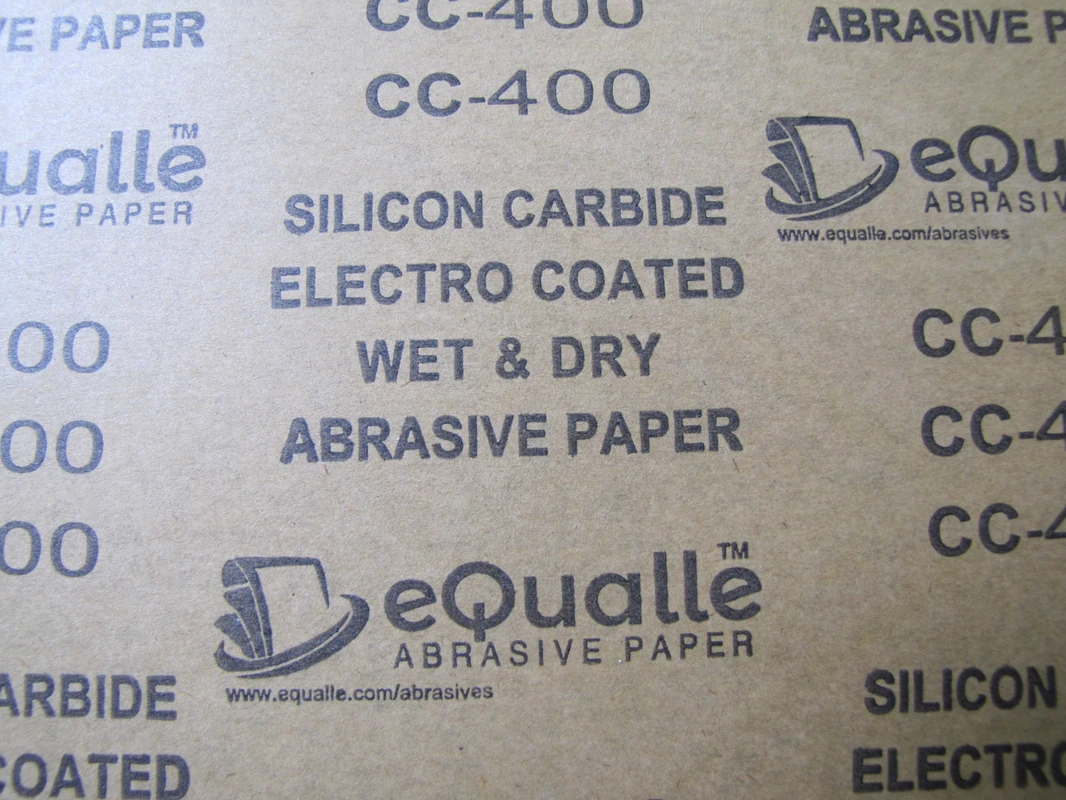
Quick Summary: For faster, cleaner polishing, sand at 1500 to level, refine with 2000, finish with 3000, then buff—control the scratch pattern and the gloss arrives quickly.
Why the 1500→2000→3000 path works
The job of 1500 is to flatten, not to finish. It’s your contouring grit—the one that erases orange peel, blends dust nibs, and defeats waves. If you stop at 1500, you’ve leveled, but you haven’t refined. Those scratches are still deep enough that even a strong cutting compound must convert a lot of surface into heat and dust to get beneath them. That equals time, pad wear, and risk.
Shifting to 2000 grit shortens the scratch depth dramatically. On the surface, this seems like a tiny jump. In practice, it’s a big reduction in valley depth without losing tracking control. You can still see your scratch pattern clearly under shop lights, which is important for coverage. I teach a 45° crosshatch: one direction with 1500, the opposite with 2000. When your 2000 pattern erases the 1500 lines across the entire panel, you know the deeper furrows are gone.
That final sanding step at 3000 takes the blur of 2000 and turns it to a matte-satin glow. Now the buffer doesn’t have to “dig.” Instead, it does what it does best—slices off the last whisper of haze. If you’ve ever had compound sling and haze come back after wipe-down, that’s a sign you asked the buffer to remove too much. 3000 fixes that by setting up an easy finish that responds to light pressure and a consistent pass.
Three key benefits of this path:
- Speed: Less compounding and fewer polishing stages.
- Safety: Lower heat, less chance of edge burn or swelling.
- Predictability: Clear visual checkpoints; when the scratch direction changes, you know you’ve fully refined.
This isn’t only for automotive clear. Woodturners and instrument builders love it because the fine grits keep contours true while building a deep, wet look without cutting through dye or thin coats. The physics are the same: make smaller, more uniform scratches, and buffing becomes a formality.
Dialing in 2000–3000 grit wet sanding
Moving from 1500 to 2000 to 3000 is more than swapping discs. The technique changes as the scratches get smaller. The deeper you are in the refinement phase, the more you manage pressure, lube, and cleanliness.
Start by switching to a softer interface at 2000, especially on curved panels or turned pieces. A 3–5 mm foam interface between your DA and the disc keeps the abrasive conformal, so you don’t “bridge” low spots or introduce flats. Keep the DA speed moderate—around 3 for most machines. Too fast at this stage can micro-melt thermoplastics and load the paper. Too slow and you’ll leave inconsistent marks.
For lubrication, a spray bottle with clean water and a dash of car-wash soap or a dedicated wet-sanding lubricant is your friend. You’re aiming for a ribbon of slurry that stays creamy, not watery. Flooding washes away abrasive debris too aggressively and reduces cut; going too dry clogs the abrasive and gouges. Every minute or so, stop, squeegee with a soft rubber blade, and check under bright, raking light. You should see a uniform, directional haze. Any islands with deeper cross-scratches are spots where 1500 still lives—stay on them with 2000 until the pattern is consistent.
At 3000, lighten your touch. Your hand pressure should drop to about half what you used at 1500. Let the foam-backed disc kiss the surface. Here, cleanliness is king: rinse the panel and pad frequently. A stray 1500 grain or a bit of dried compound will write a story you’ll read again under the buffer.
Four tips that make these grits sing:
- Use a guide coat, even at 2000. A mist of wax pencil or dry guide coat reveals low spots and leftover coarse scratches.
- Sand in short sets. Work 2’x2’ sections, then stop, squeegee, and inspect. You’ll waste less time wandering.
- Keep edges safe. Mask delicate edges with two layers of tape and sand off-edge, never into it.
- Replace discs the moment they stop cutting cleanly. A dull 2000 is slower and scratches worse than a fresh 3000.
When your 3000 pass leaves a uniform, soft sheen without darker “pits,” your surface is buff-ready. That’s the green light to put the sandpaper down and grab the pads.
Tools, lube, and technique that save hours
The right kit turns this from a chore into a rhythm. I keep two DAs set up: one 5" with a medium interface for 1500/2000, one 3" with a soft interface for edges and tight areas. A clean squeegee, lint-free wipes, and two spray bottles—one for soapy lube, one for plain water—stay on the cart. For wood or resin work, I’ll throw in a tack rag and solvent-safe panel wipe.
A matched system helps. If you start with a high-quality 1500 film disc, stick with the same brand’s 2000 and 3000 foam-backed or trizact-style. Consistency in abrasive grading keeps your scratch map predictable. At 2000, I prefer a film disc that resists loading. At 3000, I switch to a foam-backed or engineered abrasive that leaves a near-polish right off the DA.
Technique-wise, picture your passes as mowing lines on a lawn. Overlap 50 percent. Count your seconds per pass: three to five seconds from one side of a 2’x2’ section to the other. If you’re not counting, you’re guessing. Keep the pad flat unless you’re intentionally feathering an edge—then raise no more than 10 degrees. The goal is contact, not pressure.
Contamination control is huge. If you’re restoring headlights or working plastics after paintwork, clean everything between each grit: hands, squeegee, panel, and hose the floor if needed. One rogue grain can undo 20 minutes of finesse.
- Actionable checklist before you buff:
- 1500 haze fully replaced by a singular 2000 direction
- 2000 haze fully replaced by a uniform 3000 satin
- No shiny islands, no deep crosshatch ghosts
- Edges intact and protected; panel cool to the touch
- Fresh microfiber wipes that don’t shed
According to a article, many swirl complaints come from rushing through 1500 and 2000 or skipping 3000 entirely. I see it all the time in the shop: folks try to “buff it out” with a heavy-cut compound, then chase haze for hours. The fix is simpler than new bottles—complete each sanding step until the previous scratch direction is gone, then move on. That discipline means your buffer works like a finisher, not a grinder.
From sand to shine: buffing that pops
Your sanding set the table; buffing is just the meal. With a thorough 3000 finish, the right combination is usually a medium-cut compound and a foam cutting pad, then a fine polish on a finishing pad. Wool has its place for heavy correction, but if you’ve done the 2000–3000 work right, you often won’t need it.
Start with a clean, primed pad—spread a thin layer of compound, work it into the pad, then add three pea-sized drops. Set your machine to a moderate speed. On a rotary, keep it low and mobile; on a DA, around speed 4 is a good starting point. Work small sections with controlled arm speed, overlapping 50 percent. Keep the pad flat and the cord off the panel. If the compound starts to dust, you’re overworking it; if it smears, you’re either too much product, too little cut, or the panel’s still oily. Wipe with panel wipe and reset.
Lighting matters. Switch off the broad shop lights and use a single raking light to inspect. Swirls will announce themselves right away. If you see faint trails after your first pass, don’t jump grits backward—adapt your approach:
- Reduce pressure and slow your arm speed slightly.
- Switch to a fresh cutting pad of the same type.
- If trails persist, step to a one-step “cut and finish” compound and polish the area clean.
When the haze is gone, move to finish polish on a soft foam pad. Here, less is more. Two or three drops, slow passes, minimal pressure. You’re not removing material; you’re clarifying it. Wipe down with clean microfiber, rotate towels frequently, and keep them off the floor—contamination at this stage shows up instantly.
On plastics like headlights, seal with a UV-stable clear or a proven protectant after polishing. On wood, apply your preferred finishing system—oil, lacquer, or a dedicated polish—and let it cure undisturbed. The mirror you see now didn’t come from a miracle compound. It came from disciplined sanding and a calm, methodical buff.
- Three buffing habits that pay off:
- Cool panels only—if it’s warm to the touch, let it rest.
- Pad hygiene—blow out or brush pads every panel; wash between stages.
- Final inspection under multiple lights—sunlight, cool LEDs, and a warm halogen if possible.
Wet sanding and — Video Guide
If you like to learn by watching the process, there’s a solid walkthrough that mirrors this approach. The maker starts by wet sanding at 600, then steps through 800, 1500, and 2000 before buffing with a 6-inch foam pad. It’s a woodturning piece, but the sequence and touch translate perfectly to automotive and instrument work.
Video source: Wet sanding and buffing for a mirror gloss finish - wood turning and gloss finish
1000 Grit Sandpaper Sheets (50-pack) — 9x11 in Silicon Carbide Abrasive for Wet or Dry Use — Gentle polishing grit that removes swirl marks and fine scratches on automotive or resin finishes. (Professional Grade).
Frequently Asked Questions (FAQ)
Q: Can I skip 2000 and go straight from 1500 to 3000?
A: You can, but you’ll spend more time at 3000 erasing the deeper 1500 scratches, and you risk leaving ghosts that reappear after wipe-down. The 1500→2000→3000 sequence is usually faster overall and delivers a cleaner finish.
Q: How much pressure should I use when wet sanding at 3000?
A: Light. Think the weight of your hand, not your arm—roughly 2–3 pounds of pressure. Let the abrasive do the work, and focus on even coverage and lube management.
Q: My 2000 grit leaves random deeper lines—what’s wrong?
A: Likely contamination or a loaded disc. Rinse the panel and disc frequently, replace the disc if it stops cutting evenly, and keep a clean squeegee for inspections. Also ensure your DA speed isn’t too high, which can drag debris.
Q: Should I use wool if I finished at 3000?
A: Usually no. A medium-cut compound on a foam cutting pad is enough after a proper 3000 finish. Save wool for heavy correction or when you stopped at a coarser grit.
Q: What lube mix works best for wet sanding?
A: Clean water with a few drops of car-wash soap per quart works well. Dedicated wet-sanding lubricants are excellent too. Aim for a creamy slurry that keeps the surface slick without flooding away your cutting action.