
Master High Spots with a Sanding Block and Pencil
The first cold coffee on the bench, a board that looked perfect last night, and that quiet moment when the shop lights flicker on—that’s where real surface work starts. You run your fingers along the panel and feel a whisper of a ridge where there shouldn’t be one. It’s the same dance whether you’re blocking a guitar body, flattening a cherry tabletop, or prepping a fender for primer: light, touch, and patience. The fastest way to truth? A few pencil marks and a faithful sanding block. No guesswork, no chasing illusions—just clear, visual feedback that tells you exactly where to work and when to stop.
I learned to trust pencil marks on a commission where time and perfection both mattered. The tabletop was wide, the light unforgiving, and the margin of error small. I tried the “wing it” method—spot sanding where I thought it needed attention—and kept correcting what I’d just created. Then I squiggled a light pencil pattern across the surface, set a sanding block to work, and watched the graphite map change. The first few strokes made it obvious: high spots erased the pencil immediately; low spots held on to the lines. Suddenly, the surface was speaking clearly.
It’s a technique that scales—small jewelry boxes, curved carvings, drywall seams, automotive panels. The principle never changes: mark lightly, block sand purposefully, read the pattern. You don’t need fancy dyes or expensive gadgets; a sharp pencil and the right block get you the feedback loop you’ve been missing. If you only adopt one finishing habit this year, make it this one. The cost is pennies and a few extra seconds per pass. The payoff is dead-flat, crisp work that holds up under any light, any finish, and every hand that touches it.
Quick Summary: Use light pencil marks and a sanding block to reveal and correct high spots fast—erase marks on highs, keep marks on lows, and stop the second the pattern evens out.
Read the surface like a pro
Most surfaces lie until you force them to tell the truth. Pencil marks make the lie visible; raking light and a steady technique make the fix predictable. Here’s the workflow I use on wood and bodywork alike.
Clean the surface. Remove dust and loose grit so you don’t grind debris into scratches. If you’ve jointed or planed, wipe away any sap or resin.
Choose your pencil. Use an HB or 2B for wood, a softer 3B for metal and primer. You want marks that are visible but not smeary. Avoid markers—they bleed and stain.
Mark a pattern. Draw light, continuous squiggles or a loose crosshatch across the entire area. Keep them faint. If you can feel the graphite ridge, you’ve gone too heavy.
Set raking light. Position a shop light low and off to one side so shadows exaggerate highs and lows. Natural window light at an angle works in a pinch.
Take a test pass. With your sanding tool of choice (we’ll cover blocks next), make 4–6 controlled strokes, then stop and read. High spots will show up as clean, erased areas; lows will still wear pencil.
Adjust and repeat. Attack the highs diagonally with light pressure until the pencil fades evenly across the field. When everything disappears together, you’re flat.
H3: What the pattern tells you
- Wide, immediate erase = dominant high spot. Reduce pressure and expand your sanding area so you don’t create a divot.
- Persistent pencil islands = lows. Don’t chase them by digging. Keep your block flat, remove the surrounding highs, or fill if the low is deep.
- Diagonal streaks = uneven pressure or a bowed block. Check your block’s face and your grip.
H3: Why the marks must be light Heavy graphite clogs paper and can drive into open grain. Light lines brush off as soon as you touch them, preserving your grit and your clarity. Think “guide coat,” not “coloring book.”
Dialing in with a sanding block and light
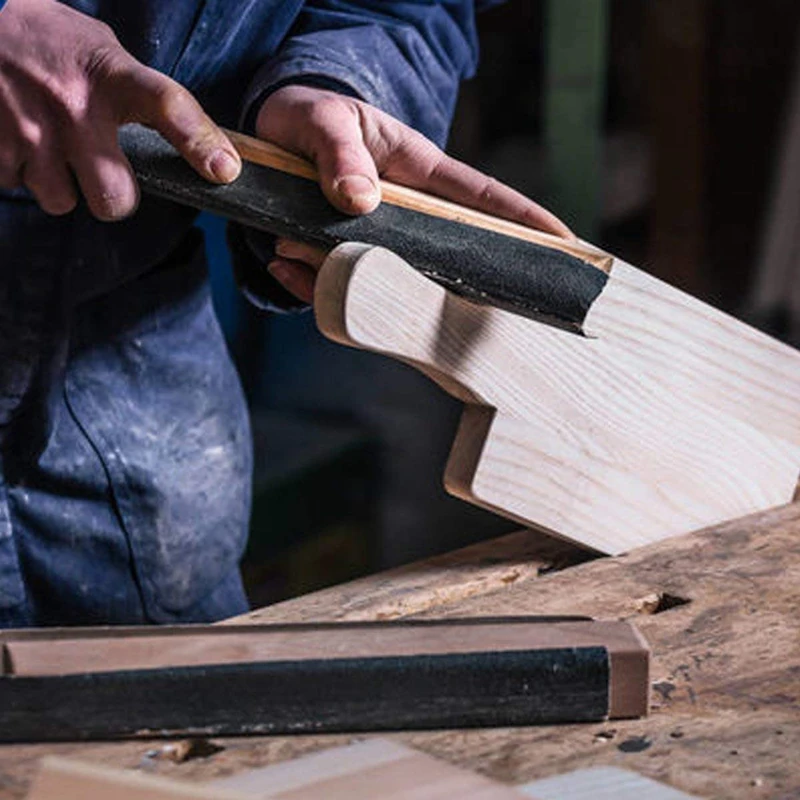
The sanding block is the translator between your hand and the surface. Blocks keep you honest: they bridge across lows and ride highs until the surface earns its flatness. Pick the block that matches the task and let it do the alignment work.
H3: Choose the right block
- Hard, flat blocks (acrylic, hardwood, aluminum): Perfect for flattening panels, edges, and bodywork. They cut highs aggressively without dipping.
- Medium-flex blocks (cork, rubber): Great for subtle curves and boards with slight camber. They “average” well without following minute ripples.
- Soft foam blocks: Use for final feathering or complex contours. They conform—excellent for blending, not for initial flattening.
H3: Step-by-step block technique
Load the paper flat and wrinkle-free. Let grit wrap slightly around the block edges, but don’t overwrap—too much radius rounds edges.
Start coarse but sane. On raw wood or primer, 120–150 grit finds highs without digging trenches. Reserve 80 for rough corrections.
Sand diagonally at 30–45 degrees across the grain or panel line. Change direction with each cycle to avoid bias.
Keep pressure even. Use two hands and lead with the fingertips. Don’t press harder when you see a high—that just makes a crater. Instead, take more passes.
Pause early and often. After every 6–8 strokes, blow off dust and read the pencil. Stop the moment the marks fade evenly.
H3: Raking light makes the block smarter Angle your light so it travels across your strokes. The combination of disappearing pencil and moving shadow gives you a 3D readout. If your light is straight-on, you erase your best cues.
Pro tips
- Put a piece of contrasting tape on your block’s face. If you start tipping, you’ll see the tape peeking at one edge—correct your grip.
- For long edges, use a longer block than the work is wide. A 12–16 inch block keeps panels honest.
- If the block chatters, you’re too dry or too coarse. Drop a grit or dampen the dust with a light mist when appropriate (drywall/primer only; never on bare wood unless you’re intentionally raising grain).
Patterns, grits, and pressure control
With the basics in place, refine your system so every pass counts. Your goals: consistent scratch patterns, predictable removal, and zero surprises when finish hits the surface.
H3: Set a grit sequence you can trust
- Flattening: 120 → 150 → 180. Only move up when pencil fades evenly and the prior grit’s scratches are gone.
- Pre-finish on hardwood: 180 → 220. Stop at 220–240 to avoid burnishing—your finish needs a tooth.
- Primer/auto body: 180 → 220 → 320. Use guide coats (dry powder or light mist) as your “pencil” between grits.
H3: Use crosshatching as a lie detector Alternate your stroke angle by about 60–90 degrees between cycles. The change makes old scratches easy to see and keeps your pressure distribution honest. If you can’t see old scratches after 6–8 strokes, you moved up too early.
H3: Manage pressure by the numbers
- Think grams, not gorilla. On a mid-size block, 1–2 kg of downward force is plenty. Practice by setting a small scale on the bench and learning the feel.
- Let the block stop itself. If your pass wants to drift or catch, lighten up; you’re forcing it to follow your hand instead of the plane of the surface.
- Use more strokes, not more weight. Extra pressure rounds edges and prints your fingertips through soft blocks.
Guide coats and substitutes If you prefer less graphite, a dry powder guide coat or even a puff of contrasting chalk dust works beautifully on primer, gesso, and some woods. The principle is the same: the highest points wipe clean first, the lows hang on. For wood with tricky grain, a super-light spritz of shellac followed by pencil can sharpen your read without raising fuzz.
According to a article, light, squiggly pencil lines are enough—too much graphite simply muddies the readout and clogs your abrasive.
Actionable tips
- Sharpen your pencil often. A dull tip lays heavy lines; a sharp one deposits just enough graphite to guide you.
- Renew marks after every grit change. Fresh lines keep you from “polishing the problem.”
- Label your paper’s back with grit and date. You’ll catch worn sheets before they burnish instead of cut.
Troubleshooting lows, highs, and edges
Every surface throws curveballs. The trick is recognizing the pattern and applying the right fix without creating a new problem.
H3: Persistent lows If islands of pencil refuse to disappear, don’t dig at them with finger pressure. That just creates a dish. Instead:
- Expand your sanding zone. Work a slightly larger area so the surrounding highs come down evenly.
- Consider a stiffer block. Soft blocks follow the dip; hard blocks bridge it.
- Fill or level smarter. On bodywork or filled knots, add material to lows rather than chasing everything down. On wood, a pass with a sharp hand plane set fine can reset the field before you return to the block.
H3: Ghost highs and snipe Raised streaks that keep erasing instantly can come from machine snipe or glue ridges.
- Machine snipe: Isolate the affected zone and blend it into the panel using long diagonal strokes with a hard block.
- Glue ridges: Scrape first, sand later. A cabinet scraper removes the ridge cleanly so you don’t grind glue into surrounding pores.
H3: Edge control Edges are the first victims of over-sanding.
- De-bias the edge. Start 1–2 inches in from the edge and roll into it gently at the end of your stroke.
- Keep the block off-plane. Don’t let paper overwrap aggressively; a soft radius on the block transfers to your work.
- Use a backer. Clamp a sacrificial board flush to edges when possible; it supports fibers and shares wear.
For curves and profiles
- Convex shapes: Use a medium block and shorten your stroke. The goal is to average, not flatten.
- Concave shapes: Match your block to the radius—a shaped cork or custom foam works wonders. Pencil marks along the length show you where you’re still high.
- Small details: Switch to a dowel wrapped with paper for tight radii; still mark lightly, still read often.
Finish checks Before calling it done, re-mark a few light lines and take four feather passes with your final grit. If everything fades uniformly and the scratch pattern is even under raking light, you’re ready for finish. If a new island appears, you know exactly what to do: go back one grit, re-mark, and resolve only what the surface shows you.
Best Sanding Block? — Video Guide
Curious how premium versus budget blocks stack up in the real world? There’s a helpful video review that pits high-end, grit-embedded blocks against more affordable options and conventional sandpaper wraps. The host runs comparative tests, highlighting how each block cuts, clogs, and tracks along edges and curves.
Video source: Best Sanding Block?
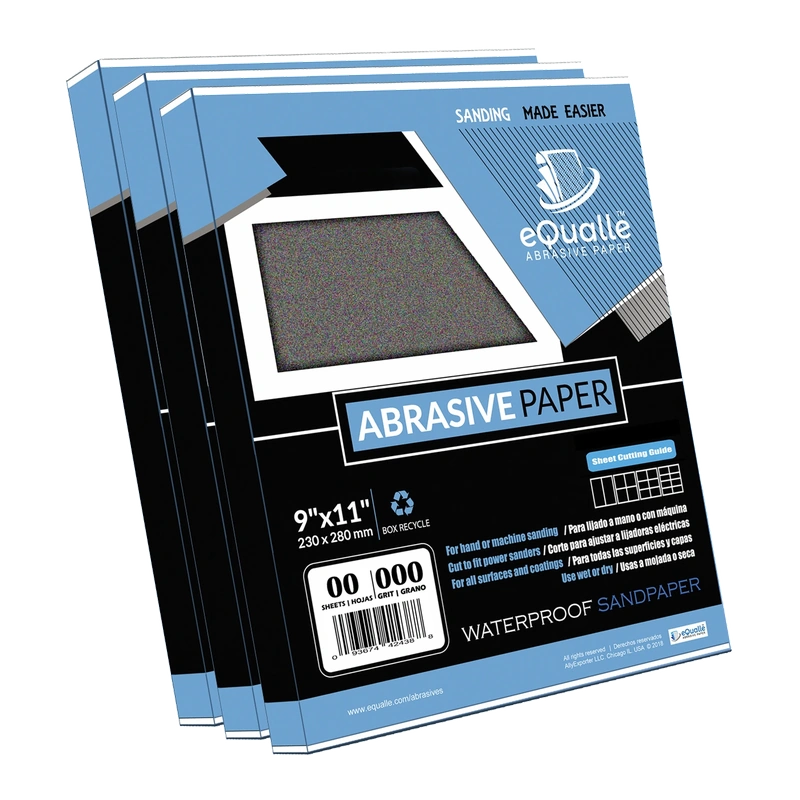
180 Grit Sandpaper Sheets (10-pack) — 9x11 in Silicon Carbide Abrasive for Wet or Dry Use — Reliable grit for producing a uniform texture on wood, metal, or filler layers—often used before varnishing or applying topcoats. (Professional Grade).
Frequently Asked Questions (FAQ)
Q: How heavy should my pencil marks be when tracking high spots?
A: Keep them whisper-light—just visible. Heavy graphite clogs paper and can stain open grain. Aim for thin squiggles or a faint crosshatch you can erase in a few strokes.
Q: What grit should I start with when using a sanding block for flattening?
A: For most wood and primer, start at 120–150. Drop to 80 only for severe highs. Progress modestly (120 → 150 → 180) and don’t move up until the pencil disappears evenly.
Q: My edges keep rounding—what am I doing wrong?
A: You’re likely overwrapping paper or loading pressure at the stroke’s end. Trim paper flush, keep the block flat, start strokes inboard, and finish off the edge with lighter pressure.
Q: Do I need special guide coats, or is a pencil enough?
A: A pencil is plenty for most wood and many primers. Guide coats (powder or mist) help on large panels or automotive work, but the principle is identical: highs wipe clean first, lows hold color.
Q: Should I use a soft or hard sanding block for curved work?
A: Use medium or soft blocks for curves so the block conforms without cutting flats. Reserve hard, dead-flat blocks for flattening tasks where you need to bridge across lows.