
PSA Sanding Discs: Firm Pads for Flatter Finishes
Twilight in the shop is my favorite hour. The radio softens, the dust hangs like fog in the raking light, and you can hear the work breathing back at you. I was nursing the final passes on a walnut writing desk—legs hand-shaped, top bookmatched, edges dead true—when the sander told a truth I’d been ignoring. I’d used a cushy pad and hook-and-loop paper because it was quick, and the piece looked fine under overhead light. But at a low angle? The seams telegraphed, the field had tiny undulations, and the edges were ever so slightly rolled. That’s not “fine.” That’s “almost.”
So I pulled off the hook paper and reached for psa sanding discs, a firm backing pad, and the patience that comes with caring how a surface feels under fingertips. The sander changed character instantly—less bounce, more authority. The tool stopped behaving like a sponge and finally started behaving like a plane. Each pass shaved down the highs without collapsing into the lows. The edges kept their squareness. The raking light quieted. That’s the moment you learn to trust firmness.
Hook-and-loop is brilliant when you’re blending contours, chasing drips, or swapping grits every minute. But if your goal is dead-flat panels, veneered work that won’t witness, filler that levels perfectly, or automotive panels that block out clean, you want a firm pad and a pressure-sensitive adhesive disc. That stack-up puts the grit where it belongs: directly under your control, with minimal cushion and minimal chatter. It isn’t flashy. It’s consistent. And in a workshop, consistency is the real luxury.
Today I’ll show you how to build that stack, dial your technique, and troubleshoot the two big spoilers—heat and loading—so your surfaces finish flatter and faster. Whether you sand wood, filler, or primer, this is how you take “almost” to “done.”
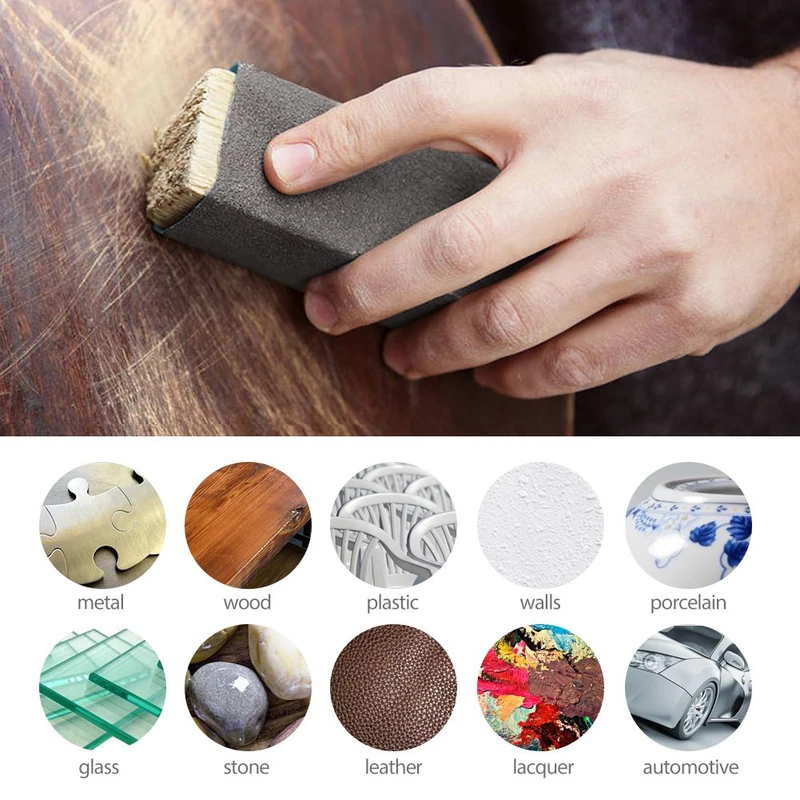
Quick Summary: Pair firm pads with PSA sanding discs to keep the abrasive flat, control heat, and eliminate edge roll, delivering truer, faster, and cleaner sanding results.
Why Pad Firmness Changes Everything
Think of your sanding stack as a suspension system. The softer the pad, the more it deforms under pressure. That’s perfect for curves but deadly for flatness—it rounds edges, bridges over lows, and imprints tiny waves you only see in raking light or after finish. Firm pads resist that deformation. They keep the abrasive riding the true plane, so each orbit cuts the highs down without sagging into the lows. In short: firm equals flat.
On a random-orbit sander, two forces dance—rotation and oscillation. With a soft or medium pad, that dance has bounce. With a firm pad, you get less trampoline effect and more contact consistency. Your cut rate actually improves because the grit stays engaged, and your pattern uniformity improves because the pad isn’t wobbling around dust nibs.
Three places firmness matters most:
- Veneers and ply cores: A firm pad prevents edge roll that can witness through thin faces.
- Jointed slabs and glued-up panels: You’ll level glue lines without scalloping between them.
- Body filler and primer: Blocking becomes predictable; the surface reveals true highs and lows instead of pad-induced waves.
Practical tip: Match pad firmness to the task, not the tool. Many 5" and 6" DA sanders accept multiple pad densities. Keep a firm pad for leveling, a medium for general sanding, and a soft for contours. Label them so you don’t guess mid-project.
Real-world adjustment: Firm pads transmit your pressure more directly. That means you need less downforce than you think. Let the grit bite. Too much push just creates heat—no extra speed, only extra problems.
When to choose psa sanding discs and firm pads
There’s a reason I reach for psa sanding discs when the brief says “perfectly flat.” Adhesive-backed discs bond the abrasive directly to the pad face. No hook layer, no additional cushion. That tighter stack improves cut consistency and reduces micro-chatter on hard surfaces. When you add a firm pad, you get a platform that behaves almost like a small, powered handplane.
Pick this combo for:
- Flattening tabletops, doors, and veneered panels before finish.
- Leveling epoxy fills, body filler, and high-build primer.
- Sanding rigid plastics and solid surface where uniformity shows instantly.
- Removing machine marks from jointer/planer without rounding crisp edges.
Stick with hook-and-loop when:
- You’re sanding contoured parts, coves, or mouldings.
- You need to swap grits every minute in a prototype workflow.
- You’re using through-pad dust extraction with multi-hole patterns you change frequently.
Downsides to PSA? You can’t peel and restick repeatedly without losing adhesion or contaminating the pad. That’s fine when you plan your grit progression and run each disc to a sensible lifespan. The trade-off is worth it for the surface quality and discipline it forces in your process.
A word on heat: PSA doesn’t fix heat by itself, but it removes the fuzzy hook layer that can warm up and smear under pressure. Firm pads spread load more evenly and resist edge collapse, reducing hot spots. Control speed and pressure, and you’ll keep adhesive happy.
Pro workflow tip:
- Stage grits (80/120/180/220 for wood; 80/120/180/240 or 320 for primer) and commit to them. Don’t bounce around. PSA rewards a straight, efficient progression.
Build the right stack: sander, pad, disc
Your results are only as good as your stack-up. Here’s how to get it right from the spindle out.
Step-by-step setup
- Confirm thread and diameter: Most 5" and 6" DA sanders use a 5/16"-24 thread. Choose a firm or medium-firm pad that matches your sander and disc diameter.
- Choose the face: For PSA, you want a vinyl or similar smooth face that bonds evenly with adhesive discs.
- Balance and torque: Thread the pad on fully by hand, then snug per manufacturer specs. An unbalanced pad introduces vibration, which telegraphs to the surface.
- Clean before sticking: Wipe the pad face with isopropyl alcohol. Any dust or oils reduce adhesion and create bubbles that generate heat.
- Align the disc: Peel the liner carefully, hover to align, then commit. Press from center out to purge air. A centered disc prevents wobble.
- Check runout: Spin up to speed briefly and observe. Any shimmy? Kill power and recenter.
According to a article, medium-firm polyurethane pads with tapered edges strike a useful balance: rigid enough for flatness, forgiving enough to avoid chatter on small ripples. That’s the sweet spot for general leveling before you jump to final grits.
Grit progression and pressure
- Coarse (60–80): For flattening glue lines or leveling filler. Keep the sander moving; don’t park.
- Mid (120–150): Erase coarse scratches. Same path, lighter pressure.
- Fine (180–220/320): Pre-finish prep. Reduce speed and hover less on edges.
Actionable tips:
- Mark the surface with a light pencil crosshatch before each grit. Sand until the marks just disappear uniformly; then move on.
- Keep 30–40% pad overhang off the edge to avoid gouging; let the firm pad ride the field, not dig the corner.
- Empty the extractor and blow the pad face between discs. Dust trapped at the interface becomes a hot marble under your disc.
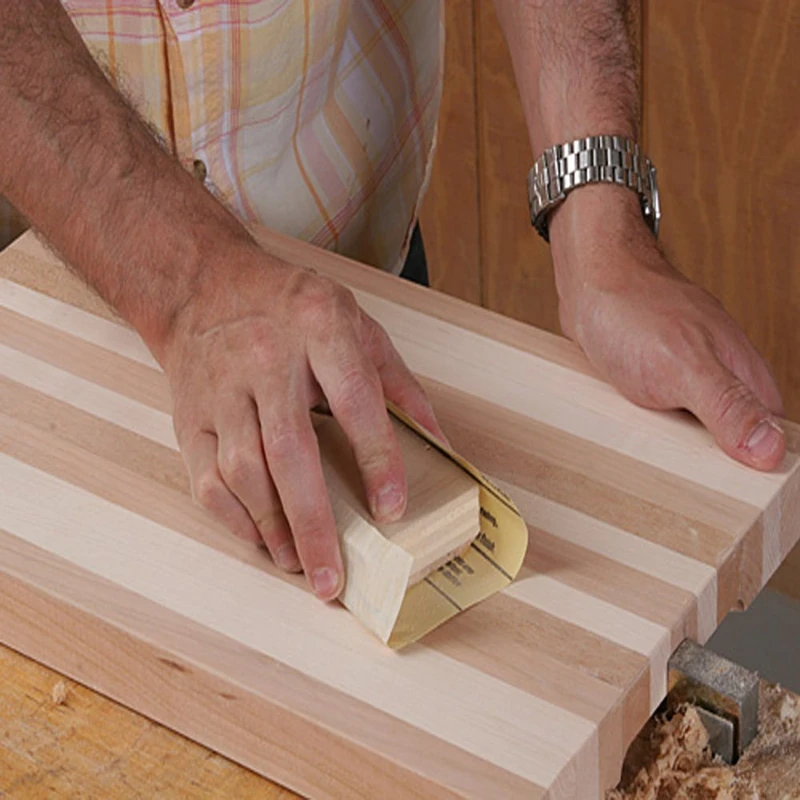
Techniques for ultra-flat results
You’ve built the right stack—now make it sing. Ultra-flat sanding is about controlled movement, consistent pressure, and smart inspection.
- Set sander speed to mid-range. High speed builds heat fast; too low can stutter. Mid gives you cut without meltdown.
- Two-hand control: one guiding the head, one feathering pressure at the rear. With a firm pad, micro changes in your wrist translate directly.
- Overlap passes by about one-third. Imagine mowing a lawn with pride—no racing stripes.
- Keep the pad flat. Tilting to “chase a spot” creates a crater. If a defect won’t disappear with the pad flat, step back a grit or grab a block.
- Work in zones. Divide the surface mentally into panels and complete each with the same pass count and pattern to avoid waves.
Inspection drives quality:
- Use raking light at 30–45 degrees. Move the light, not just your head.
- Pencil grid lightly before each grit. It forces discipline and gives a clear “done” signal.
- Feel is truth. After vacuuming, wipe with mineral spirits or naphtha to preview finish and slide your fingertips across. You’ll feel corrugations your eye can’t see yet.
Edge management on firm pads:
- To keep edges crisp, let only 10–15 mm of pad cross the boundary. Run a few light, full-length strokes parallel to the edge rather than spiraling into it.
- On veneered panels, stop short of the edge with coarse grits. Bring the edge in at the mid-grit to avoid witness lines.
Three quick wins:
- Shorten your hose and use an anti-static hose where possible; less drag means steadier movement.
- Add a thin graphite slip sheet on your platen where compatible; it reduces friction and heat at the interface.
- If you sense warmth at the pad with your hand, you’re already past the ideal. Pause, vacuum, and let it cool.
Troubleshooting heat, clogs, and adhesion
Heat, loading, and sticker drama are the usual suspects. Here’s how I solve them in the shop.
Heat buildup:
- Causes: Too much pressure, dirty interface, high speed, clogged abrasive, or lingering in one spot.
- Fix: Reduce pressure to “just cutting,” drop one speed notch, keep the tool moving, and clean dust paths. If the pad feels warm to the touch, take a minute. Heat kills adhesives and hardens resin on the grit.
Clogging/loading:
- Causes: Resinous woods, uncured finishes, soft fillers.
- Fixes:
- Use stearate-coated discs in mid/fine grits on gummy stock.
- Lower speed and make lighter, more frequent passes.
- Clean discs with a crepe block between passes while the tool is off.
- For epoxy/filler, wait full cure time. Half-cured material packs discs instantly.
Adhesion issues:
- Disc won’t stick well: The pad face might be dusty or cold. Wipe with alcohol and warm the pad and disc slightly (a few minutes in a warm room, not a heat gun).
- Disc creeps or bubbles: You trapped air or misaligned. Press from center out firmly for a few seconds. If a bubble shows later, stop and replace; running it creates a hot spot and a swirl pattern you’ll chase for an hour.
- Residue after removal: A little is normal. Roll off with your thumb or use a citrus-based adhesive remover sparingly, then wipe with alcohol. Let the pad dry before the next disc.
Storage and lifespan:
- Keep psa sanding discs in a dust-free sleeve or drawer. Dust on the adhesive weakens bond.
- Don’t overrun a dead disc “just to finish the pass.” Dull grit makes heat and lies about flatness.
- Label partial discs by grit and task. If you dedicated a 180 to primer, don’t take it to walnut; cross-contamination shows up in your finish.
Three habits that prevent headaches:
- Vacuum the work and pad between each grit, not after three.
- Change discs before they’re fully smoked. If the cut slows noticeably, swap.
- Keep a dedicated firm pad for PSA only; mixing systems shortens pad life.
Stop Melting Your — Video Guide
There’s a great microscope-level look at why sanding discs let go and pads degrade. The video breaks down how pressure and friction generate heat, which softens hook material on hook-and-loop pads and leads to premature failure and flying discs.
Video source: Stop Melting Your Hooks (why sanding discs fly off your sander)
280 Grit Sandpaper Sheets (100-pack) — 9x11 in Silicon Carbide Abrasive for Wet or Dry Use — Fine finishing grit for delicate work—ideal for flattening varnish layers and creating a pre-polish smoothness on wood or resin. (Professional Grade).
Frequently Asked Questions (FAQ)
Q: When should I choose PSA over hook-and-loop discs?
A: Choose PSA with a firm pad when you want maximum flatness and uniform cut—think panels, veneers, filler, and primer. Use hook-and-loop for contours, frequent grit changes, or when a bit of cushion helps.
Q: What firmness pad pairs best with psa sanding discs?
A: A firm or medium-firm pad is ideal. Firm maximizes flatness and edge control; medium-firm offers a touch of forgiveness on slight surface variations without rounding edges.
Q: Can I reuse a PSA disc after peeling it off?
A: Not reliably. Once lifted, the adhesive picks up dust and loses bond strength. Plan your grit runs and replace when the cut slows; trying to restick usually causes bubbles and heat.
Q: How do I prevent PSA residue on my backing pad?
A: Peel discs slowly at a low angle, avoid overheating, and keep the pad face clean. If residue remains, use a small amount of citrus adhesive remover, wipe with alcohol, and let the pad dry before applying a new disc.