
Vacuum Ready Sanders and Hoses for Dustless Sanding
Elena paused at the threshold of her collision bay before sunrise, listening to the silence. A few years ago, this same floor would have been dust-glazed by midmorning: talc-like filler haze on the tool carts, primer freckles on the headlights of a freshly-detailed SUV two stalls over, the faint scratch in the throat that lingered long after a long day. Today, her prep bench looked more like a lab station than a battle zone—vacuum ready sander on the hook, antistatic hose coiled with intent, HEPA extractor waiting on tool activation. She toggled the extractor, snapped the bayonet cuff to the sander port, and gripped the two-handed body with the muscle memory of a hundred quarter panels. The tool settled into a low hum, and the abrasive came alive. Instead of the telltale cloud, spent dust vanished at the source, the translucent hose pulsing like a vein.
This wasn’t about “being neat.” It was about control: controlling surface topography, scratch depth, and process variation with the same rigor as airflow and static pressure. Dust isn’t just a housekeeping problem; it’s a process contaminant that blunts abrasives, loads discs prematurely, and seeds defects into primer and basecoat. Switching to a true system—vacuum ready sanders, matched hose adapters, antistatic routing, and high-capture abrasives—made Elena’s work both quieter and sharper. Edges feathered properly. Filler was shaped with fewer passes. Primer leveled without pinholes reappearing. And most importantly, she could step from body filler to paint prep without pausing to clean an entire bay.
If your first thought is that dustless sanding belongs in a factory cleanroom, you’re not alone. But the practical reality is simpler: with the right sander-to-hose interface, adequate airflow, and abrasives designed for extraction, the “clean shop” outcome arrives as a byproduct of a faster, more repeatable sanding workflow. And in a world where every minute counts—and every nib in a clearcoat tells a story—eliminating airborne waste at its point of formation is the most technical, yet most human, upgrade you can make.
Quick Summary: The strongest sanding workflows use vacuum ready sanders, right-sized antistatic hoses and adapters, and extraction-friendly abrasives to remove dust at the source, sharpen abrasive performance, and deliver cleaner, faster finishes.
What makes a sander vacuum-ready
“Vac-ready” isn’t a sticker—it’s an engineered pathway. A vacuum ready sander is designed with an integrated extraction channel from the pad face to a sealed outlet, synchronized with a perforated backing pad pattern that aligns to multi-hole abrasives. The goal is to capture particulate at the cutting interface before it becomes airborne or embeds in the scratch pattern.
Key design features include:
- Port geometry and seal integrity: The outlet should accept a tight cuff that resists torsion and air leaks. Many pro sanders use tapered or bayonet ports for repeatable fit-up.
- Pad perforation strategy: Multi-hole patterns (often 15+, or “universal” layouts) broaden capture across the pad, minimizing swirl-inducing loading. The holes must align with the abrasive and interface layers to sustain laminar pull through.
- Internal dust channels: Modern random orbit sanders route air within the shroud to balance debris intake and cooling without starving the motor. Poor internal routing means strong suction at the hose but weak pull at the pad.
- Trigger or lever modulation with vacuum auto-start: Tool-activated extractors cut idle time and maintain consistent airflow from first contact.
For bodywork, two-handed chassis and larger orbits (5–10 mm) handle filler shaping and substrate leveling with stable pressure distribution. Finishing operations often favor 2.5–3 mm orbits for a shallower scratch and easier polish-out. Match the pad diameter (commonly 150 mm/6 in or 200 mm/8 in) to your panel size and abrasive availability; ensure the sander’s backing pad is a multi-hole or universal type to exploit the extractor you own.
Finally, vacuum readiness includes the noise and balance story. Sanding is tactile: torque reaction, pad stability under suction, and stall resistance at the edges matter. A well-designed vac-ready sander preserves cutting speed under extraction, rather than “suction sticking” or skating—both signs of mismatched hose diameter, excessive water lift, or poor pad ventilation.
Airflow tuning for dustless sanding
Dust capture lives and dies by airflow. You need enough volumetric flow (CFM or L/s) at the pad to grab liberated particles instantly, and enough static pressure (water lift) to overcome losses through the pad, interface, disc, and hose. For most 5–6 in random orbit sanders, a high-performance extractor in the 120–150 CFM range with 80–100 in H2O water lift is a proven baseline. Larger 8 in pads and heavy dust operations (coarse filler cuts) may need more flow or a larger hose.
Two levers dominate:
- Hose internal diameter (ID) and length: A 27 mm (≈1-1/16 in) antistatic hose is a common sweet spot for 5–6 in sanders. Larger orbits and 8 in pads benefit from ~32–36 mm hoses to reduce friction losses. Shorter is almost always better; every additional meter compounds pressure drop.
- Adapter transitions: Abrupt step-downs create turbulence and restriction. Use stepped or conical adapters that progress smoothly from extractor port to sander inlet, with tight cuffs and O-rings where supported.
Think in terms of resistance. The abrasive itself is a filter; net or mesh discs impose less airflow resistance than closed-film discs. Clean filters amplify the effect: as your extractor’s bag fills and the HEPA filter loads, available CFM at the pad drops, leading to haze even if the hose “feels” like it’s drawing. Tool-activated auto-clean extractors (pulse cleaning) can sustain flow during continuous production; otherwise, schedule manual purges.
Airflow tuning pays off in abrasive performance. With adequate capture, grains stay cool and free-cutting, reducing loading and extending disc life. You’ll also see fewer deep random scratches caused by embedded debris under the disc. According to a article, paired adapter-and-hose kits sized for vac-ready pneumatic sanders simplify this optimization because the interface is engineered as a system rather than a guesswork chain of couplers.
Adapters, diameters, and antistatic hoses
Hose-and-adapter selection is where many “dustless” ambitions stall. The sander port, hose cuff, and extractor inlet all need to agree on geometry, material, and electrical behavior.
Focus on three specifications:
- Geometry: Common sander outlets range from ~22 mm to 29 mm OD, sometimes with a taper. Many extractors use 27 mm or 36 mm ID hose systems with bayonet or twist-lock collars. Choose adapters that seat deeply without wobble; bayonet or detent features resist accidental pull-off when you stretch across a roof or deck.
- Diameter continuity: Maintain the largest practical diameter from the extractor to within one step of the sander inlet. Long runs of 32–36 mm hose keep friction losses low; a short, flexible whip hose (25–27 mm) at the tool end preserves maneuverability without starving the pad.
- Antistatic properties: Dry dust moving through plastic builds charge that can annoy (zaps), attract fines back to the panel, or even create ignition risks in certain environments. Use antistatic hoses (surface resistivity typically <10^9 Ω) and ensure a continuous ground path from tool cuff to extractor chassis to wall ground. Avoid PVC tape “fixes” that break the path.
Material choice matters. Reinforced, crush-resistant hoses with smooth interior walls reduce turbulence. Flexible cuffs with left-hand threads or molded ribs maintain seal integrity under torsion. If your sander has an oval or proprietary port, use the OEM adapter as the first step, then transition to a standard 27/36 mm ecosystem.
Plan for service. Quick-disconnects let you swap between tools without mangling cuffs. Label hose segments with their ID and intended zone (“36 mm trunk,” “27 mm whip”) to preserve your airflow plan. And minimize length: route extractors closer to the work or use ceiling drops to shorten runs across large bays. If you need to run long, consider a pre-separator or cyclone upstream; that keeps the heavy cuttings out of the HEPA stage and preserves CFM over time.

Abrasives and interface pads that extract
Even the best extractor cannot compensate for a dead-end abrasive stack. Your pad, interface, and disc must act like a breathable laminate that moves dust vertically through the cutting zone.
A few rules anchor this:
- Use extraction-first abrasives: Mesh/net products provide near-continuous airflow and resist loading, ideal for primer leveling and wood finishing. Modern multi-hole film discs (15+ hole patterns) can rival nets on flat work while delivering crisp scratch uniformity for paint prep.
- Align hole patterns: Your backing pad, interface foam, and disc should share a universal or high-count pattern. Misaligned layers throttle flow and concentrate loading under “blind” zones, creating mini swirls. If you use interface pads for contours, pick multi-hole interfaces matching the disc diameter and pattern.
- Choose orbit and grit to suit the substrate: 10 mm orbit eats filler; 5 mm is general-purpose; 2.5–3 mm is for finishing. For filler knockdown, run P80–P120 net or aggressive film; for primer, P180–P320 film on a 3–5 mm orbit; for sealer scuff, P600–P800 non-woven or fine film with light vacuum pull to avoid panel cooling artifacts.
- Control pad hardness: Hard pads maintain flatness on broad panels; soft pads conform to blends and radii. Too-soft pads on a large orbit can induce “hook” scratches; too-hard pads on a crowned panel will bridge and leave lows. Match pad durometer to the task and keep interfaces thin—just enough foam to wrap a contour without starving extraction.
Extraction raises abrasive performance by keeping grain tips sharp and temperatures lower. This reduces resin smear in primers, prevents melt-on of thermoplastics, and makes scratch traces more predictable. The output is measurably cleaner: fewer pigtails, clearer guide-coat feedback, and less rework before coating. Add a controlled vacuum bleed, if available, to fine-tune pad-stick on delicate substrates—just enough capture to keep the zone clean without losing glide.
Standardized workflows you can repeat
Consistency arrives when you treat surface prep like a measured sequence—same machine, same airflow, same abrasive geometry—rather than a set of on-the-fly guesses. Below are core workflows you can replicate across body filler, primer, and composite or wood:
Body filler shaping (automotive):
- Tool: Two-handed 6–8 in random orbit, 5–10 mm orbit depending on volume removal.
- Abrasive: P80 then P120 net on a hard or medium pad. Interface only where transitions demand contouring.
- Airflow: 130–150 CFM at a 27–36 mm hose; keep runs under 5 m. Pulse-clean the extractor between grits.
- Method: Crosshatch passes at 45°, guide coat between steps; stop when low areas remain and address with skim, not pressure.
Primer leveling (automotive and composites):
- Tool: 5 mm orbit 6 in sander with medium pad.
- Abrasive: P220 then P320 multi-hole film; P400 if basecoat spec demands.
- Airflow: 120–130 CFM; slightly bleed suction if pad stick occurs on fresh primer.
- Method: Long-board effect with a wide stance; keep the hose behind the travel path to prevent panel marking; re-guide coat for uniform matte.
Fine finishing on hardwood or solid surface:
- Tool: 3 mm orbit 5–6 in sander with soft pad.
- Abrasive: P240 → P320 → P400 net or high-count film; finish with non-woven where specified.
- Airflow: 100–120 CFM; antistatic hose essential for oak, maple, and resinous species.
- Method: Vacuum the surface between steps; rotate the workpiece orientation per grit to minimize directional bias.
Actionable tips for immediate gains:
- Keep hoses short and fat: Use 36 mm from extractor to a 27 mm whip; avoid more than one step-down.
- Check pad vacuum with a manometer or anemometer at the cuff monthly; declining numbers signal filter load, leaks, or adapter issues.
- Use net abrasives for heavy dust and multi-hole film for scratch precision; swap when the task shifts, not after discs glaze.
- Align every layer (pad, interface, disc); punch-align or rotate until maximum hole overlap is visible.
- Ground the system: Verify continuity from sander cuff to extractor chassis; replace any non-conductive segment in the chain.
BLOCK SANDING Body — Video Guide
This short demo showcases a vacuum-integrated sanding block purpose-built for shaping body filler with linear, track-straight passes. Instead of chasing airborne dust with a rag, the block pulls debris through the face, keeping the cutting path visible so you can read highs and lows in real time.
Video source: BLOCK SANDING Body Filler Made EASY With This Dustless System!
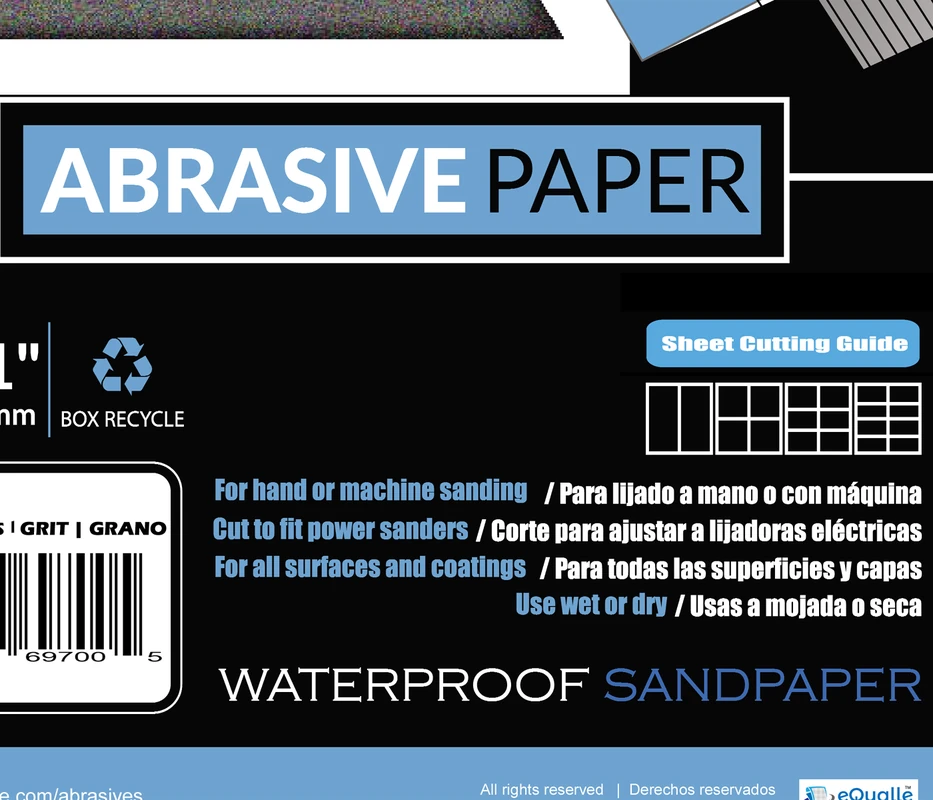
150 Grit Sandpaper Sheets (25-pack) — 9x11 in Silicon Carbide Abrasive for Wet or Dry Use — Versatile medium grit that transitions from shaping to smoothing. Works well between coats of finish or for preparing even surfaces prior to paint. (Professional Grade).
Frequently Asked Questions (FAQ)
Q: What defines a true vacuum ready sander versus a standard model?
A: A vacuum ready sander has sealed internal dust channels, a perforated backing pad matched to multi-hole abrasives, and a robust extraction port designed for secure hose connection. Together, these route debris from the cutting interface into an extractor without starving the motor or destabilizing the pad.
Q: Which hose diameter should I use for a 6 in random orbit sander?
A: For most 5–6 in pads, a 27 mm antistatic hose is optimal at the tool, fed by a 32–36 mm main hose from the extractor. Larger pads or 10 mm orbits benefit from sustaining 32–36 mm as close to the tool as practical to reduce pressure drop.
Q: How much airflow is necessary for effective capture?
A: As a baseline, target 120–150 CFM with 80–100 in H2O of water lift for 5–6 in sanders. Heavier cuts, larger pads, or long hose runs may require more flow or larger diameter hoses to maintain pad-face capture.
Q: Do I need antistatic hoses for dustless sanding?
A: Yes. Antistatic hoses reduce static shocks, prevent fines from re-attracting to the workpiece, and maintain a safer, cleaner environment. Ensure a continuous ground path from the sander cuff through the hose to the extractor and building ground.
Q: What abrasives work best with extraction systems?
A: Net/mesh abrasives excel at heavy dust generation (filler, primer), while high-count multi-hole film discs deliver superb scratch uniformity. Use multi-hole interface pads where contours demand, and always align hole patterns across the stack.