
Stop Ghosting: Concrete Polishing Without Patch Shadows
It always happens when the light hits just right. I was kneeling on a school hallway slab before first bell, hand on the cold surface, checking last night’s patch work with a flashlight and a mason’s skepticism. You know the look—soft dawn glare, long rakes of light washing across the floor—and that’s when ghosting shows itself. A square of old tile pattern peeks through here, a darker island where last week’s crack repair cured a shade off there. The client doesn’t care that the concrete is 30 years old and lived through a cafeteria’s worth of milk spills and waxed VCT; they’re buying a clean, even finish. If you’re in concrete polishing, you’re in the business of managing edges, light, and expectations as much as diamonds and densifier.
Ghosting from patch areas is the moment your repairs telegraph through the shine, making the surface look stained or grid-lined even after a thorough grind. It shows up when repairs absorb differently, cure at a different density, or you didn’t cut uniformly across substrates and adhesives. It shows up when moisture moves, when resin swirls are left under a guard, and when patch materials don’t truly marry the slab. The good news: ghosts hate uniformity. When you control the substrate, tool path, chemistry, and light, you take away their theater. That’s the craftsman’s advantage.
Today I’m walking you through a shop-proven approach to avoid ghosting from patch areas—the same playbook I bring to schools, shops, and garages. This is for the weekend warrior with a 7-inch polisher and a dream, and for the pro who lives by bond selection and RPM. We’ll plan, prep, patch, and polish in a way that blends those repairs into the slab instead of spotlighting them. Concrete polishing rewards patience, sequence, and a ruthless eye; let’s get your floor to read as one piece.
Quick Summary: Prevent ghosting by planning repairs, grinding uniformly, managing moisture, matching patch porosity and color, timing densifier and grout correctly, and blending edges like a finisher.
What Ghosting Really Is
Ghosting is contrast you didn’t intend. In polished floors, it’s the visible outline of past tile, mastic beds, slab pours, grinder swirls, or patch areas that show up darker or lighter under a sheen. Ghosting happens because different parts of the floor reflect and absorb light unevenly. Patches typically have different porosity and hardness than the parent slab, so they take dye, densifier, and fine grits differently. Add past adhesives, moisture migration, thermal variations from sun exposure at windows, or surface carbonation under old coatings, and you’ve got a perfect recipe for “picture-framing.”
Here are the main sources I look for on a walk-through:
- Residual mastic or thinset pattern: Even after removal, the chemistry and profile can differ.
- Patch materials: Fast-set repair mortars often cure denser or lighter, telegraphing at 800–1500 grit.
- Moisture: RH differentials darken certain zones or push densifier away from full reaction.
- Tooling and path: Inconsistent cut patterns, skipped grits, or overworked edges leave halos that read as ghosting.
- Aggregate exposure: If your patch doesn’t expose at the same depth, the mismatch advertises itself.
Diagnose before you grind. Sprinkle water and time it—fast absorption means porous spots; be cautious with densifier timing and dye. Scratch test with a pick set or a fresh screw to read hardness and choose bonds. If you’ve got evidence of past tile, use a bright raking light or angle a work light low to the floor. Mark every suspect area with chalk (not marker), and map it. When the floor warms or sunlight hits, it’ll read differently. Think like a finisher: a uniform story beats a perfect polish in pockets. When in doubt, plan deeper, more uniform cuts instead of trying to “polish away” history at high grits. Ghosts live in the uneven parts of your process.
Concrete polishing plan to prevent ghosting
A clean, uniform plan beats heroics. Treat the slab like a system and attack variables in order.
Step-by-step workflow:
- Pre-inspection and mapping
- Mark patch areas, adhesive grids, cold joints, and moisture-prone bays.
- Do a simple moisture check: plastic sheet overnight or RH probes if available (ASTM F2170 is gold standard).
- Decide exposure level early. Light cream is the most unforgiving; salt-and-pepper or small aggregate exposure hides history better.
- Adhesive and coating removal
- Start with 16/20 or 30/40 metal bonds depending on hardness. On soft concrete, go harder bond to avoid gouging; on hard concrete, soft bond to cut instead of skate.
- Vacuum frequently. Dust tells you if you’re cutting clean or just glazing diamonds.
- Flattening and uniformity
- Run long, even passes with 1/3 to 1/2 overlap. Avoid “ringing the doorbell” on patches—don’t hover.
- Knock proud patches flush at metal grits; feather past the patch borders to blend the plane.
- Sample panel
- Always make a mock-up: one small area with your full sequence (metal > transition > resin), grout pass, densifier timing, and finish.
- Confirm that patches read neutral under both shop light and daylight. This is where you change plan—not after 1500 grit.
- Grit sequence and transitions
- A reliable path: 30/40 metal > 70/80 metal > 120 metal > 50/100/200 transitional > 200 resin > grout > densifier > 400 > 800 > 1500 (optional).
- Never skip a grit on patchy floors. Ghosts love shortcuts.
- Moisture management
- If RH is high, consider pausing after metal grits for drying time or use breathable guards later.
- Don’t flood densifier into wet slab; it’ll streak and calcify unevenly.
- Edgework parity
- Hand-polish edges with the same grits, pressure, and pace. Keep a log or tags on your pads so edges mirror field passes.
- Blend 8–12 inches into the field with your hand grinder to erase the “edge halo.”
This concrete polishing plan puts uniformity first. The more even your cut, the less chance a patch stands proud or stays too cream-rich compared to the rest. As a rule, if your test panel shows a ghost at 200 resin, no amount of 1500 burnish will erase it—adjust at the low grits, not the top.
Patches That Disappear, Not Telegraph
Patches succeed or fail long before polish. Pick a material that matches the slab in porosity and hardness, and apply it like a finisher, not a caulk gun. Rapid-set cementitious patch with fine silica is my default for structural fills; for hairline or pinholes, I’ll use a cement slurry/grout pass to blend color.
Material and prep checklist:
- Profile first: After adhesive removal, scrub the cavity clean. Avoid over-widening unless the edges are weak.
- Prime if the manufacturer says so. Dry, dusty cavities rob bond and color.
- Mix consistently by weight, not eyeballing. Tiny water shifts change shade and density.
- Feather your patch 12–18 inches beyond the damaged area. Thick, hard edges telegraph under polish.
- Let it cure per spec. Rushing into metal cuts will rake the patch light and burn the surrounding cream.
Sanding and blending:
- Flatten patches at 60–80 grit metal, then step out to 120. Resist the urge to “polish the patch”; polish the floor.
- Run wide arcs across and beyond the patch so your wheel path doesn’t draw a circle that will read at 400+.
- If the patch polishes too light, pre-densify just the patch lightly, then densify the full floor later. Reverse if the patch is thirstier.
Color and porosity control:
- For salt-and-pepper exposure, aim to expose fines consistently across both patch and slab.
- For cream, consider a whole-floor micro skim (cement grout) to equalize tone before densifier.
- Test dyes on a spare board using your exact patch mix and the slab’s fines; pre-tone the patch if needed.
Avoid resins on uncured patches; they’ll smear and heat-stain. Your best friend is patience at metal grits and a wide blend radius.
According to a article, even old tile fields can imprint through the polish if you don’t cut uniformly and anticipate contrast. I’ve seen it too: if your first cuts chase adhesive lines instead of planing the whole field, the ghost grid returns at sheen. The fix isn’t magic—just commitment to even removal, feathered repairs, and a grout pass that knits the surface into one story.
Dialing In Grinds, Densifier, and Grout
This is where polishers earn their keep: getting the chemistry and sequence to read as one surface.
H3: Tooling and torque that tell the truth
- Metal-bond choice: On soft or green patches, use a medium or hard bond so you plane, not plow. On hard, old slabs, soft bonds cut faster and reduce skating.
- Transitional tools: 50/100/200 hybrids remove metal scratches without smearing. If you still see tiger stripes at 200, you didn’t finish the metals—drop back.
- RPM and pressure: Slow down on patches to control heat; too much downforce on resins creates halos that glow under guards.
H3: Densifier timing and technique
- When: Densify after you’ve removed metal scratches and grouted—commonly after 200 resin if the floor is tight, or after 120 metal on soft, open slabs.
- How: Two light, even coats beat one flood. Microfiber in a figure-eight, keep it wet-edge, and scrub into thirsty patches.
- Why it matters: Uneven densification creates patch outlines that pop at 800+. You’re hardening the top 1–3 mm into a uniform mineral; treat it like finish carpentry.
H3: Grout pass that hides everything
- Mix: Portland-based slurry or commercial grout mix with fines to match your target tone. Aim for toothpaste consistency.
- Apply: At 200–400 grit, squeegee across the floor, forcing paste into pores and pinholes.
- Cut back: After cure flash, resume with the same grit you paused on. You’ll fill micro voids that otherwise shadow at gloss.
H3: Color blending and finish choices
- Dyes: If a uniform color is acceptable, lightly tone the entire floor—not just the patch. Mist-spray and back-roll for even uptake.
- Guards: Choose a breathable, penetrating guard over a thick topical if moisture is variable. Burnish per spec; don’t chase glass on a floor that wants a satin.
- When to pivot: If cream shows every sin, consider dialing exposure to salt-and-pepper. It’s a craftsman’s reset that often solves ghosting without drama.
Actionable tips you can use today:
- Map and grind past patch edges: Blend at least 12 inches beyond each repair to erase the “patch circle.”
- Pre-tone test: Mix a small batch of your patch, polish a sample to 800, and test dye and densifier on that puck before touching the floor.
- Uniform first cuts: Plane the whole room on metals before spot-grinding defects; spot work last, then re-blend.
- Densify evenly: Keep a wet edge and track coverage rates; patch islands happen when you starve or flood small zones.
- Edge parity: Run the exact same grits and passes on edges. Count your laps. A crisp edge halo is ghosting’s favorite trick.
If you still see outlines after 400 grit, stop and reassess. Going higher only polishes contrast. Take a step back, deepen the cut uniformly, re-grout, and re-densify with discipline. You’ll save hours compared to chasing a ghost at 1500 grit.
Concrete Floor Transformation: — Video Guide
Check out a practical walkthrough from Antony James of AJ Stone Life as he restores a school cafeteria slab from rough to reflective. He tackles adhesive removal, uniform grinding, patch blending, grout slurries, densifier timing, and the resin sequence that turns a tired floor into a clean, consistent surface.
Video source: Concrete Floor Transformation: Step-By-Step Polishing Guide For The Perfect Shine | AJStoneLife.com
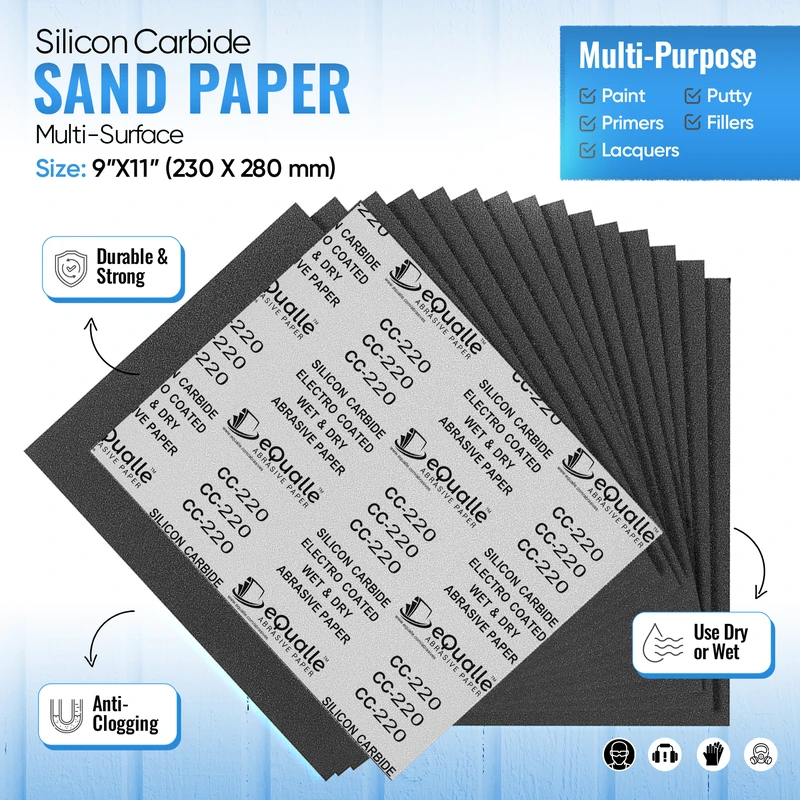
2000 Grit Sandpaper Sheets (25-pack) — 9x11 in Silicon Carbide Abrasive for Wet or Dry Use — Super-fine grit for restoring deep gloss on automotive paint, resin, or metal. Removes micro-defects and surface haze. Ideal for precision polishing prior to waxing or compounding. (Professional Grade).
Frequently Asked Questions (FAQ)
Q: What causes patch areas to ghost after polishing?
A: Different porosity, hardness, and color between the patch and original slab make light reflect unevenly. Uneven grinding, skipped grits, moisture, or inconsistent densifier application can amplify the outline so it reads through the finish.
Q: Can I fix ghosting late in the process with 1500-grit and guard?
A: Rarely. If you see a patch outline at 400–800 grit, more gloss usually makes it worse. Drop back to the last grit where the floor looked uniform, deepen your cut, re-grout, and re-densify evenly before stepping back up.
Q: What patch material blends best for polished floors?
A: Use a cementitious repair mortar designed for polishing, with fine aggregate similar to your target exposure. Avoid coarse fillers for cream finishes. Mix by weight for color consistency, feather wide, and let it cure fully before metal cuts.
Q: Where should I apply densifier to avoid patch halos?
A: Apply densifier uniformly across the entire floor with even coverage, not just on patches. If a patch is especially porous or hard, pre-treat lightly to equalize, then densify everything together so the chemistry reacts as one.
Q: How do I keep edges from telegraphing a brighter band?
A: Match the field sequence exactly: same grits, same number of passes, same pressure. Blend edges 8–12 inches into the field. Keep edge pads clean and labeled by grit so you don’t accidentally jump or skip.